When you click on links to various merchants on this site and make a purchase, this can result in this site earning a commission. Affiliate programs and affiliations include, but are not limited to, the eBay Partner Network.
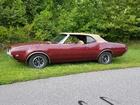
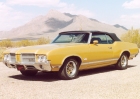
Last year I acquired my grandfather's 69 Cutlass. The car is nearly 100% original with just the high wear items replaced. It sat for a year while he succumbed to cancer and I have been tinkering with it to get it back in shape. Just basic things, ie new battery, new ignition harness, air filter, oil change, spark plug cleaning and gapping, firewall clutch boot replacement, etc. Accelerator pump went out on the carb so I had it overhauled. When I installed it, the car started to smoke a bit on a cold start. I assumed too rich a fuel mixture but it only got worse when adjusting. I got it dialed in right but it fills my garage on cold start (probably valve seal leak?) Now, it is very slow to accelerate in first gear. I'm an airplane guy so this is a bit new to me. It has 126k original miles with no overhaul. The question is do I get a tune up (timing, vacuum, fuel air mixture, etc) or do I find a restoration shop for a complete overhaul? And for the latter, how much is that normally costing folks? I'd do it myself but I don't want to screw something up. Thanks folks.
Restoration costs are a big wild card, all depending how far you want to go (all the way back to factory condition, frame off, etc). A big cost will be the condition of the body, especially in regards to rust. I learned that if you had a choice, a car with no engine, but great body condition, is much more cost effective than the other way around. You will pretty much count on spending over $10k as a starting point, if you plan on doing paint, replacing the interior etc. Take a look at the Legendary interior website, to just get an idea of interior costs, without considering labor.
I would start with doing the tuneup first and if you can't do that, find one of those old school mechanic shops to do it for you and then go from there.
We need more information on what your current tune up settings are? What distributor and carb is installed? Condensation emitted (what some call smoke) from your exhaust is normal and the amount is predicated on humidity and outside air temperature. Depending on what's needed a tuneup performed by someone else can be as high as $500 with labor and parts.
weather to commit to a resto is a personal decision. For me i like to fix whats needed and make improvments along the way, all while enjoying the car! A restoration can be a multiyear commitment.
a carb rebuild isnt difficult. It sounds like your carb may need to gone thru again to ensure proper setup, and this is an old car not fuel injection. When the car starts on choke it will run rich until its warmed up to enough to open the choke. Sitting in a garage it will quickly fume up the area.
this site and a chassis service manual (CSM) will help you out! In the last 50 years or so there has been quite a knowledge base accumulated on these cars and there operation.
Without question you need a tuneup - first & foremost. Either buy the tuneup tools or take it to a knowledgeable mechanic. You should purchase an original hard copy Chassis Service Manual (CSM) - definitive bible for your car. Perform a simple compression check of the engine. It is preferable to dial-in your A/F mixture employing a vacuum gauge as the last step in your tuneup.
After a proper tuneup, check to see how it runs. Then you can move forward with diagnostics to troubleshoot any other issue(s) e.g, carburetor, throttle linkage, torque converter, etc.
The chassis itself needs no restoration. It is rust free throughout. The powertrain is the only issue. The carb has already been overhauled by National Carburetors. I'm really just concerned about the rear main oil seal and valve seals. It's definitely not just condensation from humidity. It's oil burning from the fuel in startup. I've got the CSM but I have no idea where to start. I guess if I was to have the engine restored, it would just be honing the cylinders, new rings, hone the valve seats, blast and paint the block and replace all of the seals. Maybe piston replacement from the old cast stuff. I don't know where to start with all of this. Thanks for the input thus far.
Nice car. First thing I would check is the choke pull off setting on cold start and make sure the choke is 100% opening when warm. I assume it is the factory 4bbl Qjet? Get new quality spark plug wires, brass contact distributor cap and rotor along with quality Blue Streak, Accel or similar points. You will need a feeler gauge and dwell meter. It has been 20 years since I have had anything to do with points. There are point conversion to electronic like Pertronix to eliminate point maintenance. Good luck.
You asked where do you start in the CSM? First priority is a tuneup, unless of course you’d prefer to change out the pistons, rings, valves, etc before you perform a tuneup without performing any diagnostics. Perform a tuneup to specifications as defined in the CSM. That’s where you begin.
Dwell, Timing then A/F mixture in that EXACT order.
A vacuum gauge you should own. Measure you vacuum and use that gauge to adjust A/F mixture.
Ask your airplane mechanics if they can do a compression or leak down test on your Olds. This is the best place to start on determining engine health. Maybe someone on this site who lives nearby can direct you to a good tune-up mechanic for older cars. Vo-tech or college automotive students may be eager to help also.
X2 dragline. Absolutely start with a leak down test or compression test. If that is good replace the timing chain, cam/crank gears, valve seals and do a thorough tune-up.
Ask your airplane mechanics if they can do a compression or leak down test on your Olds. This is the best place to start on determining engine health. Maybe someone on this site who lives nearby can direct you to a good tune-up mechanic for older cars. Vo-tech or college automotive students may be eager to help also.
As I stated in Post #6 (hopefully the OP is reading each post):
Perform a simple compression check of the engine.
If a simple compression check demonstrates no significant variations in both dry & wet cylinder compression, a leak-down test is unwarranted. A tune-up should be the first place to begin. A very simple tune-up is also a very simple diagnostic tool in which the OP will quickly be able to determine if the dwell, timing & vacuum are unable to be set to specifications. Should this be the case, further diagnostics are warranted.
Factory stock distributor and carb. Rochester 2 barrel.
Originally Posted by oldcutlass
We need more information on what your current tune up settings are? What distributor and carb is installed? Condensation emitted (what some call smoke) from your exhaust is normal and the amount is predicated on humidity and outside air temperature. Depending on what's needed a tuneup performed by someone else can be as high as $500 with labor and parts.
I have a vacuum gauge. I'll make sure to look into that process and check it out.
Originally Posted by Vintage Chief
You asked where do you start in the CSM? First priority is a tuneup, unless of course you’d prefer to change out the pistons, rings, valves, etc before you perform a tuneup without performing any diagnostics. Perform a tuneup to specifications as defined in the CSM. That’s where you begin.
Dwell, Timing then A/F mixture in that EXACT order.
A vacuum gauge you should own. Measure you vacuum and use that gauge to adjust A/F mixture.
I have a vacuum gauge. I'll make sure to look into that process and check it out.
Originally Posted by Vintage Chief
You asked where do you start in the CSM? First priority is a tuneup, unless of course you’d prefer to change out the pistons, rings, valves, etc before you perform a tuneup without performing any diagnostics. Perform a tuneup to specifications as defined in the CSM. That’s where you begin.
Dwell, Timing then A/F mixture in that EXACT order.
A vacuum gauge you should own. Measure you vacuum and use that gauge to adjust A/F mixture.
I've got a cylinder compression kit that I use on Lycoming/Continental aircraft engines. We test at 80psi. Any idea what to test the Olds at? Does anything need to be disconnected?
Originally Posted by dragline
Ask your airplane mechanics if they can do a compression or leak down test on your Olds. This is the best place to start on determining engine health. Maybe someone on this site who lives nearby can direct you to a good tune-up mechanic for older cars. Vo-tech or college automotive students may be eager to help also.
Thank you. I'll be sure to check vacuum and compression asap.
Originally Posted by Sugar Bear
Sorry for your loss.
X2 dragline. Absolutely start with a leak down test or compression test. If that is good replace the timing chain, cam/crank gears, valve seals and do a thorough tune-up.
An easy start to a simple diagnosis is to measure your current manifold vacuum which should be between ~17.5"Hg - 21"Hg. You said it was a stock engine. But, you also need to use the vacuum gauge for the exact same process at the end of the tune-up. You adjust your A/F mixture screws one at a time (left and right) to achieve the highest vacuum possible. This is done at the end of a proper tune-up. But, as I've been following your thread, you can perform this now since you earlier said you have this "dialed in right". Dialed in right would be the highest achievable vacuum with a vacuum gauge.
I've got a cylinder compression kit that I use on Lycoming/Continental aircraft engines. We test at 80psi. Any idea what to test the Olds at? Does anything need to be disconnected?
I believe you're confusing a leak-down test with a cylinder compression test. The leak down test begins w/ a specific psi (e.g. 80psi on a Lycoming) then you measure the delta between start and end.
A cylinder compression test measures the compression within each cylinder. Remove EACH plug, remove coil wire, insert compression gauge, cycle the engine several turns with the key and read the compression. Do this both wet & dry. Plenty of YouTube videos. You do this for each cylinder. You're performing this operation one cylinder at a time. You'd never have more than one plug removed and the compression gauge inserted into the cylinder you removed the plug from.
Last edited by Vintage Chief; Jan 16, 2022 at 06:17 PM.
I've got a cylinder compression kit that I use on Lycoming/Continental aircraft engines. We test at 80psi. Any idea what to test the Olds at? Does anything need to be disconnected?
the cylinder pressure depends a lot upon the static compression ratio and the camshaft profile. Your 2bbl engine was built with 9.0:1 compression and should have around 150 PSI, but that depends upon multiple things (static compression that can change with aftermarket head gaskets, valve job, camshaft profile, etc). Do a compression test and post the results, then we can guide you from there.
There's a delta in discussion here which is important for you to understand moving forward - let's call it some "buggery". I have performed leak-down tests on Lycoming/Continental and other various aircraft engines - many years ago when I was an active pilot. What you are most likely referring to is a common leak-down test of an aircraft engine - I have seen far too many people refer to this test as a compression test when in fact it is a leak-down test in which you supply 80 psi and examine for deltas; and, depending on the test kit you have in your hand, it can measure various aspects of compression, leaks, within cylinders and if you have to top-of-the-line bad-boy you can perform manifold vacuum tests including the "rate" of compression loss or vacuum loss - a very important indicator of aircraft engine health.
Notice both of these two videos. Each of these individuals incorrectly identifies this test as a compression test. It is not a compression test, it is a leak down test. This isn't the forum or thread to become embroiled with nomenclature but I wanted to ensure you know what we in this forum/thread are referring to when we state a leak-down test vs. a compression test. NOTE: There are several YouTube members in each of these first two videos who did comment this was a leak-down test and not a compression test. With that said, this will help you to understand what we here are referring to when we say a leak-down test vs. a compression test.
I knew this was the place to go. I can't thank you guys enough for the information. Looks like I've got some work to do this weekend.
Originally Posted by Vintage Chief
There's a delta in discussion here which is important for you to understand moving forward - let's call it some "buggery". I have performed leak-down tests on Lycoming/Continental and other various aircraft engines - many years ago when I was an active pilot. What you are most likely referring to is a common leak-down test of an aircraft engine - I have seen far too many people refer to this test as a compression test when in fact it is a leak-down test in which you supply 80 psi and examine for deltas; and, depending on the test kit you have in your hand, it can measure various aspects of compression, leaks, within cylinders and if you have to top-of-the-line bad-boy you can perform manifold vacuum tests including the "rate" of compression loss or vacuum loss - a very important indicator of aircraft engine health.
Notice both of these two videos. Each of these individuals incorrectly identifies this test as a compression test. It is not a compression test, it is a leak down test. This isn't the forum or thread to become embroiled with nomenclature but I wanted to ensure you know what we in this forum/thread are referring to when we state a leak-down test vs. a compression test. NOTE: There are several YouTube members in each of these first two videos who did comment this was a leak-down test and not a compression test. With that said, this will help you to understand what we here are referring to when we say a leak-down test vs. a compression test.
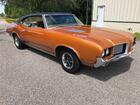
Beautiful car. If you are looking for a excellent reputable mechanic in the area check with Mike Shipman at Shipman Auto in Orange Park.
When I first bought my 72 I went to him for advice on a tuneup. He will deal with you honestly. He owns a 69 GTO Judge. He works on a lot of local
Classic cars. Good luck with whatever you decide. Not sure what side of town you are on, but there are several car clubs in the area. I'm a member of
the Clay County Cruzers. Joining a car club can make contact with lots of car enthusiast that can help with advice.
I'm glad you commented. There are so many shops locally, it's nice to have someone reputable and recommended. I'm in the Oakleaf area so that's just down the road. I'll look into the Cruzers and drop in sometime to say hi.
Originally Posted by Skydog9
Beautiful car. If you are looking for a excellent reputable mechanic in the area check with Mike Shipman at Shipman Auto in Orange Park.
When I first bought my 72 I went to him for advice on a tuneup. He will deal with you honestly. He owns a 69 GTO Judge. He works on a lot of local
Classic cars. Good luck with whatever you decide. Not sure what side of town you are on, but there are several car clubs in the area. I'm a member of
the Clay County Cruzers. Joining a car club can make contact with lots of car enthusiast that can help with advice.