


Engine won't start


Thread Starter
Registered User
Joined: Jun 2015
Posts: 8
Engine won't start
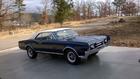
I purchased my car from the second owner who used the small block 67 Cutlass as his experiment car while learning his way through tech school. Car was pulled out of storage and worked well for days before I bought it. When I bought it, it started up just fine multiple times and ran like a top during the test drive, when sitting at idle, and for the next 2 days.
What happened after 2 days? It would turn over but not start. Knowing he didn't do much on it for a couple years other than take it out of storage, drive it a little, then put her away without any maintenance, I replaced the plugs, wires, rotor, distributor, oil, gas, and rebuilt the carburetor to give her some of the loven she needed. After all that, the engine no longer turns over. Replaced the battery (10 years old and drains after 1 day) and it tries to turn over but still no catch.
I sprayed starting fluid in the carburetor (4BBL Rochester QuadraJet) and it catches then dies fairly quickly. Fuel Pump was leaking like a sieve. I replaced it and the leaking is now gone, fuel going to the carburetor and still not catching.
I have an inline spark tester so I can troubleshoot further to see if I am getting spark to all plugs, if there is still a fuel line issue, or some other issue with the ignition system.
I was also told to make sure the dwell timing is at 30 degrees over TDC then adjust total timing since I replaced the rotor and cap. I've never adjusted timing before so this is new territory for me to try out. From what I understand, I need to get the car running to accurately adjust timing, so it's a bit of a chicken and egg.
Any thoughts on what I should go next to troubleshoot?
What happened after 2 days? It would turn over but not start. Knowing he didn't do much on it for a couple years other than take it out of storage, drive it a little, then put her away without any maintenance, I replaced the plugs, wires, rotor, distributor, oil, gas, and rebuilt the carburetor to give her some of the loven she needed. After all that, the engine no longer turns over. Replaced the battery (10 years old and drains after 1 day) and it tries to turn over but still no catch.
I sprayed starting fluid in the carburetor (4BBL Rochester QuadraJet) and it catches then dies fairly quickly. Fuel Pump was leaking like a sieve. I replaced it and the leaking is now gone, fuel going to the carburetor and still not catching.
I have an inline spark tester so I can troubleshoot further to see if I am getting spark to all plugs, if there is still a fuel line issue, or some other issue with the ignition system.
I was also told to make sure the dwell timing is at 30 degrees over TDC then adjust total timing since I replaced the rotor and cap. I've never adjusted timing before so this is new territory for me to try out. From what I understand, I need to get the car running to accurately adjust timing, so it's a bit of a chicken and egg.
Any thoughts on what I should go next to troubleshoot?
Administrator
Joined: Oct 2009
Posts: 42,496
From: Poteau, Ok
I moved your post to its own thread. If you changed the points, then a dwell adjustment is necessary before setting the timing. The initial points gap is set with a .016 feeler gauge with the points wear strip sitting on one of the distributors high lobe positions. Then once the engine is running adjust the dwell to 30. Timing is set to 7.5 deg's BTDC @ 850 rpm. Once the timing is set lower the curb idle down to 600. After that you need to set the carb idle mixture screws.
If the car will not start after you set the points with a feeler gauge, you need to check for spark. If you have spark look down into the carb with the engine off and operate the throttle by hand to ensure you see 2 solid streams of fuel spraying. If you have fuel and spark then its not at the right time. Loosen the distributor hold down bolt and turn the distributor CCW an 1/8 turn or CW 1/8 turn while cranking and see if it starts.
If the car will not start after you set the points with a feeler gauge, you need to check for spark. If you have spark look down into the carb with the engine off and operate the throttle by hand to ensure you see 2 solid streams of fuel spraying. If you have fuel and spark then its not at the right time. Loosen the distributor hold down bolt and turn the distributor CCW an 1/8 turn or CW 1/8 turn while cranking and see if it starts.

Registered User
Joined: Jan 2013
Posts: 43
Had the same problem with a 70 442. Assuming you get your points right, etc. check the 3/8 rubber hoses from the fuel tank to the steel fuel lines that run the length of the car. Mine were dry rotted and cracked causing the fuel pump to suck air instead of sucking fuel. Good luck
Connoisseur d'Junque
Joined: Sep 2010
Posts: 21,183
From: The Hudson Valley
Ordinarily, the process is that we troubleshoot first, and replace parts second.
This is a perfect illustration of what many of us advise people over and over again: Don't replace perfectly good original parts with unknown new parts that may not work, and/or may not be made to the same specifications as the originals.
My advice: Now is the time for slow, patient, systematic analysis.
Start at one place - doesn't matter which one - and systematically make CERTAIN that every part of that system is working well, and then move on to the next.
For instance: Test your fuel pump for pressure and volume output as described in the CSM. Once you have proven that it is up to spec., ascertain that the float, needle, and seat are working properly.
Once you have done that, check through your cranking system.
Once you have done that, check through your ignition system - battery to switch to coil to points - including setting dwell and timing. While you're at it, put the original distributor back in.
Once you have done that, you will probably have a running engine - warm it up and do a compression test.
Once you have done that, pressure test your cooling system and fix any leaks that you find.
You get the idea.
At this point you have no idea what is good and what is bad because you messed with everything.
Good luck.
- Eric
Thread Starter
Registered User
Joined: Jun 2015
Posts: 8
I understand troubleshooting and appreciate the feedback. I do tend to work quickly and move on to the next thing out of excitement to see her get back into her original form, not out of malice or self-sabotage. It isn't as though I replaced parts *****-nilly either. I reviewed the available service history on the car back to 2000, inspected parts, and sought advice from my local mechanic who directed me to the different areas based on what we found. A hidden gem I just found when going through the paperwork I inherited from the second owner was the following note from owner #1 to owner #2:
"List of Things Done Already:
1. Rebuild of Carburetor
2. New distributor cap
3. New spark plug wires
4. New positive battery cable
5. New negative battery cable
6. Checked and adjusted timing
7. Replaced small wire inside distributor cap (it is now red)
The car ran fine for a while then would not run smooth with occasional backfire. With accelerator depressed all the way to the floor the car would not go over 10-15 mph. Was only able to drive a mile or two before the system would overload with fuel and kill the engine. Easy to restart but would continue to run rough. Once we did get it home, that's when we took the carburetor in for a rebuild. When that was done, we put the rebuilt carb back on and the car did not run any better. Then we started replacing things listed above. When engine is idling and when adjusting the timing, the engine will sound better when the timing is way advanced. Which leads us to believe that the timing chain has jumped. The only way the car will start and continue to run is if you pump it a couple of times and keep the accelerator depressed fully to the floor. If you let off the accelerator after the engine starts, the engine will die. When the timing is way advanced, the engine will idle rough and when you try to accelerate, the engine will die. Occasionally the engine will smooth out and idle fine for 30 seconds or so and during that time you can rev the engine and everything sounds close to normal. But without making any adjustments, it will go right back to running rough and die."
The above mirrors my experience since day 3 of owning the car. Looking through the rest of the paperwork, owner #2 had the carburetor rebuilt and readjusted timing when he purchased the car in 2001. No other engine work done other than oil changes (last one in 2010), a transmission rebuild (2001), and replacement of upper and lower radiator hoses (2001) so I wanted to start back at the beginning since my experience has mirrored the above excerpt since Day #3 of ownership before I touched anything under the hood.
My mechanic recommended replacement of the cap, rotor, and points to give the car a chance at a fresh start. Looking at the condition of the Carburetor, he suggested I rebuild that too. That's how I got to where I am today.
Lots of great advice on the forum so far! Once I get through the different steps I will update the forum on progress and once all the gremlins have been eliminated so others can learn as I learn.
Cheers,
E~
"List of Things Done Already:
1. Rebuild of Carburetor
2. New distributor cap
3. New spark plug wires
4. New positive battery cable
5. New negative battery cable
6. Checked and adjusted timing
7. Replaced small wire inside distributor cap (it is now red)
The car ran fine for a while then would not run smooth with occasional backfire. With accelerator depressed all the way to the floor the car would not go over 10-15 mph. Was only able to drive a mile or two before the system would overload with fuel and kill the engine. Easy to restart but would continue to run rough. Once we did get it home, that's when we took the carburetor in for a rebuild. When that was done, we put the rebuilt carb back on and the car did not run any better. Then we started replacing things listed above. When engine is idling and when adjusting the timing, the engine will sound better when the timing is way advanced. Which leads us to believe that the timing chain has jumped. The only way the car will start and continue to run is if you pump it a couple of times and keep the accelerator depressed fully to the floor. If you let off the accelerator after the engine starts, the engine will die. When the timing is way advanced, the engine will idle rough and when you try to accelerate, the engine will die. Occasionally the engine will smooth out and idle fine for 30 seconds or so and during that time you can rev the engine and everything sounds close to normal. But without making any adjustments, it will go right back to running rough and die."
The above mirrors my experience since day 3 of owning the car. Looking through the rest of the paperwork, owner #2 had the carburetor rebuilt and readjusted timing when he purchased the car in 2001. No other engine work done other than oil changes (last one in 2010), a transmission rebuild (2001), and replacement of upper and lower radiator hoses (2001) so I wanted to start back at the beginning since my experience has mirrored the above excerpt since Day #3 of ownership before I touched anything under the hood.
My mechanic recommended replacement of the cap, rotor, and points to give the car a chance at a fresh start. Looking at the condition of the Carburetor, he suggested I rebuild that too. That's how I got to where I am today.
Lots of great advice on the forum so far! Once I get through the different steps I will update the forum on progress and once all the gremlins have been eliminated so others can learn as I learn.
Cheers,
E~
Connoisseur d'Junque
Joined: Sep 2010
Posts: 21,183
From: The Hudson Valley
If you suspected that the timing chain had jumped, the proper course would have been to connect a timing light and see whether the engine was about 22° (if I remember correctly) retarded, as that is the distance of one tooth on the timing sprocket.
Once you loosened the distributor clamp, that test was no longer possible.
If you still believe this may be so, and the engine is stock, you can follow the directions in the CSM to check the timing by measuring the lift of one rocker arm and you will have your answer.
Your description of the initial symptoms sounds like a low spark voltage, which can be caused by a bad coil, bad condenser, dirty points, bad coil wire, bad plug wires, or bad carbon tracking in the cap.
It does not sound like a fuel issue to me, though that is not out of the question.
Did it seem to run and rev just fine, or very close to that, at idle, when it started misbehaving?
- Eric
Once you loosened the distributor clamp, that test was no longer possible.
If you still believe this may be so, and the engine is stock, you can follow the directions in the CSM to check the timing by measuring the lift of one rocker arm and you will have your answer.
Your description of the initial symptoms sounds like a low spark voltage, which can be caused by a bad coil, bad condenser, dirty points, bad coil wire, bad plug wires, or bad carbon tracking in the cap.
It does not sound like a fuel issue to me, though that is not out of the question.
Did it seem to run and rev just fine, or very close to that, at idle, when it started misbehaving?
- Eric
Registered User
Joined: Mar 2012
Posts: 2,163
From: Sistersville, WV
Are you sure the choke is adjusted correctly?
Do you have a factory manual? There are a lot of things that you need to slowly check one by one, starting with the simple items first. What do the spark plugs look like?
Do you have a factory manual? There are a lot of things that you need to slowly check one by one, starting with the simple items first. What do the spark plugs look like?
Thread Starter
Registered User
Joined: Jun 2015
Posts: 8
Hi Eric,
Thanks for the quick reply.
Definitely a lot of things to check on this car. On Day 1 the car ran like a top - Idle was nice and steady, didn't sound rough at all.
On Day 2, it started to sound rough and was a bit difficult to start but once it did, the idle smoothed out after 5 -10 minutes. When running rough, idle was below 800rpm. Smooth idle was at 1200rpm.
On Day 3, it took a lot of cranking before it would turn over and idle was extremely rough on the verge of dying as idle bounced between 500rpms and 700 rpms. Depressing the accelerator made no difference to the rough idle and no change to rpms. The car was either choking or suffocating.
Spark plugs were very fouled and had some corrosion on them. No indication that they were replaced anytime in the past 15 years. Wires were replaced in 2001. Some of them were corroded onto the plugs so I replaced both plugs and wires. Plugs gapped to .035.
@m371961:
I have a Chilton's Auto Repair Manual. Found the CSM available online today and am cross-referencing to make sure the adjustments I made are inline with specs laid out in the CSM and work my way through each system to make sure they are installed correctly, set correctly, and performing as expected.
Thanks for the quick reply.
Definitely a lot of things to check on this car. On Day 1 the car ran like a top - Idle was nice and steady, didn't sound rough at all.
On Day 2, it started to sound rough and was a bit difficult to start but once it did, the idle smoothed out after 5 -10 minutes. When running rough, idle was below 800rpm. Smooth idle was at 1200rpm.
On Day 3, it took a lot of cranking before it would turn over and idle was extremely rough on the verge of dying as idle bounced between 500rpms and 700 rpms. Depressing the accelerator made no difference to the rough idle and no change to rpms. The car was either choking or suffocating.
Spark plugs were very fouled and had some corrosion on them. No indication that they were replaced anytime in the past 15 years. Wires were replaced in 2001. Some of them were corroded onto the plugs so I replaced both plugs and wires. Plugs gapped to .035.
@m371961:
I have a Chilton's Auto Repair Manual. Found the CSM available online today and am cross-referencing to make sure the adjustments I made are inline with specs laid out in the CSM and work my way through each system to make sure they are installed correctly, set correctly, and performing as expected.
Connoisseur d'Junque
Joined: Sep 2010
Posts: 21,183
From: The Hudson Valley
Mr. Johnson beat me to half of it, but...
I would say that the two most likely things that come to mind based on your description of symptoms are:
1. As stated, a stuck float or float needle, or a piece of gunk stuck between the needle and seat.
This would have caused flooding, and likely black smoke.
It should also have caused running (roughly) with throttle open to some degree, but stalling when allowed to get close to idle, due to choking on excess fuel, and rough running and stalling while driving.
It should have been cured by rebuilding the carb.
2. Breakdown of one or more high-voltage components.
It is possible that after years of storage some breakdown of insulators occurred (such as in spark plug wires), which was accelerated by suddenly applying voltage after many years, which blazed some new carbon trails,
When there is insulator breakdown, things are often fine at a low voltage, which is not enough to overcome the remaining resistance of the insulator, but when voltage increases (as it does with increased combustion chamber pressures and temperatures, ie: when revving or when accelerating), it exceeds the resistive ability of the insulator and the current runs out before it can power the spark plug(s).
If this happens, you tend to get black, sooty spark plugs, just like you would with a rich mixture, as well as a gassy smell, because the combustion is poor and incomplete from the poor spark.
You should have replaced all the likely parts in your ignition system dragnet, so...
It is likely that the current running problem is not due to whatever was causing your original problem, but is not due to something new that you did when you changed everything, so...
As I said earlier, you need to go through each system and see if you can find the one thing that got messed up in the process.
Follow the instructions here for troubleshooting the ignition system.
Also, note that the new distributor that you installed will not have the same centrifugal and vacuum advance curves that the old one had, and so all of the specified timing adjustments are out the window. I would strongly recommend disassembling the original, cleaning and lubricating it, reassembling, and replacing it, so that you have eliminated at least that one unknown.
- Eric
I would say that the two most likely things that come to mind based on your description of symptoms are:
1. As stated, a stuck float or float needle, or a piece of gunk stuck between the needle and seat.
This would have caused flooding, and likely black smoke.
It should also have caused running (roughly) with throttle open to some degree, but stalling when allowed to get close to idle, due to choking on excess fuel, and rough running and stalling while driving.
It should have been cured by rebuilding the carb.
2. Breakdown of one or more high-voltage components.
It is possible that after years of storage some breakdown of insulators occurred (such as in spark plug wires), which was accelerated by suddenly applying voltage after many years, which blazed some new carbon trails,
When there is insulator breakdown, things are often fine at a low voltage, which is not enough to overcome the remaining resistance of the insulator, but when voltage increases (as it does with increased combustion chamber pressures and temperatures, ie: when revving or when accelerating), it exceeds the resistive ability of the insulator and the current runs out before it can power the spark plug(s).
If this happens, you tend to get black, sooty spark plugs, just like you would with a rich mixture, as well as a gassy smell, because the combustion is poor and incomplete from the poor spark.
You should have replaced all the likely parts in your ignition system dragnet, so...
It is likely that the current running problem is not due to whatever was causing your original problem, but is not due to something new that you did when you changed everything, so...
As I said earlier, you need to go through each system and see if you can find the one thing that got messed up in the process.
Follow the instructions here for troubleshooting the ignition system.
Also, note that the new distributor that you installed will not have the same centrifugal and vacuum advance curves that the old one had, and so all of the specified timing adjustments are out the window. I would strongly recommend disassembling the original, cleaning and lubricating it, reassembling, and replacing it, so that you have eliminated at least that one unknown.
- Eric
Mr. Johnson
Joined: Feb 2012
Posts: 574
From: Cleveland Ohio
Re-reading all of this made my head hurt. Ok so...
1. do you have a point distributor or HEI? " I replaced the plugs, wires, rotor, distributor"
2. Did you wire the cap to plugs correctly? olds runs CCW distributors
3. How did you remove and install the distributor? Was it at TDC when removed installed? Did you use any point of reference to "peg" it back in when installing.
If the carb was recently rebuilt we can almost rule that out for now then and go back to the basics. I think you're over looking something simple like 180 out on the distributor, or timing is way off( the vac advance hooked up for initial timing will do that to ya) and Plug wiring may be wrong. With how many wires have been replaced I'd be double checking everything is correct.
I'd start with confirming the timing chain hasn't slipped and that will rule out a lot of problems down the road diagnosing. That leaves us with fuel and spark then.
1. do you have a point distributor or HEI? " I replaced the plugs, wires, rotor, distributor"
2. Did you wire the cap to plugs correctly? olds runs CCW distributors
3. How did you remove and install the distributor? Was it at TDC when removed installed? Did you use any point of reference to "peg" it back in when installing.
If the carb was recently rebuilt we can almost rule that out for now then and go back to the basics. I think you're over looking something simple like 180 out on the distributor, or timing is way off( the vac advance hooked up for initial timing will do that to ya) and Plug wiring may be wrong. With how many wires have been replaced I'd be double checking everything is correct.
I'd start with confirming the timing chain hasn't slipped and that will rule out a lot of problems down the road diagnosing. That leaves us with fuel and spark then.
Thread Starter
Registered User
Joined: Jun 2015
Posts: 8
Hi All!
Sorry for the delayed responses. I was in an accident right after the start of the year and am just now able to get back to working on the Cutlass. Starting with RJounson, I will work my way through the questions:
The distributor was NOT replaced. I replaced the distributor cap only. The car still runs with ignition points, not HEI. I do have an HEI distributor though I want the car to work as-is before throwing any more complexity to the equation.
When replacing plus and wires, I replaced one at a time to make it easier. Double checked the order today and it matches why is stamped on the engine block: 18436572 - starting at the 7 o'clock position and moving around the distributor cap CCW from there.
I hooked up an inline spark tester with 1, 8, and 2 - no spark on any plug whatsoever. Next step is to track down wiring to the coil to see what I am getting for input as well as output.
I'll keep reading through the responses and respond as soon as I can.
-Enrique
Sorry for the delayed responses. I was in an accident right after the start of the year and am just now able to get back to working on the Cutlass. Starting with RJounson, I will work my way through the questions:
The distributor was NOT replaced. I replaced the distributor cap only. The car still runs with ignition points, not HEI. I do have an HEI distributor though I want the car to work as-is before throwing any more complexity to the equation.
When replacing plus and wires, I replaced one at a time to make it easier. Double checked the order today and it matches why is stamped on the engine block: 18436572 - starting at the 7 o'clock position and moving around the distributor cap CCW from there.
I hooked up an inline spark tester with 1, 8, and 2 - no spark on any plug whatsoever. Next step is to track down wiring to the coil to see what I am getting for input as well as output.
I'll keep reading through the responses and respond as soon as I can.
-Enrique

Thread
Thread Starter
Forum
Replies
Last Post
Jonmueller1
General Discussion
6
Dec 20, 2013 07:27 AM


