


Stock Appearing tire prep


Registered User
Joined: Sep 2017
Posts: 5,220
From: St. Paul Minnesota
While the "tire prep" can make a difference in traction, it takes more than tire prep to pop wheelies.
I do find it interesting that he does a couple short dry burnouts when competing and not spinning the tires in the "water box". The metal screws in the rim, low tire pressure, using inner tubes and short, dry burnouts is "old school" stuff that still works. Tire compounds have changed over the last 50 years too.
.....Just my two cents worth.
I do find it interesting that he does a couple short dry burnouts when competing and not spinning the tires in the "water box". The metal screws in the rim, low tire pressure, using inner tubes and short, dry burnouts is "old school" stuff that still works. Tire compounds have changed over the last 50 years too.
.....Just my two cents worth.
Thread Starter
Registered User
Joined: Jul 2012
Posts: 2,991
From: Vancouver BC
While the "tire prep" can make a difference in traction, it takes more than tire prep to pop wheelies.
I do find it interesting that he does a couple short dry burnouts when competing and not spinning the tires in the "water box". The metal screws in the rim, low tire pressure, using inner tubes and short, dry burnouts is "old school" stuff that still works. Tire compounds have changed over the last 50 years too.
.....Just my two cents worth.
I do find it interesting that he does a couple short dry burnouts when competing and not spinning the tires in the "water box". The metal screws in the rim, low tire pressure, using inner tubes and short, dry burnouts is "old school" stuff that still works. Tire compounds have changed over the last 50 years too.
.....Just my two cents worth.
There is major money involved in that operation.
Registered User
Joined: Sep 2017
Posts: 5,220
From: St. Paul Minnesota
Whats "stiction" ?
Yes, there is major money involved. But, you need "major power" to pop the front wheels.
Thread Starter
Registered User
Joined: Jul 2012
Posts: 2,991
From: Vancouver BC
Yes, but I thought I saw one tire in the video that had them on both sides. If the rules permitted, I would have them on the inside and the outside. I used a lot fewer screws.
Whats "stiction" ?
Yes, there is major money involved. But, you need "major power" to pop the front wheels.
Whats "stiction" ?
Yes, there is major money involved. But, you need "major power" to pop the front wheels.
[QUOTE=OLDSter Ralph;1555751]Yes, but I thought I saw one tire in the video that had them on both sides.
You right watched the video again and the Vette has screws on both sides of the rim. I agree I would rather have screws on both sides and fewer of them, just like the way we used to run them. Why they were on only one side of the Camaro ?
Last edited by Bernhard; Mar 1, 2024 at 01:44 PM.

Registered User
Joined: May 2022
Posts: 270
Ya Pennyington's sure have the Vette stuff figured out. I'm actively looking for a '69 Vette to put my F.A.S.T. style ZL1 in and was thinking to send the chasses to them to do the suspension stuff. Not sure if Lane or Dave, being leaf spring guys, would help people out with there suspension stuff, or know where one with leafs could send there car to get the chassis sorted and baselined?
Thread Starter
Registered User
Joined: Jul 2012
Posts: 2,991
From: Vancouver BC
Ya Pennyington's sure have the Vette stuff figured out. I'm actively looking for a '69 Vette to put my F.A.S.T. style ZL1 in and was thinking to send the chasses to them to do the suspension stuff. Not sure if Lane or Dave, being leaf spring guys, would help people out with there suspension stuff, or know where one with leafs could send there car to get the chassis sorted and baselined?
Have you joined the stock appearing Facebook group?
https://www.facebook.com/groups/765517070206972
Good luck with your new project the times that the cars are running on small tires are impressive.
Did you see the posts about the 69 Vette that went sideways in the top end and ended up in the barrier. The one positive is that car was well built with all the safety upgrades, so driver was able to walk away. He has already started a new build, you have to admire the perseverance in racers.


Registered User
Joined: Jun 2008
Posts: 1,434
From: Chicago
It's actually the opposite. Stiction = static (starting) friction. If the suspension is stuck in place and won't articulate, you don't have a chance in hell of getting it to articulate and work.
Registered User
Joined: Jun 2008
Posts: 1,434
From: Chicago
Ya Pennyington's sure have the Vette stuff figured out. I'm actively looking for a '69 Vette to put my F.A.S.T. style ZL1 in and was thinking to send the chasses to them to do the suspension stuff. Not sure if Lane or Dave, being leaf spring guys, would help people out with there suspension stuff, or know where one with leafs could send there car to get the chassis sorted and baselined?
The ZL1 camaro had springs from Landrum in it, I think. Landrum has a lot of GM options, but weren't going to work for the Mopars we have. I have my own homebrew leaf spring setup made with extra parts from the local driveline shop and homemade clamps. I actually had a shock start leaking from the bending forces from spring wrap when I was using stock leaf springs to try a "softer" setup to absorb the hit.
Thread Starter
Registered User
Joined: Jul 2012
Posts: 2,991
From: Vancouver BC

Registered User
Joined: Sep 2013
Posts: 2,932
I had to look up what stiction means…and I found out, nobody has a clue.
it sounds sexy…but in true technical and engineering terms, the word is hotly debated.
the best and most realistic use of the word means the breakaway force needed to overcome static at rest friction. it’s used most to describe the breakaway force needed to move the front forks on a motorcycle….when i googled stiction, that came up the most. the seals in the front forks of a motorcycle need to seal the fluid,, the friction from the seal on the shaft itself needs more force to move than they do to keep moving once the breakaway (stiction) force is overcome.
another thing that came up a lot was the force to break free a valve to get movement. they called it static or kinetic breakaway force..we’ve all experienced it…trying to break something free,?/‘s then, bang, the force drops dramatically once broken loose.
so I don’t know what stiction has to do with these types of cars? for one, all the automatic cars are brake torque’d to preload the suspension..you can’t shock these type of tires…they’ll go up in smoke. they need to have to TQ applied gradually…the stick cards are no different…no way is dumping the clutch gonna work…they are ridding the clutch the best they can to make sure the tires don’t break free..if they do, it’s over. that’s why the majority are automatic.
These types of tires need to lose rubber as they go down the track. the loss of rubber means they are bitting into the track , putting down rubber (losing it from the tire) while moving forward….there is no other way to move the car forward without losing rubber from the tire and putting it into the surface of the track…the narrower the tire, the more rubber loss there needs to be to move the car.
the suspension is critical..it needs to have the instant centre perfect which forces the rear axle into the track…that’s my theory. 😂😂😂
it sounds sexy…but in true technical and engineering terms, the word is hotly debated.
the best and most realistic use of the word means the breakaway force needed to overcome static at rest friction. it’s used most to describe the breakaway force needed to move the front forks on a motorcycle….when i googled stiction, that came up the most. the seals in the front forks of a motorcycle need to seal the fluid,, the friction from the seal on the shaft itself needs more force to move than they do to keep moving once the breakaway (stiction) force is overcome.
another thing that came up a lot was the force to break free a valve to get movement. they called it static or kinetic breakaway force..we’ve all experienced it…trying to break something free,?/‘s then, bang, the force drops dramatically once broken loose.
so I don’t know what stiction has to do with these types of cars? for one, all the automatic cars are brake torque’d to preload the suspension..you can’t shock these type of tires…they’ll go up in smoke. they need to have to TQ applied gradually…the stick cards are no different…no way is dumping the clutch gonna work…they are ridding the clutch the best they can to make sure the tires don’t break free..if they do, it’s over. that’s why the majority are automatic.
These types of tires need to lose rubber as they go down the track. the loss of rubber means they are bitting into the track , putting down rubber (losing it from the tire) while moving forward….there is no other way to move the car forward without losing rubber from the tire and putting it into the surface of the track…the narrower the tire, the more rubber loss there needs to be to move the car.
the suspension is critical..it needs to have the instant centre perfect which forces the rear axle into the track…that’s my theory. 😂😂😂
Registered User
Joined: Sep 2013
Posts: 2,932
Stiction is a new word which was invented in the 40’s by someone.
it’s not really an engineering term…you’ll find engineers arguing about what it is online. just ask,,you’ll get torn to shreds.
the word is a combination of STatic and frICTION ... it’s the difference between no movement and movement…I think?
I’m not an engineer..thank God for that
it’s not really an engineering term…you’ll find engineers arguing about what it is online. just ask,,you’ll get torn to shreds.
the word is a combination of STatic and frICTION ... it’s the difference between no movement and movement…I think?
I’m not an engineer..thank God for that
Registered User
Joined: Sep 2013
Posts: 2,932
You dont want the tire to breakaway…a perfect run down the track would have the tire roll the exact amount of its circumference to equal the length of the track..zero slip or spin.
that’s called perfect traction…but we all know that’s not gonna happen. in todays world we have driveshaft sensors and wheel sensors that tell us the amount the wheel/ driveline rotation relative to the track…we can reduce power from the engine to be just on the edge of breaking traction/contact with the surface of the track…
it’s the same with breaking ..to get maximum breaking traction to produce the minimum stopping distance…there needs to be no loss of traction ..no lock up..if the tire locks, or is just past the breakaway/traction point..it’s game over
that’s called perfect traction…but we all know that’s not gonna happen. in todays world we have driveshaft sensors and wheel sensors that tell us the amount the wheel/ driveline rotation relative to the track…we can reduce power from the engine to be just on the edge of breaking traction/contact with the surface of the track…
it’s the same with breaking ..to get maximum breaking traction to produce the minimum stopping distance…there needs to be no loss of traction ..no lock up..if the tire locks, or is just past the breakaway/traction point..it’s game over
Thread Starter
Registered User
Joined: Jul 2012
Posts: 2,991
From: Vancouver BC
I had to look up what stiction means…and I found out, nobody has a clue.
it sounds sexy…but in true technical and engineering terms, the word is hotly debated.
the best and most realistic use of the word means the breakaway force needed to overcome static at rest friction. it’s used most to describe the breakaway force needed to move the front forks on a motorcycle….when i googled stiction, that came up the most. the seals in the front forks of a motorcycle need to seal the fluid,, the friction from the seal on the shaft itself needs more force to move than they do to keep moving once the breakaway (stiction) force is overcome.
another thing that came up a lot was the force to break free a valve to get movement. they called it static or kinetic breakaway force..we’ve all experienced it…trying to break something free,?/‘s then, bang, the force drops dramatically once broken loose.
so I don’t know what stiction has to do with these types of cars? for one, all the automatic cars are brake torque’d to preload the suspension..you can’t shock these type of tires…they’ll go up in smoke. they need to have to TQ applied gradually…the stick cards are no different…no way is dumping the clutch gonna work…they are ridding the clutch the best they can to make sure the tires don’t break free..if they do, it’s over. that’s why the majority are automatic.
These types of tires need to lose rubber as they go down the track. the loss of rubber means they are bitting into the track , putting down rubber (losing it from the tire) while moving forward….there is no other way to move the car forward without losing rubber from the tire and putting it into the surface of the track…the narrower the tire, the more rubber loss there needs to be to move the car.
the suspension is critical..it needs to have the instant centre perfect which forces the rear axle into the track…that’s my theory. 😂😂😂
it sounds sexy…but in true technical and engineering terms, the word is hotly debated.
the best and most realistic use of the word means the breakaway force needed to overcome static at rest friction. it’s used most to describe the breakaway force needed to move the front forks on a motorcycle….when i googled stiction, that came up the most. the seals in the front forks of a motorcycle need to seal the fluid,, the friction from the seal on the shaft itself needs more force to move than they do to keep moving once the breakaway (stiction) force is overcome.
another thing that came up a lot was the force to break free a valve to get movement. they called it static or kinetic breakaway force..we’ve all experienced it…trying to break something free,?/‘s then, bang, the force drops dramatically once broken loose.
so I don’t know what stiction has to do with these types of cars? for one, all the automatic cars are brake torque’d to preload the suspension..you can’t shock these type of tires…they’ll go up in smoke. they need to have to TQ applied gradually…the stick cards are no different…no way is dumping the clutch gonna work…they are ridding the clutch the best they can to make sure the tires don’t break free..if they do, it’s over. that’s why the majority are automatic.
These types of tires need to lose rubber as they go down the track. the loss of rubber means they are bitting into the track , putting down rubber (losing it from the tire) while moving forward….there is no other way to move the car forward without losing rubber from the tire and putting it into the surface of the track…the narrower the tire, the more rubber loss there needs to be to move the car.
the suspension is critical..it needs to have the instant centre perfect which forces the rear axle into the track…that’s my theory. 😂😂😂
Bernhard wrote:
One place the word is used is in the class racing world when describing the force required to move the control arms. You have the initial force to get the arms to move stiction. There is increased friction through out the control arms travel when using stock unmodified bushings. Some class cars are running Del-a-lum bushings. The old school method is to grind off the serrations on the upper control arm bushings. The control arms bushings are run with out side pre-load to allow the arm to move freely. The reason they do this is to allow the front end to move freely aiding in weight transfer and planting of the rear tires. Dale you already know this. The word might be new to the hobby, but the practice of lowering it goes back to the late 60's.
Registered User
Joined: Sep 2013
Posts: 2,932
Bernhard wrote:
One place the word is used is in the class racing world when describing the force required to move the control arms. You have the initial force to get the arms to move stiction. There is increased friction through out the control arms travel when using stock unmodified bushings. Some class cars are running Del-a-lum bushings. The old school method is to grind off the serrations on the upper control arm bushings. The control arms bushings are run with out side pre-load to allow the arm to move freely. The reason they do this is to allow the front end to move freely aiding in weight transfer and planting of the rear tires. Dale you already know this. The word might be new to the hobby, but the practice of lowering it goes back to the late 60's.
One place the word is used is in the class racing world when describing the force required to move the control arms. You have the initial force to get the arms to move stiction. There is increased friction through out the control arms travel when using stock unmodified bushings. Some class cars are running Del-a-lum bushings. The old school method is to grind off the serrations on the upper control arm bushings. The control arms bushings are run with out side pre-load to allow the arm to move freely. The reason they do this is to allow the front end to move freely aiding in weight transfer and planting of the rear tires. Dale you already know this. The word might be new to the hobby, but the practice of lowering it goes back to the late 60's.

Registered User
Joined: Jun 2008
Posts: 1,434
From: Chicago
Static friction is pretty well defined. For the friction force calculation, there's a different coefficient that is used to define the friction force between two surfaces not moving, compared to dynamic friction which occurs once the objects are sliding. We dealt with stiction a lot more on cars that handle compared to drag racing, because every time you go through a suspension transient, it's present at the start, which can upset the car's balance.
Just because the car is preloaded on the converter, stiction is still there because the suspension isn't moving, and sometimes the force applied through the rear links could make it worse (like pushing down on a sanding block before it's moving). What matters is the motion as soon as you release the brakes and want the suspension to start planting. If the rear doesn't want to separate or the front to come up, you get no benefit from the transfer, unless you're lucky enough to have more than enough tire for the power level or great track prep.
Just because the car is preloaded on the converter, stiction is still there because the suspension isn't moving, and sometimes the force applied through the rear links could make it worse (like pushing down on a sanding block before it's moving). What matters is the motion as soon as you release the brakes and want the suspension to start planting. If the rear doesn't want to separate or the front to come up, you get no benefit from the transfer, unless you're lucky enough to have more than enough tire for the power level or great track prep.
Thread Starter
Registered User
Joined: Jul 2012
Posts: 2,991
From: Vancouver BC
Do they fit GM A body control arms? I know that you have to run the pre 69 lower if you run the Del-a-lum as well as other lower friction bushings.
Thread Starter
Registered User
Joined: Jul 2012
Posts: 2,991
From: Vancouver BC
Static friction is pretty well defined. For the friction force calculation, there's a different coefficient that is used to define the friction force between two surfaces not moving, compared to dynamic friction which occurs once the objects are sliding. We dealt with stiction a lot more on cars that handle compared to drag racing, because every time you go through a suspension transient, it's present at the start, which can upset the car's balance.
Just because the car is preloaded on the converter, stiction is still there because the suspension isn't moving, and sometimes the force applied through the rear links could make it worse (like pushing down on a sanding block before it's moving). What matters is the motion as soon as you release the brakes and want the suspension to start planting. If the rear doesn't want to separate or the front to come up, you get no benefit from the transfer, unless you're lucky enough to have more than enough tire for the power level or great track prep.
Just because the car is preloaded on the converter, stiction is still there because the suspension isn't moving, and sometimes the force applied through the rear links could make it worse (like pushing down on a sanding block before it's moving). What matters is the motion as soon as you release the brakes and want the suspension to start planting. If the rear doesn't want to separate or the front to come up, you get no benefit from the transfer, unless you're lucky enough to have more than enough tire for the power level or great track prep.
How did you have your 68 Hurst set up to run on the stock tire?
Registered User
Joined: Sep 2013
Posts: 2,932
Static friction is pretty well defined. For the friction force calculation, there's a different coefficient that is used to define the friction force between two surfaces not moving, compared to dynamic friction which occurs once the objects are sliding. We dealt with stiction a lot more on cars that handle compared to drag racing, because every time you go through a suspension transient, it's present at the start, which can upset the car's balance.
Just because the car is preloaded on the converter, stiction is still there because the suspension isn't moving, and sometimes the force applied through the rear links could make it worse (like pushing down on a sanding block before it's moving). What matters is the motion as soon as you release the brakes and want the suspension to start planting. If the rear doesn't want to separate or the front to come up, you get no benefit from the transfer, unless you're lucky enough to have more than enough tire for the power level or great track prep.
Just because the car is preloaded on the converter, stiction is still there because the suspension isn't moving, and sometimes the force applied through the rear links could make it worse (like pushing down on a sanding block before it's moving). What matters is the motion as soon as you release the brakes and want the suspension to start planting. If the rear doesn't want to separate or the front to come up, you get no benefit from the transfer, unless you're lucky enough to have more than enough tire for the power level or great track prep.
the tires can’t be hit without suspension preload or they’ll break the tires loose. one of the fastest cars has no rear body separation at all..infact, it actually squats a bit in the rear ..the front does rise and transfer to the rear.
here’s three pics and a vid of the Camaro leaving. Pre stage no suspension preload, staged with rear suspension preloaded you can see the suspension get pre loaded and the rpm’s change with slight body separation , and third the leave. watch the vid from about 19.00 min point , there’s a secondary vid of the leave.
the rear is already at max travel and does not separate any further as it leaves..watch top of wheel well.


Registered User
Joined: Jun 2008
Posts: 1,434
From: Chicago
Front end loose, rear end has TA performance no hop bars. I haven't raced it in two years, it wasn't even out last year or this year yet for a street drive due to not having time to fix a sizeable oil leak. It would do okay on a prepped track, but suffered on minimal prep - timing curve in the distributor was too aggressive. The no hop bars were a huge improvement. I had a new distributor curve I was starting to mess with on the Sun machine last time out but I can't remember the exact details. I've been racing / developing my 4 speed 'cuda... driving stick is so much more fun.
Registered User
Joined: Jun 2008
Posts: 1,434
From: Chicago
the TQ converter being loaded isn’t the same as the rear suspension being preloaded. These cars don’t leave off a trans brake . The automatic cars leave off a stutter box and a foot brake or a combination of that and timing retard that is gradually put back in as the car accelerates.
the tires can’t be hit without suspension preload or they’ll break the tires loose. one of the fastest cars has no rear body separation at all..infact, it actually squats a bit in the rear ..the front does rise and transfer to the rear.
here’s three pics and a vid of the Camaro leaving. Pre stage no suspension preload, staged with rear suspension preloaded you can see the suspension get pre loaded and the rpm’s change with slight body separation , and third the leave. watch the vid from about 19.00 min point , there’s a secondary vid of the leave.
the rear is already at max travel and does not separate any further as it leaves..watch top of wheel well
here’s three pics and a vid of the Camaro leaving. Pre stage no suspension preload, staged with rear suspension preloaded you can see the suspension get pre loaded and the rpm’s change with slight body separation , and third the leave. watch the vid from about 19.00 min point , there’s a secondary vid of the leave.
the rear is already at max travel and does not separate any further as it leaves..watch top of wheel well
Registered User
Joined: Sep 2013
Posts: 2,932
How so? Loading the TQ converter in a footbrake car means the engine torque is being resisted at the brakes, and any antisquat / link load generated from torque will be transmitted through the suspension. If they left on a transbrake, I would agree you have 0% suspension preload. Agree on the digital timing control that has now become obvious with the 2 step at the line...
Agree on how the Camaro leaves (back end flat) and they have that car sorted out. I can't find the video now, but there was a video of the black 'cuda on the hub dyno with rear antisquat lifting the rear significantly with torque. I broke my car a few races ago so I got a lot of time to watch, and it's interesting to watch the differences... some cars squat a little, some leave flat, some separate the rear.
Agree on how the Camaro leaves (back end flat) and they have that car sorted out. I can't find the video now, but there was a video of the black 'cuda on the hub dyno with rear antisquat lifting the rear significantly with torque. I broke my car a few races ago so I got a lot of time to watch, and it's interesting to watch the differences... some cars squat a little, some leave flat, some separate the rear.
there is also a vid of this Camaro on a hub dyno which shows huge rear suspension separation..it’s nothing like that at the track though. all a hub dyno is good for is engine data. a rolling chassis dyno would show some similarities as the track would but still not real life.
that Camaro usually runs mid 1.5 60’s but has dipped into a high 1.4 in perfect track and weather.
do you have any vids of your car and how it leaves?
Last edited by CANADIANOLDS; Jun 12, 2024 at 02:17 PM.
Thread Starter
Registered User
Joined: Jul 2012
Posts: 2,991
From: Vancouver BC
Camaro vid. The second vid starts about 19.15 min in. there is also a vid of it on the hub dyno
https://www.youtube.com/watch?v=XeplWZJdu08
https://www.youtube.com/watch?v=XeplWZJdu08
Thanks for posting.
Thread Starter
Registered User
Joined: Jul 2012
Posts: 2,991
From: Vancouver BC
Those Chevy guys are hard done by, that's why the class racing lanes are filled with Chevy's.
Registered User
Joined: Jun 2008
Posts: 1,434
From: Chicago
I have to dig on the Olds, probably on the wife's phone. I got a GoPro last year and started making videos of the 'cuda rear leaf springs, at first it was shocking how much the spring was twisting up, the next race was on crap track conditions and the leaf spring mods were making it more stable but still spinning. Leaf springs + 4 speed + polyglas is a real beotch. I'll try to find something this weekend and upload to youtube for everyone's entertainment.
Thread Starter
Registered User
Joined: Jul 2012
Posts: 2,991
From: Vancouver BC
I have seen some very fast GM A body and G body stock & supper stock class cars with next to no Squat or body separation. They are running stiff rear springs and controlling them with some very expensive shocks. I will see if I can find some video. I think the modern anti roll bar was a game changer and has helped a lot of cars. I don't know if it is legal in stock appearing but the Fast Car was sporting one. The cleanest install I have seen of an anti roll bar was on a local Chevelle,he placed the links through the center of the springs. I don't know if it is an ideal mounting point but it was very hard to spot. The bar was mount in the truck so unless the trunk was open most would never know.
Thread Starter
Registered User
Joined: Jul 2012
Posts: 2,991
From: Vancouver BC
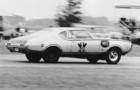
Here is a 68 Hurst Oldsmobile from 2013 no squat or body separation
https://www.bing.com/videos/rivervie...4&&FORM=VRDGAR
https://www.bing.com/videos/rivervie...4&&FORM=VRDGAR
Registered User
Joined: Sep 2017
Posts: 5,220
From: St. Paul Minnesota
Here is a 68 Hurst Oldsmobile from 2013 no squat or body separation
https://www.bing.com/videos/rivervie...4&&FORM=VRDGAR
https://www.bing.com/videos/rivervie...4&&FORM=VRDGAR
Here is a pic from last year of the H/O and owner with trophy.

.
Thread Starter
Registered User
Joined: Jul 2012
Posts: 2,991
From: Vancouver BC
I'm familiar with the car it's running Weibe suspension , Jason Line power and they are well under the index. Not an easy car to get under the index, definitely a fan of this stocker.
Last edited by Bernhard; Jun 15, 2024 at 01:15 PM.

Thread
Thread Starter
Forum
Replies
Last Post


