When you click on links to various merchants on this site and make a purchase, this can result in this site earning a commission. Affiliate programs and affiliations include, but are not limited to, the eBay Partner Network.
All my local parts stores (NAPA, Carquest, etc) offer a service where they can match the paint on your car and make up spray paint for you. Anyone have any experience with this? They all seem pretty confident that they can match my original '66 paint using a paint code or even using a scanner. How we feeling about this? Is this a legit process?
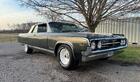
I'm currently doing some repairs and a bit of a restoration to my '66 Toronado's trunk and would like to use the correct body color (at least fairly close) for some of the areas. These areas won't be extremely visible so I'm not crazy picky about this.
Last edited by ourkid2000; Jan 17, 2025 at 08:06 AM.
Depends on the scanner, but if it's a good one, it could be better than simply mixing by code. If you were painting the entire car, I'd go by mix code and then you get all one "new" color.
But age and sun, weather, etc., wears on paint, and the paint fades or changes the hue slightly so mixing by code usually gives you a mismatch if you were just doing a single part like a trunklid or something.
The old time paint guys may have some of those shade cards. There's variance in shades because even new cars have variances as well. They could try to match it close that way as well. Again, I'd try the scanner first if doing a single panel, and then test spray it on a disposable part or test card to see if it actually is what you want.
My local NAPA has the paint scanner camera, and I have paint matched three vehicles (2 cars and a motorcycle). In all three cases, the match was VERY good! For all three, I had aerosol spray cans mixed up, as I was doing smaller areas. Paint quality was automotive grade.
My local NAPA has the paint scanner camera, and I have paint matched three vehicles (2 cars and a motorcycle). In all three cases, the match was VERY good! For all three, I had aerosol spray cans mixed up, as I was doing smaller areas. Paint quality was automotive grade.
I will do you one better… Here's a photo of the bike that I built last year… When I got it, the tank was painted the way you see it, but the rear fender was chopped and black.
I bought a new steel fender, colour matched the tank at NAPA, and here's how it turned out.
I will do you one better… Here's a photo of the bike that I built last year… When I got it, the tank was painted the way you see it, but the rear fender was chopped and black.
I bought a new steel fender, colour matched the tank at NAPA, and here's how it turned out.
Looks great! So how does this scanner work? Is it some kind of camera? The paint comes in a spray can I presume? I guess these are questions for NAPA but I'm curious, LOL.
It's a special camera that has a rubber seal around the lens. They take images from multiple places on the paint of your car. If you are doing a specific location, have them take the images from around that area. The camera and the computer then takes the average of the three or four samples and finds the best match.
Then, they plugged the camera into their paint computer, and it provides the exact quantities of the different colours that make up your color.. The paint machine makes the match, and your paint is ready. You can get it in pints, quarts or a spray can. I like the spray can because then the solvent is already mixed in the correct proportion.
Depends on the scanner, but if it's a good one, it could be better than simply mixing by code. If you were painting the entire car, I'd go by mix code and then you get all one "new" color.
But age and sun, weather, etc., wears on paint, and the paint fades or changes the hue slightly so mixing by code usually gives you a mismatch if you were just doing a single part like a trunklid or something.
The old time paint guys may have some of those shade cards. There's variance in shades because even new cars have variances as well. They could try to match it close that way as well. Again, I'd try the scanner first if doing a single panel, and then test spray it on a disposable part or test card to see if it actually is what you want.
JMO.
Sorry, I forgot to thank you for this advice. Excellent tips and a good heads up on the potential color mismatch. That actually hadn't occurred to me!