When you click on links to various merchants on this site and make a purchase, this can result in this site earning a commission. Affiliate programs and affiliations include, but are not limited to, the eBay Partner Network.
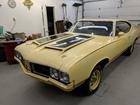
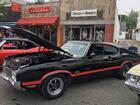
Here is a close up pic from a QAI hood. It’s on a Oct 69’ build dated car. The hood has the small holes inside the scoops like the first few months of production had and the stripes look correct. The interesting part is the
white paint is below the red. Is there anyway to tell if it’s the original paint before it gets all the way stripped?
Here is a close up pic from a QAI hood. It’s on a Oct 69’ build dated car. The hood has the small holes inside the scoops like the first few months of production had and the stripes look correct. The interesting part is the
white paint is below the red. Is there anyway to tell if it’s the original paint before it gets all the way stripped?
It looks like you just sanded it into the base fiberglass there. It looks like just one coat of white paint over the black sealer then they mask off the stripe and paint the red.
From the brief exposure I've had sanding my factory OAI hood, I think what you are seeing is a white gelcoat on the exterior surface of the fiberglass hood skin. I have the same thing under my factory primer.
The white is above the black sealer/primer. The thin red stripe sands off before the the White does. Was surprised of the process but did some research and if you spray white lacquer over red the red bleeds through the white paint.
The white is above the black sealer/primer. The thin red stripe sands off before the the White does. Was surprised of the process but did some research and if you spray white lacquer over red the red bleeds through the white paint.
We always paint first whichever color is easier to mask off. So in this case, I would spray the hood white, mask off the stripes and then paint the body color. But I do not believe they were doing it this way from the factory back then. I’m no expert, but I thought they would lay the stripes on after the car was painted. However, If this hood only only came with stripes, it would make sense that it would have been done this way.
Looks like the W25 hood I'm sanding down right now. On mine, there is the white stripe, the Viking Blue color, the black primer and then the white which looks like a gel coat to me. I have never hit bare fiberglass as I see it.
I always thought my car had totally been repainted but after sanding on it I believe all but the nose is original paint and the nose of the hood appears to have had a minor repair before my brother bought it in the 80's.
I've also messed with the paint on some spots on the rest of the car and it appears to just have had a couple spots worked and repainted but most of the car appears to be original paint.
Looks like the W25 hood I'm sanding down right now. On mine, there is the white stripe, the Viking Blue color, the black primer and then the white which looks like a gel coat to me. I have never hit bare fiberglass as I see it.
I always thought my car had totally been repainted but after sanding on it I believe all but the nose is original paint and the nose of the hood appears to have had a minor repair before my brother bought it in the 80's.
I've also messed with the paint on some spots on the rest of the car and it appears to just have had a couple spots worked and repainted but most of the car appears to be original paint.
The fiberglass part of the factory hood is made of SMC (sheet moulding compound) material.........you won't see anything different as you sand or grind into it. It's a uniform white material all the way through. There aren't any "layers" to it.....just the homogeneous white SMC material.
The fiberglass part of the factory hood is made of SMC (sheet moulding compound) material.........you won't see anything different as you sand or grind into it. It's a uniform white material all the way through. There aren't any "layers" to it.....just the homogeneous white SMC material.
So......it's not really fiberglass. And everywhere I hit white under the black primer is the molded hood?? What really throws me off is....I've been using the sanding blocks with the adhesive sandpaper and when sanding on the flat tops of the scoops, I get random high spots that go very quickly to the white. Does the original hood have that bad of a surface from the factory? Like I said, mine appears to be the original one layer of Viking Blue on the hood except a small area on the nose. Seems like I'm going to have to leave some blue and or primer or risk thinning out the high spots?
There's a possibility that the hoods were Press Molded material (compound)....a "predecessor" of SMC or a process w/many similar features.
What I am getting at is the material is homogeneous.....same appearance all the way through. You may be thinking or looking for a woven fiberglass MAT appearance in the original hood material.....it's not going to be there. The process used on the hood skin didn't utilize any woven fiberglass mat material.
I can see what Thornton is talking about. While sanding on my basically original paint hood. When block sanding flat areas on the hood there are high and low spots on basically an original hood! At the back of the hood, behind the two scoops when I sanded down below the color, it looks like there is maybe spot putty or something making it smooth before paint. It sands down faster than the primer or the paint. So, it appears that these hoods were far from perfect on the brand-new cars. Just like Thornton said.