


Pontiac 455..Will it fit 71 cutlass????


Registered User
Joined: Sep 2010
Posts: 3,057
From: Shorewood, Il.
Yes, it'll work if you get all the corresponding parts from a GTO/Lemans.
Engine stands, mounts, exhaust manifods, headers, etc. from the Pontiac intermediate will work.
I'd personally try to trade for a Olds motor rather than 'mix it up' to a Oldsiac or a Pontmobile!
Engine stands, mounts, exhaust manifods, headers, etc. from the Pontiac intermediate will work.
I'd personally try to trade for a Olds motor rather than 'mix it up' to a Oldsiac or a Pontmobile!


Registered User
Joined: Nov 2008
Posts: 8,477
From: Central Fl

Registered User
Joined: Oct 2009
Posts: 3,814
From: Erie,PA
The Pontiac 455's are more rare than an Olds 455,and you should be able to find a Pontiac guy that will pay a decent coin for that. Then you can buy an Olds 455.
But yes,it will swap in,if you use Lemans/GTO engine mounts & frame pads,along with the other quirky changes.
But yes,it will swap in,if you use Lemans/GTO engine mounts & frame pads,along with the other quirky changes.

Oldsdruid
Joined: Dec 2007
Posts: 10,617
From: Southside Vajenya
Hm. I'd never considered the Pontiac 455 being rarer than the Olds. Maybe the dealers here just ordered more of them, because there were sure a lot of 455 powered big Pontiacs here.
I never really liked the 455 Pontiac. Sure, it was cubes and torque, same as Olds, but the things always seemed like they ran borderline overheated. I always felt the 428 was about as far as that engine should have been taken.
Then I felt the same way about Buick and Olds- 425 and 430 were much better engines than the 455. Just MHO.
Tim, my question is why? You'll come out cheaper overall to fix your engine or find an Olds 455. Believe me, when you start mixing it up, the details are what will really screw you up- especially inexperienced like you are. I like to see a guy take his learning curve slow and easy and not jump in over his head. I also don't like to see young guys get taken advantage of by shade-tree mechanics who will make something work, whether their work is done to standards or not.
Your car is too nice to be subjected to a hack job, and I can about promise a Pontiac or Chevy engine transplant would end up hacked.
I never really liked the 455 Pontiac. Sure, it was cubes and torque, same as Olds, but the things always seemed like they ran borderline overheated. I always felt the 428 was about as far as that engine should have been taken.
Then I felt the same way about Buick and Olds- 425 and 430 were much better engines than the 455. Just MHO.
Tim, my question is why? You'll come out cheaper overall to fix your engine or find an Olds 455. Believe me, when you start mixing it up, the details are what will really screw you up- especially inexperienced like you are. I like to see a guy take his learning curve slow and easy and not jump in over his head. I also don't like to see young guys get taken advantage of by shade-tree mechanics who will make something work, whether their work is done to standards or not.
Your car is too nice to be subjected to a hack job, and I can about promise a Pontiac or Chevy engine transplant would end up hacked.
Last edited by rocketraider; Oct 25, 2010 at 02:19 PM.

Registered User
Joined: Sep 2009
Posts: 2,444
From: mn
Do you have a 455 pontiac? if so what year and what heads? Like They said it will go in .
From what I have seen lots more parts for the pontiac 455 than olds. More heads more intakes and other parts . if you are looking to hot rod it . What are you trying to accomplish in the swap?
From what I have seen lots more parts for the pontiac 455 than olds. More heads more intakes and other parts . if you are looking to hot rod it . What are you trying to accomplish in the swap?
Oldsdruid
Joined: Dec 2007
Posts: 10,617
From: Southside Vajenya
430 was the progenitor to the 455. Used 67-69 and part of 1970 IIRC. It looks like a Buick 455. The original 340 was also same design as the 350-400-455 family
The 401/425 Buick confuses a lot of folks. It WAS a Nailhead, last used in 1966. It also has the distinction of using a Nailhead-pattern Turbo 400, so even the Buick guys have it easier trying to use a modern transmission behind an early engine than the early Rocket crowd- provided they can find one.
That early 1964 Super Turbine 400 was also a 3-speed unit with a PRNDL shift sequence- you could not manually select the intermediate range. The L2-L1 sequence didn't show up till 66.
The 401/425 Buick confuses a lot of folks. It WAS a Nailhead, last used in 1966. It also has the distinction of using a Nailhead-pattern Turbo 400, so even the Buick guys have it easier trying to use a modern transmission behind an early engine than the early Rocket crowd- provided they can find one.
That early 1964 Super Turbine 400 was also a 3-speed unit with a PRNDL shift sequence- you could not manually select the intermediate range. The L2-L1 sequence didn't show up till 66.

Registered User
Joined: Mar 2010
Posts: 302
My cousin built a mild 455 Pontiac for a '67 LeMans, it had a 4 speed and a 3:73 gear set. I was super unimpressed with the power. My '57 Chevy with a 327 embarassed him badly as did my cousin's Buick 430 powered Skylark. I never got the big block till I rode in an Olds 455 powered car. Just my experience.

Registered User
Joined: Sep 2009
Posts: 1,489
From: KY
My cousin built a mild 455 Pontiac for a '67 LeMans, it had a 4 speed and a 3:73 gear set. I was super unimpressed with the power. My '57 Chevy with a 327 embarassed him badly as did my cousin's Buick 430 powered Skylark. I never got the big block till I rode in an Olds 455 powered car. Just my experience.
Any 455 regardless if its a Pontiac, Olds, or Buick. Will run good if the right parts are used and its built right.
Registered User
Joined: Mar 2010
Posts: 302
I only have experience with that one, but it was built with higher compression and most of what we do to our Olds engines. I know the Pontiac's can be made fast but IMO the '76 455 I have (stock) is faster in the four door 98 than his "built" Pontiac 455 was.

Thread Starter
Registered User
Joined: Jun 2010
Posts: 36
From: Goldsboro, NC
Hey friends...Now Iam having the darnest time wit this car.....Iam loseing coolant with no sign of loss on the ground or when its parked period...what could that be...I just had the head gaskets changed a couple mnths back with new heads valves and all done....Please help....every couple days Iam loseing about a coup of water and Iam forever haveing to top it off....like I can go out there right now and I would bet plenty money itll need water...what do that sound like to any of you?
Registered User
Joined: Jul 2006
Posts: 694
From: Manassas, VA
Any engine that came in any A-body will go in any A-body. Doesn't matter if it's Buick, Chevy, Olds or Pontiac, and actually, others can be fitted too. All can make power. Buick actually had the highest advertised torque ever with the 70 455. Unbelievable all the parts that are available for Pontiacs, blocks, stroker cranks, a bunch of heads, you name it. Every brand has it's particulars, and if one pays attention to those, you can build a successful engine.
What lead you to doing the heads? Was there some problem that prompted you to doing the top end? Might give a clue as to your problem. Usually, to 'ensure' 'proper' head gasket sealing, the block surface needs to be prepared. Just fyi.
Could be simple afterboil, doesn't sound like you're losing a lot, could be steaming past the cap. One way you can check that is by installing a expansion tank, would help diagnose, but unless you're seeing water in the oil, not sure I would worry too much about it.
.
What lead you to doing the heads? Was there some problem that prompted you to doing the top end? Might give a clue as to your problem. Usually, to 'ensure' 'proper' head gasket sealing, the block surface needs to be prepared. Just fyi.
Could be simple afterboil, doesn't sound like you're losing a lot, could be steaming past the cap. One way you can check that is by installing a expansion tank, would help diagnose, but unless you're seeing water in the oil, not sure I would worry too much about it.
.
Thread Starter
Registered User
Joined: Jun 2010
Posts: 36
From: Goldsboro, NC
What lead me doing the heads is the headgasket blew.....And when I had the heads check both of them had atleast two or three cracks in them.......the heads that I bout came with new guts on the inside of them and the block was prepared also......Why would it overboil?....I checked it and none is comeing from the overboil pipe.....Ok I did a flush thru the system after it was put back together and put like 1 jug of 50/50 antifreeze in it and filled up the rest with str8 water...could that be it?...Could it be cause the antifreeze ratio might be wrong?...too much water and its simply boiling away the water?...Is that even possible?
Registered User
Joined: Jul 2006
Posts: 694
From: Manassas, VA
The block was surfaced? In or out of the car? Curious...
Afterboil is a normal occurance, like, when you shut the engine off, the coolant flow stops, and sits against an area of the block or heads like bacon in a fry pan. That makes the coolant expand, and it has to go somewhere. New cars have 'expansion tanks', and during expansion, the excess goes into the holding tank, and gets sucked back up later when it contracts. On old cars, and pre-EPA, no one cared, and that amount of expansion was allowed to just dribble onto the pavement. Those days, it was common to see people 'topping off' at gas stations.
A worn out cap on the radiator will allow steam to 'hiss' out, or a few 'burps' of coolant to go past, and after a couple times, will show a drop in coolant levels. If you had an overheat situation, like when the head gaskets blew, then chances are your cap is toast and needs to be replaced. Try that first.
Straight water cools better than antifreeze, fyi. The purpose of antifreeze is to, well, prevent freezing! And to raise the boiling point too, but, for the most part, freezing, which can crack a block. There are 'testers' that determine the mix of antifreeze and that correlats to a particular freezing temp. (Example: 30/70 = -20 before it freezes). As long as you have a ratio that protects against frrezing for your climate, you're good.
.
Afterboil is a normal occurance, like, when you shut the engine off, the coolant flow stops, and sits against an area of the block or heads like bacon in a fry pan. That makes the coolant expand, and it has to go somewhere. New cars have 'expansion tanks', and during expansion, the excess goes into the holding tank, and gets sucked back up later when it contracts. On old cars, and pre-EPA, no one cared, and that amount of expansion was allowed to just dribble onto the pavement. Those days, it was common to see people 'topping off' at gas stations.
A worn out cap on the radiator will allow steam to 'hiss' out, or a few 'burps' of coolant to go past, and after a couple times, will show a drop in coolant levels. If you had an overheat situation, like when the head gaskets blew, then chances are your cap is toast and needs to be replaced. Try that first.
Straight water cools better than antifreeze, fyi. The purpose of antifreeze is to, well, prevent freezing! And to raise the boiling point too, but, for the most part, freezing, which can crack a block. There are 'testers' that determine the mix of antifreeze and that correlats to a particular freezing temp. (Example: 30/70 = -20 before it freezes). As long as you have a ratio that protects against frrezing for your climate, you're good.
.
Thread Starter
Registered User
Joined: Jun 2010
Posts: 36
From: Goldsboro, NC
Thanks HWYSTR455.....Uve giving me more info then anybody on this situation and has really been a help...the block wasn taken out and surfaced it was morw like a wire brush cleaning......It is the same radiator cap that was on it and I will try replaceing that first as you said...as aa matter a fact when I go out tonight Iam going to get one......I wish I had the car before the cap blew but being that I bought it like that I hate that....I wouldnt have let that happen.....do you think maybe the block could be cracked or worped maybe?
Connoisseur d'Junque
Joined: Sep 2010
Posts: 21,183
From: The Hudson Valley
1. Another important function of antifreeze is as a corrosion preventative.
Modern antifreeze contains specific corrosion inhibitors. Using straight water can lead to rusting inside the block over a period of years.
2. How high are you filling it?
Non-expansion tank models have a line about 4" below the filler that you fill it up to.
If you go over, it will boil out until it settles around that level.
- Eric
Modern antifreeze contains specific corrosion inhibitors. Using straight water can lead to rusting inside the block over a period of years.
2. How high are you filling it?
Non-expansion tank models have a line about 4" below the filler that you fill it up to.
If you go over, it will boil out until it settles around that level.
- Eric
car guy
Joined: Apr 2008
Posts: 5,675
From: Dallas TX

Thread Starter
Registered User
Joined: Jun 2010
Posts: 36
From: Goldsboro, NC
Iam filling it to the top of the radiator....do you think that may be my problem....?...What Iam going to do is not top it off for a couple days and see if I have to put alot more then I usually do and see if that is what it is....cause I dont not have a expansion tank.....all i got is a drop off hose......
Registered User
Joined: Jul 2006
Posts: 694
From: Manassas, VA
Wow, learn something every day! Never knew there was a fill line inside the radiator tank!
If the block was cleaned up with a wire brush, it's possible that you still have a head gasket problem. If a shop did it, then it's possible a thicker head gasket was used to help with any surface irregularities. Just keep an eye on it, and really only worry once you see water in the oil. (wouldn't worry about it though). Blocks tend to be more stable then heads, by the way. And I would still replace the cap.
I think you're just seeing afterboil, and you really have no worries....
.
If the block was cleaned up with a wire brush, it's possible that you still have a head gasket problem. If a shop did it, then it's possible a thicker head gasket was used to help with any surface irregularities. Just keep an eye on it, and really only worry once you see water in the oil. (wouldn't worry about it though). Blocks tend to be more stable then heads, by the way. And I would still replace the cap.
I think you're just seeing afterboil, and you really have no worries....
.
Connoisseur d'Junque
Joined: Sep 2010
Posts: 21,183
From: The Hudson Valley
Registered User
Joined: Jan 2010
Posts: 69
Any engine that came in any A-body will go in any A-body. Doesn't matter if it's Buick, Chevy, Olds or Pontiac, and actually, others can be fitted too. All can make power. Buick actually had the highest advertised torque ever with the 70 455. Unbelievable all the parts that are available for Pontiacs, blocks, stroker cranks, a bunch of heads, you name it. Every brand has it's particulars, and if one pays attention to those, you can build a successful engine.
What lead you to doing the heads? Was there some problem that prompted you to doing the top end? Might give a clue as to your problem. Usually, to 'ensure' 'proper' head gasket sealing, the block surface needs to be prepared. Just fyi.
Could be simple afterboil, doesn't sound like you're losing a lot, could be steaming past the cap. One way you can check that is by installing a expansion tank, would help diagnose, but unless you're seeing water in the oil, not sure I would worry too much about it.
.
What lead you to doing the heads? Was there some problem that prompted you to doing the top end? Might give a clue as to your problem. Usually, to 'ensure' 'proper' head gasket sealing, the block surface needs to be prepared. Just fyi.
Could be simple afterboil, doesn't sound like you're losing a lot, could be steaming past the cap. One way you can check that is by installing a expansion tank, would help diagnose, but unless you're seeing water in the oil, not sure I would worry too much about it.
.
Oldsdruid
Joined: Dec 2007
Posts: 10,617
From: Southside Vajenya
Thread's been dead a year and a half. Why resurrect it just to diss an engine that prepped right (and using factory parts) would stomp anything else's *** into the ground?
Or are you unaware of what a Stage I did to a Hemi?
My long-time best friend had a dealer-prepped 71 Stage II when we were in high school early 70s. It annihilated a 440-SixPack 69 Roadrunner so many times the RR guy sold the car. There was one 429 1970 Torino running around that could hang with it. Only Chevy that could was the Chevy dealer's 69 9560 COPO Camaro- notice it was an "exotic" and it was barely street legal.
At the time I had a legit 12 sec 66 442 (when anything running 11's was usually riding a trailer) and it couldn't hang with any of the four cars mentioned.
Lemme guess- the solution to Tim's dilemma would be a SBC, and he shouldn't consider anything else.
Or are you unaware of what a Stage I did to a Hemi?
My long-time best friend had a dealer-prepped 71 Stage II when we were in high school early 70s. It annihilated a 440-SixPack 69 Roadrunner so many times the RR guy sold the car. There was one 429 1970 Torino running around that could hang with it. Only Chevy that could was the Chevy dealer's 69 9560 COPO Camaro- notice it was an "exotic" and it was barely street legal.
At the time I had a legit 12 sec 66 442 (when anything running 11's was usually riding a trailer) and it couldn't hang with any of the four cars mentioned.
Lemme guess- the solution to Tim's dilemma would be a SBC, and he shouldn't consider anything else.
Registered User
Joined: Jan 2010
Posts: 69
Thread's been dead a year and a half. Why resurrect it just to diss an engine that prepped right (and using factory parts) would stomp anything else's *** into the ground?
Or are you unaware of what a Stage I did to a Hemi?
My long-time best friend had a dealer-prepped 71 Stage II when we were in high school early 70s. It annihilated a 440-SixPack 69 Roadrunner so many times the RR guy sold the car. There was one 429 1970 Torino running around that could hang with it. Only Chevy that could was the Chevy dealer's 69 9560 COPO Camaro- notice it was an "exotic" and it was barely street legal.
At the time I had a legit 12 sec 66 442 (when anything running 11's was usually riding a trailer) and it couldn't hang with any of the four cars mentioned.
Lemme guess- the solution to Tim's dilemma would be a SBC, and he shouldn't consider anything else.
Or are you unaware of what a Stage I did to a Hemi?
My long-time best friend had a dealer-prepped 71 Stage II when we were in high school early 70s. It annihilated a 440-SixPack 69 Roadrunner so many times the RR guy sold the car. There was one 429 1970 Torino running around that could hang with it. Only Chevy that could was the Chevy dealer's 69 9560 COPO Camaro- notice it was an "exotic" and it was barely street legal.
At the time I had a legit 12 sec 66 442 (when anything running 11's was usually riding a trailer) and it couldn't hang with any of the four cars mentioned.
Lemme guess- the solution to Tim's dilemma would be a SBC, and he shouldn't consider anything else.
Tony
Joined: Mar 2011
Posts: 450
From: wisconsin
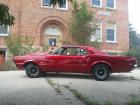
I know some of you guys just are against it but it is a easy swap heres mine with a 468poncho it runs great. as far as the wiring goes get real they are pretty much the same the a frame blocks need to be changed to a lemans,tempest,gto and it will drop right in as far as headers go get them for the same year a-body lemans,gto,tempest and they will fit also the fuel line with have to be switched to the other side because pontiac is opposite starter is the same. Heck pontiac put 403 olds in trans ams
Tony
Joined: Mar 2011
Posts: 450
From: wisconsin
Hm. I'd never considered the Pontiac 455 being rarer than the Olds. Maybe the dealers here just ordered more of them, because there were sure a lot of 455 powered big Pontiacs here.
I never really liked the 455 Pontiac. Sure, it was cubes and torque, same as Olds, but the things always seemed like they ran borderline overheated. I always felt the 428 was about as far as that engine should have been taken.
Then I felt the same way about Buick and Olds- 425 and 430 were much better engines than the 455. Just MHO.
Tim, my question is why? You'll come out cheaper overall to fix your engine or find an Olds 455. Believe me, when you start mixing it up, the details are what will really screw you up- especially inexperienced like you are. I like to see a guy take his learning curve slow and easy and not jump in over his head. I also don't like to see young guys get taken advantage of by shade-tree mechanics who will make something work, whether their work is done to standards or not.
Your car is too nice to be subjected to a hack job, and I can about promise a Pontiac or Chevy engine transplant would end up hacked.
I never really liked the 455 Pontiac. Sure, it was cubes and torque, same as Olds, but the things always seemed like they ran borderline overheated. I always felt the 428 was about as far as that engine should have been taken.
Then I felt the same way about Buick and Olds- 425 and 430 were much better engines than the 455. Just MHO.
Tim, my question is why? You'll come out cheaper overall to fix your engine or find an Olds 455. Believe me, when you start mixing it up, the details are what will really screw you up- especially inexperienced like you are. I like to see a guy take his learning curve slow and easy and not jump in over his head. I also don't like to see young guys get taken advantage of by shade-tree mechanics who will make something work, whether their work is done to standards or not.
Your car is too nice to be subjected to a hack job, and I can about promise a Pontiac or Chevy engine transplant would end up hacked.
Im posting on this old thread so the next guy that asks get a fair answer not one sided opinion
Last edited by archeryshooter; Sep 12, 2012 at 07:46 AM.
XCELERATIONRULES!
Joined: Mar 2012
Posts: 323
From: Orwell,Ohio
It's as easy as swapping engine frame mounts...that being said...
Pontiac engine building has some special quirks.
The rear main rope seals are prone to leaking...the originals contained asbestos.
The new technology seals are like $40.
The timing cover requires replacing dowel pins and some other small pieces that jack the prices up.
If you can buy the running Pontiac 455 and run it as is....go ahead.
If you plan on building a motor...you may want to do research first.
The more money spent usually equals a more robust motor.
With a 10k engine budget,the Chevy motor would be the baddest.
No oiling problems,parts are cheaper per piece,more engine options.
(10k Chevy vs 10k Buick vs 10k Pontiac vs 10k Olds.)
Chevy has the best engineering as it's still around.(LS7)
Pontiac engine building has some special quirks.
The rear main rope seals are prone to leaking...the originals contained asbestos.
The new technology seals are like $40.
The timing cover requires replacing dowel pins and some other small pieces that jack the prices up.
If you can buy the running Pontiac 455 and run it as is....go ahead.
If you plan on building a motor...you may want to do research first.
The more money spent usually equals a more robust motor.
With a 10k engine budget,the Chevy motor would be the baddest.
No oiling problems,parts are cheaper per piece,more engine options.
(10k Chevy vs 10k Buick vs 10k Pontiac vs 10k Olds.)
Chevy has the best engineering as it's still around.(LS7)
Last edited by Nasty455; Sep 14, 2012 at 04:31 PM.
Tony
Joined: Mar 2011
Posts: 450
From: wisconsin
It's as easy as swapping engine frame mounts...that being said...
Pontiac engine building has some special quirks.
The rear main rope seals are prone to leaking...the originals contained asbestos.
The new technology seals are like $40.
The timing cover requires replacing dowel pins and some other small pieces that jack the prices up.
If you can buy the running Pontiac 455 and run it as is....go ahead.
If you plan on building a motor...you may want to do research first.
The more money spent usually equals a more robust motor.
With a 10k engine budget,the Chevy motor would be the baddest.
No oiling problems,parts are cheaper per piece,more engine options.
(10k Chevy vs 10k Buick vs 10k Pontiac vs 10k Olds.)
Chevy has the best engineering as it's still around.(LS7)
Pontiac engine building has some special quirks.
The rear main rope seals are prone to leaking...the originals contained asbestos.
The new technology seals are like $40.
The timing cover requires replacing dowel pins and some other small pieces that jack the prices up.
If you can buy the running Pontiac 455 and run it as is....go ahead.
If you plan on building a motor...you may want to do research first.
The more money spent usually equals a more robust motor.
With a 10k engine budget,the Chevy motor would be the baddest.
No oiling problems,parts are cheaper per piece,more engine options.
(10k Chevy vs 10k Buick vs 10k Pontiac vs 10k Olds.)
Chevy has the best engineering as it's still around.(LS7)
XCELERATIONRULES!
Joined: Mar 2012
Posts: 323
From: Orwell,Ohio
I was just trying to say building a big block chevy at the same price point,would get a stronger engine.
Buying BOP parts gets really extremely expensive.
When your spending $400 for basic stuff like intake and headers,valves etc,it really adds to the engine costs.
The chevy parts are engineered well and the lower cost per part lets you spend extra where it's needed...like forged internals.
Obviously if you have a decent motor,and just want to add heads or other go fast parts,use what you got.
I'm currently running a bunch of different engines,in nearly stock configuration,with mostly bolt on parts.
Buying engine parts really adds up fast.
Buying BOP parts gets really extremely expensive.
When your spending $400 for basic stuff like intake and headers,valves etc,it really adds to the engine costs.
The chevy parts are engineered well and the lower cost per part lets you spend extra where it's needed...like forged internals.
Obviously if you have a decent motor,and just want to add heads or other go fast parts,use what you got.
I'm currently running a bunch of different engines,in nearly stock configuration,with mostly bolt on parts.
Buying engine parts really adds up fast.

Thread
Thread Starter
Forum
Replies
Last Post
tmaleck
Other
18
Aug 15, 2021 08:17 AM


