When you click on links to various merchants on this site and make a purchase, this can result in this site earning a commission. Affiliate programs and affiliations include, but are not limited to, the eBay Partner Network.
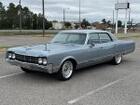
Hello everyone, I am new to the forum. I was up north visiting family when I saw a nice 1965 Oldsmobile 98 for sale. I casually looked the car over and it appeared to be mostly rust free and the engine ran smooth as silk. So I made an offer and he accepted. This is my first Oldsmobile, I'm mainly a Chevy guy although I've owned many other cars such as Buick Grand National, Dodge Viper and others.
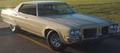
This car is in remarkably good shape with original interior and 66k on the odometer. I've already started fixing the many minor issues it has. I've replaced the A/C compressor, TXV and drier so that it has ice-cold A/C again. I replaced a worn out hood hinge, alternator, voltage regulator, battery tray, some hoses and bulbs and I'm sure I'll find some other things that need attention. Here are a few pics.
The 1965 98 Luxury Sedan was the most popular and the second-most expensive version of the 98 that year. Production of the Luxury Sedan totaled 33,591, and the base price was $4,351. Only the convertible was more expensive at $4,493, and only 4,903 were made. Second in line in terms of production was the Holiday Sports Sedan at 28,480 and a base price of $4,273.
Here are some pages out of one of the 1965 dealer brochures.
It does have ‘66 hubcaps on it. But for the new member some maybe useful points for him joining us as Chevy guy/person…
1) 65-70 big Oldsmobiles (88’s/Starfires/98’s share a great many hard parts - water pumps, alternators and what not. Mechanically in those years the “big” cars didn’t change much, excepting the changeover to disc brakes after 67.
2) Most interior trim parts swap from 65-66 for the 88’s and 98’s, excepting model-specific stuff. Radio *****, headlight dimmer switches and stuff like that swaps as a bolt-in. Radio’s for that matter too
3) For safety, consider upgrading to a dual brake master cylinder from the factory single master. 2 hydraulic circuits is safer than 1 - you always have at least half of your brakes. Not true in the ‘65 system. The bigger buck upgrade is going to 69-70 (not 71 or later) disk front/drum rear system. If you can find the parts in good shape, go for it. If not, at least get the dual circuit master that was federally mandated in 1967.
4) The Olds big block from 1965 - 1976 (400/425/455) has a great deal of common parts. Small block parts (the 330/350) don’t always swap, but effectlvely when shopping for water pumps, starter motors and stuff like that your “search years” are basically 1965 to 1976. Don’t go back to 1964 since that was the last year of the 394 - the previous generation engine.
5) You’re gonna love how lightly these cars were used in their lives previous to you. Big Oldsmobile owners mostly didn’t beat the sh*t out of ‘em. They mostly just drove ‘em normally and few raced ‘em. So you have an old car which has probably been well cared for and gently used. As you’ll know from Chevy experience, GM cars from this era were designed to be repaired - not much crappy plastic connectors or other single-use junk.
6) Olds-unique parts will be harder to find than Chevy. No way around that. No, Impala parts won’t fit. A few Cutlass/442 trim parts can fit, but don’t assume that. Set up a persistent EBay search and get to know Fusick Auto Parts in CT, and when you’re feeling flush OldsObsolete.com….
I’ve had these cars since the 1980’s and they’ve been directly responsible for days & days of fun. Great hobby. If you’re interested, look up posts under my name when you can’t sleep. Or hit me up privately if you have a question or 2 that won’t help the others here…
Nice info, cfair. I'd like to add a dual master. I did it on my 66 Chevelle many years ago. Inline tube made it easy, they had the master cylinder, pre-bent lines and a brass distribution block. I'm betting I'll have to source my own stuff for this car. Any pointers would be appreciated, like what master cyl to buy and what adapter fittings are needed.
Another mod that I'd like to do is a rear sway bar. I've been doing some reading and it appears that A-body rear lower arms will fit. My 66 Chevelle is sitting next to this car, so I supposed I can crawl under and measure. And someone mentioned that the 66 Impala rear sway bar may fit. Anybody try it?
And another mod would be the exhaust. I don't want to go with duals, but rather I'd like to go with a single 2 1/2 system. Not sure if a pipe that big can connect to the manifold.
This car had a broken window switch and Fusick wants almost $300 to refurbish it. I'd hate to spend that and have the switch fail after a few months. My switch looked very sketch! So I decided to make my own. 30 amp toggle switches from Amazon. $13 bucks for all four switches. Winning!
That window switch shouldn’t be that hard to locate through some parts wanted ads. That switch was used for many models and years. Not to beat you up but that switch you came up with looks a little funky. Hope it wasn’t permanently altered where you can replace with an original when you find it. You have a beautiful 98! I had one similar to yours around 20 years ago
Such a beautiful find. It is great to see yet another one of the big cars getting attention it deserves. Sometimes with the big cars we have to be resourceful in keeping things running. The window switch is genious, but new ones can be found, perhaps somebody in the group has an extra, This car deserves to be kept as OG as possible. These are extremely well built cars, a real pride for Oldsmobile back then. We found a 1966 offering of a Luxury Sedan in 2018, it is quite optioned out like yours with cruise control but unlike yours we also have the power vent windows but no auto-dimming headlight option. Ours had not been driven for many years, but was very weathered from being kept outside, It has 69,000 miles on it, Albeit looking a bit shabby, everything works after a bit of connection/tarnish cleaning, greasing/oiling, and cleaning. Even the clock works now! It is testamant to the quality and longevity of mechanical stuff on these cars. The smoothness of the engines and transmissions and ride quality are something to be truly loved. Indeed, go with the dual brake system, it gives piece of mind on today's very crowded roads, we did. Please enjoy this car immensely!
I have 2 different masters on my 2 slightly different 66 big cars, I don't know the part numbers off hand, but anyway you'd need to convert to disc at some pain and cost to replacate what I did. If I were hunting I'd start with a 1967 88/98 drum master cylinder which, I think by law, had to be dual for '67. That has highest likelihood of fitting the engine bay of your '65 easily. The tricky part is dual masters are longer than the single masters and get very close to the driver's inner fender. To the point where you have gently massage the inner fender with a BF hammer to get it to fit if the lines exit the master on the fender, as opposed to the engine side. That means you may want your hydraulic lines to exit on the engine side just have it fit better. I believe there are some others here who've used other GM brand masters from that era which do exit on engine side to good effect, but I don't know the solution myself.
My rear sway bars were bought from Addco eat least 25 years ago, I don't know if they're still in business. Couple things here
1) don't put a sway bar on open lower rear trailing arms, they put enough stress on the trailing arms that they can snap. That ruined a Christmas Day for me one year.
2) I'm using 1966 Cutlass/442 boxed trailing arms on my '66 big cars from an after market source. I can't remember which source, but I was surprised and remembered that they fit. If you try this make sure you get the early 65-66 year arms and be sure you know the return procedure in case they don't fit.
3) The addco bars hang down low near the ground because of their required mounting brackets. Some here don't like that look. I never really cared, but yeah it's slightly uglier than a factory solution. To me that's a small cost for the handling improvement.
That window switch you just remade is made up from a chrome casting, 4 chrome switch rockers and simple circuit board and some plastic insulation. You can still buy the circuit board, I think at maybe AuVeCo, or through one of the classic car aftermarket companies. Anyway, what usually goes out on them is the points on the brass contacts. Usually driver's front window first. If you want to go back to a stock look, hit up the classic car junkyards for the parts and dig around on the 'net for the switch board with fresh contacts. You may also be able to dremel clean your existing contacts and/or use solder & file your switch original contacts. I'm kind of a stock look guy, but you did great work putting those toggles in. Be aware that window switch and parts for it were made for many GM models from Cadillac to Buick to Olds to Pontiac, you should be able to find or make one up without too much trouble for much less than $300 from Fusick. I love the work they do, but yeah, $300 for a switch is on the high side to me too.
When you want to clean up the diecast chrome on interior or exterior, get yerself some #0000 steel wool and start shining with a headlamp on your head and beer near. The shiny parts come back great with a little effort.
Great info! Yeah I'd rather keep this car 100%. The previous owner attempted to fix the switch and cut the wires and I think tried to pry it apart. It's in really bad shape and zip ties were holding it together. I doubt it's worth trying to save. Hopefully I can run across a good used one. Until then, the toggle switches will do. Most people won't even know, or they might think the car has hydraulics.
There are a couple of common ways electrical window and seat systems fail in those years
1) One or more of the wires break in the drivers door rubber boot and you see all kinds of terrible crimp connector fixes
2) The switch contacts get carboned up and fail to provide solid electrical voltage to the motors
3) The accessories relay in the driver's side kick panel stops working
4) One or more motors get dirty and overheat, sometimes melting the high amperage connections in the doors
Other than that these GM systems were really robust and remain eminently repairable as you're seeing.
The really time consuming picky fix for 1st failure is to cut the rubber driver's door boot out, pull the driver's door harness back into the body, solder fix the wires with proper shrink wrap, reinstall a new rubber boot (which can still be bought...), then pull the fixed harness back through.