When you click on links to various merchants on this site and make a purchase, this can result in this site earning a commission. Affiliate programs and affiliations include, but are not limited to, the eBay Partner Network.
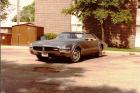
I'm new here. I have a 67 Toronado with paint code W2. This looks like Gold with a black vinyl top? The car is all gold, so no vinyl top. Looks like the previous owner removed it maybe.
Anyway, my question is the way to check if the engine and trans are numbers matching to the car. I do not have a protect o plate. Is there anyway to connect the engine and tranny unit numbers to the VIN number without the POP, so that I can check if the engine and transmission are original? thanks for your help in advance.
09B = build date, second week (B) of September (9), 1966
67 = 1967 model year
3 = Oldsmobile division
9687 = Toronado Deluxe 2-door coupe
EUC = Euclid, Ohio assembly plant
3313 = Fisher Body sequence number at that plant
PAINT W = lower body color = Sauterne
PAINT 2 = upper body color = black vinyl top
080 = black interior (I think)
-D = ?
Group 1
E = tinted windshield and window
X = power windows
Y = ?
S = power trunk release
M = ?
Group 2
K = air-conditioning
R = rear speaker
Group 3
P = ?
Group 4
F = remote control outside mirror
L in the upper right of the tag = ? (not sure anyone knows what this means)
I'm sure others will correct anything I've gotten wrong.
Sauterne is half-way down the rightmost column (code W). It was a Toronado-only color.
Not sure how to describe it. Looks like a grayish-brown to me. I'm sure these scans of charts don't do these colors justice. It seems to match the color of your car.
Without the POP you are SOL! As stated above, 1968 was the first year that engines and transmissions were stamped with VIN numbers. In 1967 the POP will have the engine unit identification number which is factory stamped on a flat pad on the front of the right (passenger) side cylinder head. Very hard to read this stamping without removing some of the accessory brackets from the engine. The engine unit ID number of a 1967 Tornado would have the sequence RXXXXXXT (the six Xs indicating the unit number, preface R and suffix T indicates Toronado specific) and the engine color being blue.
Thanks guys. I saw this chart in an earlier post. Trim code is black vinyl with cloth which matches. Yes, I called it Gold, but the color is Sauterne. I think "D" with the trim is Stratobench which matches the car. the car has power everything (brakes, antenna, steering, windows, door locks, bench seat, trunk release in glovebox, and remote mirror). It has the climatron controls. Very nice optioned car. Only thing that doesn't match so far is the vinyl roof, which isn't there anymore. Anyway, thanks for the post about the missing POP. It's too bad there is no way to search the engine and trans without the POP numbers. thanks again guys!!
"Matching numbers" and "born with" components may be very important in the world of authenticating W-30's or maybe even 442's.
But Toronado's? Not so much.
Can confirm that those ports are AIR injection ports. Sensible enthusiasts (who didn’t need to be smog tested) blocked them just like that decades ago. This was likely a CA car, which is good for rust, but bad for the injection ports. Frankly, you are where you need to be on the engine if it runs well. The main thing is to delete the AIR system which was a deeply crude patch in 1966 or so to meet rising CA and Federal smog standards. As far as I know, all it did was dilute the exhaust mixture, though the claim was that it cleaned it up. The AIR system was just a crank driven pump shoving fresh air into the exhaust. Whether it did any good is for better scientists than me.
Don’t fuss about the numbers matching thing. I have a ‘66 98 with original block & heads and a ‘66 Starfire with a later 455 that runs great. The Starfire is distinctly not numbers matching, but it sure runs one helluva a lot smoother than the slightly (weirdly) rowdy 98. Point is, unless you’re doing a ‘vette or some popular mainstream car, you’re better off enjoying the experience and not fussing about engine/chassis numbers. Get the car to where you think GM wanted it and drive it a whole bunch of miles.
"Numbers matching" is a phrase in general use to help establish a value or legitimize particular models. Many who blurt out the popular "numbers matching" phrase lack expertise. Clones, tributes, and half dozen more words mean "Fake". Taking a lesser model, add badging and repro or NOS parts to imply it a much more valuable and rare model is the problem.
While your Toronado would be nice to know its "numbers matching", it likely wouldn't affect resale value a lot as Charlie Jones said. Its pretty hard to counterfeit a Toronado. Enjoy the car.
......Just my two cents worth.
Thanks for all the information, guys. Nice to know the ports are for the old smog system. That must have been long ago deleted. I was told it was an Arizona car, bought by a guy in Chicago (where I got it) and then bought by me and moved back to Arizona. Guess it started out in California. I really was only worried about original engine for resale value, but I plan to keep it for many years and just improve it and take it to auto meets/shows, so that doesn't really matter.
Thanks for all the information, guys. Nice to know the ports are for the old smog system. That must have been long ago deleted. I was told it was an Arizona car, bought by a guy in Chicago (where I got it) and then bought by me and moved back to Arizona. Guess it started out in California. I really was only worried about original engine for resale value, but I plan to keep it for many years and just improve it and take it to auto meets/shows, so that doesn't really matter.
I was wondering if I could see how your carb looks? Specifically from the drivers side of the carb. I'm interested in removing the A.I.R. system from my '66 and am wondering how people went about doing this back in the day.
Newbie, if you have ever seen a 1967 with a vinyl roof you'll understand why it was removed. It truthfully never should have been put on there.
Vinyl roof was popular in the 60s, and GM put them on everything including station wagons and pickup trucks, but the 1967 Toronado's vinyl roof looked like the afterthought it was. It was horrid. Didn't follow the car's styling at all.
Course if you look at 66-70 Toronados you'll realize they were never intended to have a vinyl or two tone roof.
Newbie, if you have ever seen a 1967 with a vinyl roof you'll understand why it was removed. It truthfully never should have been put on there.
Vinyl roof was popular in the 60s, and GM put them on everything including station wagons and pickup trucks, but the 1967 Toronado's vinyl roof looked like the afterthought it was. It was horrid. Didn't follow the car's styling at all.
Course if you look at 66-70 Toronados you'll realize they were never intended to have a vinyl or two tone roof.
I agree, Rocketraider. At one time I thought all the '67s had the vinyl roof until I saw one on here without it. Totally changed the look of the car and it's a much better looking vehicle. In my mind it's almost as nice as the '66 when there is no vinyl.
Pretty close. I tried to fill in the holes (in bold below). The "L" may refer to the body assembly jig used.
Originally Posted by jaunty75
I think we can get some of those codes.
09B = build date, second week (B) of September (9), 1966
67 = 1967 model year
3 = Oldsmobile division
9687 = Toronado Deluxe 2-door coupe
EUC = Euclid, Ohio assembly plant
3313 = Fisher Body sequence number at that plant
PAINT W = lower body color = Sauterne
PAINT 2 = upper body color = black vinyl top
080 = black interior (I think) Black bench seat interior to be exact
-D = ?
Group 1
E = tinted windshield and window
X = power windows
Y = ? Power Bench Seat
S = power trunk release
M = ? Power Door Locks
Group 2
K = air-conditioning
R = rear speaker
Group 3
P = ? Power Steering (Unverified but only seen on Toronados)
Group 4
F = remote control outside mirror
L in the upper right of the tag = ? (not sure anyone knows what this means)
I'm sure others will correct anything I've gotten wrong.
Do you know what the -D is after the 080? Center armrest?
I've unfortunately not been able to document any of those letters that show up after the trim code. All 1967 Toronado Deluxe models like this one came with the Strato Bench seat with armrest as standard equipment (buckets were optional).
I've unfortunately not been able to document any of those letters that show up after the trim code. All 1967 Toronado Deluxe models like this one came with the Strato Bench seat with armrest as standard equipment (buckets were optional).
It means seats. This Toro has an impressive strato bench.