When you click on links to various merchants on this site and make a purchase, this can result in this site earning a commission. Affiliate programs and affiliations include, but are not limited to, the eBay Partner Network.
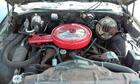
Newbie to this sort of thing. Excellent source of info. I have a stock 71 350 Cutlass Supreme that has been sitting for about 6 years. Decided to get it running again. Tranny is shot and the motor was running rough when I parked it. I was looking into modifying the 350 but had a chance to buy a 78 jet boat with a 455. After looking at the cost of upgrading the 350, I decided to buy the 455 with an old boat wrapped around it. It is a F serif code motor w/ E heads. I thought it was a 1970 motor someone put in the boat. It turns out the vin derivative indicates it is from a 73 car. The intake says OLDSMOBILE across the top. Don't know part #. I left the motor stock as far as I can tell. The boat was sitting for about 5 years so we pulled the heads to see what I bought. Turns out it was a fresh rebuild with machine marks still on cylinders. The pistons have shallow recessed heads. I decided to buy a Street Rodder 700r4 instead of rebuilding the TH350. Can't afford to upgrade the SBO one legger stock rear end yet, as I wanted the overdrive tranny. The motor is almost ready to be installed (see pics)
I have a couple questions I am hoping someone can answer:
has anyone on here put a 700r4 behind a 455? What can I expect with stock rear end?
Dirty Clean E heads On the run-cart with Summit headers. Probably mild rv cam TCI Street Rodder 700r4
With the overdrive tranny, what rear end gears to upgrade to for good off the line performance but still driveable on highway?
Can I rebuild the SBO rear end with posi to handle to 455, or will I need to go with the Ford housing?
if the intake is from a Toro, how much less hp and torque?
Assuming your car has the original rearend, it is an 8.5" 10 bolt rear and is a very good rear. It was originally used behind the 455 engines, so it can handle the power.
3.42 or 3.73 would be my choice for rear gears, but with the 0.7:1 overdrive transmission, you could get away with 4.10 rear gears and still keep highway RPM at reasonable levels.
I wouldn't assume a jet boat got an RV type camshaft. Those things are either at idle or WOT and folks typically want "more power" when rebuilding an engine.
Thanks for the info regarding rear end. At some point I may swap the cam, but I'll see how it moves the car down the road. The motor runs really well, but super smooth. That's why I think the cam is mild. Throttle response is instantaneous on the run cart, will need to see how it performs under load.
One thing to keep in mind about rear gears is the lower gears are like having more torque, so when you start with a torque monster engine like a 455 you don't need as low rear gears as with a smaller engine. Lower gearing results in easier ability to overpower the rear tires, so realistically with a 455 and TH700-R4 that has a 3.07:1 first gear something in the mid-3.xx range may be better.
Any idea of the torque numbers? The intake is smog era from what I can tell from the OLDSMOBILE, but if no longer smog hooked up, not sure if that's an issue. The heads are 1970 and the pistons appear to be higher compression. So the motor is probably closer to a 70 than 73?
Bone stock 455s were rated 500ish ft-lbs in the 1970-older GROSS rating system and around 370 ft-lbs in the 1971-newer NET rating system. Also note the 71-up engines were all low compression.
It would help if you post a picture of the intake so it can be identified.
The minimum gear I would consider is around a 3.42. What’s the point of having overdrive if your not running enough gear to need the overdrive? Run a tire tall enough to fill the wheelhouse, 3.42 or 3.73 gears, have fun!
I'll need to take a pic of the intake next week when I'm at the shop. I also need to see what kind of rear end I have 8.5 or 8.2". Hope it's 8.5. I'm thinking if it came with 2.50 gears, I'm glad I have a modest 1580 stall TC. not sure what would happen if I opted for a higher stall at 50 mph. One nice thing about waiting to change rear end, I can see what it does with
I have a mild 455 and 700r4 in my 67 with the stock 3.08 rear. I have a stock converter and it needs something a little looser like 2200 stall. At 80 the engine is only turning 2040 rpm with the converter locked up. I find myself using drive around town and overdrive when I can drive at least 60 otherwise it feels sluggish. After all, the engine is running at a fast idle below 60. Mathematically swapping rear gears would raise rpm with 3.42 to approx 2270 and with 3.73 to approx. 2500 at 80.
That's really helpful. It's my understanding you want a higher stall for modified motors (bigger cam, performance heads, etc.) where the performance curve peaks are higher. Definitely something to consider regarding gearing. 3.73 gears sound reasonable for rpm at 80. How quick is 1st gear with your rear end?
You get to have the best of both worlds. Peak torque is still well above the stall on a mild converter so it just gets you a little closer sooner to peak. That would assist initial acceleration and with lock up on no additional slip when your cruising.
I also need to see what kind of rear end I have 8.5 or 8.2". Hope it's 8.5.
The factory rear would be an 8.5" 10 bolt.
Originally Posted by Donaldbabineau
I'm thinking if it came with 2.50 gears, I'm glad I have a modest 1580 stall TC. not sure what would happen if I opted for a higher stall at 50 mph.
With a good quality converter, you wouldn't notice anything different. I had the 3.23 rear out of y car for a rebuild, and in the meantime I put the original 2.56 rear back under the car. Driving to work on 45 MPH roads had the engine RPM below the stall rating (2500 RPM) and did not result in any more converter slippage than when above the stall RPM. I have heard with low end converters there can be a lot of slippage below the stall rating, and a lot of heat to go along with it. Get a good wuality converter and you won't have to worry about it.
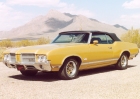
First and foremost, boy did that car clean up nicely. Its gorgeous. 70-72 Supremes have beautiful lines.
The 700-R4s 1st gear along with the 455s torque are going to make the rear gear irrelevant to some extent unless track time is key.
The smoothness of the cam wont really matter either ... If your engine was a bottom of the barrel 1976 455 its still healthy in the power department. Headers and your talking 250 HP and 400 LB FT that's base for 4BBL 455s, you cant go wrong.
Cant wait to hear how she feels the first time you punch it. I think your thoughts on feeling out the car before swapping the rear makes perfect sense. If you still want more at least you have a baseline to work off of.
Thanks for the compliment. I've had the car since 94 and it was restored in 95. It's starting to show it's age a little bit (not show quality by any means) but still pretty straight. When it was on the trailer headed to the shop, people were staring at it and giving thumbs up. I really don't think it is going to be down at the base level 455 as it has the E heads. Not sure how intake likely being later casting will affect performance if smog has been removed.
Bone stock 455s were rated 500ish ft-lbs in the 1970-older GROSS rating system and around 370 ft-lbs in the 1971-newer NET rating system. Also note the 71-up engines were all low compression.
It would help if you post a picture of the intake so it can be identified.
Not sure if this is how I reply but I snuck in and took a couple pics of the intake. The pn is 412753 I think 412753 intake. Engine has a 73 vin derivative OLDSMOBILE script
Assuming your car has the original rearend, it is an 8.5" 10 bolt rear and is a very good rear. It was originally used behind the 455 engines, so it can handle the power.
3.42 or 3.73 would be my choice for rear gears, but with the 0.7:1 overdrive transmission, you could get away with 4.10 rear gears and still keep highway RPM at reasonable levels.
I wouldn't assume a jet boat got an RV type camshaft. Those things are either at idle or WOT and folks typically want "more power" when rebuilding an engine.
Will it perform the same as earlier manifolds with all the emissions removed? There were no emissions when on the boat and it looks to me all has been removed
I have a mild 455 and 700r4 in my 67 with the stock 3.08 rear. I have a stock converter and it needs something a little looser like 2200 stall. At 80 the engine is only turning 2040 rpm with the converter locked up. I find myself using drive around town and overdrive when I can drive at least 60 otherwise it feels sluggish. After all, the engine is running at a fast idle below 60. Mathematically swapping rear gears would raise rpm with 3.42 to approx 2270 and with 3.73 to approx. 2500 at 80.
I spoke with a guy who has built a lot of 455 olds cars and was familiar with the 700r4 being used in this application. He said with a stock 455 that doesn't have an aggressive cam, the sweet spot due to the low end torque would be running 323 gears. Anything more aggressive (3:42) would result in getting out of peak torque too soon and anything less would result in the tranny not wanting to use over drive and lugging the motor. Either way, the result could damage the transmission. Not sure if I am exactly correct in how I'm describing the situation.
Pics of motor installed, still need shorter driveshaft and rear end. Waiting for rear disc brake conversion kit to arrive. Still needs a few items completed, but it fits (barely) Summit Racing headers were a tight squeeze and the proportioning valve needed to be relocated, but the fit Pic of the cowl plate. Don't know what some of it means.
I spoke with a guy who has built a lot of 455 olds cars and was familiar with the 700r4 being used in this application. He said with a stock 455 that doesn't have an aggressive cam, the sweet spot due to the low end torque would be running 323 gears. Anything more aggressive (3:42) would result in getting out of peak torque too soon and anything less would result in the tranny not wanting to use over drive and lugging the motor. Either way, the result could damage the transmission. Not sure if I am exactly correct in how I'm describing the situation.
He has an expertise in this field that you trust then of course lean accordingly.
What I will add is that the 700-R4 first came mated to the 1982 Corvette. And lastly on the 1993 Corvette.
1982 Corvette 350 V8 = 200 HP @ 4200 RPM and 285 LB FT @ 2800 RPM / rear gear 2.72 (starting line ratio was 8.32)
1974 Hurst Olds W30 455 = 230 HP @ 4000 RPM and 370 LB FT @ 2800 RPM / rear gear 3.23 (starting line ratio was 8.01)
1993 Corvette 350 V8 = 300 HP @ 5000 RPM and 340 LB FT @ 4000 RPM / rear gear 3.07 (starting line ratio was 9.39)
(The 74 Hurst Olds is with THM400)
Apples and oranges but the Corvette is the peak performer that came with a 700-R4 factory new since inception.
He has an expertise in this field that you trust then of course lean accordingly.
What I will add is that the 700-R4 first came mated to the 1982 Corvette. And lastly on the 1993 Corvette.
1982 Corvette 350 V8 = 200 HP @ 4200 RPM and 285 LB FT @ 2800 RPM / rear gear 2.72 (starting line ratio was 8.32)
1974 Hurst Olds W30 455 = 230 HP @ 4000 RPM and 370 LB FT @ 2800 RPM / rear gear 3.23 (starting line ratio was 8.01)
1993 Corvette 350 V8 = 300 HP @ 5000 RPM and 340 LB FT @ 4000 RPM / rear gear 3.07 (starting line ratio was 9.39)
(The 74 Hurst Olds is with THM400)
Apples and oranges but the Corvette is the peak performer that came with a 700-R4 factory new since inception.
good to know. I wonder how much different the 525 hp rated 700r4 I have is to the original. What heads came on the 74? Not sure but the pistons on my motor appear to be 30-over 70 stock replacement "high" compression based on the shallow recession depth. with E heads, hp on my motor may be a bit higher if the 74 came with J heads. So many variables to consider and I don't know what my cam is. That was the one thing the builder I spoke with said would make a difference in using more aggressive gears. A higher lift cam would move the peak torque and hp to a higher rpm allowing for more aggressive gears. From your info, it looks like you could go with more of a highway gearing. From the previous response it sounded like 3.08 gears were too low with the 455/700r4 combination. It will be interesting to see how the car comes out. With the size of my tires, I don't think the motor will be the limiting factor.
What heads came on the 74? Not sure but the pistons on my motor appear to be 30-over 70 stock replacement "high" compression based on the shallow recession depth. with E heads, hp on my motor may be a bit higher if the 74 came with J heads.
Yes J heads from 1973-1976 455. Looks like marine engines were often built with very similar parts and components. This thread may be of interest to you. https://classicoldsmobile.com/forums...e-motor-38352/ Particularly posts, #8, 10, 22, and 23.
Originally Posted by Donaldbabineau
So many variables to consider and I don't know what my cam is. That was the one thing the builder I spoke with said would make a difference in using more aggressive gears. A higher lift cam would move the peak torque and hp to a higher rpm allowing for more aggressive gears.
One thing to keep in mind is an RV cam is considered mild today. But in the 1970s it was aggressive.
Originally Posted by Donaldbabineau
From your info, it looks like you could go with more of a highway gearing. From the previous response it sounded like 3.08 gears were too low with the 455/700r4 combination.
Hard to tell, things feel different to different people. 3.08 may work for one 3.23 for another, and 3.42 for another... Maybe 3.23 has been track proven...
Corvettes are Halo cars, have been for 60 years. Very seldom will the factory make a mistake with this type of car. So minimizing the differences between a Chevy 350 and a Olds 455, I say yes you can go highway gear with a 700-R4.
If your builder has been around enough of these. And he is seeing and hearing that the 3.23 is ideal so be it.
The factory as best i can tell was all over the place with vehicles that came with the 700-R4 with regards to rear. Suburban's had 3.42s
Yes J heads from 1973-1976 455. Looks like marine engines were often built with very similar parts and components. This thread may be of interest to you. https://classicoldsmobile.com/forums...e-motor-38352/ Particularly posts, #8, 10, 22, and 23.
One thing to keep in mind is an RV cam is considered mild today. But in the 1970s it was aggressive.
Hard to tell, things feel different to different people. 3.08 may work for one 3.23 for another, and 3.42 for another... Maybe 3.23 has been track proven...
Corvettes are Halo cars, have been for 60 years. Very seldom will the factory make a mistake with this type of car. So minimizing the differences between a Chevy 350 and a Olds 455, I say yes you can go highway gear with a 700-R4.
If your builder has been around enough of these. And he is seeing and hearing that the 3.23 is ideal so be it.
The factory as best i can tell was all over the place with vehicles that came with the 700-R4 with regards to rear. Suburban's had 3.42s
some of the considerations he went over were throttle pressure and the ability of the tires to keep traction. There are adjustments that can be made for throttle pressure settings on the transmission which may explain how there are so many ratios able to be used, but he said to make those adjustments to taylor to the gears you want to run is a waste of effort if your tires are roasted of the rim. In his experience, he got better track times with 323 gears because of not being able to get traction with more aggressive gears due to the torque. Kind of what you were saying.
some of the considerations he went over were throttle pressure and the ability of the tires to keep traction. There are adjustments that can be made for throttle pressure settings on the transmission which may explain how there are so many ratios able to be used, but he said to make those adjustments to taylor to the gears you want to run is a waste of effort if your tires are roasted of the rim. In his experience, he got better track times with 323 gears because of not being able to get traction with more aggressive gears due to the torque. Kind of what you were saying.
Very interesting about the marine engines. The jet boat I got the motor out of was a 1978 with a Berkeley Pac-a-jet 455 package on he valve covers. The motor has a 73 vin derivative and plugged up smog ports on the intake. With the 6-digit serial number I was assuming it came out of a car. Don't know what if anything would be stamped on a boat motor where the vin derivative is located. The pistons' appearance are definitely consistent with the thread you referenced.
In his experience, he got better track times with 323 gears because of not being able to get traction with more aggressive gears due to the torque.
That makes sense.
In the original muscle era world of performance a starting line ratio (the trans first gear x the rear gear) of around 10 is considered ideal. The 700-R4s 3.06 multiplied by 3.23 = 9.88
I say go for it if you so wish.
With regards to your current engines horsepower. A wheel dyno will give you an idea, a great 1/4 mile pass will confirm it. But for fun we can guesstimate and probably not be so far off as well. If the Olds Faq is correct in the cam department etc that I'm using for reference I think I can come up with a good idea.
Marine high compression cam is listed as
409691 overlap 61 (adv duration 286/287 and lift .474/.472) 455 L75 ST,L77 AT, Marine HC
If I'm reading into it correctly that is the same cam that came in the 1971 automatic W30.
1971 W30s are rated 300 HP net. It has much better heads than 1973-1976 455s but so do you. So if we are right in the cam department plus high compression, plus headers, minus blueprinting... 300 HP net.
1971 automatic W30 had 3 choices for rear gear 3.23, 3.42, and 3.73. It's SLR with 3.73 is 9.25
Last edited by 69CSHC; Dec 14, 2020 at 08:10 PM.
Reason: addition for clarification
In the original muscle era world of performance a starting line ratio (the trans first gear x the rear gear) of around 10 is considered ideal. The 700-R4s 3.06 multiplied by 3.23 = 9.88
I say go for it if you so wish.
With regards to your current engines horsepower. A wheel dyno will give you an idea, a great 1/4 mile pass will confirm it. But for fun we can guesstimate and probably not be so far off as well. If the Olds Faq is correct in the cam department etc that I'm using for reference I think I can come up with a good idea.
Marine high compression cam is listed as
409691 overlap 61 (adv duration 286/287 and lift .474/.472) 455 L75 ST,L77 AT, Marine HC
If I'm reading into it correctly that is the same cam that came in the 1971 automatic W30.
1971 W30s are rated 300 HP net. It has much better heads than 1973-1976 455s but so do you. So if we are right in the cam department plus high compression, plus headers, minus blueprinting... 300 HP net.
1971 automatic W30 had 3 choices for rear gear 3.23, 3.42, and 3.73. It's SLR with 3.73 is 9.25
300 net would be awesome for a motor I wasn't sure about buying. It wasn't running well in the boat with the stock points distributor and carb. It had been sitting for a couple years. After putting the HEI distributor from the 350 and the new carb, the motor runs great. The compression test was about 145 psi average, so probably not super high, but gas isn't what it used to be. I am having the shorter driveshaft made this week and waiting for gears and the rear disc brake kit to arrive. I'm hoping it will be done before Christmas, but with Covid and holidays, parts are taking longer to ship. Stay tuned and I'll let you know how it comes out. The cost may be more than the car will be worth, but you only live once.
yeah I've looked at this. The one thing that is still original marine on my motor is the oil pan with windage tray. We were concerned it wouldn't fit. It's lumpier on the sides than the auto application and has a 7 plus quart capacity unlike the catalogue you are looking at which specifies 5 with filter. I never knew oil run though a clean motor looks clear on a dipstick until we ran it on the cart and checked the oil.
I never knew oil run though a clean motor looks clear on a dipstick until we ran it on the cart and checked the oil.
I bet those engines ran that clean for a long time. The load put on the engine in a boat is so softened vs pushing a 4000 LB vehicle in my minds eye. I gotta figure driving reasonably on a power boat is a blessed life for a 455.
Looking at the manuals engine power specs. 330 HP is the top dog which is likely gross going through manifolds.
Add 20 HP for long tube headers, 350 Gross. 1971 W30 gross to net conversion 350 HP to 300 HP... Coincidently the W30s HP rating for both gross and net is at the same 4700 RPM as the 455-2 Packajet. As well as the RV cams powerband ending at 4700 RPM...
I think your ride is going to be a lotta fun when its all said and done. Premium fuel is a must.
I bet those engines ran that clean for a long time. The load put on the engine in a boat is so softened vs pushing a 4000 LB vehicle in my minds eye. I gotta figure driving reasonably on a power boat is a blessed life for a 455.
Looking at the manuals engine power specs. 330 HP is the top dog which is likely gross going through manifolds.
Add 20 HP for long tube headers, 350 Gross. 1971 W30 gross to net conversion 350 HP to 300 HP... Coincidently the W30s HP rating for both gross and net is at the same 4700 RPM as the 455-2 Packajet. As well as the RV cams powerband ending at 4700 RPM...
I think your ride is going to be a lotta fun when its all said and done. Premium fuel is a must.
I hope so. Actually a boat puts a very heavy strain on a motor but the motor probably didn't get used since the machine marks were still on the cylinder walls from the rebuild. What I know about the boat is the previous owner was in the process of restoring the boat. He had the motor rebuilt and bought it into my boat mechanic's shop to rewire, run new gas lines, replace seized steering cables etc. That work was done and the boat was being wet sanded for paint prep and upholstery needed to be done. The owner said he rebuilt the motor two years before bringing it to the shop for the boat work where it sat for 3 years while the work was being done. So it's a 5 year old rebuild, but I'm guessing it was never on the water since the boat was not functional on many levels when it arrived at the shop and the little bit of carbon on the piston heads wiped off with a cloth. I paid 4k for the boat, so I really didn't get the deal of a lifetime, but a complete rebuilt motor ain't cheap. If you price a complete 455, they run about 5k at the lowest without carb. Hopefully I can get something for the jet Drive and trailer.
Actually a boat puts a very heavy strain on a motor but the motor probably didn't get used since the machine marks were still on the cylinder walls from the rebuild.
Ahh I see, I'm focusing on her gliding along the water. Overlooking the brutal constant high revs. Basically when in use its like a car running a perpetual all out 1/4 mile.
Originally Posted by Donaldbabineau
Not sure but the pistons on my motor appear to be 30-over 70 stock replacement "high" compression based on the shallow recession depth.
Missed this when trying to assess HP earlier. 30 over adds 6 cubic inches, that's 6 more HP going by conventional wisdom.
Ahh I see, I'm focusing on her gliding along the water. Overlooking the brutal constant high revs. Basically when in use its like a car running a perpetual all out 1/4 mile.
Correct about that. Back in high school I worked at at a NAPA store and one day someone brought in a jet boat QJet as a core. I bought the core from the store and found the oddest secondary metering rods in it - they had no taper and were the longest, thinnest rods I have ever seen. Apparently set up for two operating conditions: either idle or WOT with nothing in between.
Correct about that. Back in high school I worked at at a NAPA store and one day someone brought in a jet boat QJet as a core. I bought the core from the store and found the oddest secondary metering rods in it - they had no taper and were the longest, thinnest rods I have ever seen. Apparently set up for two operating conditions: either idle or WOT with nothing in between.
kind of glad I'm not using the carb that came with the boat. Hope the cam isn't set up the same way
If she was rebuilt to Berkeley Pac-a-jet 455-2 spec. You may have to run an octane booster. That manual which is a cool read by the way is saying your engine required minimum 99 octane RON. Which is equivalent to 94 octane AKI (modern gas). Not readily available in the states as best I can tell. And definitely not available by me. My car is not satisfied with 93 octane alone...
I just heard the car run with the exhaust hooked up to it. When it was on the run cart with just headers, it didn't seem to have any lope to it. Thought it was a mild cam. With back pressure of the exhaust it must have brought out the lope. Not super choppy but definitely has that nice uneven idle sound. The 323 gears are going in and the rear disk brake conversion came today so should be on the road next week.
If you have the cam I believe you have yours will sound slightly more lopey/choppy. The car featured in video is an Automatic W30 but he has AC. AC cams have slightly less overlap.





 I bet those engines ran that clean for a long time. The load put on the engine in a boat is so softened vs pushing a 4000 LB vehicle in my minds eye. I gotta figure driving reasonably on a power boat is a blessed life for a 455.


