When you click on links to various merchants on this site and make a purchase, this can result in this site earning a commission. Affiliate programs and affiliations include, but are not limited to, the eBay Partner Network.
Hi everyone,A lot has been done on the car since mid-May.
Now I have a new issue with this beautiful vehicle: Just for information: the radiator and the cap are both new. I installed an overflow tank. Last week, when i pushed the pedal down to the ground to enjoy the beautiful straight line in front of me, a small flow of coolant started to come out of the engine hood. I stopped the car on the right side of the road, I opened the hood. I saw that the leak was coming from the radiator cap. I continue the ride, calm to go home.
Someone could help me solve this problem: - what is the right level of liquid that I should have inside the radiator? I fill it with 2 inches near the top. It's too much?
Hi everyone,A lot has been done on the car since mid-May.
Now I have a new issue with this beautiful vehicle: Just for information: the radiator and the cap are both new. I installed an overflow tank. Last week, when i pushed the pedal down to the ground to enjoy the beautiful straight line in front of me, a small flow of coolant started to come out of the engine hood. I stopped the car on the right side of the road, I opened the hood. I saw that the leak was coming from the radiator cap. I continue the ride, calm to go home.
Someone could help me solve this problem: - what is the right level of liquid that I should have inside the radiator? I fill it with 2 inches near the top. It's too much?
Thanks for your help.
Pat.
If you installed an overflow tank (which was NOT OEM equipment), and the leak was NOT in the overflow tank but instead at the radiator cap, this strongly suggests you have the incorrect radiator cap (incorrect PSI), a bad seal where the radiator cap meets the radiator or you have a leak elsewhere and NOT at the radiator cap. I would buy a new radiator cap (I believe the correct PSI is 16 PSI?). That empty head space should be sufficient at the top of the radiator fill line.
The cap is a brand new one , and it's a 16 PSI (1 month old). The overflow tank has been working properly till this time. It fill when the engine goes hot and the over flow come back to the radiator when the engine gets cold.
The issue came when I pushed a little bit the engine to the high rpm. Before that no problem.
It sounds like coolant flow is not your issue i suspect a coolant flush will do nothing. I know your cap is new - you might have bought a defective radiator cap or possibly the incorrect style of radiator cap. How much coolant are we talking about leaking...1mL, 5mL, 10mL, 0.5L, 1L?
.. - what is the right level of liquid that I should have inside the radiator? I fill it with 2 inches near the top. It's too much?
With an overflow tank the radiator should be filled to the top and the tank should be filled to the FULL COLD mark.
Be sure you have the correct type of radiator cap. With the overflow tank you need a recovery type cap and not the one originally designed for your car.
So we're talking about 10 or 20 ml. But honestly, I don't know because I stopped accelerating when I saw the drops running on the hood.
For the cap, it's a GATES 31528 (made in mexico) bought to ROCKAUTO. The radiator is a APDI PRO 8010322. Both bought in april 2020.
For sure, my first think was : the pressure rate of the cap is not good. I checked, and it seems to be ok.
Or the size of the hose connected to the overflow tank is to small, but it's the radiator stock size...
Since the 66 model year did not come with an overflow tank, I don't think the diameter of the overflow hose has anything to do with your issue. I agree it is probably the cap.
Does your car have analog gauges to see what the water temp was when you noticed the water on the hood? If not, did your water temp light come on?
If the car isn't overheating under wide open throttle, once again it would lead me to think it is the cap or possibly the radiator leaking.
Do you ever see any any liquid on the ground below the radiator?
So we're talking about 10 or 20 ml. But honestly, I don't know because I stopped accelerating when I saw the drops running on the hood.
10ml - 20ml is quite a small volume of liquid - that is ~5 teaspoons. I am having great difficulty understanding how you could view 10ml - 20ml (or drops) of coolant running on the hood? I cannot for the life of me figure out how coolant in this small amount of volume would rise vertically from the radiator cap up and onto the hood of your car without creating a significant stream of coolant to accomplish this behavior. I don't think I'm completely following along unless you have an OAI hood which has sucked the coolant up onto hood. Perhaps the fluid is where - along the seam where the hood meets the fender? I don't get it.
Since the 66 model year did not come with an overflow tank, I don't think the diameter of the overflow hose has anything to do with your issue. I agree it is probably the cap.
Does your car have analog gauges to see what the water temp was when you noticed the water on the hood? If not, did your water temp light come on?
If the car isn't overheating under wide open throttle, once again it would lead me to think it is the cap or possibly the radiator leaking.
Do you ever see any any liquid on the ground below the radiator?
This would be my theory also. Check the hose between the cap and the tank, check the cap, and check the tank.
No red light or gauge concerning the engine water temp...
I'll need to check this point too.
Before adding overflow tank, I had "normal" leakage through the small hose beside the cap.
This is the reason why I added this tank in order to avoid to lose too much coolant.
As for the drops seen on the hood, I assume if the leak come from the cap, It could spray coolant in different directions, even straight front the car.
It seems really to be a over pressure phenomena...due to hot temp. As far as I ride slower, no issue and no leakage anymore.
When I opened the hood just after the issue, I saw sprayed coolant all around the cap, in different directions, and for sure on the reverse side of the hood, the fender...
That is not right. With the cap working correctly, any coolant that vents should go through the overflow hose, not around the cap sealing area. My car has had a LOT of overheating issues over the many years I've driven it (since the 80s) and I have never had this issue. I would suspect something is amiss with the "new" radiator cap or possibly an issue with the sealing surfaces at the cap-radiator interface.
Hi Kenneth,
This is exactly what I was thinking when I wrote my second reply.
I took some pictures this morning.
Here there are : new radiator connection
The edge seems to be very slim ! (in the front direction)
And I see a small stair at the opposite direction (red circle)
I think you're right Kenneth, there is something wrong with the new radiator. sprayed leakage (both caps are removed on the picture, but not when I drive )
I still have the former radiator which wasn't the stock one. It was larger and higher than the original. I rather wanted to have the stock one, but in the case...
I could make a deep cleaning and replace the new by the old one with the new cap.
The overflow has also a cap, with an opened joint. overflow tank cap
And the new radiator cap is equiped with the return valve
New cap
So, I will follow your advise concerning the quantity of coolant : max in radiator and min in overflow tank.
Try the old radiator (deep cleaned) with the new cap. Let's go for a ride. former radiator 2 former radiator
You have the wrong kind of overflow tank. That's designed for pressurized overflow. You need one with a hose that goes to a non-pressurized cap and drains into the bottle. If your hose is connected to the bottom, the radiator's expanding coolant is fighting against the fluid weight of the fluid in the overflow (the gravity head). It needs to come in from the top, via a hose, going through a cap, that goes down to near the bottom.
This is from another thread on this site. Please see how it leaves the radiator, goes into the tank, and how there is even another overflow hose in case it overflows.
You have the wrong kind of overflow tank. That's designed for pressurized overflow. You need one with a hose that goes to a non-pressurized cap and drains into the bottle. If your hose is connected to the bottom, the radiator's expanding coolant is fighting against the fluid weight of the fluid in the overflow (the gravity head).
I think you are right. That looks to be a non-vented pressurized overflow tank. With a pressurized overflow tank, the coolant trying to vent from the radiator has only one place to go, and that's around the cap seal.
My tank has a pipe inside connected to the hose. This pipe goes to the middle of the tank in order to spray above the liquid level.
The cap is not tight and the joint is opened : the pressure inside the tank is the atmosphere pressure, It works like an exhaust.
opened in the middle overflow tank cap
It's generic aftermarket overflow tank, installed on not closed pressure circuit.
You can find the same kind of tank, like this one :
Your tank has also a pipe connected to the hose comming from the radiator cap. This pipe goes down in your tank in order to be below the surface of the liquid. This is made to avoid the vapor coming from the radiator going directly to the second hose. Because usualy it's coolant vapor. Your second hose, getting out your tank, is also an exhaust and at the end, could be an overflow pipe.
By the way, the vapor coming from the radiator is enough strong to push liquid at atmospheric pressure.
Did you lock at the shape of my radiator cap connector, It's very ugly.
The tank is not the problem the one Koda posted works the same as the tank in the OP's car. It allows fluid to enter the tank when the coolant expands and then return back to the radiator when it cools by vacuum. I'm still leaning towards the wrong/defective cap for the radiator. I have the same style radiator on my car without the aux tank, as long as the fluid level is below the neck and just above the transmission cooler lines it never pukes.
Yes, fully agree with you.
As you said, the tricky part now is to find who is guilty, the cap or the filler neck... My feeling...the radiator has a defect.
I will do a cross test, old cap / new radiator (easy to do) and new cap / old radiator.
If the issue come from the radiator, I'll buy a brand new full metal radiator.
Becool has got a good quality ?
Hi everyone,
I found out the root cause of my issue : the inlet diameter of the overflow tank was too small to digest the flow coming from the radiator. I drilled it in order to have the same as the filler neck bypass.
It works now.
Thanks to your answers and support.
By the way, I've started the back to basic conditions work of the front and rear axels ...I'll send you details in another thread.
Hi everyone,
It wasn't the diameter of the over flow pipe.
I found out the root cause of this issue : gaz combution goes into the coolant system. That means : cylinder head gasket or cylinder head cracked.
In the case of the head is dead, do you think the cylinder block could be also break ?
Good that you have discovered the cause of this problem. Hopefully it is only a leaking head gasket. Things that must be checked are the deck surface of the block for any erosion from steam and also the surface of the head for the same. The cylinder head should also be checked for warpage at this time. You should have your cylinder head pressure checked if no visible damage is seen. Good luck. If the existing head gasket is the factory steel shim, you should replace both head gaskets at this time to maintain uniformity on both banks.
Thanks for your answer !
Yes I hope it'll be only the gasket. But I saw a weird hard resin on the rear lower side of the right bank.
Looks like a former repair
I gonna disassemble the both banks and check all those things.
By the way, I found out it's not the stock engine. It's 403 CI olds. . These engines are known for overheating and, in severe cases, blowing head gaskets.
Hi everyone,
My heads have been remachined. I order the brand new gasket and seals.
I'm asking if I have to remove the cylinder head studs by new one ?
The cast number of the block is 554990 4A and the heads are 4A too.
The head stud holes are blind.
What is the torque spec for the stud installation in the block ?
I don't see any reason why you can't keep them, the studs. Oldsmobile used head bolts at the factory on those engines and they can be reused as long as they are not damaged. So it appears that some previous owner put head studs on that motor which should also be reusable as long as they are not damaged. There is no torque value when installing the stud into the engine block; just put them in finger tight, use a lubricant or blue loctite on clean threads. Go to the ARP website, arp-bolts.com, and read thru the Frequently Asked Questions, FAQ, for more information. The 403 has 1/2 inch head bolts or studs; the only manufacturers of head stud kits for these motors that I am familiar with are ARP and Milodon; there may be others. Have you checked the deck surface of the block to be sure that it is not damaged? It is not uncommon for there to be damage to the gasket surface of the block when a head gasket has blown; I mentioned that on post #22. Hopefully your block is not damaged.
I don't see any reason why you can't keep them, the studs. Oldsmobile used head bolts at the factory on those engines and they can be reused as long as they are not damaged. So it appears that some previous owner put head studs on that motor which should also be reusable as long as they are not damaged. There is no torque value when installing the stud into the engine block; just put them in finger tight, use a lubricant or blue loctite on clean threads. Go to the ARP website, arp-bolts.com, and read thru the Frequently Asked Questions, FAQ, for more information. The 403 has 1/2 inch head bolts or studs; the only manufacturers of head stud kits for these motors that I am familiar with are ARP and Milodon; there may be others. Have you checked the deck surface of the block to be sure that it is not damaged? It is not uncommon for there to be damage to the gasket surface of the block when a head gasket has blown; I mentioned that on post #22. Hopefully your block is not damaged.
Thanks for all ! Very helpfull. I think i have to remove the studs kit because some of them are very rusty.
I ordred them this morning.
As far as the block is concerned, i didn't check it yet. I have to clean it first.
I will check it properly concerning erosion. I only saw carbon deposits and gasket coating at this point.
By the way, the surfacing specialist who re-machined the heads told me that they had between 0.06 and 0.08 mm of plane deviation. For the whole surface.
Not dramatical gap from his point of view. I machined 0,1 mm max.
The gasket wasn't cracked. I had just gas combustion leakage though the coolant circuit.
You could use a diesel oil possibly. I assume a 5W40, 10W40 or 15W40 is available? All depends what temperature upu drive in. Yeah, had the same thing happen with blown head gaskets and cracked heads, violent exit of coolant through the rad cap.
This engine is designed to run on 10W-30. Thicker oil is not helpful - it only increases windage loss. High ZDDP oil is needed for the flat tappet cam. Modern diesel oils do not have the levels of ZDDP that they used to and probably aren't your best bet. I use specialty high ZDDP oil like Amsoil, Penn, Valvoline VR1, etc. I have no idea what is available in Europe, but I have to imagine that there are older vehicles there that still need this.
Is VR1 even available in Europe? What temp does the 403 usually run? Yes diesel and all oils have reduced ZDDP from years past. A 5W40 is Euro diesel oil that should be readily available and work fine. What have you been using for oil?


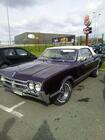
 cutlass 66 radiator coolant level

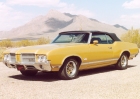


 )
)