When you click on links to various merchants on this site and make a purchase, this can result in this site earning a commission. Affiliate programs and affiliations include, but are not limited to, the eBay Partner Network.
I'd like to compression test the cylinders my Cutlass with the assist of a vintage remote starter switch. The instructions mention making a conection to a starter relay, but I can't find that part in any diagram in the Chassis Manual (unless I overlooked it).
So, how would I go about hooking this thing up? The darn starter is in a difficult spot and even if I jack the car up I'm not sure which wires to set the clips to. Detailed steps and/or pics would be appreciated.
Thanks
Last edited by stlbluesbrother; Oct 7, 2010 at 06:43 AM.
Reason: spell
On the solenoid there will be an S and an R terminal. The wire would go on the S terminal. I would run the wire down with the harness for the starter wires to keep it away from any heat source.
On the solenoid there will be an S and an R terminal. The wire would go on the S terminal. I would run the wire down with the harness for the starter wires to keep it away from any heat source.
So, to connect the clips to the starter solenoid I have to jack the car up? I don't see how this can be done otherwise as the starter is adjacent to the transmission.
You can find the starter interlock connection up under the dash, above the steering column - it allows the car to crank only in PARK for A/T cars or with the clutch down for M/T cars.
It's a large purple wire with a white stripe that connects to a large plain purple wire.
One goes to the starter, one goes to the switch (I forget which is which).
If you put power to the right one, she'll crank (the wrong one and nothing will happen).
You can find the starter interlock connection up under the dash, above the steering column - it allows the car to crank only in PARK for A/T cars or with the clutch down for M/T cars.
It's a large purple wire with a white stripe that connects to a large plain purple wire.
One goes to the starter, one goes to the switch (I forget which is which).
If you put power to the right one, she'll crank (the wrong one and nothing will happen).
- Eric
Hmm. The whole point of using a remote switch is so I can turn the engine over while peering into the engine compartment. I'm not sure the wires are long enough to reach that far.
You will have almost no success in using a remote start button on an Olds starter. The terminals for the wires are virtually impossible to reach with the starter in place. What I have done is to drop the starter and connect a wire to the "S" terminal on the starter solenoid. Reinstall the starter and run that wire to a convenient location. You can leave it in place if you insulate the end so it can't short accidentally. Now when you want to use the remote start button, connect one wire from the button to this new wire and the other to the battery positive terminal.
You will have almost no success in using a remote start button on an Olds starter. The terminals for the wires are virtually impossible to reach with the starter in place ...
You've confirmed what I've experienced thru trial and error. Thanks for the alternative suggestion; however, I'm must going to turn the engine over with the ignition key.
Side question: to get an accurate test do I turn the key two separate times? I got one reading of 180 lbs on one cylinder after cranking it 4 times or so.
You've confirmed what I've experienced thru trial and error. Thanks for the alternative suggestion; however, I'm must going to turn the engine over with the ignition key.
Side question: to get an accurate test do I turn the key two separate times? I got one reading of 180 lbs on one cylinder after cranking it 4 times or so.
When running a compression test, I crank the engine until the compression gauge stabilizes. Usually that requires several rotations of the engine.
The whole point of using a remote switch is so I can turn the engine over while peering into the engine compartment. I'm not sure the wires are long enough to reach that far.
Originally Posted by joe_padavano
The terminals for the wires are virtually impossible to reach with the starter in place. What I have done is to drop the starter and connect a wire to the "S" terminal on the starter solenoid. Reinstall the starter and run that wire to a convenient location. You can leave it in place if you insulate the end so it can't short accidentally. Now when you want to use the remote start button, connect one wire from the button to this new wire and the other to the battery positive terminal.
Yes, but as an alternative to dropping the starter, you can reach up into the dash, find the interlock terminal plug, piggyback on a second spade terminal, and run a new wire to wherever you wish, to use as a remote start button, and avoid the pitfalls of dropping a starter that weighs more than some modern engines.
Yes, but as an alternative to dropping the starter, you can reach up into the dash, find the interlock terminal plug, piggyback on a second spade terminal, and run a new wire to wherever you wish, to use as a remote start button, and avoid the pitfalls of dropping a starter that weighs more than some modern engines.
- Eric
Yup, you are completely correct. I have to admit that I wish I had thought of that. DOH!
I know this is an old thread, but I wanted to ask about the wire gauge for purple wire to the S terminal on the starter solenoid. It appears to be larger than 16 gauge, but would 16 gauge from the start button to the S terminal be sufficient? I don't find wire sizes anywhere in the CSM, so if it is there somewhere please let me know. Thanks for your help.
No. It will add resistance to the circuit under conditions of full-current flow to the solenoid, and could result in the solenoid not pulling in.
You aren't looking in the right places.
It's 12 gauge.
- Eric
Thanks Eric, for both your quick and detailed response. I was looking at the wiring diagram, but in my copy, the wire gauge and color is printed in black ink on the purple wire so I wasn't seeing it. Your picture makes it clear and when I magnify mine, I can now see it too. I'll try to attach a picture of mine.
Yes, there's a tremendous amount of detail in the original wiring schematics, much of which is lost in the "digital" copies that many people have.
Your is nice and clear, though - once you see the wire sizes, you won't miss them again.
Also, any wire without a size indicated is 18 gauge.
Is that true on generally all wiring diagrams or just Oldsmobile diagrams from the '60's & '70's?
It's true of GM's manuals, and many others as well, but not a universal standard.
This is from the '66 CSM, top right corner:
This information should be on all of the schematics, but I have not surveyed them to see whether it actually is or not, or whether it is printed elsewhere in the Chassis Electrical section.
It's true of GM's manuals, and many others as well, but not a universal standard.
This is from the '66 CSM, top right corner:
This information should be on all of the schematics, but I have not surveyed them to see whether it actually is or not, or whether it is printed elsewhere in the Chassis Electrical section.
You're welcome.
- Eric
Sho'nuff! Says the same thing on the wiring diagram in my '78 CSM. I guess I hadn't noticed that before.


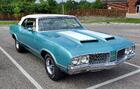
 Remote Starter Switch instructions