When you click on links to various merchants on this site and make a purchase, this can result in this site earning a commission. Affiliate programs and affiliations include, but are not limited to, the eBay Partner Network.
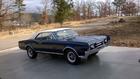
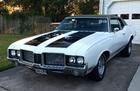
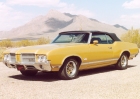
1970 Cutlass 350 Rocket
Can someone tell me why my radiator is draining into my overflow bottle? When I take the radiator cap off, I have full pressure but the radiator is half empty and the bottle is full. Is the thermostat stuck closed?
1970 Oldsmobiles did not have coolant recovery systems ("overflow jugs"). I suspect yours is aftermarket.
To use a CRS, you also have to have a pressure/vacuum type radiator cap. This allows overflow to the jug under certain hot engine conditions. The vacuum part of the cap allows coolant to be syphoned from the jug back into the radiator as the engine cools down.
Sounds to me like your car has a pressure relief only cap and it's venting coolant into the jug, then not allowing it to syphon back to the radiator.
Try replacing the radiator cap with one for a 75-later Olds. Specify it's for a car with overflow jug if you intend to keep the jug. Though a 1970 cooling system in good operating condition shouldn't even need it. You just have to remember NOT to fill the radiator to the bottom of the fill neck. There's a COLD FILL mark on the radiator tank, usually about 3" below the fill neck.
Good advice. You are correct the 1970 didn't have a Overflow bottle, but the knuckle head that put in a equivalent GM radiator put one in with an after flow,
Could it be I have one of the two ports open on the Overflow bottle - see picture? I left the other one open for air flow.
The overflow from radiator connects to the nipple that usually has an extension hose going to the bottom of the jug. The other nipple should have a rubber tube attached that directs jug overflow to the ground. Similar to the original overflow tube at the radiator cap.
Later versions routed radiator overflow to the bottom of the jug and the jug had a molded-in overflow spout.
If a head gasket had failed seems he'd see a lot of bubbling and churning in the jug. Radiator cap is the cheapest and quickest thing to check.
If that doesn't correct the condition we'll dig deeper.
Check to make sure that extension hose in the jug has not fallen off. Mine did and was sitting in the bottom of an empty jug last night. I had not used a spring clamp on it. There is one there now. I also have a heater core leak, which accounts for the missing coolant.
you dont have to buy a fancy cap , any year Olds V8 cap that came with a factory recovery system will work. Also had a quality made in India AC Delco 15 lb cap that would not hold 5lbs.. went to Stant..
Last edited by FStanley; Dec 19, 2021 at 08:39 AM.
Bill- did you talk with 72455 about that RC27 cap he has for sale? Or as FStanley says, any parts store should have an equivalent, just get one for 75-later. All those had recovery systems.
Last edited by rocketraider; Dec 11, 2021 at 01:04 PM.
HI RocketRaider - good to hear from you again and checking in on me.
I have not yet proceeded with the cap yet but will tonight - my car is still in pieces (interior) in the driveway awaiting a neutral safety switch. After the interior is complete I will decide whether I need the cap.
You're welcome and thanks for the vote of confidence, but there are plenty here who know as much or more than me.
But yeah, stupid Oldsmobiles have been beating me up for 50 years, so I think that experience should be used to help others. Especially people who have Oldsmobiles older than they are!👨🔧
To give you an update - l changed both the thermostat and reattached the hose in the reservoir that fell to the bottom. Everything is fine - the reservoir is not filling up.
Do not know if it was the reservoir hose or the thermostat - but all is good, If things get bad again I will try the CRS cap.
Are you still using the standard radiator pressure cap? You won't get full benefit of the recovery system unless you use the correct CRS pressure cap. If a standard cap relieves pressure into the jug, after things cool off the system can't pull coolant back from the jug into the radiator, which I think was the original issue.
With a recovery system, there should be some coolant in the overflow jug. Its sole purpose is to keep the entire radiator core flooded and to reduce coolant loss to atmosphere.
When using a recovery type pressure cap: fill the radiator to the bottom of the radiator cap neck, then fill the overflow jug to COLD FILL mark. Replace the pressure cap and run the engine to operating temperature. Shut it off and allow it to cool.
Once engine has cooled, check the level in the jug. If it has dropped, refill the jug to COLD FILL mark. It may take a few cycles to stabilize the level in the jug, but once it does simply check coolant level in the jug. You'll see it vary between COLD FILL and HOT FILL marks depending on conditions.
...the overflow jug...purpose is to keep the entire radiator core flooded and to reduce coolant loss to atmosphere.
And there is an additional benefit. Using the jug minimizes air contact with the coolant and extends coolant life.
Coolant absorbs carbon dioxide from the air, becomes acid, and promotes corrosion. That's why you must change your coolant on a schedule.
Coolant filters also extend coolant life because they have a slow-release pellet that neutralizes acid. If you change filters every few years, you don't have to change coolant.
while on this topic, I have a question. I have a 69 Cutlass with an overflow tank that has just the bottom connection. Am I suppose to have a coolant recovery tank or just an overflow to the ground? If I am suppose to have this tank what type cap should I have. With just one connection it seems like it would just keep it from dumping on the ground not returning it to the radiator?
thanks,
Steve
The connection on the bottom allows the coolant in the jug to be siphoned back into the radiator, once the engine cools down. This is the type of aftermarket jug I have on my car. It has a molded spout near the top to allow overflow if the jug fills up completely.
You would need a closed system type radiator cap for it to work properly.
And there is an additional benefit. Using the jug minimizes air contact with the coolant and extends coolant life.
Coolant absorbs carbon dioxide from the air, becomes acid, and promotes corrosion. That's why you must change your coolant on a schedule.
Coolant filters also extend coolant life because they have a slow-release pellet that neutralizes acid. If you change filters every few years, you don't have to change coolant.
Coolant filter is an interesting concept. Where would it mount in the system? I know some of the 20s-40s cars owners put a cone shaped screen in the upper radiator hose.
Where would (a coolant filter) mount in the system?
In my 1970 442, I ran a hose from a port at the driver-side back of the intake, under the passenger fender, to the filter mounted near the back of the headlight.
The filter outlet hose teed into the heater hose at the water pump.
That routing kept the filter accessible, but out of sight.