


CID vs Bore/Stroke


Thread Starter
Registered User
Joined: Dec 2011
Posts: 7,286
CID vs Bore/Stroke
It's all just math, pi are square and all that.
Has anyone else noticed that in the "olden days" they selected bore and stroke and the CID worked out to whatever it may be, then at some point they evidently realized that when you buy 'em by the millions, you can specify whatever size pistons YOU want and whatever stroke YOU want, and thereby compose the CID that you want?
here is a lot of various-make info:
http://books.google.com/books?id=eT7...412493&f=false
[caution- tons of casting iD errors even with a Quick Glance- e.g., 411990 "big block" intake (not) and 4A blocks not specifically named as having windowed main webs]
or
http://en.wikipedia.org/wiki/Oldsmobile_V8_engine
Example- 49-58 Olds engines' CID's 303, 324, 371, with bore and strokes that are not at my fingertips but I recall them being fractional inch handy numbers.
Later, 1970's, All the divisions had "a 350" but each with a different bore and stroke. Bore of 4.057- WTH is that? Four point oh five seven, really? Stroke of 3.385- what the heck kind of number is that?
Has anyone else noticed that in the "olden days" they selected bore and stroke and the CID worked out to whatever it may be, then at some point they evidently realized that when you buy 'em by the millions, you can specify whatever size pistons YOU want and whatever stroke YOU want, and thereby compose the CID that you want?
here is a lot of various-make info:
http://books.google.com/books?id=eT7...412493&f=false
[caution- tons of casting iD errors even with a Quick Glance- e.g., 411990 "big block" intake (not) and 4A blocks not specifically named as having windowed main webs]
or
http://en.wikipedia.org/wiki/Oldsmobile_V8_engine
Example- 49-58 Olds engines' CID's 303, 324, 371, with bore and strokes that are not at my fingertips but I recall them being fractional inch handy numbers.
Later, 1970's, All the divisions had "a 350" but each with a different bore and stroke. Bore of 4.057- WTH is that? Four point oh five seven, really? Stroke of 3.385- what the heck kind of number is that?
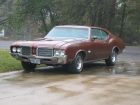
same but different
Joined: Jun 2007
Posts: 2,965
From: Central Missouri
All the manufactures/divisions had a given architectural design to work with, or work within its limitations.
Designers and Engineers have their plans and ideas, Accountants and Marketing have theirs. Maybe there were corporate rules they had to work with too. They all have to compromise. Everyone wants to have the biggest tool in the room.
Maybe the engineers wanted a 4'' piston and a 3-1/2'' stroke, but that didn't measure up
If you think in terms of retooling these operations, it could be pretty costly. I can see why they kept working with what the had, improving when possible. At some point a conclusion Is drawn, its time to redesign or totally drop production.
I've wondered why they kept the Olds engines alive so long. Why didn't it die like the pontiace V8 in 76? I would of have liked to hear the arguments in the board room when the buick poncho and caddy guys had to defend their...hmmm designs. At some point, somebody is getting wacked. Why did the olds design get another 13 or 14 years running?
Designers and Engineers have their plans and ideas, Accountants and Marketing have theirs. Maybe there were corporate rules they had to work with too.
They all have to compromise. Everyone wants to have the biggest tool in the room.Maybe the engineers wanted a 4'' piston and a 3-1/2'' stroke, but that didn't measure up
If you think in terms of retooling these operations, it could be pretty costly. I can see why they kept working with what the had, improving when possible. At some point a conclusion Is drawn, its time to redesign or totally drop production.
I've wondered why they kept the Olds engines alive so long. Why didn't it die like the pontiace V8 in 76? I would of have liked to hear the arguments in the board room when the buick poncho and caddy guys had to defend their...hmmm designs. At some point, somebody is getting wacked. Why did the olds design get another 13 or 14 years running?
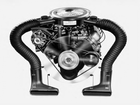
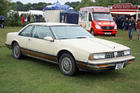
'87 Delta 88 Royale
Joined: Dec 2010
Posts: 2,514
From: Margate, England
It always struck me as bizarre that GM should have so many engines that essentially weren't much different. I know there are plenty who would lynch me for saying that Oldsmobile engines weren't simply better than all the others, but like all engines, it had strengths and weaknesses. I think it was production volume that secured its continuation after the Pontiac and Buick V8s demise, Chevrolet always sold plenty of their engines too.
Ford and Chrysler didn't upset their customers by putting the same engines in low price and upscale models, When Oldsmobile put Chevrolet engines on some of their cars it caused outrage among some customers.
The Buick V6 caused far less outcry when it became the across the board engine for H Body models, despite its being sold to AMC in the '60s and then bought back in the '70s.
Perhaps the bean counters should have decided to produce only one V8, and instructed other divisions to concentrate on developing modern multi cammed multi valved low emission fuel efficient engines. Then they would have had an answer to the onslaught of M/B, BMW and the Japanese large cars. But then hindsight is the only exact science.
Roger.
Ford and Chrysler didn't upset their customers by putting the same engines in low price and upscale models, When Oldsmobile put Chevrolet engines on some of their cars it caused outrage among some customers.
The Buick V6 caused far less outcry when it became the across the board engine for H Body models, despite its being sold to AMC in the '60s and then bought back in the '70s.
Perhaps the bean counters should have decided to produce only one V8, and instructed other divisions to concentrate on developing modern multi cammed multi valved low emission fuel efficient engines. Then they would have had an answer to the onslaught of M/B, BMW and the Japanese large cars. But then hindsight is the only exact science.
Roger.

Registered User
Joined: Oct 2010
Posts: 398
From: Austin, TX
The Oldsmobile engines were able to produce lower emissions than their counterparts. I recall the Pontiac 400 as a particularly "dirty" polluter. The Olds engines were the last GM mark to switch from carburetors to fuel injection in GM. It was due to the tight combustion chamber and the EPA rated pollution output.

Old(s) Fart
Joined: Mar 2007
Posts: 50,802
From: Northern VA
Did you go off your meds again?
Besides, everyone knows that pi are ROUND, cakes are square...
BADDA BING!
Registered User
Joined: Aug 2013
Posts: 12,798
From: Evansville, IN
GM was a merger of multiple brands, as we all know. Legacy design of something that works carries over into future designs because it is faster and cheaper. So, an Olds, a Poncho, and a Chevy block are different simply because they always have been. Now that GM has corporatized their engines, you get a GM engine. Where I work, the engines are always Toyota engines, and Scion and Lexus get them as well. Lexus engines have a little more clean room style assembly area, but they're still a Toyota block. So was the Pontiac Vibe, for that matter.
My grandfather once wryly commented when Oldsmobiles got some Chevy engines that they might be upset that they were given a better engine. I think the reason that the engines were similar size and layout but different is that corporate said to come up with X engine, and the various designers used their established practices to do it. This was a good way to do it as long as you could control the market. If some customer chose between Pontiac and Chevy, GM still won. Nowadays, with so many car companies, and such a tight bottom line, commonization is key to save money.
We once had a thread on ROP dissecting the various aspects of the Olds block over the Chevy. I think it died in a website crash. For my thinking, the Olds engine should have had better materials as it was costlier. I do think most GM engines will go the distance with proper maintenance, and most have the same upgrade potential, with some exceptions, like that tiny Olds 8....265?
I have noticed that some companies hit certain things. GM has always seemed to have hit 350 well, not so much the 302ish, other than the z28 engines. Ford, on the other hand, does a 302 very well, but the 351, not quite as much. This is very much a general, imprecise observation.
My grandfather once wryly commented when Oldsmobiles got some Chevy engines that they might be upset that they were given a better engine. I think the reason that the engines were similar size and layout but different is that corporate said to come up with X engine, and the various designers used their established practices to do it. This was a good way to do it as long as you could control the market. If some customer chose between Pontiac and Chevy, GM still won. Nowadays, with so many car companies, and such a tight bottom line, commonization is key to save money.
We once had a thread on ROP dissecting the various aspects of the Olds block over the Chevy. I think it died in a website crash. For my thinking, the Olds engine should have had better materials as it was costlier. I do think most GM engines will go the distance with proper maintenance, and most have the same upgrade potential, with some exceptions, like that tiny Olds 8....265?
I have noticed that some companies hit certain things. GM has always seemed to have hit 350 well, not so much the 302ish, other than the z28 engines. Ford, on the other hand, does a 302 very well, but the 351, not quite as much. This is very much a general, imprecise observation.
Old(s) Fart
Joined: Mar 2007
Posts: 50,802
From: Northern VA
The various GM divisions typically had common displacements due to corporate restrictions on engine size in model lines. Notice how the 64-67 A-body cars all had displacements in the same range:
Buick 340
Chevy 327
Olds 330
Pontiac 326
Then, the big blocks were all about seven liters:
Buick 430
Chevy 427
Olds 425
Pontiac 421 (and 428)
The seven liter mark had racing significance, as all automakers had something in that range:
Chrysler had the 426 (wedge and hemi)
Ford had the 427 and 428 and 429 (don't get me started...)
Later, GM set a limit of 400 cu in on the A-body cars, thus ever division had an engine in that range
Buick 401
Chevy 396 (and 402... go figure)
Olds 400 (short and long stroke)
Pontiac 400
And the full size cars (and later the A-bodies) eventually went to 7.5-ish liters
Buick 455
Chevy 454
Olds 455
Pontiac 455
Also:
Chrysler 440
Ford 460
The standard mid-size engine was the 5.7 liter engine, as all divisions had 350s, as well as the Chrysler 340/360 and the Ford 351 (and even AMC 340 and 360).
The 302s (Chevy and Ford) were children of the five liter racing classes. Other automakers chimed in later:
AMC 304
Chevy 305 and 307
Olds 307
Pontiac 301 (and the 303 racing engine)
I've never figured out why 4.3 liters was a magic number, but:
Chevy 265 and later 262
Olds 260 (gas and diesel, V8 and V6)
Pontiac 265
Also, Ford 260 originally and 255 in the 1970s
Buick 340
Chevy 327
Olds 330
Pontiac 326
Then, the big blocks were all about seven liters:
Buick 430
Chevy 427
Olds 425
Pontiac 421 (and 428)
The seven liter mark had racing significance, as all automakers had something in that range:
Chrysler had the 426 (wedge and hemi)
Ford had the 427 and 428 and 429 (don't get me started...)
Later, GM set a limit of 400 cu in on the A-body cars, thus ever division had an engine in that range
Buick 401
Chevy 396 (and 402... go figure)
Olds 400 (short and long stroke)
Pontiac 400
And the full size cars (and later the A-bodies) eventually went to 7.5-ish liters
Buick 455
Chevy 454
Olds 455
Pontiac 455
Also:
Chrysler 440
Ford 460
The standard mid-size engine was the 5.7 liter engine, as all divisions had 350s, as well as the Chrysler 340/360 and the Ford 351 (and even AMC 340 and 360).
The 302s (Chevy and Ford) were children of the five liter racing classes. Other automakers chimed in later:
AMC 304
Chevy 305 and 307
Olds 307
Pontiac 301 (and the 303 racing engine)
I've never figured out why 4.3 liters was a magic number, but:
Chevy 265 and later 262
Olds 260 (gas and diesel, V8 and V6)
Pontiac 265
Also, Ford 260 originally and 255 in the 1970s
Old(s) Fart
Joined: Mar 2007
Posts: 50,802
From: Northern VA
Of course, at the same time you have:
Olds 403
Pontiac 400
Chrysler 400
Ford 400M
Registered User
Joined: Mar 2010
Posts: 2,048
From: Mt Vernon,WA
Registered User
Joined: Mar 2010
Posts: 2,048
From: Mt Vernon,WA
I was under the impression he was talking about how thy came up with the bore an stroke combos. when you start from scratch you can use whatever numbers you want to come out with desired cid, obviously only the numbers that ad up correctly. So why use a 3.975 stroke in the 425 when they could have gone straight to an even 4"? or the 4.057 bore he mentioned, why not 4", unless somehow the calculated the stoke they wanted and found out they could add that extra .057". Ive thought about that before, more so the 425's stroke, weird to me that its 3.975" and not just 4"
Old(s) Fart
Joined: Mar 2007
Posts: 50,802
From: Northern VA
I was under the impression he was talking about how thy came up with the bore an stroke combos. when you start from scratch you can use whatever numbers you want to come out with desired cid, obviously only the numbers that ad up correctly. So why use a 3.975 stroke in the 425 when they could have gone straight to an even 4"? or the 4.057 bore he mentioned, why not 4", unless somehow the calculated the stoke they wanted and found out they could add that extra .057". Ive thought about that before, more so the 425's stroke, weird to me that its 3.975" and not just 4"
When Olds retained the 4 1/8" bore for the 455, that drove the stroke to 4 1/4". Using this same crank on the 400 motor forced the bore to the oddball 3.89" dimension. It's easier to tool up for piston molds than crankshaft molds.
On the 350, the stroke was predetermined because Olds used the same 3.385" stroke as the 330. A 4" bore would have resulted in a displacement of 340 cu in.
Thread Starter
Registered User
Joined: Dec 2011
Posts: 7,286
Interesting direction this has gone
Many different perspectives!
I love it.
"I've never figured out why 4.3 liters was a magic number..."
I noticed at some point that the 4.3 Diesel V6 Olds is very, very much a 350 diesel with 2 cylinders lopped off. Same pistons, stroke, timing cover, part of the exhaust manifold...
A real Weirdity.
Many different perspectives!
I love it.
"I've never figured out why 4.3 liters was a magic number..."
I noticed at some point that the 4.3 Diesel V6 Olds is very, very much a 350 diesel with 2 cylinders lopped off. Same pistons, stroke, timing cover, part of the exhaust manifold...
A real Weirdity.
Old(s) Fart
Joined: Mar 2007
Posts: 50,802
From: Northern VA
Interesting direction this has gone
Many different perspectives!
I love it.
"I've never figured out why 4.3 liters was a magic number..."
I noticed at some point that the 4.3 Diesel V6 Olds is very, very much a 350 diesel with 2 cylinders lopped off. Same pistons, stroke, timing cover, part of the exhaust manifold...
A real Weirdity.
Many different perspectives!
I love it.
"I've never figured out why 4.3 liters was a magic number..."
I noticed at some point that the 4.3 Diesel V6 Olds is very, very much a 350 diesel with 2 cylinders lopped off. Same pistons, stroke, timing cover, part of the exhaust manifold...
A real Weirdity.
Registered User
Joined: Mar 2010
Posts: 2,048
From: Mt Vernon,WA
On the 425, the bore was 4 1/8". a 4" stroke would have resulted in a displacement of 428 cu in. Also, the 3.975" stroke, when combined with a 4" bore, yielded the 400 cu in engine of the 442.
When Olds retained the 4 1/8" bore for the 455, that drove the stroke to 4 1/4". Using this same crank on the 400 motor forced the bore to the oddball 3.89" dimension. It's easier to tool up for piston molds than crankshaft molds.
On the 350, the stroke was predetermined because Olds used the same 3.385" stroke as the 330. A 4" bore would have resulted in a displacement of 340 cu in.
When Olds retained the 4 1/8" bore for the 455, that drove the stroke to 4 1/4". Using this same crank on the 400 motor forced the bore to the oddball 3.89" dimension. It's easier to tool up for piston molds than crankshaft molds.
On the 350, the stroke was predetermined because Olds used the same 3.385" stroke as the 330. A 4" bore would have resulted in a displacement of 340 cu in.
'87 Delta 88 Royale
Joined: Dec 2010
Posts: 2,514
From: Margate, England
Yup, just like the Chebby 4.3 V6 is 3/4 of a 350 SBC. Keep in mind that most engine designs that we are talking about are not clean sheet designs, but are constrained by reuse of existing components, or fixed block architecture constraints, or other engineering constraints (bearing speeds, rod speed, internal forces, etc, etc.).
I think it might be GM's #2 best selling engine behind the sbc, anyone got any production figures?.
I wonder what the biggest selling ever engine is, the 50cc Honda unit strikes me as a possibilty, maybe a Briggs and Stratton?.
Roger.

Registered User
Joined: Nov 2014
Posts: 90
The (Pontiac) Iron Duke 4 cyl. was, for some years, one of the biggest selling auto engines in the world. It was also considered as having been produced in greater overall numbers than any automotive engine in history by the time it neared the end of its decades long run. This number may have been eclipsed by other engines by now tho.
Old(s) Fart
Joined: Mar 2007
Posts: 50,802
From: Northern VA
Well, almost. The original Fireball V6 was based on the architecture of the aluminum 215 (though the six was made from cast iron), but the 198 cu in displacement was not 3/4 of 215. The 198 used a bore of 3.625 inches and stroke of 3.1875 inches, which are completely unrelated to the 3.500 bore and 2.800 stroke of the 215. When the 215 was changed to the iron 300 for the 1964 model year, the bore and stroke of the V6 were changed to match the 3.750 x 3.400 dimensions of the V8, yielding 225 cu in and thus truly becoming 3/4 of a V8. When GM got the V6 back from AMC in the 1970s, the bore was enlarged to match the 3.800" bore of the Buick 350, but stroke remained at 3.400, yielding the now-famous 231/3800 motor. Bore was later bumped to 3.965" to get the 252/4.1 liter version.
Old(s) Fart
Joined: Mar 2007
Posts: 50,802
From: Northern VA
could they not have just made 428's? as for the 455 using the same bore as 425 yes but they arent the same piston, so they werent saving money by continuing to cast pistons with old molds. and the 350 using the same stroke as the 330 is on the same base, cast vs forged. maybe they saved money to cast them but since they had to make castings why go with the same stroke? I have no idea why one would choose a certain bore and stroke for a certain cubic inch but across gm for the same cid ive never noticed any with the same combo, always different bore x stroke for the same displacement.
One (self-imposed) design constraint was to restrict the number of crankshaft designs. Whether forged or cast, the basic design of the crank is driven by bore spacing, bearing sizing, counterweight sizing and clearances, piston-to-crank clearances, crank-to-cam clearances, etc, etc. And keep in mind that production cost is an extremely important design constraint. Yeah, people build stroker SBOs, but even ignoring the crank costs, there are issues like internal clearances with the longer arm. Olds engineers decided it was far easier to keep the 3.385" stroke, maintain the existing internal clearances and counterweights, and simply increase bore in the block. As for the 400/425 pair, I suspect that both motors were designed at the same time, and since the A-body was limited to 400 cu in, and Olds decided to use a 4.000" bore, that drove stroke to 3.980". Using the same stroke on the 4.125" bore block gets 425 cu in. Keeping the same 4.125" bore for the 455 (it's not piston cost that drives it, it's the tooling on the assembly line to bore and hone those blocks) requires a 4.25" stroke, and keeping that same 4.25" crank for the 400 requires a 3.890" bore. I'm guessing that Olds expected to build way more 455s than long stroke 400 motors (and they did).
Old(s) Fart
Joined: Mar 2007
Posts: 50,802
From: Northern VA
Old(s) Fart
Joined: Mar 2007
Posts: 50,802
From: Northern VA

Yes, AMC used the Buick V6 (in 225 cu in form), the Iron Duke four, and the Chevy 2.8 V6. They also used Delco distributors (including the window distributors on V8s) and assorted electrical parts, Saginaw steering boxes and pumps, and Harrison A/C parts.
Registered User
Joined: Dec 2010
Posts: 192
From: Milwaukee, WI
Displacements
Olds engines have a different deck height between the SB (350) and BB (455), which dictates two transfer lines to surface two different blocks at two different deck heights. Once the deck height and bore centers are determined, using that pi thing, allowable displacements simply fall off the slide rule.
Now back to the 400/402 Chevys for a bit...the 400 was a SB as stated. The 402 was a BB, as a result of a slight bore increase from the 396. The "SS396" badging was retained.
Now back to the 400/402 Chevys for a bit...the 400 was a SB as stated. The 402 was a BB, as a result of a slight bore increase from the 396. The "SS396" badging was retained.
Registered User
Joined: Aug 2013
Posts: 12,798
From: Evansville, IN
Well, since I've been at least partly responsible for driving this thread off the road and through the weeds, let's keep going into oncoming traffic on the other side of the freeway...
Yes, AMC used the Buick V6 (in 225 cu in form), the Iron Duke four, and the Chevy 2.8 V6. They also used Delco distributors (including the window distributors on V8s) and assorted electrical parts, Saginaw steering boxes and pumps, and Harrison A/C parts.
Yes, AMC used the Buick V6 (in 225 cu in form), the Iron Duke four, and the Chevy 2.8 V6. They also used Delco distributors (including the window distributors on V8s) and assorted electrical parts, Saginaw steering boxes and pumps, and Harrison A/C parts.
'87 Delta 88 Royale
Joined: Dec 2010
Posts: 2,514
From: Margate, England
Using other makers hardware has been a common practice in Europe for many years, as has sharing development costs. Renault, Peugeot and Volvo all made the same V6 for their large cars back in the '70s. Diesel Fords had a Peugeot engine for several years, Opel (part of GM) Omega diesels were BMW powered, as were a few mk6 Linolns back in the day.
Some cars from different makers are identical apart from badges, the Toyota Aygo and Peugeot 107 are the same car, French styling with Toyota running gear.
When all the GM divisions were selling in huge numbers I guess it didn't matter that they all made their own engines, it wasn't until the late '60s that the transmissions were rationalised. Was other hardware like brakes,suspension etc interchangable back in the day?.
Roger.
Some cars from different makers are identical apart from badges, the Toyota Aygo and Peugeot 107 are the same car, French styling with Toyota running gear.
When all the GM divisions were selling in huge numbers I guess it didn't matter that they all made their own engines, it wasn't until the late '60s that the transmissions were rationalised. Was other hardware like brakes,suspension etc interchangable back in the day?.
Roger.
Old(s) Fart
Joined: Mar 2007
Posts: 50,802
From: Northern VA
Olds engines have a different deck height between the SB (350) and BB (455), which dictates two transfer lines to surface two different blocks at two different deck heights. Once the deck height and bore centers are determined, using that pi thing, allowable displacements simply fall off the slide rule.
Sorry, but what does bore spacing and deck height have to do with displacement? Yeah, the architecture will limit the maximum bore and stroke, but none of these motors are anywhere near the maximum. The fact that one can build a 440+ cu in motor out of a DX block demonstrates that these factors don't matter.
Thread Starter
Registered User
Joined: Dec 2011
Posts: 7,286
"She's real fine, my 409..."
4.3125 x 3.500
per http://www.348-409.com/general.html
Olds 403:
4.351 x 3.385
per http://en.wikipedia.org/wiki/Oldsmobile_V8_engine
Sounds remarkably similar. Nearly identical.
by the way, I put most of this wording in the wiki:
"The Toronado version of the 1977 Oldsmobile 403 engine was fitted with a crank triggered ignition system. Parts peculiar to this system include a toothed disc between the harmonic balancer and the crank pulley, the adjacent sensor, a special distributor, an engine temperature sensor, and a rudimentary computer mounted inside the car, under the dash. No other years or models were provided with this system."
Maybe we should add the Soiled [sic] Main Web text too.
4.3125 x 3.500
per http://www.348-409.com/general.html
Olds 403:
4.351 x 3.385
per http://en.wikipedia.org/wiki/Oldsmobile_V8_engine
Sounds remarkably similar. Nearly identical.
by the way, I put most of this wording in the wiki:
"The Toronado version of the 1977 Oldsmobile 403 engine was fitted with a crank triggered ignition system. Parts peculiar to this system include a toothed disc between the harmonic balancer and the crank pulley, the adjacent sensor, a special distributor, an engine temperature sensor, and a rudimentary computer mounted inside the car, under the dash. No other years or models were provided with this system."
Maybe we should add the Soiled [sic] Main Web text too.
'87 Delta 88 Royale
Joined: Dec 2010
Posts: 2,514
From: Margate, England
Why would the Pontiac engine be picked for making a four in line, why the Buick for a V6?.
The smog Olds engines of the '80s had reworked heads to make them comply with new pollution laws, as did the Buick V6. I think it entirely feasible that similar development of other GM engines would have worked. They were all oversquare two valve pushrod designs, anyone who could work on one of them wouldn't have any problems figuring how to work on the others, or Ford, Chrysler, even AMC V8s too.
Roger.
Registered User
Joined: Nov 2014
Posts: 90
The Iron Duke was a Pontiac design from '56 IIRC. The other Pontiac 4 cyl. was indeed half a V8 (this 1/2 V8 engine didn't fair well, in part, because of its excessive weight). The Iron Duke, of course, later saw use in a broad range of GM cars. It was also used in the Chevy S10 and GMC S15 trucks.

Old(s) Fart
Joined: Mar 2007
Posts: 50,802
From: Northern VA
OK, now there's lots of mis-information on four cylinder engines.
The Chevy 153 used in the early Novas was essentially 2/3 of the 230 cu in inline six cylinder engine. This engine was used in the US in the 1960s (including service in a lot of postal jeeps) and was built internationally into the 1980s. The cylinders are oriented vertically. It is completely unrelated to the Iron Duke or any Pontiac motors.
The 151 cu in Iron Duke was a new design four cylinder that was first released in 1977 in the Pontiac Astre (think Vega with a split grille). The cylinders are also oriented vertically. It was used through the early 1990s in all sorts of RWD and FWD cars and trucks, including S-10s and F-body cars.
The Pontiac slant four was called both the Indy 4 and the Trophy 4 and was only offered in the 1961-63 Tempest. It was 194.5 cu in, which you will note is exactly half of 389 cu in. This engine was essentially the LH bank of a Pontiac 389 V8. Cylinders were in the same place as on the V8 (angled at 45 deg from vertical). The cylinder head, valvetrain, timing gears, front cover, oil pan, pistons, and rods were the same parts used on the 389. Naturally, the block, crank, and cam were unique to the four cylinder engine (but the stroke was the same as for the 389). The problem with this engine is the natural harmonics of a four cylinder, which grow dramatically as displacement increases. These engines definitely provided a "magic fingers" experience while driving.
By the way, you will note that the similarity between the slant four and V8 motors allowed Pontiac to very easily drop the 326 into the 1963 Tempests, and even the 421 for the Super Duty cars.
The Chevy 153 used in the early Novas was essentially 2/3 of the 230 cu in inline six cylinder engine. This engine was used in the US in the 1960s (including service in a lot of postal jeeps) and was built internationally into the 1980s. The cylinders are oriented vertically. It is completely unrelated to the Iron Duke or any Pontiac motors.
The 151 cu in Iron Duke was a new design four cylinder that was first released in 1977 in the Pontiac Astre (think Vega with a split grille). The cylinders are also oriented vertically. It was used through the early 1990s in all sorts of RWD and FWD cars and trucks, including S-10s and F-body cars.
The Pontiac slant four was called both the Indy 4 and the Trophy 4 and was only offered in the 1961-63 Tempest. It was 194.5 cu in, which you will note is exactly half of 389 cu in. This engine was essentially the LH bank of a Pontiac 389 V8. Cylinders were in the same place as on the V8 (angled at 45 deg from vertical). The cylinder head, valvetrain, timing gears, front cover, oil pan, pistons, and rods were the same parts used on the 389. Naturally, the block, crank, and cam were unique to the four cylinder engine (but the stroke was the same as for the 389). The problem with this engine is the natural harmonics of a four cylinder, which grow dramatically as displacement increases. These engines definitely provided a "magic fingers" experience while driving.
By the way, you will note that the similarity between the slant four and V8 motors allowed Pontiac to very easily drop the 326 into the 1963 Tempests, and even the 421 for the Super Duty cars.
Registered User
Joined: Nov 2014
Posts: 90
Thanks for the clarifications. I obviously got the older Pontiac 4 mixed up with the newer Iron Duke.
Old(s) Fart
Joined: Mar 2007
Posts: 50,802
From: Northern VA
Registered User
Joined: Mar 2010
Posts: 2,048
From: Mt Vernon,WA
i had a 62 chevy II 4 cylinder, original engine needed a rebuild badly so i put a mercruiser 181 in it. bolted my stock head on it and it even accepted my z bar pivot. fast little 4 cylinder that got upper 20's mpg. one of those i shouldnt have sold.


