When you click on links to various merchants on this site and make a purchase, this can result in this site earning a commission. Affiliate programs and affiliations include, but are not limited to, the eBay Partner Network.
Open hood pictures of non running 70-72 OAI setups show the flapper in the down position. This position allows air in around the outside perimeter of the air filter in the base assy. I assume when the engine starts the vacuum module pulls the door shut thus forcing air to enter through the snorkel of the base. In theory, this seems counter productive in providing cooler air in from the hood inlets.
In an attempt to wrap my head around how this all works, I stumbled across a video on youtube that shows the flapper in motion on a car featured in the video.. Forward to about the one minute mark on this video to see what I'm talking about.
My question is this.. Does the suction created by air pulled in by the carb simply overpower the vacuum module and pull the door down during acceleration or is there some other function of the vacuum module that moves the door?
thanks,
tc
Last edited by 4+4+2=10; Feb 15, 2021 at 11:40 AM.
The flapper is operated by manifold vacuum. When the engine isn't running, there is no vacuum, so the flapper drops open. At idle and low speeds, manifold vacuum is high, so the flapper pulls closed. This allows the hot air stove to feed the engine so it warms up faster. At wide open throttle, manifold vacuum drops to zero again, so the flapper opens exactly when you need it. The engineers kinda knew what they were doing.
I guess you could unplug the vacuum motor if you were on a hot road trip. I mean, unplug it at the source and cap the port.
Additionally, that flapper thing was for all the "in the hood" kind, and the equivalent was on 68 and 69 for fed regulations, too. 66 and 67 tolerated none of that crap, and their hoses just went straight to the front.
Quick & easy to remove the flapper at the hinge, remove the 2 screws holding vac motor and stick a golf tee in the vac line if you want full time OAI, takes less than a minute. I don’t know if it does anything but iirc it gives you more intake sound at idle and all throttle positions, kinda like the ole air cleaner cover flip.
Nothing like the sound of that flapper coming open at WOT. Forward motion of all that air rushing in just adds to it. I highly doubt Hot Rods claim. More like driver inconsistency, heat, traction etc.
Quick & easy to remove the flapper at the hinge, remove the 2 screws holding vac motor and stick a golf tee in the vac line if you want full time OAI, takes less than a minute. I don’t know if it does anything but iirc it gives you more intake sound, kinda like the ole air cleaner cover flip.
Air enters the open gap around three sides of the flapper (WOT) and is directed to the rear. Remove the flapper and you have the whole opening to allow the straightest air entry and it can flow where it needs to go. Some "smart guy with a slide rule" might be able to calculate the increase in cross sectional area difference and how many CFM's the air flow would increase.
It shouldn't make any noticeable increase in sound, since the flapper door would be open at WOT.
I highly doubt Hot Rods claim. More like driver inconsistency, heat, traction etc.
Same day, same track, same driver (John Dianna, who knew - and knows - a thing or two about launching a car). I did mis-remember one detail, however. They removed both the flapper and the air filter element (so presumably the small lid above the element) and picked up 0.12 seconds. Unfortunately we don't know how much of that was flapper alone.
April 1970 issue. Read it for yourself and decide.
Same day, same track, same driver (John Dianna, who knew - and knows - a thing or two about launching a car). I did mis-remember one detail, however. They removed both the flapper and the air filter element (so presumably the small lid above the element) and picked up 0.12 seconds. Unfortunately we don't know how much of that was flapper alone.
Same day, same track, same driver (John Dianna, who knew - and knows - a thing or two about launching a car). I did mis-remember one detail, however. They removed both the flapper and the air filter element (so presumably the small lid above the element) and picked up 0.12 seconds. Unfortunately we don't know how much of that was flapper alone.
April 1970 issue. Read it for yourself and decide.
Impressive bit of memory for an old guy there Joe.. Also changed to a hotter set of plugs. Doubt if there are many among us willing to run filterless on the street to gain that advantage, but it does seem to add a bit of track performance.
There is also a temp sensor on the air cleaner base which only allows heated air through the snorkel vacuum motor until engine gets up to operating temp. After that the snorkel draws in air from the engine compartment instead of the heat shroud. It's good to check that this is working properly or performance will suffer.
Impressive bit of memory for an old guy there Joe.. Also changed to a hotter set of plugs. Doubt if there are many among us willing to run filterless on the street to gain that advantage, but it does seem to add a bit of track performance.
Obviously you're not going to do that on the street, and frankly, you won't notice a tenth in street driving anyway. And FYI, I still have that original issue from my subscription.
Nice TX Hill Country drone footage in that video.....a buddy of mine owns the car (he's driving).
NOTE: looks like a possibly earlier version of the repro flapper door on there.
Tell your buddy thanks for posting the video. I also liked his choice of background music. Watching that flapper move with the rpm rise was cool to see. I can imagine that getting a lot of attention on cruise night parking lot gatherings.




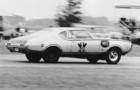

 Also changed to a hotter set of plugs. Doubt if there are many among us willing to run filterless on the street to gain that advantage, but it does seem to add a bit of track performance.


