


Whiff of oil


Thread Starter
Registered User
Joined: Nov 2020
Posts: 426
From: Washington State
Whiff of oil
I have been wondering where a quart of oil goes every 1000 to 1200 miles of driving my 71 cutlass with a 455. Tonight I had it out and noticed the faint smell of oil when I took my foot off the gas after bringing it up to 80. I haven't noticed this before but the windows are usually down during warmer weather. Since I replaced the leaking power steering pump, I haven't seen any oil/fluid on the floor, so I'm pretty sure it's burning the lost oil although I have never seen any blue smoke out the tailpipe. The car runs great, so I just keep it topped off, but I would be interested to know what the gurus here think might be the cause and if there is anything to worry about.
Thread Starter
Registered User
Joined: Nov 2020
Posts: 426
From: Washington State

Running On Empty
Joined: Jul 2018
Posts: 26,049
From: Earth
That's good oil and good additive. My suggestion was more of a long shot, yet there are instances low viscosity cheap oil gets burned up much faster than a premium high viscosity oil.
Running On Empty
Joined: Jul 2018
Posts: 26,049
From: Earth
I don't know the answer to your oil loss. I recognize "some" history of your posts, but not all. As a suggestion, which would be where I'd head first if it were my engine, I'd perform both a dry and a wet compression test on the eight cylinders. I think, in general, either worn/stuck piston rings or worn valve seals first come to mind. Performing a dry & a wet compression test is inexpensive & the numbers can provide decent insight on the possibility of bad rings &/or worn/stuck valve seals. Just a suggestion and easy to perform.
Running On Empty
Joined: Jul 2018
Posts: 26,049
From: Earth
Registered User
Joined: Nov 2015
Posts: 685
From: So. Ca.
Just a long shot but the PCV system is often overlooked as a cause of oil consumption. Maybe replace the valve & clean the breathers or replace. I've dissected good looking breathers and found them corroded inside with rust.

Moderator
Joined: Jul 2007
Posts: 18,225
From: Edmond, OK
Generally speaking, a puff of blue oil smoke at start up can be attributed to worn valve guide seals, while smoke upon acceleration is a sign of worn rings. Norm is right on the money suggesting a dry/wet compression test.

Registered User
Joined: Jun 2009
Posts: 15,193
From: southeastern Michigan
This is interesting. I didn't know oil had a smell, at least that you could notice as obvious the way you can with gasoline. I've changed the oil on my cars about 100 million times over my life, and I've never noticed any particular odor from the oil in the collection pan.
My guess is that you're either imagining the smell because the power of suggestion is a real thing, or you're smelling some other fluid.
How many miles on the engine? As engines wear, they consume more oil.
If it were me, putting in a quart of oil every thousand miles is nothing to worry about. I wouldn't tear the engine apart trying to fix it or pull my hair out worrying about it. If it needs oil every time you fill the tank, then I'd worry.
My guess is that you're either imagining the smell because the power of suggestion is a real thing, or you're smelling some other fluid.
How many miles on the engine? As engines wear, they consume more oil.
If it were me, putting in a quart of oil every thousand miles is nothing to worry about. I wouldn't tear the engine apart trying to fix it or pull my hair out worrying about it. If it needs oil every time you fill the tank, then I'd worry.


Registered User
Joined: Aug 2017
Posts: 329
From: North Carolina
I'd suggest refreshing the PCV system and making sure that is functioning properly first. It's a cheap hedge to start with. If that doesn't cure it, it is time to do the compression and leakdown tests.


CH3NO2 LEARN IT BURN IT
Joined: Jul 2010
Posts: 5,635
From: Land of Taxes
7 other plugs look like the one above?
1qt every 1-1.2K isnt horrible. Its elevated but not to the point of concern.
Verify the PCV isnt pulling it in. Verify the correct valve is installed etc.
Run it with the PCV removed still connected to the hose end. Pull the tube off the other valve cover. Run the engine and observe the amount of blow by. If its not excessive your are ok.
1qt every 1-1.2K isnt horrible. Its elevated but not to the point of concern.
Verify the PCV isnt pulling it in. Verify the correct valve is installed etc.
Run it with the PCV removed still connected to the hose end. Pull the tube off the other valve cover. Run the engine and observe the amount of blow by. If its not excessive your are ok.
Thread Starter
Registered User
Joined: Nov 2020
Posts: 426
From: Washington State
The other plugs look the same except the passenger rear which I don't have the tools to access. This also makes it tough to do a compression test since I believe all the plugs need to be removed to test. I will check for blowby as described above. I replaced the PCV recently. I will check for oil in the line to the carb. Not sure if this would indicate a bad valve, since I would assume there would be a little oil residue in the line over time. Correct me if I'm wrong.
Running On Empty
Joined: Jul 2018
Posts: 26,049
From: Earth
The back passenger side is always somewhat of a challenge. It's preferable you perform the compression &/or leak-down on all eight cylinders; yet, seven cylinders would probably suffice as it represents 88% of your cylinder compression.
Moderator
Joined: Jul 2007
Posts: 18,225
From: Edmond, OK
Make sure you do a compression test on all the cylinders. If you need a 3" extension or wobble extension then buy one.
Also, make sure you have another car running with jumper cables connected when you crank over your 72 and do the compression test. Without another car running jumper cables you'll quickly drain the battery and get a bad compression reading.
Also, make sure you have another car running with jumper cables connected when you crank over your 72 and do the compression test. Without another car running jumper cables you'll quickly drain the battery and get a bad compression reading.
Running On Empty
Joined: Jul 2018
Posts: 26,049
From: Earth
Thread Starter
Registered User
Joined: Nov 2020
Posts: 426
From: Washington State
7 other plugs look like the one above?
1qt every 1-1.2K isnt horrible. Its elevated but not to the point of concern.
Verify the PCV isnt pulling it in. Verify the correct valve is installed etc.
Run it with the PCV removed still connected to the hose end. Pull the tube off the other valve cover. Run the engine and observe the amount of blow by. If its not excessive your are ok.
1qt every 1-1.2K isnt horrible. Its elevated but not to the point of concern.
Verify the PCV isnt pulling it in. Verify the correct valve is installed etc.
Run it with the PCV removed still connected to the hose end. Pull the tube off the other valve cover. Run the engine and observe the amount of blow by. If its not excessive your are ok.
Moderator
Joined: Jul 2007
Posts: 18,225
From: Edmond, OK
That would work just as well if it's available. I have a 2/10 Amp charger that I don't think would keep up with cranking the 455 in my 71 for very long. Last time I did a compression test I did it dry then tried to do it wet. The battery didn't last through the wet compression test so MAW keep the battery healthy if you can.
Thread Starter
Registered User
Joined: Nov 2020
Posts: 426
From: Washington State
One thing I noticed was oil on the PCV valve. No smoke, but oil. Is that normal or is something like the valve cover baffling not working. Regarding compression, a test would be good, but when I used a vacuum meter to set my idle mixture, I also did all the diagnostics I found online for which the meter can be used. I don't remember the indicator now and would need to refer to the website, but the meter test indicated there wasn't a compression issue.
Running On Empty
Joined: Jul 2018
Posts: 26,049
From: Earth
Baffles inside the valve covers shouldn't be an issue w/ regards to burning/losing oil. I'm not following you regarding use of a vacuum gauge (meter). Yes, you can use a vacuum gauge on your vacuum lines to check vacuum, establish/adjust your carburetor A/F mixture screws (and set idle). Most vacuum gauges are dedicated to reading vacuum and it is measured in inches of mercury (Hg). If it's a dual function gauge, you may have used a dual function gauge which can read both vacuum & fuel pump pressure. However, fuel pump pressure readings are almost always below 30PSI when included on a dual function vacuum/fuel pressure gauge. A compression test gauge needs to be able to test up ~190PSI. Generally, a compression test gauge is a dedicated gauge. Therefore, I'm unclear how the meter you used indicated there wasn't a compression issue.
Running On Empty
Joined: Jul 2018
Posts: 26,049
From: Earth
That would work just as well if it's available. I have a 2/10 Amp charger that I don't think would keep up with cranking the 455 in my 71 for very long. Last time I did a compression test I did it dry then tried to do it wet. The battery didn't last through the wet compression test so MAW keep the battery healthy if you can.

Thread Starter
Registered User
Joined: Nov 2020
Posts: 426
From: Washington State
Baffles inside the valve covers shouldn't be an issue w/ regards to burning/losing oil. I'm not following you regarding use of a vacuum gauge (meter). Yes, you can use a vacuum gauge on your vacuum lines to check vacuum, establish/adjust your carburetor A/F mixture screws (and set idle). Most vacuum gauges are dedicated to reading vacuum and it is measured in inches of mercury (Hg). If it's a dual function gauge, you may have used a dual function gauge which can read both vacuum & fuel pump pressure. However, fuel pump pressure readings are almost always below 30PSI when included on a dual function vacuum/fuel pressure gauge. A compression test gauge needs to be able to test up ~190PSI. Generally, a compression test gauge is a dedicated gauge. Therefore, I'm unclear how the meter you used indicated there wasn't a compression issue.


Proud Viet Nam Veteran
Joined: Dec 2006
Posts: 10,817
From: Rowlett, TX
Guys, if you have all the plugs out doing a compression test, it don't take a lot to spin the engine over. I have never had a problem with all the plugs out. Maybe I just had a good battery.
Running On Empty
Joined: Jul 2018
Posts: 26,049
From: Earth
Glenn - Fully agree & that's how I go about doing the test. I remove them all then begin the test, one cylinder dry>wet, then move onto the next. You bring up a valid consideration none-the-less I do remove all the plugs before I begin. Good call.
Proud Viet Nam Veteran
Joined: Dec 2006
Posts: 10,817
From: Rowlett, TX
A tip on pulling that #8 plug on the passenger side. I have had two 72 Cutlasses with 350's. I have a spark plug socket for a 3/8 drive ratchet. But, on the top end of the socket, it has a hex head for a 3/4 inch box end wrench. The image below is a little large. 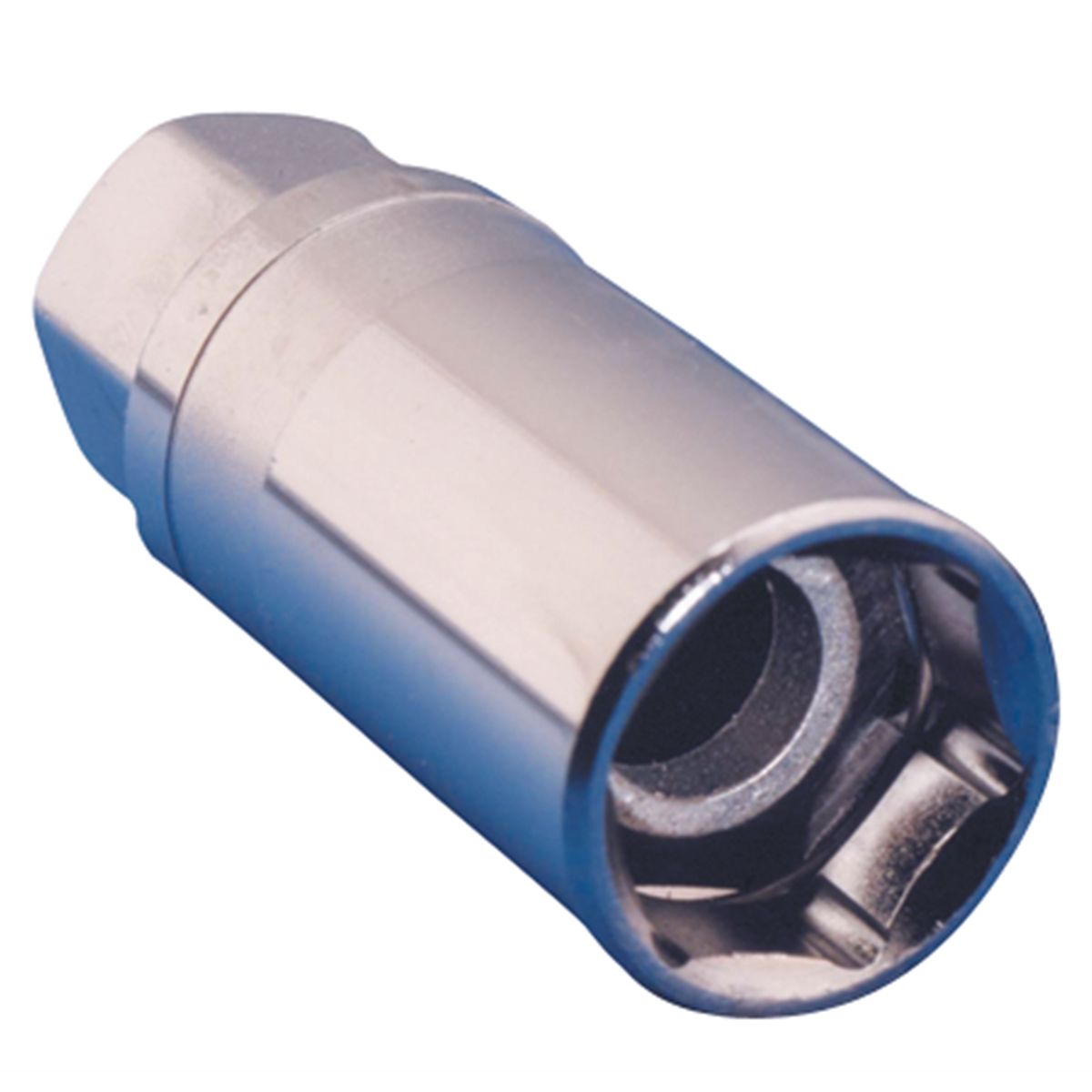 rench. This is the only way I have ever got that plug out.
rench. This is the only way I have ever got that plug out.
Thread Starter
Registered User
Joined: Nov 2020
Posts: 426
From: Washington State
That's the diagram I saw. There is a good write up with it. The motor had 150 psi within 10 percent when installed. Nothing has changed with the way it runs or the amount of oil it uses since then. Actually it runs better since I have made adjustments to the timing and carb. I would be interested to know if oil on the PCV is normal. It would seem to me when the valve opens it would pull oil into it if oil is coming into contact with it.
Running On Empty
Joined: Jul 2018
Posts: 26,049
From: Earth
Exactly same as me. I think I may have the longer extended version. But, you're correct, slide the socket onto the plug then use a box-end wrench. It's actually more difficult to get the plug wire on/off.
Thread Starter
Registered User
Joined: Nov 2020
Posts: 426
From: Washington State
Thanks for the image. With the 455, I can't even get my hand in there to pull the wire. When I had the head gaskets replaced, I asked them to leave the unreachable fasteners off so I could remove the inboard site of the box to replace that plug. The AC is disconnected.
Running On Empty
Joined: Jul 2018
Posts: 26,049
From: Earth
That's the diagram I saw. There is a good write up with it. The motor had 150 psi within 10 percent when installed. Nothing has changed with the way it runs or the amount of oil it uses since then. Actually it runs better since I have made adjustments to the timing and carb. I would be interested to know if oil on the PCV is normal. It would seem to me when the valve opens it would pull oil into it if oil is coming into contact with it.

Proud Viet Nam Veteran
Joined: Dec 2006
Posts: 10,817
From: Rowlett, TX
I am sure I had to do the same thing on the 455 in my Hurst Olds. Getting the plug wire off can be a real PIA. When age starts catching up with you and you have arthritis in your hands it gets a little more challenging.
Thread Starter
Registered User
Joined: Nov 2020
Posts: 426
From: Washington State
Thanks for the info. I agree, 2 to 3 quarts is a bit much. Wouldn't there be some blowby if a ring was the issue? I'm wondering it it might be a valve stem seals. I don't think that would cause compression issues since the valves would still seat properly.


