When you click on links to various merchants on this site and make a purchase, this can result in this site earning a commission. Affiliate programs and affiliations include, but are not limited to, the eBay Partner Network.
I’m reading this book call the 442 sourcebook by Dennis Casteele that says the W30 option was only dealer installed in 1967. Is this true? If so then every 67 442 W30 will show evidence of the battery tray being moved from the engine compartment to the trunk. Also was there a part replaced between the headlights to allow air flow to the OAI ducts? If this is all true, could you bring your 442 back to the dealer within the year or later to have that W30 option installed? —Billy
I’m reading this book call the 442 sourcebook by Dennis Casteele that says the W30 option was only dealer installed in 1967. Is this true? If so then every 67 442 W30 will show evidence of the battery tray being moved from the engine compartment to the trunk. Also was there a part replaced between the headlights to allow air flow to the OAI ducts? If this is all true, could you bring your 442 back to the dealer within the year or later to have that W30 option installed? —Billy
There's a nomenclature problem here, and it stems from marketing wanting to use cool, insider terms like internal production codes as model names. L78 is 442, but you never hear it advertised as L78. W-30 was both, yet the RPO W-30 was not in the 1967 SPECS as they had not figured it out yet on how to call it.
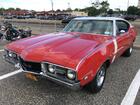
In 67, there were, several hundred, I think, factory "W-30 442s." These had either a 4 speed, or a specially built TH400, a specific 4 pinion rear end from Pontiac with specific ratios, I think, and certain things done to the carb and the distributor. Specific heads were used. Red fenderwells became a practice. Not done on an AC car. In addition, there were the changes that were also the "W-30 OAI Package" done to the car, which was the shroud, the ducts, the hoses, the 308/308 cam (I think those angles are right), the stiffer valve springs, and the trunk relocation parts for the battery. The core support came with extra holes from its manufacture for a factory W-30 car for the ducts to fit through.
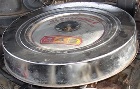
Now, if you went to a dealer, you could buy the aforementioned "W-30 OAI Package" which had the valves, springs, shroud, battery relocation stuff, and a template to cut the core support with a jig saw to put the ducts in. You could also pay the dealer to install that, and they would, on a 442 you owned. However, you wouldn't have all the other stuff mentioned above.
Curt Anderson, expert on this stuff, coined the term "Track Pack" to describe 66 and 67 442s that had the W-30 OAI system and cam, but none of the other, factory stuff that came on the "factory W-30s."
So "W-30" = factory car with all the goodies.
"Track Pack" car = dealer installed, or just dealer sourced, OAI system only and a cam shaft.
A good comparison is to realize that in 1970, the OAI system was called W-25, and it was PART of what a W-30 car got. Same thing here, but you also got a cam with your OAI.
Yeah as already said, around 502 factory cars produced non convertibles and dealer/customer over the counter packages were available. Olds had to build at least 500 to be sanctioned legal in NHRA drag races. In 66 the number had to be 50....
In 67, there were, several hundred, I think, factory "W-30 442s.
502 factory-built, to be exact.
The 1967 O.A.I. Package was P/N 230309, which was the dealer-installed (or owner-installed) kit. Note that this O.A.I. Package did not include the 308 deg cam, which was a separate item (P/N 230328).
Wow. Thanks for this info on 67. I wish this kind of knowledge would be documented in a book. I’d love to read that.
So looking back on Dennis Castelle’s 1966 chapter there are many pages of specs and Olds ads, I guess in the first half of the year before the W30 option was available. He has one page of text about the year and I don’t see a W30 mention.
The 1967 O.A.I. Package was P/N 230309, which was the dealer-installed (or owner-installed) kit. Note that this O.A.I. Package did not include the 308 deg cam, which was a separate item (P/N 230328).
Thanks for the corrections; I get it 95% right.
It seems well within the range of possibility that you could go buy the OAI kit, the cam kit, and the chrome valve covers and spend a weekend and come out with something impressive. If you had the right rear end already, it might end up close to the factory W-30.
The 1967 O.A.I. Package was P/N 230309, which was the dealer-installed (or owner-installed) kit. Note that this O.A.I. Package did not include the 308 deg cam, which was a separate item (P/N 230328).
There has been documents found that actually say there were 504 built. Kurt Schubert found them during a visit to the GM Heritage Center.
I’ve gotten to the 69 chapter and found some interesting things. The author calls the W32 a more streetable version. In this comparison sheet, issued by Olds doesn’t make mention of a special cam on the W30 but it does for the W32. We’re these details accurate or we’re they downplaying the performance of the W30?
The book is from like 1980, when people were trying to gather info on these cars after they were the red-headed stepchildren of the used car market. There's a lot of bad info from that era that was later corrected.