When you click on links to various merchants on this site and make a purchase, this can result in this site earning a commission. Affiliate programs and affiliations include, but are not limited to, the eBay Partner Network.
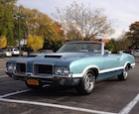
I noticed this leak yesterday and it's not something I've ever run into in any car I've owned. Any ideas what's happening here? The hose into the firewall looked fine...
Some words of advice, don't use any stop leak product for a quick fix. Bypass the heater core temporarily if you need until you decide what your going to do.
Hey, you're going into summer. Do the infamous heater core bypass (connect the two hose barbs in the block together) and put a pan under it until it drains until you're ready.
Back in the day, did someone win a design award for this?
I'm guessing they received at least two J.D. Power awards. Probably from the same class of engineers who decided to route the front parking brake cable through a fully boxed frame rail in our Deltas.
Back in the day, did someone win a design award for this?
What, as opposed to newer cars where you have to completely pull the dash to replace the heater core? Heck, on my 1999 Chevy full size pickup (not a small vehicle with limited space, I might add), you have to depressurize the A/C so you can completely remove the under dash HVAC module to replace the heater fan.
Decisions like these get made every day on every mass-produced product. What's more important - lower assembly cost (and thus lower initial purchase price) or lower total cost of ownership when maintenance costs are included? The American consumer has historically chosen lower initial purchase price, which is why we have WalMarts full of Chinesium products. And quite frankly, when these cars were new, most people traded in after two or three years, so they never had to even deal with heater core replacement.
What, as opposed to newer cars where you have to completely pull the dash to replace the heater core? Heck, on my 1999 Chevy full size pickup (not a small vehicle with limited space, I might add), you have to depressurize the A/C so you can completely remove the under dash HVAC module to replace the heater fan.
Decisions like these get made every day on every mass-produced product. What's more important - lower assembly cost (and thus lower initial purchase price) or lower total cost of ownership when maintenance costs are included? The American consumer has historically chosen lower initial purchase price, which is why we have WalMarts full of Chinesium products. And quite frankly, when these cars were new, most people traded in after two or three years, so they never had to even deal with heater core replacement.
Joe is correct. I know, at my workplace, we go for quality and safety first (and we just had our Customer First day, where we remember Akio Toyoda apologizing to Congress and vowing never again, on Friday), then productivity and cost. A large part of productivity and cost is ease of assembly. That is different from ease of maintenance. Ease of maintenance is not a priority, and it chaps my ***.
What REALLY chaps my *** is how we, and other car companies, charge 10x price more on a part than what it cost on the vehicle. The car YOU MADE broke a part, and you want to make me pay 25% of the car's value for a replacement? That is how you lose repeat customers.
You've got ten midgets. Problem solved
not sure the whole fender needs to come off but definitely the wheel well. Protect the carpet too. MAW do the blower fan while your in there if it's older so you don't relive the wheel well experience.
What REALLY chaps my *** is how we, and other car companies, charge 10x price more on a part than what it cost on the vehicle. The car YOU MADE broke a part, and you want to make me pay 25% of the car's value for a replacement? That is how you lose repeat customers.
That's the difference between direct cost and indirect cost. The direct cost to make that particular part is the same in both cases (assuming similar production lot sizes). The difference is the indirect costs at the parts counter (warehousing, packaging, labor to stock the shelves, parts counter labor, cost to develop and maintain the parts book, cost to restock when the customer asks for the wrong item, inventory cost, depreciation, etc, etc) are much greater than on the assembly line. The customer doesn't see this, but these costs are very real. And yeah, there is likely more profit on the replacement part than on the part installed on the assembly line.