When you click on links to various merchants on this site and make a purchase, this can result in this site earning a commission. Affiliate programs and affiliations include, but are not limited to, the eBay Partner Network.
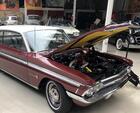
Here are the stamps my Olds specialist uncovered restoring the engine compartment this past fall. He was thrilled. I had no idea they even existed. Then I came here
He added the codes for the transmission (M38) and exterior colours (75 A). He also found a trace of that 'f' on the radiator shroud, so he reproduced that, too. But he doesn't know what it signified. Anybody have an idea? He also added the digits on the hood (last four digits of the serial number).
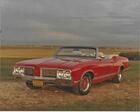
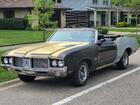
Short history: I've owned this 1970 Cutlass Supreme convertible (in Canada) for 35 years. Just had the motor rebuilt in its 50th year. Got it back just in time for a reunion, at the original small-town dealership lot, with a former owner (1974) and the former owner of the dealership. They were blown away. Was pretty cool.
Paul,
Thanks for the 1970 stamps from Lansing. Just a couple of things for you.
1. The M38 and Paint codes shouldn't be on the firewall. That's not something the factory did.
2. The Paint code will be on the cowl tag which is just above the marking your builder did.
3. Cars didn't get VIN derivative numbers on their hoods. BUT, if you look closely on the fenders, A pillars, hood and trunk you will be able to see what press stamped them. It will be an Alphabetic character followed by 2 numbers.
Lovely looking engine compartment! Nice to see the original fenders are still on the car. Those things are incredibly rare now.
That's interesting, Allan. My restorer is an Olds fanatic. Does nothing but restore vintage Oldsmobiles, particularly from this era. I don't feel qualified to question him about the firewall markings. Perhaps I'll work up the nerve to ask him
I must admit I was a bit surprised there was no discussion of those hand-drawn codes on this very thread. Haven't looked into it further. I likely won't worry about it, as I don't do shows or anything. But don't get me wrong, I do appreciate the feedback.
How can you tell those are original fenders?
Paul
Last edited by pfriesen; Dec 7, 2020 at 08:16 PM.
Reason: spelling
That's interesting, Allan. My restorer is an Olds fanatic. Does nothing but restore vintage Oldsmobiles, particularly from this era. I don't feel qualified to question him about the firewall markings. Perhaps I'll work up the nerve to ask him
I must admit I was a bit surprised there was no discussion of those hand-drawn codes on this very thread. Haven't looked into it further. I likely won't worry about it, as I don't do shows or anything. But don't get me wrong, I do appreciate the feedback.
How can you tell those are original fenders?
Paul
Not trying to get between you and your restorer, in this case I'd love to see his resources that prove other original markings like that on a vintage Olds because we've never seen them on this forum and there are a lot of very well versed enthusiasts here. Look to fully restored or even original cars and you won't find those markings in grease pencil because depending on style (model year) they were contained on the cowl tag or build sheet. The M38 was an almost no brainer RPO added to the SBO 350 so why he would choose to that leaves me guessing. Same with the PNT code which you'll find on the cowl tag. Since your car is a Lansing car you won't find a build sheet, but you may very well have broadcast cards left in the car by Fisher Body Works. Ask your restorer if he found any. Usually there were 2 or 3 left in the body when it was shipped to Lansing final assembly.
Example of a build sheet (which Lansing fastidiously removed before the car rolled off the line)
Example of a broadcast card
re: fenders. The fenders on your car are unique to 70 and very early 71 production. There are no crumple ridges on the horizontal part of the inner bracing. Those fenders are very hard to find nowadays.
This is 1970
You obviously know your stuff. RPO? SBO? Help me out here, Allan.
Yes, I have a broadcast card, plus a few other goodies: the Warranty and Protect-O-Plate and the owner's manual. Photos included.
My broadcast card is rather blank, by comparison to that one you posted. I understand one of the codes is for a rear seat speaker. What else does my card tell us?
You obviously know your stuff. RPO? SBO? Help me out here, Allan.
Yes, I have a broadcast card, plus a few other goodies: the Warranty and Protect-O-Plate and the owner's manual. Photos included.
My broadcast card is rather blank, by comparison to that one you posted. I understand one of the codes is for a rear seat speaker. What else does my card tell us?
SBO = Small Block Olds (in your case a 350 - casting 395558-2) The standard engine for the 1970 Cutlass Supreme was the 350 4bbl.)
RPO = Regular Production Options - available at extra cost. Some were stand alone, others required the addition of other options to make it viable.
Your Broadcast card is deciphered as follows:
Seq: 024 - the 24th car scheduled for final production that day
Mo: 03 - March 1970 - so built in the third quarter of production.
Day: 10 - Tuesday (always a good day for car builds; some say Monday and Friday are the worst but truth be told Lansing ran production very often 6 days a week) My car was built at Lansing final assembly on April 10, 1972 and it's one of the best cars I've ever owned. I also have the GM of Canada Heritage documentation for it, as well as my broadcast card and BOS.
Style: 34267 (3=Olds, 42=Cutlass Supreme, 67=Convertible)
Body Number: 389704 = Body number assigned to your car by Fisher Body Works who built the basic shell and fitted it with interior. Not related to your VIN. The shell was then sent to Lansing final assembly for marriage to the chassis, where the front clip, bumpers and trim pieces were added as needed. Typically the FBW took 2-3 days to produce a body before shipping to final assembly.
SPCL = Z. No one seems to know what this is. And trust me it's been researched to death
Trim Comb = 977: Ivory vinyl themed interior with Strato Bucket seats. (SBS were std equipment on CS)
Exterior Paint - Lower: 75 Matador Red, Upper A white convertible top
PP = Again, a question mark no one has answered on this site.
RPO A39 - Deluxe Seat belts front and rear
RPO U80 - Rear Radio Speaker
Your other documents are in really good shape. Preserve them well as they are your cars heritage and provenance.
EDIT: Interesting note: Your car went into service on September 18, 1970. This means it was likely sold at discount to Mr. Delorme as the new 1971 model cars would have been on the dealer showroom floor in late July, early August and definitely September. So my guess is it was a sale blowout car to clear inventory.
That's terrific information, Allan. Thank you. A couple things:
1. How does Day 10 on my card equal Tuesday?
2. I was pretty sure it was "Rally Red," but after looking up the colour codes again, you're right, it's "Matador Red."
Re the history. Just last month I took the car to its original dealer lot (now a daycare, as GM shuttered it a decade ago) where it met up with the dealer owner, Mr. Brodeur. He told me he drove that car as part of a "demonstration program," basically a way of advertising the new lineup. The program saw the new-car warranty stay intact for whenever the customer bought the car, despite any miles put on during the showcase period. He remembered that, and the sale to Mr. Delorme, very clearly. (Delorme died in 1985, coincidentally the year I bought the car).
Mr. Brodeur also recalled most of the new lineup arriving in September of the previous year. He assumed this Cutlass did, as well. But your knowledge of the Broadcast date obviously proves otherwise?
Re: RPO U80. I think I removed and tossed out that rear seat speaker two or three decades ago, dammit. It was pointless back there, but still, what a foolish move. Shame on me.
What's the best way to preserve my documentation, Allan? A plastic zip-lock bag, out of the light?
This is fun, by the way Here's a photo of that 'f' my restorer discovered, then enhanced, on the radiator cowl. He didn't know what it signified.
Last edited by pfriesen; Dec 8, 2020 at 10:05 PM.
Reason: correction
You can get acid free storage containers to put your paperwork in, and bags for the same with dissecant packs. Try a hobby shop, or a photography supply store. Also check online.
1. How does Day 10 on my card equal Tuesday?
Re the history. Just last month I took the car to its original dealer lot (now a daycare, as GM shuttered it a decade ago) where it met up with the dealer owner, Mr. Brodeur. He told me he drove that car as part of a "demonstration program," basically a way of advertising the new lineup. The program saw the new-car warranty stay intact for whenever the customer bought the car, despite any miles put on during the showcase period. He remembered that, and the sale to Mr. Delorme, very clearly.
Mr. Brodeur also recalled most of the new lineup arriving in September of the previous year. He assumed this Cutlass did, as well. But your knowledge of the Broadcast date obviously proves otherwise?
Day 10 is easily determined. We know it was built in March of 1970 (close to the end of 1970 production) Simply look at a 1970 calendar and 10 is a Tuesday
Yes, demonstrator cars were often used by sales or managers to get the cars on the road and show them off. Enticement 101 to the general public. However there is no way this car could have logistically been delivered in September 1969 and used as a demonstrator as the dealer remembers since it wasn't even built until March of 1970. Keep in mind that production for each model year started in the mid point of each year so 1970 cars came on line in about July/August of 1969, 1971 cars in July/August of 1970 etc and they ramped up production as needed to meet dealer inventory and sales needs. Mr. Brodeur is not right about the timeline on this car IMO. It makes no sense to have a 1970 demonstrator for the 1971 model year (which would have been the case in Sept 1970) Interesting there is no documentation showing the mileage the car was delivered with.
The radiator top plate is not significant. The markings don't mean anything especially since they're under the paint.
Dan has given you excellent suggestions for storing your documents. Mine are stored in a pressed binder. Some people cold laminate them to remove any further oxidation or damage.
Agree that timeline you suggest is correct, Allan. He never did recall specifically driving this car beginning in September, '69. He only recalled that's when new models generally started to arrive. He certainly recalled driving the car as a demo, though. And someone who worked at the dealership at the time, who turned out to be the car's second owner, remembers it, too.
I'm actually writing a feature story on this for the local publication where I work. I'll send a link when it's published, likely this Sunday.
Eric, those are really cool! Who made them for you and are they in demand? Honestly I've never seen that style before
A local place here in Brazil Indiana made them for me. I am not sure if they are in demand or not but I did have a guy buy two of them for a 65 442. I may list them and see if I can get most of my money back for the others. Most of the expense was the art work, not the stamps. I can get more stamps made reasonably now that the are work is already done.
I thought I would drag this thread out of moth ***** instead of starting new. I have mostly always worked on Lansing made Oldsmobiles and Flint built Buicks. 70-72. Has anyone seen any firewall markings on a 70 Linden NJ car? Upon initial inspection I have not seen anything. AC box is in place and I don’t have access to this car at this time. I should begin restoration soon.