


Carb adjustment


Thread Starter
Registered User
Joined: Apr 2021
Posts: 19
Carb adjustment
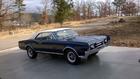
1969 cutlass 442 clone
This may be a dumb question, but if you increase the size of your exhaust from 2in to 3in do you need to retune the carb? Car was running fine prior to the exchange, but now it stalls when starting unless you give it some gas. The minute you take your foot off the gas it stalls. Same when it's in gear. Seems like it might need an adjustment to make it richer?
This may be a dumb question, but if you increase the size of your exhaust from 2in to 3in do you need to retune the carb? Car was running fine prior to the exchange, but now it stalls when starting unless you give it some gas. The minute you take your foot off the gas it stalls. Same when it's in gear. Seems like it might need an adjustment to make it richer?

Registered User
Joined: Dec 2014
Posts: 16,709
Long answer requires more details -- like which engine, what kind of carb, Q-jet, Holley, E-brock? CFM? Intake? Cam specs? Headers? Initial ignition settings? And anything else you can think of that might be helpful.
Thread Starter
Registered User
Joined: Apr 2021
Posts: 19
Has a 455 engine. Not sure what kind of headers but they were 3in. Has a Holley 650 cfm with Edelbrock performer manifold.

Old(s) Fart
Joined: Mar 2007
Posts: 50,802
From: Northern VA
The size of the exhaust system has nothing to do with stalling when the car starts. The fact that the 650 carb is too small also has exactly zero to do with starting. What else did you change when you put the exhaust system on?
Thread Starter
Registered User
Joined: Apr 2021
Posts: 19
Nothing else was changed. It seemed to run fine yesterday, but I only drove it around the block a couple times. Today this issue started. So maybe something else and this all just coincidence?
Registered User
Joined: Aug 2014
Posts: 839
From: Western North Carolina
The only way the exhaust diameter increase would be noticeable is if it were a restriction to the engine's breathing to begin with. The fact that you're running a 650 carb suggests the engine is not too modified, in which case 2" exhaust should be acceptable for street manners. The engine needs to be moving a pretty serious amount of air (in and out) to make use of a 3" exhaust. In theory, if your 2" was restrictive and you now had the capability to move more air with the 3", then yes, you'd need to account for the engine's increased ability to 'breathe' by modifying your carb settings. Either way, I wouldn't expect the exhaust change to cause stalling.
Old(s) Fart
Joined: Mar 2007
Posts: 50,802
From: Northern VA
While that is true at wide open throttle, it has ZERO effect at starting, which is the OP's problem.

Registered User
Joined: Mar 2010
Posts: 3,868
From: Mt.Ary, MD
Most would assume initial start up, however it could also mean "starting to move", which is where I jumped to when the exhaust caused the problem. It may need more fuel to get rolling with less restrictive exhaust, then the 650cfm runs out of air on the top end of the rpm range...
Old(s) Fart
Joined: Mar 2007
Posts: 50,802
From: Northern VA
Here's where things go awry: define "starting".
Most would assume initial start up, however it could also mean "starting to move", which is where I jumped to when the exhaust caused the problem. It may need more fuel to get rolling with less restrictive exhaust, then the 650cfm runs out of air on the top end of the rpm range...
Most would assume initial start up, however it could also mean "starting to move", which is where I jumped to when the exhaust caused the problem. It may need more fuel to get rolling with less restrictive exhaust, then the 650cfm runs out of air on the top end of the rpm range...
Call me crazy, but I'm pretty sure that he isn't talking about starting off from a stop if he's taking his foot off the gas and it stalls.
Bottom line is that this is a choke or fast idle speed adjustment.

Running On Empty
Joined: Jul 2018
Posts: 26,049
From: Earth
IMO, your terminology needs improvement to help us understand exactly what you're referring to.
Starting is most often a condition of starting the engine - e.g. the ignition system starts the car. Acceleration imparts the notion of movement - the acceleration from a dead stop or from some point other than dead stop. It's difficult to understand what you mean.
When you state " ...If I give constant pressure on the accelerator to keep RPMs up it will run. What are you talking about here? Are you talking about a constant pressure on the accelerator to keep RPMs up it will run - while in Park?
Starting is most often a condition of starting the engine - e.g. the ignition system starts the car. Acceleration imparts the notion of movement - the acceleration from a dead stop or from some point other than dead stop. It's difficult to understand what you mean.
When you state " ...If I give constant pressure on the accelerator to keep RPMs up it will run. What are you talking about here? Are you talking about a constant pressure on the accelerator to keep RPMs up it will run - while in Park?

Registered User
Joined: Mar 2013
Posts: 1,914
From: St. Clair, MI
You will need two people for this:
Crank the car, start for 30 seconds
Take the air cleaner off, and look into the carb.
Is there gas dripping out of the venturi? Thats the circular thing in the middle of the carb throats
Crank the car, start for 30 seconds
Take the air cleaner off, and look into the carb.
Is there gas dripping out of the venturi? Thats the circular thing in the middle of the carb throats

Registered User
Joined: Aug 2011
Posts: 4,109
If the OP is referring to a start up i.e., the car is not running and is being turned on I agree it is not exhaust diameter related. If the OP has to keep throttle applied to keep it running and this just started I'm guessing a new vacuum leak.
Running On Empty
Joined: Jul 2018
Posts: 26,049
From: Earth
I guess it appears you mean when you start the engine.
I agree w/ Eric if that's the case. Turn up the slow idle speed (RPM) and get the engine to idle and go from there. "If" what you say is true, nothing was changed, going from 2">3" exhaust should have nothing to do w/ stalling, IMO.
Check: (1) You didn't knock off a vacuum line (e.g. the automatic transmission modulator valve vacuum line to manifold); (2) are all vacuum lines attached correctly; (3) what is RPM @ idle? It needs to match the specifications in the CSM. When was the last tune-up?
Set/Establish Dwell;
Set timing;
Adjust carburetor A/F mixture to highest achievable vacuum
I agree w/ Eric if that's the case. Turn up the slow idle speed (RPM) and get the engine to idle and go from there. "If" what you say is true, nothing was changed, going from 2">3" exhaust should have nothing to do w/ stalling, IMO.
Check: (1) You didn't knock off a vacuum line (e.g. the automatic transmission modulator valve vacuum line to manifold); (2) are all vacuum lines attached correctly; (3) what is RPM @ idle? It needs to match the specifications in the CSM. When was the last tune-up?
Set/Establish Dwell;
Set timing;
Adjust carburetor A/F mixture to highest achievable vacuum
Thread Starter
Registered User
Joined: Apr 2021
Posts: 19
IMO, your terminology needs improvement to help us understand exactly what you're referring to.
Starting is most often a condition of starting the engine - e.g. the ignition system starts the car. Acceleration imparts the notion of movement - the acceleration from a dead stop or from some point other than dead stop. It's difficult to understand what you mean.
When you state " ...If I give constant pressure on the accelerator to keep RPMs up it will run. What are you talking about here? Are you talking about a constant pressure on the accelerator to keep RPMs up it will run - while in Park?
Starting is most often a condition of starting the engine - e.g. the ignition system starts the car. Acceleration imparts the notion of movement - the acceleration from a dead stop or from some point other than dead stop. It's difficult to understand what you mean.
When you state " ...If I give constant pressure on the accelerator to keep RPMs up it will run. What are you talking about here? Are you talking about a constant pressure on the accelerator to keep RPMs up it will run - while in Park?
Running On Empty
Joined: Jul 2018
Posts: 26,049
From: Earth
My initial suspicion is one or more vacuum hoses aren't connected - double check every vacuum line hose and perform a tune-up using the specifications stated int the CSM being mindful to disconnect the vacuum advance during tune-up:
Set Dwell
Adjust Timing
Adjust A/F mixture to highest achievable vacuum
Set Dwell
Adjust Timing
Adjust A/F mixture to highest achievable vacuum
Administrator
Joined: Oct 2009
Posts: 42,496
From: Poteau, Ok
What RPM is the engine now running? I would hook up a vacuum gauge and see what your vacuum is and if the needle is steady.


Thread
Thread Starter
Forum
Replies
Last Post


