When you click on links to various merchants on this site and make a purchase, this can result in this site earning a commission. Affiliate programs and affiliations include, but are not limited to, the eBay Partner Network.
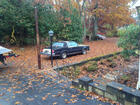
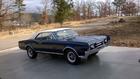
A few weeks back I was backing out of my garage when everything died. Engine, electrical, everything. The battery is new(er), and it has gas (allegedly 1 3/4 tanks but that’s a project for another day). Not sure where to even begin so any advice is greatly appreciated!
Starting point (1), as suggested by Eric - do the headlights turn on? (2) Measure the battery voltage. Should be ~`12.6V. Battery could be deader than a door nail. Remember, the Alternator charges the battery. If the Alternator has failed (possibly the VR [Voltage Regulator) it will fail to charge the battery (leaving the battery dead or nearly so).
If your battery voltage is near or at ~10.5V or ~11.0V - you have a dead battery. Again, 1st step is to determine charge state (voltage) of your battery.
If nothing electrical works, first check the battery and clean the posts and terminals.
If still dead, check battery cables and connections. They don't last forever.
Past that you need the Chassis Service Manual wiring diagrams and some basic electrical troubleshooting skills and tools.
everything is clean & connected. I do have the chassis service manual but have zero electrical troubleshooting skills. Chef by trade and that’s as far as my trade skills go unfortunately.
Originally Posted by fleming442
Oooh, goody! Fun fact: dead batteries kill alternators and dead alternators kill batteries.
Define "died".
Died: no longer moving or responding to stimulus.
Originally Posted by Vintage Chief
Did you address Joe's suggestions in your post below?
yes I did. Some connections were a little dirty, didn’t seem like it would’ve been an issue or alarming but apparently it was. Started up the first time the few times I tried it. Since then the car’s just sat in the garage. Negative cable removed if I ever plan on going more than a week or so messing with it.
First: substitute known good battery from currently working vehicle. Does it start? Yes: verify charging voltage. Replace battery and/or alternator. No: check other circuits- lights, radio, etc. If those work and it doesn't crank, replace starter.
If the headlights are inop then check for a bad fusible link at the horn relay (don’t have access to a diagram) or starter, a loose bulkhead connector, or the factory red wire splice under the dash.
So, you had a thread about two years ago on here RE: fusible link (or not) issue - remember that one with the broken glass fuse? And, you've had &/or are having some electrical issues (gremlins) which need to be sorted through (out). You're going to need at least one or both simple tools to stay on top of your game here if you plan to do this troubleshooting yourself: (1) digital multimeter (~$35-$50) & a (2) Test Light ($10). You have the CSM, so you have the wiring diagram. You're moving in a positive direction. The electrical wiring is no mystery - don't allow it to get to you - it's simple stuff. Joe mentioned an important item in a previous post - that purple wire and the solenoid (which resides on the battery). That needs to be checked. You need to address this with some methodology - which everyone will assist you with; but, performing a simple voltage drop test, checking voltage on the battery, the alternator, resistance (Ohms) on a wire - those things require tools to troubleshoot. If you don't have them, it can become a needle in the haystack. They're not expensive, they're required if you want to troubleshoot properly. Suggestion: "If" you have "ANYTHING" which is aftermarket installed on the car...e.g. radio, power amplifier, stuff you can't identify in the CSM or which you know was not original to the car - remove that wiring. You need to be at Base One - with no aftermarket gizmos which may be the issue or at least interfere with your troubleshooting.
EDIT: Oh yeah, stop by General Store, Dollar Store or wherever and buy a handheld magnifying glass with 2" diameter glass lens. You'll rip the hair from your scalp having to read the wiring diagram - make this easy, not difficult.
Exactly. Volt meter is something you really need right now. You need to see the voltage of the battery. Test light works but you need to go more in depth.
I do have the chassis service manual but have zero electrical troubleshooting skills. Chef by trade and that’s as far as my trade skills go unfortunately.
Don't underestimate yourself. If you can read a recipe, know how to measure and combine ingredients for taste, and figure cooking temperatures and times, you should be able to do basic electrical troubleshooting. A pair of latex work gloves will keep grease from getting under your fingernails.
Plus, doubtful anyone you hire to repair it knows anything about a 50-year-old car that they can't connect a scan tool to it. We can get you thru this.
A digital multimeter and test light from Harbor Freight will get you started. Pick up a battery terminal brush while you're in there, and a set of SAE measurement combination wrenches to take the battery cables off the battery.
So, you had a thread about two years ago on here RE: fusible link (or not) issue - remember that one with the broken glass fuse? And, you've had &/or are having some electrical issues (gremlins) which need to be sorted through (out). You're going to need at least one or both simple tools to stay on top of your game here if you plan to do this troubleshooting yourself: (1) digital multimeter (~$35-$50) & a (2) Test Light ($10). You have the CSM, so you have the wiring diagram. You're moving in a positive direction. The electrical wiring is no mystery - don't allow it to get to you - it's simple stuff. Joe mentioned an important item in a previous post - that purple wire and the solenoid (which resides on the battery). That needs to be checked. You need to address this with some methodology - which everyone will assist you with; but, performing a simple voltage drop test, checking voltage on the battery, the alternator, resistance (Ohms) on a wire - those things require tools to troubleshoot. If you don't have them, it can become a needle in the haystack. They're not expensive, they're required if you want to troubleshoot properly. Suggestion: "If" you have "ANYTHING" which is aftermarket installed on the car...e.g. radio, power amplifier, stuff you can't identify in the CSM or which you know was not original to the car - remove that wiring. You need to be at Base One - with no aftermarket gizmos which may be the issue or at least interfere with your troubleshooting.
This is great info. The only thing aftermarket under the hood is the HEI. Aside from that and newer battery cables it’s all original to the best of my knowledge. I’ll get the tools and get to work, thanks!
Hahaha awesome! My username was originally my BBQ catering company name. That was until I found out a group in Texas already had that name (and they were super cool about it too) so I changed it.
Don't underestimate yourself. If you can read a recipe, know how to measure and combine ingredients for taste, and figure cooking temperatures and times, you should be able to do basic electrical troubleshooting. A pair of latex work gloves will keep grease from getting under your fingernails.
Plus, doubtful anyone you hire to repair it knows anything about a 50-year-old car that they can't connect a scan tool to it. We can get you thru this.
A digital multimeter and test light from Harbor Freight will get you started. Pick up a battery terminal brush while you're in there, and a set of SAE measurement combination wrenches to take the battery cables off the battery.
We'll get you going, just don't be afraid to try.
Those were words I needed to hear, thank you! I’ve got plenty of tools, just nothing electrical related. I’ll grab what I can today and hopefully get under the hood asap. Working 80-90hrs a week tends to delay the fun stuff.
EDIT: Oh yeah, stop by General Store, Dollar Store or wherever and buy a handheld magnifying glass with 2" diameter glass lens. You'll rip the hair from your scalp having to read the wiring diagram - make this easy, not difficult.
Hahaha awesome! My username was originally my BBQ catering company name. That was until I found out a group in Texas already had that name (and they were super cool about it too) so I changed it.
BBQ?😋🤤😎🐖 Where might your bobbacue jernt be?
If you make proper Cackalacka or Vajenya bobbacue, me and a buddy are trying to eat our way across the NC BBQ trail. Going to Salisbury Monday to eat at Richard's one more time before he retires and closes up end of this month.
Plus you might find somebody on here close enough by to help.
There are supposed to be small braided wire ground straps from engine to firewall, 3/8" wide and several inches long. Some Oldsmobiles have several of them. Make sure those are in place, though one of those being missing usually shows up as a seized shifter cable or heater control cable.