When you click on links to various merchants on this site and make a purchase, this can result in this site earning a commission. Affiliate programs and affiliations include, but are not limited to, the eBay Partner Network.
Are you looking for a higher output alternator? If so, why? Or are you looking for bling? Personally, $500 for an alternator is insane. I care about performance, not bling. I use this CS130 - bolt on 105A for under $75.
RockAuto's got rebuilt 140A CS-144s for less than $80.
But the ones you picked are very shiny.
Up to you.
- Eric
edit: looks like Joe beat me to it.
I'm not sure if the CS-144 bolts to the current brackets. I do know that the CS-130 I linked to is from a 1990 Olds 307 and definitely bolts in place of any 1960s-1980s Olds alternator. That's what I'm running on my 62.
I thought it did. I'm pretty sure the CS130D (different from the CS130) doesn't.
I picked the 144 because in stock form it goes to 140A, which was in the neighborhood of the OP's selections, instead of the CS130, which goes to 105A stock.
I picked the 144 because in stock form it goes to 140A, which was in the neighborhood of the OP's selections, instead of the CS130, which goes to 105A stock.
- Eric
The only CS-144s I've seen are from vehicles with serpentine belts (like my truck) and don't have the "normal" GM alternator mounting ears for a V-belt setup. Olds used the CS-130 on the 307s in the Custom Cruiser (and in Caddy Broughams)for 1989-1990 and those do have the correct mounting ears. On my 62 I needed to swap the pulley due to the 215 using a wider V-belt.
I am running a CS 130 in my 88 CSC with factory Non A/C brackets, i may have added a washer on the bottom bracket. I bought a Summit 70 amp 10DN chromed replacement. I did have to grind the bottom bracket slightly for it to fit. I was pleasantly surprised with a proof of performance tag stating 51 amps at idle and 82 amps at cruise. Should be good for my Stratus fans.
Looks like the pivot screw tab is ⅛" thicker and needs to be ground down, the adjuster screw tab is threaded for an M10 screw, which is larger than the original (which I believe is ⅜-16), and so either the adjuster track needs to be widened or the hole has to be drilled and Heli-Coiled, and, of course, the pulley has to be changed.
Not quite a bolt-on, but not a big-deal change if you need the extra 35A either.
1992-1996 Cadillac DeVilles, apparently, but I believe the case (not the pulley) should be the same for any HD GM commercial vehicle (police, taxi) from that generation.
Are you looking for a higher output alternator? If so, why? Or are you looking for bling? Personally, $500 for an alternator is insane. I care about performance, not bling. I use this CS130 - bolt on 105A for under $75.
I'm more concerned for quality/performance and longevity (bling doesn't hurt) but is not necessary. I'm tired of Chinese made junk crapping out after 2 years. If I don't need to spend $500 then great.
The only CS-144s I've seen are from vehicles with serpentine belts (like my truck) and don't have the "normal" GM alternator mounting ears for a V-belt setup. Olds used the CS-130 on the 307s in the Custom Cruiser (and in Caddy Broughams)for 1989-1990 and those do have the correct mounting ears. On my 62 I needed to swap the pulley due to the 215 using a wider V-belt.
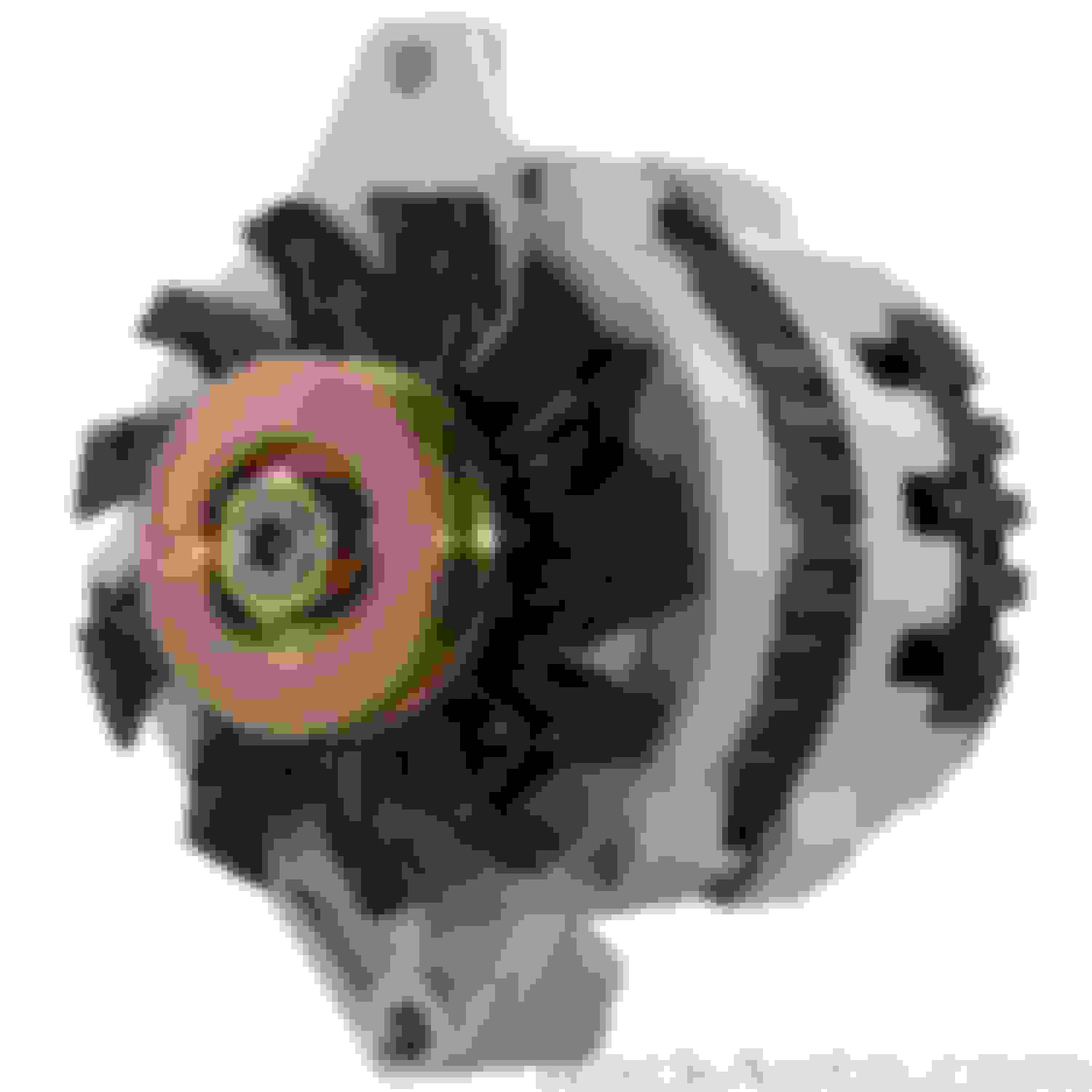
Here's a CS-130 compared to a CS-144
That CS-130D interests me. Good price and less hassle during installation. For the Regulator options I think I'll set it up for external use and pay the extra $35 as I heard one wire Reg is not as beneficial?
Hey, my Delco reman CS 130 under the Champion brand, is a Mexican POS😊. Hoping this Summit 10 DN 70 amp chrome alternator, since it has very good reviews, holds up. Wish I would have read the reviews for one of their mini starters, what a POS.
That CS-130D interests me. Good price and less hassle during installation. For the Regulator options I think I'll set it up for external use and pay the extra $35 as I heard one wire Reg is not as beneficial?
Let's start again.
ALL of the alternators I posted above, in addition to the links you showed, are INTERNAL regulator.
The CS130 and 144 alternators are set up with a very adaptable wiring interface. You can easily wire them with the three-wire scheme, or you can wire them without using the GEN light. This feature is built in to the voltage regulator. These do NOT have the problems of the one-wire 12SI style alternators.
Go back and re-read the posts above. The CS130D is NOT the same as a CS130, and are more expensive.
I'm not sure if the CS-144 bolts to the current brackets. I do know that the CS-130 I linked to is from a 1990 Olds 307 and definitely bolts in place of any 1960s-1980s Olds alternator. That's what I'm running on my 62.
If I was to install this on my 70 Cutlass, do I have to bypass the external regulator and converted to internal?
Will I fry the wires with a high output alternator?
If I was to install this on my 70 Cutlass, do I have to bypass the external regulator and converted to internal?
Yes.
Will I fry the wires with a high output alternator?
Not unless you have a dead short. It's always good practice to upgrade the wire from the alternator to the horn relay terminal with heavier gauge wire and an appropriate fuse link or megafuse.
Forgot to ask would I need to upgrade the wiring or can I just use the stock wiring with this CS144 (I would pay the extra $50 for it to function with my external Regulator) ----> http://www.qualitypowerauto.com/cata...Fcategory%3D41
I don't want to deal with wiring just yet, would prefer a plug and play situation as I got other fish to fry first.
(I would pay the extra $50 for it to function with my external Regulator)
Why in hell would you want to do that? The stock CS144 already has a regulator. You want to pay $50 to take that out and make the system LESS reliable????
Since you apparently don't care about optical correctness (since the CS144 doesn't look like the original alternator anyway), simply bypass the external regulator and pocket the $50. Or, better yet, if you still want to spend that money, sent it to me. I take paypal.
Still learning so bare with me
We will BEAR with you, but if you start taking your clothes off, you're on your own.
It's always good practice to upgrade the wire from the alternator to the horn relay terminal with heavier gauge wire and an appropriate fuse link or megafuse.
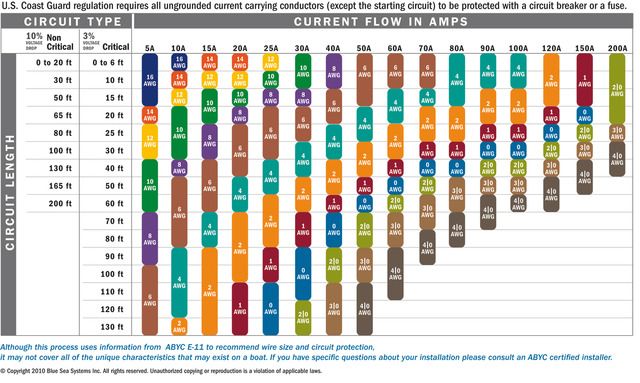
This is a must if you upgrade your alternator to anything above 50 amp output. The factory harness in 1970 had, at most, a 10 ga charging lead which will only carry 30 amp continuous for about 6 feet. You need about a 4 ga wire to carry 100 amp 6~10 feet continuously. The alternator won't put out the current until the vehicle needs it, so unless you install a rock concert worthy stereo (a personal favorite) or a pair of 30 amp radiator fans you will never reach that. Figure out the maximum amperage your vehicle will ever need and add 10% to find the right size charging lead you will need.
That's a very cool chart. Thanks for posting. A clarification, however. The reason for increased wire size as length goes up has nothing to do with the current, it's to minimize voltage drop, as the chart does show on the left. The current carrying capacity of a given wire size is fixed, no matter how long, but resistance in the wire will cause voltage drop over distance. This can be a real problem for starter circuits, for example.
For the straight-across - 6 o'clock - mount, 10DI, 10SI, 12SI, CS-130 (nearly everything GM from mid 60's to early 90's) are 6.6" hole to hole. CS-144 was made with that style of case, although it was somewhat rare and is 7.2" hole to hole. As Joe noted, the CS-130D didn't come from the factory in that kind of mount, but apparently someone found enough of a market to make custom housings.
Some of the info out there is confusing, because the common 3 o'clock mount shared major dimensions between CS-130, CS-130D and CS-144 making those swaps far easier.
The Olds mounting brackets are a little picky about that dimension. I'm sure they can be modified to fit a CS-144, but it may take a little creativity. At least for the driver side mount brackets, early 70's (the H-bracket style and the long-arm-bracket style). I'm not familiar enough with the passenger side mount brackets.
I'm looking to do the CS144 swap in Wild Bill...what I'm reading is that the 12SI is 6.6" hole to hole and the CS144 is 7.24" hole to hole so the major obstacle is finding or making a mounting bracket that fits the larger housing. Sounds like a lot of trouble, but for those of us with electric fans we need all the idle amperage we can get. Upgrading to a CS144 opens a whole new world of possibilities, especially in the Powermaster line.
Interesting rabbit hole to say the least...one I'll soon find the bottom of.
I'm looking to do the CS144 swap in Wild Bill...what I'm reading is that the 12SI is 6.6" hole to hole and the CS144 is 7.24" hole to hole so the major obstacle is finding or making a mounting bracket that fits the larger housing. Sounds like a lot of trouble, but for those of us with electric fans we need all the idle amperage we can get. Upgrading to a CS144 opens a whole new world of possibilities, especially in the Powermaster line.
Interesting rabbit hole to say the least...one I'll soon find the bottom of.
I don't understand the fixation on the 144. Personally, the custom CS130D noted above puts out far more than you need, and bolts to the stock brackets. Eric linked to a thread that talked about retrofitting a CS144, but that was on a CHEVY with different, and more adaptable, brackets. The stock Olds brackets won't accept the larger CS144 without considerable work. With other alternatives available that don't require that, why bother?
I don't understand the fixation on the 144. Personally, the custom CS130D noted above puts out far more than you need, and bolts to the stock brackets. Eric linked to a thread that talked about retrofitting a CS144, but that was on a CHEVY with different, and more adaptable, brackets. The stock Olds brackets won't accept the larger CS144 without considerable work. With other alternatives available that don't require that, why bother?
Because powermaster doesn't make a 12SI in the XS series with the electronic adjustable regulator.
Went with the 150 amp 12SI for the time being anyway.