When you click on links to various merchants on this site and make a purchase, this can result in this site earning a commission. Affiliate programs and affiliations include, but are not limited to, the eBay Partner Network.
So my 64 Dynamic has 2 coolant lights, one light is "hot" and one light is "Cold". With the key on, nether light comes on. I replaced all the sockets and bulbs in the instrument panel.
how could i troubleshoot these light and how do they work?
Disconnect the wire at the temp sensors with the key on and ground the wires, the dash bulbs should illuminate. If they do the issue is with the sensors, if they don't it is between the wire and the bulb.
No the lights do not illuminate with the key on. I will try to ground out the wires to see what happens. Brand new sockets and bulbs. I don't understand still how the lights work? Is each wire for each light?
Olds used a double terminal temperature sender in those years. Connector is in a L configuration.
The light green wire is for the COLD warning lamp, which lights when engine is started cold and goes out when coolant temp hits 115° or so. At that point you should be ok to drive at normal road speeds. Ground that wire to engine block with key on and the green COLD lamp should light.
Green wire with white stripe is the HOT warning. Ground it and HOT lamp should light. Normal operation it will light at slightly under 260°.
If they don't bulb test with ignition switch in ON/RUN, check the INST FEED fuse.
Has the car ever had its ignition switch changed? There's a GROUND terminal on it that enables the HOT light bulb test feature.
Also, since the body came off the frame make sure the fuse block firewall connector has a good connection.
Okay so i grounded each of the 2 wires, with the key on, to no avail. I reviewed the wiring diagram and decided to eliminate the ignition switch as a possible problem. So i simply added postive to the pink wire as well as negative to both wires. Still nothing, checked all fuses too. I also grounded the oil pressure orange 1 wire in the engine bay to see if that light would come on but it didnt. I cant get the gen light, Hot light, oil pressure light, and cold light to come on. Gas gauge works tho, it goes up when the key is turned on.
What else could it be? Is there a ground or somthing to that panel im missing??
If there isn't one, run a ground strap from a valve cover bolt to firewall.
Past that sounds like a connection issue in the main fuse block, or possibly on the round pin connector on the fuel gage and warning lights circuit board behind the dash.
Were they working before you took the body off the frame?
I never tried the lights unfortunately before the motor and body was removed. Is there normally supposed to be a ground from the firewall? The only ground I have hooked up right now is the battery to the engine and the small lead that hooks from the battery onto the core support.
Gosh I keep staring at this dam diagram trying to figure out how this is possible. It has to be a ground or something. But then how does the oil pressure gauge and the Gen light not work either????everything else on the dash works except those lights.
I cant get the gen light, Hot light, oil pressure light, and cold light to come on. Gas gauge works tho, it goes up when the key is turned on.
What else could it be? Is there a ground or somthing to that panel im missing??
All of those lights are grounded through the printed circuit board.
They are all connected to one pin on the multi-pin connector to the wiring harness
This connector pin goes to a wire that is grounded in the dash.
Since all four lights are out, it may mean that none of them are getting a ground.
Look at the printed circuit, the connector and the ground wire carefully.
So, looking at the wiring diagram, there is no pin on the connector that grounds that circuit board. There is a yellow wire that is fused but other than that, there is none. Unless your saying the whole instrument panel has a wire ground coming off of it somewhere. The dimmer light works on that board and the gas gauge, I'm assuming the gas gauge works because it has it own ground back by the tank
I'm not sure if this helps but after removing all of the bulbs in the whole panel, the 4 idiot light bulbs and sockets had a tremendous amount of corrosion. None of the other ones had any but those 4 had so much, the bulb leads in the socket disigrated when I pulled them out.
So, looking at the wiring diagram, there is no pin on the connector that grounds that circuit board.
Of course not. The printed circuit is attached to the metal instrument housing with screws that run through the copper ground conductor on the printed circuit. The metal housing is attached to the metal dash with screws. The metal dash is welded to the metal body structure. The ground strap on the firewall connects the body to the negative side of the battery.
Track down the screws that run through the copper ground conductor in the circuit board that JoeP mentioned. Try running a temporary ground jumper to a known good ground as a test to those screws and see if the lights work.
Okay, I will check those grounds. Thank you everyone! Another question, How could I determine bulb power? I am a little amateur at board work. I believe that the Yellow wire that connects to the panel is power since it runs to a fuse, do I simply test for 12 volts at the wire?
I would start by throwing away that crappy, hard to read, third party diagram and buying an original factory chassis service manual. The 1964 manual is a five volume set. Volume 4 includes the wiring diagrams in color. Unlike the one you are using, the factory wiring diagram includes the circuits on the printed circuit board. The yellow wire is gauge power from the INSTR BU (instruments and backup lamps) fuse on the fuse panel. Each of the temp lights has a separate wire that runs to the sender, where the ground is made. The temp lights do not ground on the printed circuit.
I own the full service manual. This was just easier to reference on the phone at the time. Here are my findings today:
-the board is receiving power from the fuse box, this i know forsure because I accidentally grounded a bulb and blew a fuse. i also stuck a test light into the yellow wire at the connector and it lit up
-after running a cable directly to the battery, I then grounded both copper ground locations on the board with no result.
-the only other wire in the connector that was sending some power was the brown wire that leads to the voltage regulator. It light up on the test light but was significantly dimmer than the yellow wire.
- at the very end, my dimmable dash lights stopped working, the icing on the cake really.
-the board condition looks great with no significant damage or discoloration. The connector contacts were also very clean.
The only other thing I can think of is doing a continuity test on the wires to see if the were chewed on or snipped. But man almost 5 wires, I don't know Could the bulbs have been in backwards, is that a possibility?
all the help is very appreciated, please tell me all the info you got
So I went back out and tested some things again.I grounded the socket of each bulb with the bulb in it to see if the light could come on. I had nothing
But then... if i take the bulb out and hook it directly to the battery it works fine. HOW IS THAT POSSIBLE? I'm grounding it from the contact directly on the neg side on the bulb in the socket. Would a short cause this kind of senerio where it doesn't work in the socket but works outside???? it has power at each socket.
So I went back out and tested some things again.I grounded the socket of each bulb with the bulb in it to see if the light could come on. I had nothing
But then... if i take the bulb out and hook it directly to the battery it works fine. HOW IS THAT POSSIBLE? I'm grounding it from the contact directly on the neg side on the bulb in the socket. Would a short cause this kind of senerio where it doesn't work in the socket but works outside???? it has power at each socket.
Are we still talking about the HOT, COLD, and OIL lights? If so, go back and read post #15. The yellow wire provides power to all three of those bulbs. Do you see +12V on one of the printed circuit traces that go to each of those lamps? I suggest using a test light to probe, since this applies a resistive load to the circuit.
Each sender wire provides the ground. Disconnect each of those wires at the sender and jumper to ground. Now check for continuity at the instrument panel connector end of each of those wires. Verify that the other printed circuit trace on the circuit board (the one that didn't show +12V) shows continuity to ground with the sender wires still jumpered to ground at the sender end.
Those are the only failure modes. This is about the least complex circuit in the car - power, bulb, and switch to connect the circuit to ground (the sender).
So the other when we decided to take the car around the block, the instrument panel decided to act even more funny. Now the only working things in the dash are the gas gauge and the dimmable dash lights. No Oil, HOT, COLD, GEN, turn signals, or high beam light. So strange. I'm guessing at this point there could be a cut somewhere in the trace, I really wish I could find a circuit breakdown of where each of the traces actually go. The book showed a overview of the circuit but not a break down.
The Yellow wire is showing 12 volts. The back lamps also work in the circuit.
Also something to note which is interesting. The 4 idiot light bulbs and sockets had a tremendous amount of corrosion. like the contacts on the bulb and socket disintegrated when they were pulled out. The board is clean where they sat and all the rest of the bulbs were very clean. What could cause so much corrosion?


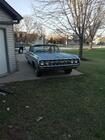


 Fixed!!!!


