When you click on links to various merchants on this site and make a purchase, this can result in this site earning a commission. Affiliate programs and affiliations include, but are not limited to, the eBay Partner Network.
I always drive old cars. I have State Farm for my newer cars . Hagerty for the older cars. Now the prices of cars, I like has gotten so high ,Im a little more concened about the insurance. State Farm will not insure my 64,84, and 87 cars for what they would cost to replace .Hagerty wont insure them to daily drive . What do you guys do that daily drive your collectables?
I know Maryland frowns upon it, and is specifically called out in the historic plate usage rules. Insurance is a scam. If you're that worried about getting hit and making an insurance claim, drive a piece of crap.
What do you guys do that daily drive your collectables?
The answer is simple. Do not use a car you consider a collector car and want to have insured for replacement value as a daily driver. You want it both ways, and it's no surprise that insurance companies won't do what you want.
You get lower rates and all on a collector car specifically because you DON'T use it as daily driver. Collector cars are supposed to be driven sparingly, typically with some yearly mileage limit. They're supposed to ALWAYS be secured. Sitting unattended in the parking lot at your place of employment all day long or at the shopping mall is not secured.
Get a later model beater for your daily driver and keep the collector cars under lock and key when you're not around them.
The answer is simple. Do not use a car you consider a collector car and want to have insured for replacement value as a daily driver. You want it both ways, and it's no surprise that insurance companies won't do what you want.
You get lower rates and all on a collector car specifically because you DON'T use it as daily driver. Collector cars are supposed to be driven sparingly, typically with some yearly mileage limit. They're supposed to ALWAYS be secured. Sitting unattended in the parking lot at your place of employment all day long or at the shopping mall is not secured.
Get a later model beater for your daily driver and keep the collector cars under lock and key when you're not around them.
Wrong. I dont want it both ways. Im willing to pay. State Farm wont insure my cars for their value, for any price. Hagerty wont aloow daily driving for any price. I gave up looking for something for nothing over 60 years ago.
How much are you willing to pay, and what is your "daily driver" worth? A 50 or 60 year old car that's not a collector car is just a used car with a value of a few hundred dollars. THAT'S how insurance companies will look at your car if you use it as a daily driver no mater how much it might be worth as a collector car. They would be foolish to value it in any other way.
You think they're going to insure your car as a collector car, let you park it unattended, let it get stolen, and then hand you 10, 20, or $30,000? No way.
A more fundamental question is, why do you want to drive a collector car as a daily driver, anyway? Isn't that a contradiction in terms? All you're doing is reducing its value when you let it get subject to the trials and tribulation (weather, parking lot dings, stone chips, sun damage, etc.) that a daily driver sees on a regular basis.
An "old car" is not the same as a "collector car." You want the insurance company to value your car as a collector car while you treat like an old car. Ain't gonna happen.
As I said, you want it both ways, and insurance companies are not stupid.
Not driving your car is like not banging your best girl. Or, you can be a cuck and save it for the next guy.
I only have insurance because it's required by the state.
I only have insurance because it's required by the state.
Let's clarify something here. The state only requires you to have LIABILITY insurance. That's to protect the rest of the world from you.
The state doesn't give a crap whether or not you have collision coverage on your own car, and no law requires you to have that kind of insurance. Many people actually drop collision coverage when their car gets old enough that the cost of insuring it starts to equal its value or when the insurance company would total it rather than pay to have it fixed if were damaged in any way.
You think they're going to insure your car as a collector car, let you park it unattended, let it get stolen, and then hand you 10, 20, or $30,000? No way.
I think mcghee's asking a fair question. Insurance companies will insure your $100,000 new car, let you park it unattended, let it get stolen, and then hand you $100,000.
Insurance companies evaluate risk before setting the premium. Mcghee's asking if any insurance companies have evaluated that risk for a collector car and will provide coverage--he's not asking for cheap coverage (standard collector car policy).
I have the same issue with insurance. Trying to drive something old and be honest to the insurance company. There's a disconnect there somewhere. I think it as simple as they don't have any relevant info on how to price/estimate repairs so they don't offer full coverage.
The responses are funny here. Old vs collector? Its still an asset, and the man is welcome to protect as he see fits..
Parking a 30k classic unattended? Peanuts compared to the 100k super duty he's parked next to. LOL...
Last edited by 66_Jetstar; May 8, 2025 at 11:13 AM.
I assume you don’t drive your old iron in nasty weather? You did mention you have State Farm insurance for your newer vehicles?
I can see both sides of this argument. As far as insurance is concerned, an old car is just that, old and not worth much. Having said that, just because it’s old doesn’t mean it’s collectible. And even if it is collectible, what’s the difference between a late model 100k pickup or a 50k collector car?? Most people would be far more careful with the collector car than a common new car.
Now, back to the subject. I have stated value policies on all my “collectible” old iron. Part of the stipulation of those policies is I have to carry insurance on other cars with them, I assume to prove that I do have other vehicles to drive. When I got the policy, an adjuster looked the car over, took lots of pictures, and noted the mileage. In the 20 years I have had the policy, not once have they ever asked to inspect the car again, or asked about the mileage. If I remember correctly, there was nothing in the policy about what where I was not allowed to drive the car. I suppose if you OCCASIONALLY drove the car to work, or OCCASIONALLY drove it to the grocery, as far as they know if something did happen you could tell them it was a nice day and decided you wanted to enjoy the car. As long as you don’t exceed their mileage limit (disconnected speedometer??) or had multiple claims under less than ideal (in their eyes) circumstances I’m guessing you would be fine.
I assume you don’t drive your old iron in nasty weather? You did mention you have State Farm insurance for your newer vehicles?
I can see both sides of this argument. As far as insurance is concerned, an old car is just that, old and not worth much. Having said that, just because it’s old doesn’t mean it’s collectible. And even if it is collectible, what’s the difference between a late model 100k pickup or a 50k collector car?? Most people would be far more careful with the collector car than a common new car.
Now, back to the subject. I have stated value policies on all my “collectible” old iron. Part of the stipulation of those policies is I have to carry insurance on other cars with them, I assume to prove that I do have other vehicles to drive. When I got the policy, an adjuster looked the car over, took lots of pictures, and noted the mileage. In the 20 years I have had the policy, not once have they ever asked to inspect the car again, or asked about the mileage. If I remember correctly, there was nothing in the policy about what where I was not allowed to drive the car. I suppose if you OCCASIONALLY drove the car to work, or OCCASIONALLY drove it to the grocery, as far as they know if something did happen you could tell them it was a nice day and decided you wanted to enjoy the car. As long as you don’t exceed their mileage limit (disconnected speedometer??) or had multiple claims under less than ideal (in their eyes) circumstances I’m guessing you would be fine.
Stated value is different than Agreed value. Make sure you are not shooting yourself in the foot.
So, I'm actually a commercial large-exposure claims liability adjuster by profession (I can see the bottles flying at me now...) - though I don't handle routine-level auto claims the basic premise for general lines auto carriers providing physical damage coverage for 'daily drivers' is fairly simple - propensity for risk... Newer vehicles for which parts and repair networks are widely available and can be estimated within narrow margins of variation are their focus. Or in the case of a total loss, vehicles which are easily valued via current market availability evaluations of like-kind and condition models of that vehicle for any given zip code where the coverage is provided.
In their world, 'old' does not immediately equate to 'collectible' even where it might be considered an 'antique' by statute. and even so, general insurers won't typically mix true collector cars into a household policy simply due to the categorical diversity of the vehicles and their intended usage.
They'll oft times concede to insure a running/driving daily use older (non-categorically collectible) vehicle only for liability-related coverage (sometimes subject to their agent's direct physical inspection) if being requested in conjunction with a larger policy encompassing newer vehicles but even then may put limitations on whom can be a listed driver, depending on how old the vehicle is and its level of factory installed safety equipment. This holds especially true in the 'non-standard' insurance market (i.e. Direct, General and other similar companies), whom in any case take on drivers that can't get standard-market rate coverage through the State Farms, Progressive and Geicos of the world...
A general lines carrier doesn't want to insure old daily driver vehicles for physical damage under a typical household-use policy because the propensity for risk is too high - there isn't as much of a repair network available, repairs aren't as easily estimable or if they are, replacement parts not as widely available whether via LKQ or aftermarket, and then there's the inevitable number of arguments to follow from their insureds in challenge to what is and what isn't reasonable to consider in terms of repair/replace value...
On the liability side they tend to shy away from older vehicles with lower levels of safety equipment due to their presumed or realized higher rate of accidents arising from an absence of modern accident-avoidance systems (i.e. steering, suspension, braking, distance sensors, etc.) and/or an increased propensity for such systems to be in less than fully operable condition at such time leading into an accident.
That's in part why 'old' cars are left to the specialty or non-standard insurance markets
Years back I had from American Collectors Insurance a "driver" endorsement which enabled me to drive the car anywhere anytime for up to 7500 annual miles and had a $250 deductible. I dropped this endo after a few years due to just not driving the car anywhere near that amount of miles. Not sure if they still offer this coverage but it might be worth looking into.
As one who spent 40 years as an Insurance Underwriter, 70'sGeek nailed it, especially with the insurance lingo, it's all there. American Collectors, Hagerty, Grundy, etc. are specialty market insurers; this would be the optimum avenue of approach for classics if you want Agreed Value, stay away from Stated Value forms. Non-Standard markets are going to have higher rates as are non-admitted insurance carriers, generally.
Really depends on the value, but this is seriously a good path to go down if you are wanting to daily an old car. I have had my old cars insured with State Farm with a normal vehicle policy for a long time now. Didn't cost much, even with full coverage, as they consider them normal cars and aren't going to give you a restored value for the thing. I had always planned on making up the difference by self-insuring the rest. Just throw your "premium" into a high yield savings account.
I have put a ton of money into my Olds over the past 5 years though, and have just recently switched to Hagerty. I'm not daily driving it and don't plan to (mostly because it isn't fun crawling in traffic). I'd never actually be able to replace the car if something were to happen to it (sentimental value), but having a larger valuation gives me an opportunity to get something else to hopefully cushion the blow. If it were just an old car, I'd have no problem continuing to self-insure it.
Insurance guys, to me, are a 1 to 10 scale, but the highest they go is 6. I never expect to be made whole by insurance, even though that is the point. I finance my own repairs, and insurance will reimburse me what they can. There's definitely shadiness, no agent on the phone will ever say anything in writing, and they always try to cut costs. USAA and American Collectors are supposed to be the best around, but I find them merely ok.
Around 2005 to 2018 I had a building full of cool cars. Were they collector? I don't know. They were very nice. I built/bought them that way. Anyway, my point is I would go to the warehouse, grab a car for the week or two and drive it as a daily. Mind you I had a very dependable newer car (if not two) to lean on if the weather all of a sudden went bad. If you're not going to drive the wheels off them, why have 'em? In '87 I was deciding between a Mustang Notch 5.0 and a Buick GN. I went w/ the notch as I like stick shift. The GN was 5k more than the Mustang. I could have bought a GN and stored it forever. Why bother.
[QUOTE=jmcghee;1628745] State Farm will not insure my 64,84, and 87 cars for what they would cost to replace .
You are not clear: "State Farm will not insure my 64, 84, and 87 cars for what they would cost to replace." Q: under what conditions? Driving daily or limited use with garaging?
Please clarify.
You are not clear: "State Farm will not insure my 64, 84, and 87 cars for what they would cost to replace." Q: under what conditions? Driving daily or limited use with garaging?
Please clarify.
Daily driving. He said it three times, including the thread title. Not sure how much more clear he can get.
x2 for Grundy - I've had them for at least 15 years covering the various classics which have passed thru my hands over that period, right up to my current ragtop. Easy renewal process, no specific mileage limitations, annual automatic agreed-value increases over the previous year and most interestingly for me, this year, the premium DECREASED.... Can't beat that...
I've luckily never had to present a Grundy claim but have little reason to believe they'd be difficult to deal with (even notwithstanding the fact I'm a liability adjuster myself).
I have had Grundy for the past 3 cars , the 34 Plym. the 56 Olds and the 64 Bel Air. I have never had to file a claim with them but I can say the on line purchase and or transfer on all 3 was straight forward and easy, communication with them was top notch via e-mail and telephone and they were the least expensive of the 3 I got quotes from, Great American and Haggerty.
Didn't see it mentioned, but my old cars I have always gotten stated value coverage. Something happens you get a agreed value, no mileage restrictions.
Stated value is quite different than agreed value in auto insurance. I recall in the "tween" years of insurance on the 85, as it got older but not that old, I had State Farm on it and my daily driver. I then got news from my agent (who knew I had some older cars) who handed me a flier about State Farm's collector insurance. Not sure if that was a new thing or they were trying to compete with Hagerty, et al, but they were touting they would cover colletor vehicles, blah blah. But my agent warned me: The policies were written for STATED value only, NOT AGREED value. He said it was quite a distinction. He told me I could insure it for $10K stated value, and pay the $10K coverage rate, or even $20K stated value and pay the higher rate. BUT- If something happened and I made a claim, they would only cover UP TO $10K or $20K. So I pay the higher rate, they could only pay me $8K for example. WHUT? Yep, he said that's how it works. Stated Value or Actual Cash Value was the max the insurer would pay, whichever was less. He didn't advise it.
Always get an AGREED value plan for your collector cars. I got Grundy and have had it for years. Easy peasy. No driving restrictions. Just some initial pictures, pay the agreed value premium, and that's it.
Grundy does not limit your annual mileage but does essentially disallow use for livery and/or daily driving activities such as school or work transportation.
So general cruising / car shows, beach runs, etc. all good - to/from school or work, Door Dashing, hiring your ride out for weddings, etc. no good....
If you use Grundy, get educated on any caps on your underinsured/uninsured liability coverage. A majority of your fellow drivers on the road are either underinsured or uninsured. Your own policy must be capable of picking up your fellow driver's coverage shortfall.
Another common mistake is a lack of understanding of the need for an excess policy. Any excess policy consideration leads to the need for understanding the limits of any underlying policy, like those written through Grundy or Hagerty. They must be written to satisfy the floor limits of an excess policy.
Last edited by Tri-Carb; May 14, 2025 at 04:57 AM.
The Amphicar community loves Hagerty and most people have their cars insured with them. I've never heard any of the club members speak an ill word about Hagerty, and that customer service is good and claims handled easily. I didn't know they had sold out. The above probably won't be true for much longer, I'll have to ask around at the next club function.
Grundy does not limit your annual mileage but does essentially disallow use for livery and/or daily driving activities such as school or work transportation.
So general cruising / car shows, beach runs, etc. all good - to/from school or work, Door Dashing, hiring your ride out for weddings, etc. no good....
Very true. I don't worry about anyone else driving my "collectible" vehicles or using them as dailies or work because that ain't happening. That's why you have to know what kind of coverage you want. Who would drive their collector car on a daily basis? If it's a daily, then it's not a collector car. End of story. I wouldn't use my "collector" vehicles as daily drivers, although I don't really consider them collectible per se. Slightly more valuable than your general used, clapped out 40-60 year old car, though, IMO.
You can still drive the wheels off of it for a pleasure cruise that lasts, what, maybe 3,200 miles if you like, aka, going to a car show way out west, east, south or north, whatever. Out of all the years I've had Grundy, they've NEVER asked for anything else from me like proof of mileage, etc. As far as they know, I've never daily driven it, even though I probably could have. Be prudent and honest to the insurance company and yourself with whatever insurance you buy. Understand what insurance policy you're buying and what you want to cover and most importantly, will it actually be covered the way you thought it would be. It's unfortunate that I live in SC, where I can't even get the parts stash coverage.
There's nothing like daily driving a hopped up Olds Big Block with a stick shift. Or, maybe a 66 Toronado? I had two at one time. My stuff was never collectible so I could drive them w/out worrying about the value of it. That to me is the essence of this hobby. Nothing wrong w/ saving money though.
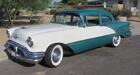
Pic. My Plum 66 Toro. What a great driving car. Look at that room! You won't find anything like this coming from the auto industry these days.
Wrong. I dont want it both ways. Im willing to pay. State Farm wont insure my cars for their value, for any price. Hagerty wont aloow daily driving for any price. I gave up looking for something for nothing over 60 years ago.
Then just insure them with state farm (I'd not) and just understand if you get in a wreck, you'll have to take the hit of the insurance stating it is worth x when you think it is worth y.
It is why I drive an older vehicle daily that if it gets totaled , I won't loose sleep over it. I'll be sad, but it is the risk I was willing to take . If the worst happens and someone wrecks it or jacks it. It was the cost of driving i daily. Still cheaper than a car payment and the depreciation of a late model vehicle.
You can't have it both ways. You might think you are not looking for that, but you are.
My advise, take it for what you paid for it. Is drive an old vehicle that you don't love. one you'd not think twice if someone offered to buy it. If it was gone tomorrow, oh well.
I've found that many insurance companies that deal with daily vehicles don't want to insure anything without 17 digit v.i.n.'s and some nothing that isn't 1995 or newer.
Good luck.
I had fogotten how i delt with this in the past. Due to a stroke. I have insured with full coverage with state farm . When I have had a loss you show ads for comparable cars and they pay. It not as easy a process as with a newer car. My 81 chevey pickup was totalled in 94. Statefarm offered a riduculus payout. The assumed, like some of the folks who have replied onn here that it was clapped out cause it was old. Took a few months of me repeating find me a truck with 40,000 miles on it and Ill settle. When a woman ran a red light that took my sons 80 Malibu coupe .Showed them a few adds for factory stick shift cars and got enough money to fix it . I will ck my current policy. In the past it stated they would repair or replace.
"Repair or replace" is not what it may seem to you.
So, to simplify (my version anyway) - collision/comp coverage provides the carrier an option to repair your vehicle or total it if the damages either (a) fall into the 70% range or above of what they determine your vehicle ACV (actual cash value) to be or (b) actually hit or exceed the ACV in total costs...
The average general auto policy is neither agreed nor stated value - it is ACV-based, which means the carrier essentially determines its value at such time leading up to the accident which damages it - at which point they decide whether repairable or totaled based on their estimation, not yours.
This again (as I've stated before) is why general auto carriers in large part don't want to or simply won't insure 'old' vehicles for daily-use coverage. Old cars are harder for them to estimate for repairs or replacement (again, for reasons I've described previously) and won't typically generate enough insurance premium dollars to cover the risk of losses to those old vehicles.
It's not typically a question of perception - i.e. they don't automatically assume your old car is a rolling junkpile, for if they did, they wouldn't be insuring it in the first place.
So if they do insure it for comp/collision, their estimation process consists of dispatching a state-licensed appraiser to inspect, photograph and estimate your damages to the most accurate level possible, or in the alternative if your car is determined non-repairable (whether economically or by reason of too much damage to save it), then they're tasked with performing a market survey effort to evaluate its overall worth at such time leading into the accident. They typically rely upon such reporting services as CCC or VVS for their total-loss evaluations, from which the basis of any offer to their insureds is then formed.
In my early adjusting years, I dealt with this a lot - many times the 'old' cars were in fact rolling junkpiles but sometimes not - in any case, each one that was insured for comp/collision was directly inspected, photographed and estimated according to the most accurate info available for repair potential and/or total-loss value. Not just numbers picked out the air to see what would stick.
So if you are able to insure your older vehicle(s) thru a general auto carrier, you should assume if they do cover it for physical damage, it won't likely be a great return on investment for you on the other end of a damage claim.