When you click on links to various merchants on this site and make a purchase, this can result in this site earning a commission. Affiliate programs and affiliations include, but are not limited to, the eBay Partner Network.
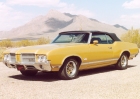
Just starting on my 1970 Cutlass project car. Starting off on the brakes.
Pulled the rear brake drums with only a little penetrating oil and a big hammer..
Can't get the front drums off.
Haven't used a lot of force yet but so far they will not budge. The wheel rotates so the pads are not stuck to the drum, but I can't get any movement between the drum and studs.
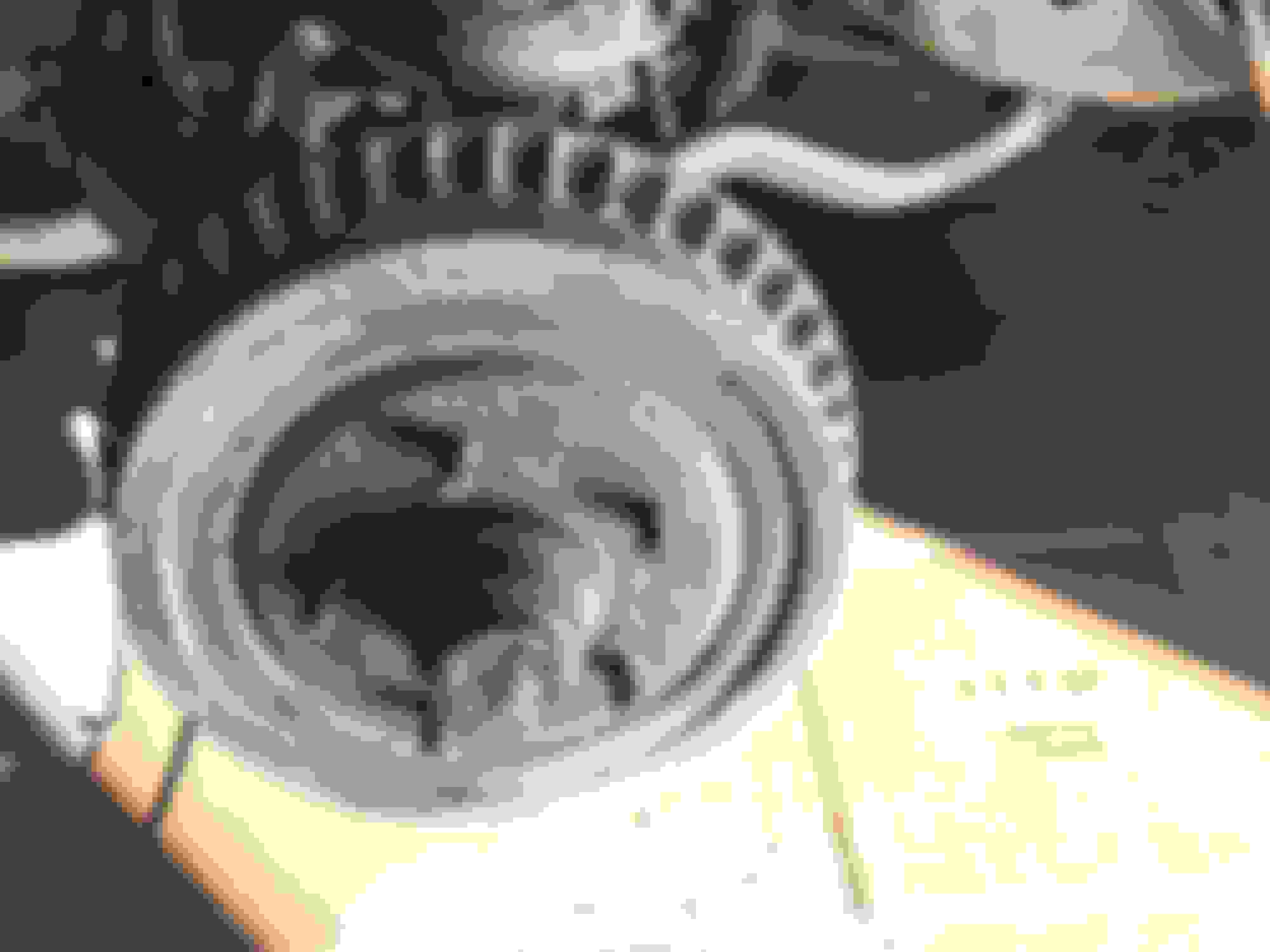
Almost looks like the studs are intergral with the drum.
Does the front drums come off like the rear drums?
Does the nut have to be removed from the spindle and then drum/brake assembly removed as a unit?
The drum and hub are attached to each other by the wheel studs and come off as a unit. Pop the grease cap off, remove the cotter pin - nut - washer, wiggle the drum an remove the front wheel bearing. Put the nut back on the spindle and pull the drum off while pushing down gently and the drum will come off leaving the inner bearing and seal on the spindle. Remove nut, bearing, and seal.
Clean and inspect bearings, races, seal, and brake parts. Replace whats bad, repack bearings and reassemble all the parts.
There's an old saying, "when all else fails, read the directions."
Stop beating on the drums before you hurt someone! See the diagram below, which is from the '70 Chassis Service Manual. Yes, the wheel lugs are attached to the drum on the front wheels.
You need to remove that black cap, which is a dust cap (just tap it with a hammer to loosen it---it's just a press-fit), and underneath you will find what is called a castle nut, which is a regular nut with raised ridges on one side for a cotter pin to fit through. When reinstalled, this nut is not tightened fully, but is tightened according to a procedure in the manual, and then the cotter pin is inserted to keep the nut, which may not even be finger tight, from turning. You'll need this procedure when you go reinstall the drum. For now, you want to remove the cotter pin and then the nut, then the outer bearing assembly, and then the drum should slide right off.
The whole assembly is not as simple as the rear drums.
I have the Chassis Service Manual, Factory Assembly Manual, Haynes Repair Manual and the Fisher Body Service Manual.
I did not see any specific info on removing the front drums but I will go back and look again. Can you point out to me where this information is located?----(never mind, others have kindly provided that info.)
thanks,
Pat
Last edited by jpatfarrell; Nov 28, 2018 at 03:59 PM.
Thanks so much for this information. I did not see anything like this in the manuals. Your expert advice is really appreciated and saved my a lot of frustration and possible damage.
Thanks for showing where this info is located. I was only looking in the Brake Sections.
Silly me for thiniking info on how to remove a brake drum would be in the Brake Section...Should have known it was in the Front Suspension Section??????
Thanks for showing where this info is located. I was only looking in the Brake Sections.
Silly me for thiniking info on how to remove a brake drum would be in the Brake Section...Should have known it was in the Front Suspension Section??????
This is a VERY common problem with the chassis manuals. They are poorly indexed, and information is not always where you think it should be. The parts that have to be removed to get the drum off (castle nut, outer bearings) are part of the suspension system, not the brake system, so, yes, you have to look in the front suspension section for this information. How difficult would it have been for Olds to have inserted a sentence at the beginning of the front brake section saying something like "for front drum removal, see page XXX in section XXX?" Not difficult at all, and it would have made it much easier for people trying to use those manuals.
Last edited by jaunty75; Nov 28, 2018 at 04:48 PM.
If you ever need to replace the drum, it has to be pressed off of the hub (the studs stay with the hub). I'm not sure why Olds made the drum a press-fit on the hub, I've seen other GM cars where the front drums just slide off the hub & studs like the rear drums do. This forces you to get into the front wheel bearings every time you need to work on or inspect the brake shoes. Of all the things I've encountered working on my Olds over the last 37 years, these press-fit front drums pisses me off the most.
Of all the things I've encountered working on my Olds over the last 37 years, these press-fit front drums pisses me off the most.
You've expressed my sentiments exactly. I ran into the same problem the OP has the first time I worked on the brakes on my '67 Delta, which also has front drums. When I realized that I needed to disassemble the front wheel bearings every time I just wanted to inspect the front brake shoes or do any work on the front brakes, I thought "what kind of design is this!"
Back when I was a kid I didn't take the wheel off the drum/hub to inspect the brakes, just removed the dust cap, cotter pin, nut, and slid everything off as an assy. I don't understand why the drum and hub assy is an issue.
Maybe they wanted the car to have to be brought in for service even if only the brake shoes needed inspection or replacement.
I doubt there was this much thought put into it. I think the assumption always was that the service work would be done by a garage or the dealer much more often than by a do-it-yourselfer, so the car would be brought in for service no matter what. I think the design was driven mostly by simply what was the cheapest to implement. As much as we might think it's silly to have to do as much disassembly as you do to get at the brakes, servicing the brakes is not something you do all that often. Certainly not as often as you check the oil, or even as often as you change the oil.
Originally Posted by oldcutlass
Back when I was a kid I didn't take the wheel off the drum/hub to inspect the brakes, just removed the dust cap, cotter pin, nut, and slid everything off as an assy. I don't understand why the drum and hub assy is an issue.
It's not really an issue in the grand scheme of things because, as you point out, you can remove things as a complete assembly, but, still, it seems to be more work than should be necessary to simply get at the brakes. And you still have to go through the proper adjustment process to get the castle nut tightened properly. If I were designing the front brake system, I might have tried to come up with something different. Maybe I wouldn't have succeeded, but I'd have at least thought about it.
You are supposed to re-regrease the front wheel bearings periodically. The hub and drum typically has to come off more frequently for that than for brake service. Since the hub has to come off anyway, why screw with making the drum separate?
You are supposed to re-regrease the front wheel bearings periodically. The hub and drum typically has to come off more frequently for that than for brake service. Since the hub has to come off anyway, why screw with making the drum separate?
Don't bother us with logic and facts! We just want to bitch!
To be honest the knurls on the studs center it on the hub so that when the drum is trued, its trued as an assembly for no vibrations.
Yes I know that the rears slip off, but they fit the hub of the axle and originally had lock rings to keep them in place. The rear of the car is not as sensitive to vibrations.
You are supposed to re-regrease the front wheel bearings periodically. The hub and drum typically has to come off more frequently for that than for brake service. Since the hub has to come off anyway, why screw with making the drum separate?
Not every DIY'er has a shop press at their disposal when the drums need to be replaced, regardless if the bearings need lube or not at the time of drum replacement. I could imagine that the inability to easily slip the front drums off for periodic inspection led to many more drum replacements due to wear-down of the shoes and subsequent drum damage.
I've not owned any other A-body w/ drums, but I know my dad's '66 Impala and my '69 Bel-Air front drums slipped off their hubs. I've done many more front disk rotor replacements on many different vehicles and never encountered a rotor that was press-fit on to the hub. Did all A-bodies use press-fit drums in the front, or just Olds?
Last edited by JohnnyBs68S; Nov 30, 2018 at 12:54 PM.
Not every DIY'er has a shop press at their disposal when the drums need to be replaced, regardless if the bearings need lube or not at the time of drum replacement.
A 2lb sledge and a couple of deep sockets are all you need to R&R the wheel studs.
The Chassis service manual will assume you are a trained Oldsmobile mechanic, so you would be expected to know how to remove the drum.
Why is the hub/drum assembly the way it is?, because it's how the bean counters approved it, that's why. If it saves a dollar per car in either parts costs or assembly time then it gets the go ahead.
Ask a VW bug fan how much fun they have removing the rear drums...
Roger
Last edited by rustyroger; Dec 1, 2018 at 12:45 PM.
Ask a VW bug fan how much fun they have removing the rear drums...
You just resurrected a memory of my Dad working on my sister's Bug, with him trying to break that nut loose. He broke a few breaker bars, then finally had a friend weld a socket to a 3 foot long sturdy pipe. I recall seeing him standing on the end of the pipe, all 220 pounds of him bouncing up and down, bending the pipe in the process before the nut broke loose.
If you are taking the time now to replace the Front Brake Drums --- rather than use the Chineseum world of "warped steel" brake drums ------
I have some ++ N.O.S. ++ U.S.A. made ++ Front Brake Drums and ++ N.O.S. ++ Asbestos ++ Brake shoes for the same application.........
Always best to simply call me ---- Craig ---- 516 - 485 - 1935....... West Hempstead, New York.....