When you click on links to various merchants on this site and make a purchase, this can result in this site earning a commission. Affiliate programs and affiliations include, but are not limited to, the eBay Partner Network.
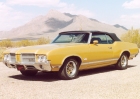
Hi All, Just got a 1971 Delta 88 convertible. Unforunately, the 455 2bbl ran out of oil. It is now at the mechanic/machine shop and needs a rebuild. I want to put a 4bbl carb on it. The mechanic is looking at stock rebuild parts for 1971 455. I'm thinking a differnt cam will be needed. Need some help/advise on what to tell the mechanic. It is the original "F" block with "G" heads. The crank will need to be ground .010 under on the mains and .020 on the rods. I'm not looking for a racing engine, just a solid driver with good idle (Bay area traffic). I need it to climb mountains without overheating (Santa Cruz, Tahoe etc.) Let me know what you think! THX!
Last edited by GoldenStateBear; Aug 13, 2024 at 10:25 AM.
Reason: Add text
Hi All, just got a 1971 Delta 88 convertible. The car seems very original. Unfortunately, the 455 2bbl ran out of oil. It is now at the mechanic/machine shop and needs a rebuild. I want to put a 4bbl carb on it. The mechanic is looking at stock rebuild parts for 1971 455. I'm thinking a different cam will be needed. Need some help/advise on what to tell the mechanic. It is the original "F" block with "G" heads. The crank will need to be ground .010 under on the mains and .020 on the rods. Probably going .020 over on the pistons. I have "Z" exhaust manifolds to go on it (they look larger than the original 2bbl manifolds) I'm not looking for a racing engine, just a solid driver with good idle (Bay area traffic). I need it to climb mountains without overheating (Santa Cruz, Tahoe etc.)
Also wondering what is the best intake manifold, carb and dizzy for this. Thinking I should ditch the factory points type dist.
Beautiful car. You don't NEED a different cam just because the carb is being changed. In the 1971 model year, the RPO L30 2bbl 455 and the RPO L31 4bbl 455 both used the same P/N 400117 cam with 258/272 advertised duration. Yes, you can probably get a better cam than that today. Your call.
It's neither necessary nor in your best interest to post the same question in multiple places. You'll get a better answer more quickly if all posts are in the same thread.
Ok, thanks Joe! Wasn't sure if this was in the right place. Do you have any recommendation for a new "mild" cam for this cruiser? or stick with the stock cam?
Thx
If you are happy with the performance, keep the stock cam. If you do, the carb jetting and distributor advance will be correct for that setup. If you want a different cam, I'd talk to Mark Remmel at https://newoldsperformance.com/
Confirm yourself or with the machine shop that the threaded oil galley plugs are reinstalled AND that they are the correct plugs in the correct location, this is a common problem area on Olds rebuilds. There are 3, 2 have 0.040 holes for oiling and one is solid. 1 of the ones with a hole goes in the block in the hole where the distributor goes, the other one with a hole goes up front to oil the timing set. The one without a hole goes up front in the galley opposite the plug with a hole.
I don't recall which side the one with the hole at the timing set goes in, L or R? I think it is the R/passenger side. Someone please chime in on this...thanks.
Those three plugs are all unique and only go into one location. The two at the front are straight thread and the one with the orifice is a different thread size than is the blank one. The one at the back is an NPT pipe plug. The problem comes when the person at the machine shop rounds out the distributor lube pipe plug and unknowingly installs a new undrilled one in it's place.
Is the plan for this rebuild to use the original pistons, or bore the block and use new aftermarket pistons? I ask because the original compression ratio was very low and some aftermarket pistons reduce it even further, then using modern composition head gaskets reduce it a bit more (compared the the original thin gaskets). If new pistons are in the plan, be sure to verify the compression ratio so the new camshaft can be chosen appropriately.
The current plan is.020 oversize pistons. The block hasn't been checked yet. It went in the tank this morning. The mechanic said he gets all his parts from the same warehouse and it's all stock stuff. If i want a different cam, I'll have to bring it to him. I suppose the same for the pistons/rings etc. Any recommendations for the pistons/rings?
The current plan is.020 oversize pistons. The block hasn't been checked yet. It went in the tank this morning. The mechanic said he gets all his parts from the same warehouse and it's all stock stuff. If i want a different cam, I'll have to bring it to him. I suppose the same for the pistons/rings etc. Any recommendations for the pistons/rings?
What’s your budget? That’ll dictate pistons and even some of the other pieces needed.
For the budget, I'm looking to keep the cost down as much as possible. Seems like that doesn't apply to Olds parts! Ideally looking for the sweet spot between price/performance. Really looking for the upragdes that make sense to do while the thing is apart. At the end of the day, I want the car to be a reliable long distance driver that will get up and go when I need it to. For the 1 day that I got to drive it, it was a bit of a dog.
Just spoke with the mechanic. Block is in the tank still. He's looking at the Silv-o-lite .020 oversize stock replacement pistons, but did not have the part#. I found Part# 1631.20 at summit for $268.99. He has ordered all new valves and guides. Confirmed the Intake was 2.0" and exh is 1.625". He said the guides were worn out and the valves were rusty.
Be aware that many so-called "machine shops", when working on Oldsmobile cylinder heads, do not think about the fact that Oldsmobile valve stems are a full 11/32" diameter, the running clearance thus being incorporated in the valve guide whereas other (Ford, Chev, Pontiac) utilize 11/32" valve guide diameter, the running clearance incorporated in the valve stem! So, if they have measured the valve guides on your Oldsmobile heads and they measure a couple thousandths of an inch larger than the typical Ford or Chev valve guides they may think that they are worn when they actually are not! Good luck on your build! As Joe P. mentioned above, Mark Remmel, known on this site as cutlassefi is the person to contact about camshaft choice!
Pistons are about as deep as you can go into the engine, they're a lot of work and $ to replace. Invest the time and some extra $ into them now by continuing to ask on the forum as you are. I don't think you'll be happy with stock pistons if you're hoping for more power.
Hopefully some of the engine builder members chime in soon.
68 thru 70 455's were high compression.
See if your guy can get Silvo-lite's for a 1970 455.
They should be about 10 to 1 compression, and will require premium fuel (93 oct)
That, and the proper cam, should give you a big boost
Charlie wasn't there also a low compression 2bbl version in those years? Agree the 10.25 factory HC would wake it up.
Correct. In 1968-70 the RPO L30 455 310 HP 2bbl came with 9.0:1 CR. In 68 you could also get the RPO L66 455 320 HP 2bbl with 10.25:1 CR. This was dropped for the 1969 model year, but came back as the L33 motor for the 1970 model year until it was dropped again in Feb 1970. For 1971 the CR was dropped to 8.5:1 across the board.
68 thru 70 455's were high compression.
See if your guy can get Silvo-lite's for a 1970 455.
They should be about 10 to 1 compression, and will require premium fuel (93 oct)
That, and the proper cam, should give you a big boost
X 2. OP: Since the new head gaskets are way thicker, the block hasn't been decked, cylinder head combustion chambers are large, the HC pistons would be good. And if the "compression height" of the replacement pistons is less than the stock pistons, you'll be "golden". 9.0 CR isn't much better than 8.5.
Originally Posted by joe_padavano
Correct. In 1968-70 the RPO L30 455 310 HP 2bbl came with 9.0:1 CR. In 68 you could also get the RPO L66 455 320 HP 2bbl with 10.25:1 CR. This was dropped for the 1969 model year, but came back as the L33 motor for the 1970 model year until it was dropped again in Feb 1970. For 1971 the CR was dropped to 8.5:1 across the board.
I’ve already talked to this gentleman and told him NOT to go with the cheap aftermarket “10.:1” piston that some of you recommended. Here’s why.
They're very short, which when used with a std gasket will give you about .090 of “squish”.
Instead I recommended the 25 or 30cc KB which is .030 taller, and should yield about a 9.0:1 or so comp ratio. He doesn’t want to have to run pump premium so the 9.0:1 is more user friendly, but will still give him added power. In addition he’ll be able to install a bit more cam if he wants to, or stay with a stock one.
It’s a proven combination as Joe P eluded to. Sometimes it’s best not to try to reinvent the wheel.
I’ve already talked to this gentleman and told him NOT to go with the cheap aftermarket “10.:1” piston that some of you recommended. Here’s why.
They're very short, which when used with a std gasket will give you about .090 of “squish”.
Instead I recommended the 25 or 30cc KB which is .030 taller, and should yield about a 9.0:1 or so comp ratio. He doesn’t want to have to run pump premium so the 9.0:1 is more user friendly, but will still give him added power. In addition he’ll be able to install a bit more cam if he wants to, or stay with a stock one.
It’s a proven combination as Joe P eluded to. Sometimes it’s best not to try to reinvent the wheel.
what’s the part# of that KB which is .030 taller? is that taller than their cast stock replacement #1631?
Last edited by CANADIANOLDS; Aug 18, 2024 at 12:12 PM.