


You Guys were right!


Thread Starter
72Cutlass S
Joined: Jul 2011
Posts: 1,201
From: Bakersfield, CA
You Guys were right!
I have seen the light,
I have been chasing a running hot problem with my 72 cutlass 455 for quite some time now. First two issues were a restricted radiator and a faulty T-stat. Replaced radiator with a 2 row Cold Case and cut the T-stat apart and just used it as on orifice thought I had it licked. It was ok at road speeds but in traffic it was hitting 240 degrees. So I tried two different fan clutches to try and increase air movement with no success. So next I started down the electric fan rabbit hole, I upgraded the alternator to a 140 amp unit, upgraded the alt wire to the horn relay and installed a 16" puller fan and a 12" pusher on the a/c condenser. this worked better but it was still hitting 230 in traffic. It was at the point were I didn't want to drive it on hot days and out where I live that is most days. I was online looking at upgrading the fans to a set of Windstar fans with a Dakota digital dual fan controller to the tune of about 400.00. My oldest son asked me why I didn't just buy another Fan clutch and try the mechanical fan one more time. So I bought a Hayden heavy fan clutch and a high flow T-stat and boy am I glad I did. on my first test drive around town it ran 190 at speed and stayed around 200 to 210 in traffic. today my wife and I took it up to Tehachapi to get a sandwich at this great German deli. the climb up there is about 4000 feet and it takes place on a 10 mile stretch so it's pretty steep. The Olds ran 195 all the way up, I feel I can finally trust it to go anywhere. I have read all of the other overheating post and a lot of you guys kept saying to keep it simple and stick to what works. I am glad I finally listened. I wrote this in case another member thinks about going with electric fans. Don't do it, save your money. 50 year old tech still works fine.
I have been chasing a running hot problem with my 72 cutlass 455 for quite some time now. First two issues were a restricted radiator and a faulty T-stat. Replaced radiator with a 2 row Cold Case and cut the T-stat apart and just used it as on orifice thought I had it licked. It was ok at road speeds but in traffic it was hitting 240 degrees. So I tried two different fan clutches to try and increase air movement with no success. So next I started down the electric fan rabbit hole, I upgraded the alternator to a 140 amp unit, upgraded the alt wire to the horn relay and installed a 16" puller fan and a 12" pusher on the a/c condenser. this worked better but it was still hitting 230 in traffic. It was at the point were I didn't want to drive it on hot days and out where I live that is most days. I was online looking at upgrading the fans to a set of Windstar fans with a Dakota digital dual fan controller to the tune of about 400.00. My oldest son asked me why I didn't just buy another Fan clutch and try the mechanical fan one more time. So I bought a Hayden heavy fan clutch and a high flow T-stat and boy am I glad I did. on my first test drive around town it ran 190 at speed and stayed around 200 to 210 in traffic. today my wife and I took it up to Tehachapi to get a sandwich at this great German deli. the climb up there is about 4000 feet and it takes place on a 10 mile stretch so it's pretty steep. The Olds ran 195 all the way up, I feel I can finally trust it to go anywhere. I have read all of the other overheating post and a lot of you guys kept saying to keep it simple and stick to what works. I am glad I finally listened. I wrote this in case another member thinks about going with electric fans. Don't do it, save your money. 50 year old tech still works fine.
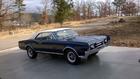


'72 Cutlass ragtop
Joined: Jun 2016
Posts: 1,309
From: Tampa, FL
For some time now in my air-conditioned '72 ragtop I've been running a Cold Case rad along with 180 hi-flow t-stat and 7-blade GM fan from mid-70's Corvette, in addition to Hayden p/n 2797 fan clutch all encased within a stock fan shroud. Here in FL i almost never hit 200 and typically run 185-195 on the hottest days.
so assuming the rest of your engine operating conditions are good, I'd opine you've achieved solid reliability with your combo.
so assuming the rest of your engine operating conditions are good, I'd opine you've achieved solid reliability with your combo.
Thread Starter
72Cutlass S
Joined: Jul 2011
Posts: 1,201
From: Bakersfield, CA
It’s funny, I should know better. I work on commercial trucks every day and they all have belt driven fans. I think I got too focused on making it work. In regards to the front wheel drive comment. I don’t disagree but all rear wheel drive cars and light trucks use electric fans these days. That being said the cooling systems on those vehicles are designed to use electric fans.


Registered User
Joined: Jan 2010
Posts: 6,095
From: central Indiana
When big trucks start using electric fans, I’ll reconsider my opinion.
Modern cars and trucks use electric fans, but the radiators and shrouds were designed for a tight fit, with no gaps to allow air to bypass the radiator. The fans and motors are far more powerful than what you find in the aftermarket. The OEM spend far more time and money perfecting their cooling systems than any of us or the aftermarket could ever hope to. When was the last time you saw a late model car on the side of the road overheating (that wasn’t caused by another failure)? It just doesn’t happen anymore.
These cars didn’t overheat when new, if they do now it’s because something has been changed or modified other than the way the factory designed. All things being equal, if you keep the factory fans and shrouding, but upgrade to an aluminum radiator that’s more efficient than the old school copper/brass radiators, you would have a combination that would be pretty hard to beat.
Electric fans become common when front wheel drive was the norm. As someone mentioned before, a engine driven fan isn’t feasible when the engine is mounted sideways.
Electric fans are used on rwd cars and some trucks not because they are more efficient, but to speed warm up time, and to ever so slightly improve fuel efficiency.
Modern cars and trucks use electric fans, but the radiators and shrouds were designed for a tight fit, with no gaps to allow air to bypass the radiator. The fans and motors are far more powerful than what you find in the aftermarket. The OEM spend far more time and money perfecting their cooling systems than any of us or the aftermarket could ever hope to. When was the last time you saw a late model car on the side of the road overheating (that wasn’t caused by another failure)? It just doesn’t happen anymore.
These cars didn’t overheat when new, if they do now it’s because something has been changed or modified other than the way the factory designed. All things being equal, if you keep the factory fans and shrouding, but upgrade to an aluminum radiator that’s more efficient than the old school copper/brass radiators, you would have a combination that would be pretty hard to beat.
Electric fans become common when front wheel drive was the norm. As someone mentioned before, a engine driven fan isn’t feasible when the engine is mounted sideways.
Electric fans are used on rwd cars and some trucks not because they are more efficient, but to speed warm up time, and to ever so slightly improve fuel efficiency.

Registered User
Joined: Jan 2009
Posts: 5,556
From: Harrison, Michigan
Glad you got it. I just changed from a "generic" fan clutch to a Hayden standard duty. My problem wasn't overheating but roaring. The Hayden is better but still roars but I suppose if it didn't roar at all it would be freewheeling.

Out of Line, Everytime😉
Joined: Dec 2006
Posts: 10,082
From: Melville, Saskatchewan
When big trucks start using electric fans, I’ll reconsider my opinion.
Modern cars and trucks use electric fans, but the radiators and shrouds were designed for a tight fit, with no gaps to allow air to bypass the radiator. The fans and motors are far more powerful than what you find in the aftermarket. The OEM spend far more time and money perfecting their cooling systems than any of us or the aftermarket could ever hope to. When was the last time you saw a late model car on the side of the road overheating (that wasn’t caused by another failure)? It just doesn’t happen anymore.
These cars didn’t overheat when new, if they do now it’s because something has been changed or modified other than the way the factory designed. All things being equal, if you keep the factory fans and shrouding, but upgrade to an aluminum radiator that’s more efficient than the old school copper/brass radiators, you would have a combination that would be pretty hard to beat.
Electric fans become common when front wheel drive was the norm. As someone mentioned before, a engine driven fan isn’t feasible when the engine is mounted sideways.
Electric fans are used on rwd cars and some trucks not because they are more efficient, but to speed warm up time, and to ever so slightly improve fuel efficiency.
Modern cars and trucks use electric fans, but the radiators and shrouds were designed for a tight fit, with no gaps to allow air to bypass the radiator. The fans and motors are far more powerful than what you find in the aftermarket. The OEM spend far more time and money perfecting their cooling systems than any of us or the aftermarket could ever hope to. When was the last time you saw a late model car on the side of the road overheating (that wasn’t caused by another failure)? It just doesn’t happen anymore.
These cars didn’t overheat when new, if they do now it’s because something has been changed or modified other than the way the factory designed. All things being equal, if you keep the factory fans and shrouding, but upgrade to an aluminum radiator that’s more efficient than the old school copper/brass radiators, you would have a combination that would be pretty hard to beat.
Electric fans become common when front wheel drive was the norm. As someone mentioned before, a engine driven fan isn’t feasible when the engine is mounted sideways.
Electric fans are used on rwd cars and some trucks not because they are more efficient, but to speed warm up time, and to ever so slightly improve fuel efficiency.
Last edited by olds 307 and 403; Aug 21, 2021 at 04:20 PM.
Thread Starter
72Cutlass S
Joined: Jul 2011
Posts: 1,201
From: Bakersfield, CA
While I agree a good heavy duty clutch fan with a 6 or 7 blade fan is a good as anything, don't use big trucks as examples of quality. Our new Freightliner's are pure junk. They honestly couldn't design a serpentine belt to stay on the motor! Don't get me started on the DEF and whole emissions system, very unreliable and down to 10 km/hr when it fails. The aftermarket fans seem to be junk. My Plymouth Breeze fans did just as well as a 7 blade fan with a new clutch.


Registered User
Joined: Sep 2010
Posts: 1,663
From: Norfolk, Va
I remember those summer days in B-field. They were a nice warm up for my time in Phoenix. But back to the topic at hand, I drove Ram 2500 trucks for work for 15-20 years and they all had this weird problem in the morning. Hot or cold didn't seem to matter but first thing in the morning they would all have that same cooling fan roar. It was always random when it happened but always first thing in the morning. I lived in a mountainous area and could coast for a bit when leaving for work so I would put the trans in neutral and rev the engine a bit and the fan clutch would release and the noise would calm down. Does the Hayden clutch ever soften up enough to lower the noise? Thx.
Thread Starter
72Cutlass S
Joined: Jul 2011
Posts: 1,201
From: Bakersfield, CA
Thats funny. My 99 F250 does the same thing in the morning. It doesn’t matter what the ambient temp is.
Regarding the Hayden clutch. It does that in the morning and then releases. If the engine temp drops below around 190 while driving it quiets down until the temp rises again. When cruising in hot temps at highway speeds it will cycle on and off.
Regarding the Hayden clutch. It does that in the morning and then releases. If the engine temp drops below around 190 while driving it quiets down until the temp rises again. When cruising in hot temps at highway speeds it will cycle on and off.
Registered User
Joined: Aug 2013
Posts: 12,762
From: Evansville, IN
That's probably an open loop fail safe computer mode until it starts getting data. Same reason some computers spin hard until the OS takes over and calms them down.
Also, the Toronado is annoyed at you all. It's not being FWD, it's being transverse that brought the electric fans.
Also, the Toronado is annoyed at you all. It's not being FWD, it's being transverse that brought the electric fans.
Registered User
Joined: Feb 2013
Posts: 15,394
From: Phoenix, AZ
From what I read on the Hayden web site, with a viscous clutch fan the fluid will pool and cause “lockup” type operation upon initial operation, then the centrifugal force pushes the fluid out of the reservoir and the fan then loosens up.
Thread Starter
72Cutlass S
Joined: Jul 2011
Posts: 1,201
From: Bakersfield, CA
Update
So, I've been driving it for a while now and I could only ever give it about 26 degrees of timing before it would start detonating really bad. I thought maybe it was a high compression crap fuel problem. It is a 1968-70 coded 455 with E heads. Well since it runs so much cooler now, the other morning before i took it out I bumped the total timing up to 34 degrees with 9 degrees of vac advance and it hasn’t made a peep. The extra advance made it run a little cooler. It also has a little more kick in it’s step when I romp on it. Now I am going to have to keep closer eye on rear tire wear lol.


Chevy budget Olds powered
Joined: Jul 2011
Posts: 8,638
From: Elgin, Illinois
Fwiw I run dual electric fans and a cheap Moroso water pump drive kit. Albeit not a 455 but it's a 10.25 to 1 compression iron headed 350 still running pump gas. The only time I have encountered detonation even was when I accidentally forgot to turn the fans on. My set up works really well. I have a big 2 row aluminum radiator , car might hit 210 at a light but when it's going down the road it's 190 ish. That's with a 4500 stall and 3.90.but with the light weight if my car and gear I don't see the cylinder pressure spikes " most " cruisers see and that's a huge Factor. My car weighs.in at 3285 with me in it add 600 lbs to a typical cruiser and it becomes a factor.
Last edited by coppercutlass; Sep 4, 2021 at 05:53 PM.
Registered User
Joined: Sep 2010
Posts: 1,663
From: Norfolk, Va

Thread
Thread Starter
Forum
Replies
Last Post
labrats804
Small Blocks
3
Jul 19, 2007 07:16 AM


