


Expansion Tank Ideas?


Thread Starter
Registered User
Joined: Jun 2022
Posts: 384
From: Eden Prairie, MN
Expansion Tank Ideas?
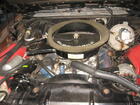
Hello all, it's been a while since I've posted. My '61 Olds 98 does not have an expansion / overflow reservoir. It has a rubber hose that leads from the neck of the rad right to the earth. Does anyone have any suggestions for fabricating an expansion tank? What material is best to use? What about mounting it? There is a lot of space to mount one on the passenger side headlight area under the hood. Any ideas would be helpful. Thanks all.



Rodney
Joined: Jun 2011
Posts: 2,591
From: Houston, TX
You will also need to change the radiator cap to a coolant recovery type; without the recovery cap, the coolant will be pushed out to the expansion tank but will never be pulled back into the radiator.
Rodney
Rodney
Administrator
Joined: Oct 2009
Posts: 42,505
From: Poteau, Ok
Google radiator overflow bottle/tank, these can be had priced from $15 on up to big dollars depending on what you choose. Note, these cars came without one and operate fine with no discharges unless you overfill the radiator or overheat. You don't have to replace the cap if you just want it to be a puke bottle, just mount and run the hose to it.


Running On Empty
Joined: Jul 2018
Posts: 26,195
From: Earth
Mike - Is there a reason you want to install a puke (expansion/overflow) tank? If the radiator has been puking fluid out the overflow tube (onto the ground) consider why it's puking (if it's puking). Old radiator caps are notorious for failing. A faulty radiator cap can demonstrate itself quite often if you find coolant puking out the overflow tube after you've shut down the engine e.g. no air flow across the radiator and no fan running. Heat builds in the radiator after the engine has shut down. The radiator cap is designed to maintain system pressure (likely either 15# or 16# in your vehicle). If the pressure falls, the heated coolant has no place to go than to get puked out the overflow tube/hose. Check your radiator cap?

Registered User
Joined: Jun 2009
Posts: 15,200
From: southeastern Michigan
Keep in mind, also, that, when your car was new, it did not come with an expansion tank. It didn't need one. A common mistake people make, and I've made it myself, is to overfill the radiator. In cars without an expansion tank, the radiator is supposed to be filled only to a level somewhat below the top. There is often a "line" molded into the radiator tank itself showing the full cold level. The point is that there needs to be room for the fluid to expand into when it heats up when the engine is running. Leaving some space by not filling to the top does this. If the radiator is filled right to the top, the fluid has nowhere to go but out the drain tube as it heats up. Then, when the car cools down and you check the radiator fluid level, it looks too low. So you put more in, and the cycle repeats!
In cars with expansion tanks, you can fill to the top, and the fluid expands into the tank when it gets hot. It is then drawn back into the radiator as the engine cools.
I think expansion tanks were added when they were more as an anti-pollution measure than for any other reason. Fluid did come out the tube on these cars now and then for whatever reason, and it just ended up on the ground where it can get into the environment.
In cars with expansion tanks, you can fill to the top, and the fluid expands into the tank when it gets hot. It is then drawn back into the radiator as the engine cools.
I think expansion tanks were added when they were more as an anti-pollution measure than for any other reason. Fluid did come out the tube on these cars now and then for whatever reason, and it just ended up on the ground where it can get into the environment.

Registered User
Joined: Sep 2011
Posts: 2,148
From: Plano, TX
Ah, good old fashioned terminology problems.
Recovery tanks became common back in ... mid 70s? It's better to catch the liquid and reuse it than to just dump it on the ground. Overflow tanks has been common forever, I think it's one of those interesting super small details the brands used to distinguish trim levels or brand hierarchy. Don't want coolant spilled in your garage? Pay for the nicer car! Recovery and overflow tanks are NOT pressurized.
Expansion tanks are newer, at least as common use. That's really because of packaging - the radiator often isn't the highest point of the cooling system, so you can't fill from there. The big difference is expansion tanks are part of the pressurized system, so now you can fill from there. Usually they have enough free space to also serve the overflow job. It just has to be the highest point of the cooling system.
You can easily add an overflow or recovery tank. Adding an expansion tank is a bit more interesting and, thankfully, pointless.
Recovery tanks became common back in ... mid 70s? It's better to catch the liquid and reuse it than to just dump it on the ground. Overflow tanks has been common forever, I think it's one of those interesting super small details the brands used to distinguish trim levels or brand hierarchy. Don't want coolant spilled in your garage? Pay for the nicer car! Recovery and overflow tanks are NOT pressurized.
Expansion tanks are newer, at least as common use. That's really because of packaging - the radiator often isn't the highest point of the cooling system, so you can't fill from there. The big difference is expansion tanks are part of the pressurized system, so now you can fill from there. Usually they have enough free space to also serve the overflow job. It just has to be the highest point of the cooling system.
You can easily add an overflow or recovery tank. Adding an expansion tank is a bit more interesting and, thankfully, pointless.
Thread Starter
Registered User
Joined: Jun 2022
Posts: 384
From: Eden Prairie, MN
I think I'm guilty of overthinking this one. I have had it puke in the past, and instead of having the coolant splash out onto the ground, I was thinking it would be better in a container. An overflow tank. And correct, it did not come with one originally. My level may have been too high, since I do have an aftermarket rad that has been in the vehicle since about 2013. There is no mark on the rad neck or mark on it indicating fill level, so I am thinking, it may have been way too full. This happened a couple summers ago, so, I think in preparing for this year's back to the 50's car show, I am thinking off things to add when things are better off left alone.
Registered User
Joined: Sep 2011
Posts: 2,148
From: Plano, TX
Eh, no big deal. I think a recovery tank is a good idea. The challenge for me was finding one that looked the way I wanted and fit in a good space, plus was actually a recovery tank and not just an overflow. Most of the part listings for aftermarket tanks are rather vague on whether or not there's a tube in there.
Without a tank, just let it puke. Once it's done a time or two then you should be at a good level - probably 2" to 3" below the top of the rad.
With a tank, fill up the rad but leave the tank empty. You might overflow the tank at first, so have a tube from that to the ground. Eventually you'll see evidence of coolant circulating in and out of the tank.
Without a tank, just let it puke. Once it's done a time or two then you should be at a good level - probably 2" to 3" below the top of the rad.
With a tank, fill up the rad but leave the tank empty. You might overflow the tank at first, so have a tube from that to the ground. Eventually you'll see evidence of coolant circulating in and out of the tank.

Thread
Thread Starter
Forum
Replies
Last Post


