When you click on links to various merchants on this site and make a purchase, this can result in this site earning a commission. Affiliate programs and affiliations include, but are not limited to, the eBay Partner Network.
Hi there,
Well not so good when on the maiden voyage.
I have looked at other peoples issues with this and tried remedies but to no avail.
Particular link was this one attached there were two threads and I checked them both out but no joy.
###I used the search feature found a little help but need more###.
Problem is:
Headed out and at a constant speed could feel like an feedback through the pedal once every second no one else in the car could feel it.
after about thirty minutes of driving starting off at the lights and going around round abouts car is jerking and shuddering.
Today it seems to be worse and on a run actually stalled once going around a round about (slightly up hill) and once just driving along (slightly down hill).
The car idles beautifully stationary and revs fine.
However when parked I have probably half throttle with a fair few revs going the engine dies down almost to idle then revs back up each time at the same rate no erratic reving and slowing it’s just a constant hi rev low rev hi rev low rev surging all while I have my foot on the accelerator in one spot and not moving at all.
So far I have checked:
distributor cap for cracks and markings on the internal pins.
wiggled each high tension lead to see if there is any change in revs etc while idling
changed dist cap centre high tension lead to ignition coil
made sure the ignition coil lead in dist cap is not catching on internal parts
had an external fuel supply to fuel pump to negate fault in fuel tank.
checked for vacuum leaks
checked vacuum advance working fine
Would I be looking at investigating the fuel pump and carb blockage next or does this sound like some type of electrical problem?
I do have footage of the car jerking while on the trip and also from today surging while stationary just cannot upload here of course.
Thank you.
Last edited by 5998DownUnder; Jul 11, 2023 at 04:54 AM.
Straight away from the description it sounds like a bad A/F mixture - either (1) because you do in fact have a vacuum leak; or (2) you have the A/F mixture set incorrectly. Attach a vacuum gauge (with an in-line "T") and check your vacuum. Your vacuum reading should be rock "steady" & should be roughly anywhere between 17"Hg - 22"Hg. If you don't have a vacuum gauge, there should be two A/F mixture screws. Individually, set each A/F mixture screw to the highest RPM you can achieve - one at a time, adjust each A/F mixture screw to the highest RPM.
Don't try to side-step normal tune-up sequence.
Establish:
(1) Dwell
(2) Timing
(3) A/F mixture ratio
Dwell effects timing, timing does not effect dwell. Dwell (point gap) MUST be established prior to timing.
Straight away from the description it sounds like a bad A/F mixture - either (1) because you do in fact have a vacuum leak; or (2) you have the A/F mixture set incorrectly. Attach a vacuum gauge (with an in-line "T") and check your vacuum. Your vacuum reading should be rock "steady" & should be roughly anywhere between 17"Hg - 22"Hg. If you don't have a vacuum gauge, there should be two A/F mixture screws. Individually, set each A/F mixture screw to the highest RPM you can achieve - one at a time, adjust each A/F mixture screw to the highest RPM.
Don't try to side-step normal tune-up sequence.
Establish:
(1) Dwell
(2) Timing
(3) A/F mixture ratio
Dwell effects timing, timing does not effect dwell. Dwell (point gap) MUST be established prior to timing.
Hi Norm,
Yes I do have a Vacuum gauge I will do this check.
Thank you.
Ensure your reading is "steady". Perform the simple test in the left-hand upper corner of this diagram. You should easily be able to repeat this simple test on a properly adjusted carburetor - be aggressive with snapping the throttle and watching the vacuum gauge. As noted, if you have a wavering of the vacuum reading +/- 4"Hg - 5"Hg you have an improperly adjusted carburetor A/F mixture (most likely)...upper right-hand corner of diagram.
Of course, the above diagram assumes you have a proper tune-up (1)Dwell>(2)Timing set correctly.
Just going through some old photos of the old original Quadrajet before I replaced it with a Holley as I had serious problems with it.
Seems to be a bit more going on Re vacuum hoses before. I may have missing hoses?
Not much in the way of vac hose diagrams in the manual though.
Just going through some old photos of the old original Quadrajet before I replaced it with a Holley as I had serious problems with it.
Seems to be a bit more going on Re vacuum hoses before. I may have missing hoses?
Not much in the way of vac hose diagrams in the manual though.
Fine. Let's start fresh. What "is" the current vacuum reading on your vacuum gauge?
I'm not trying to split hairs but the terminology could mislead some of your research/carb work. That carby is a Rochester 4 jet, specifically I think it's a 4GC. It isn't a Quadrajet, they started around '66 and are a lot different. Good luck finding the problem!
I'm not trying to split hairs but the terminology could mislead some of your research/carb work. That carby is a Rochester 4 jet, specifically I think it's a 4GC. It isn't a Quadrajet, they started around '66 and are a lot different. Good luck finding the problem!
Could it be a 4G rather than a 4GC? The 4GC has a longer intermediate choke shaft than the 4G I believe.
Here (attached .pdf document) is the United Delco manual for both the Rochester 4G & Rochester 4GC carburetors with exceptional tuning/timing discussions for 1959 engine applications (as well as other pertinent years). IIRC my Dad had the 4GC on his 1964 Buick Wildcat.
Had I read it closer, the 4G was manually operated choke with a vacuum governor while the 4GC was an automatic choke. Therefore, I believe you're correct - it's a 4GC.
Agree with previous posts. Follow the process for dwell, timing & A/F mixture.
That 4GC is sort of the qjet's father. Similar in spirit, but a generation older. To help tune in the A/F mixture you can retrofit an oxygen sensor in the exhaust to tell you in real-time whether the mixture is rich or lean in Lambda or AFR (air-fuel ratio) scales. Once you see Lambda or AFR's when you're driving the car, it's much easier to fine tune a carburetor as an amateur. (I am an amateur, you may not be). Look around under my username for more on dual 02 sensors. I have them in 2 cars and like them a lot for tuning.
Be suspicious of the vacuum canister on the distributor. These are getting rare and will often physically bolt up just fine, but there is a vast range of spring stiffnesses and slot lengths which directly affect distributor spark timing at various RPM ranges. Especially outside the US, it's got to be hard to get supplies of other-than-chevy parts. See the Lars Grimsrud article on distributor vacuum canisters and how distributor degrees is different from crankshaft degrees. To test the one you've got, hook up a vacuum pump with cap & rotor off, pump up the vacuum and see if the arm in the slot moves. If it moves, the part works as designed, if not the rubber may have a tear and will not help you when you need it to change timing.
Another cheap test would be to get a few different vacuum canisters (i.e. different part numbers) and see which one works best. Here in the US, I had a devil of a time with the latter day parts database recommendations for Olds vacuum canisters on my HEI distributors. They all had too much advance and the motor would knock at part throttle unless I dialed the overall timing back to stop the knock. That killed power though so I was never satisfied. The best "factory" fix I could manage was using a Buick canister on my Olds distributor which had less advance in the midrange and allowed me to have more idle timing. That worked for a few years until the canister died and I couldn't get another.
About 9 months ago, maybe less, I put a Progression Ignition bluetooth distributor on my cars. This allows you to build timing maps in your smartphone, download it to the distributor and adjust timing exactly as you see fit for whatever gas you'r using. This has eliminated my knock problems. Here in CA, they put alcohol in gas, but you never know quite in what ratio, so it's a bit of a cat & mouse game on timing. I'm not pitching Progression, just saying I like what it has done for me in the short run. Very much. What I don't know is how long this device will last.
Hi there, Well not so good when on the maiden voyage.
Problem is: Headed out and at a constant speed could feel like an feedback through the pedal once every second no one else in the car could feel it. after about thirty minutes of driving starting off at the lights and going around round abouts car is jerking and shuddering.
Today it seems to be worse and on a run actually stalled once going around a round about (slightly up hill) and once just driving along (slightly down hill).
The car idles beautifully stationary and revs fine.
However when parked I have probably half throttle with a fair few revs going the engine dies down almost to idle then revs back up each time at the same rate no erratic reving and slowing it’s just a constant hi rev low rev hi rev low rev surging all while I have my foot on the accelerator in one spot and not moving at all.
So far I have checked:
distributor cap for cracks and markings on the internal pins.
wiggled each high tension lead to see if there is any change in revs etc while idling
changed dist cap centre high tension lead to ignition coil
made sure the ignition coil lead in dist cap is not catching on internal parts
had an external fuel supply to fuel pump to negate fault in fuel tank.
checked for vacuum leaks
checked vacuum advance working fine
Would I be looking at investigating the fuel pump and carb blockage next or does this sound like some type of electrical problem? I do have footage of the car jerking while on the trip and also from today surging while stationary just cannot upload here of course. Thank you.
Going on those "round abouts" can cause fuel sloshing around in the float bowls and could your problem, if the float levels are a little high. You may have to set the floats to drop the fuel level slightly.
Originally Posted by 5998DownUnder
Fully reconditioned Quadrajet as per original came with the engine. This engine was dynoed with this carb.
The fuel sloshing (surging) won't show up on the dyno or when the car is stationary.
Originally Posted by 5998DownUnder
Just going through some old photos of the old original Quadrajet before I replaced it with a Holley as I had serious problems with it.
Seems to be a bit more going on Re vacuum hoses before. I may have missing hoses?
Not much in the way of vac hose diagrams in the manual though.
Fine. Let's start fresh. What "is" the current vacuum reading on your vacuum gauge?
Did some re routing from old pics before I put Holley on.
no more surging and took it for a run seems to start all over again when she gets hot after about quarter of a mile. Got home jerking and stalled. Strong smell of fuel no leaks though.
5 HG when I put vacuum T it in the fuel pump outlet hose that goes to rear of the carb. (Hope this is correct outlet to rear of carb).
On your diagram you kindly supplied I see leaks are present. Am tackling these now.
#####Come up to 11.5 now after blocking some tubes####.
Last edited by 5998DownUnder; Jul 11, 2023 at 10:08 PM.
Going on those "round abouts" can cause fuel sloshing around in the float bowls and could your problem, if the float levels are a little high. You may have to set the floats to drop the fuel level slightly.
The fuel sloshing (surging) won't show up on the dyno or when the car is stationary.
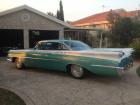
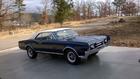
You do have a beautiful car.
Thank you been a few years in the making though, all joy.
I have smelt fuel for the first time now and noticed slight glistening in the top gasket but no seeping weeping or leaks.
I'm not trying to split hairs but the terminology could mislead some of your research/carb work. That carby is a Rochester 4 jet, specifically I think it's a 4GC. It isn't a Quadrajet, they started around '66 and are a lot different. Good luck finding the problem!
Thanks for pointing that out I did not know they were two seperate types.
‘Rochester 4 Jet’ think I should have caught on by now it’s written on the top of the carb.
If you can achieve a steady 16"Hg I'd rule out a vacuum leak. OLDSter Ralph may be onto something. The pontoons (floats) may be set too high on your fuel (float) bowls.
Could also be too much fuel pressure, which could increase when the engine is hot and overwhelm the needle and seat. Especially if it happens with two different carbs.
Or could be ignition. Say a coil that when it gets hot expands and creates an intermittent connection. Could also be wires or connections. I would check and clean all connections to the points, distributor to coil and ignition switch to coil. I'd also visually inspect those wires for damage or corrosion. You can also try flexing those wires while the car idles to see if you can make it stall.
If you can achieve a steady 16"Hg I'd rule out a vacuum leak. OLDSter Ralph may be onto something. The pontoons (floats) may be set too high on your fuel (float) bowls.
Be attending to those tomorrow and thanks for the heads up re the vacuum lines had two just floating not connected and got onto re routing them correctly.
Did they check part throttle air/fuel on the dyno? Buy a wideband and see what it’s really doing.
That I could not say Ross Racing Engines are hard to get onto these days and may not have details from many years ago. Dyno on the cards when she’s up and running though for final tweaking.
Going on those "round abouts" can cause fuel sloshing around in the float bowls and could your problem, if the float levels are a little high. You may have to set the floats to drop the fuel level slightly.
The fuel sloshing (surging) won't show up on the dyno or when the car is stationary.
You do have a beautiful car.
I should be removing carb tomorrow to attend to this. Thank you.
Could also be too much fuel pressure, which could increase when the engine is hot and overwhelm the needle and seat. Especially if it happens with two different carbs.
Or could be ignition. Say a coil that when it gets hot expands and creates an intermittent connection. Could also be wires or connections. I would check and clean all connections to the points, distributor to coil and ignition switch to coil. I'd also visually inspect those wires for damage or corrosion. You can also try flexing those wires while the car idles to see if you can make it stall.
I have a fuel pressure gauge I can throw that on.
I will inspect those wires also and the connections.
Thank you for the advice.
Just a shot in the dark, but could your points be set to close? Your surge could be the difference from a cold distributor lobes at start up and the expansion after warm up. You might have had a change in the gap( slipped) since the first install and be overlooking something simple.... Tedd
Just a shot in the dark, but could your points be set to close? Your surge could be the difference from a cold distributor lobes at start up and the expansion after warm up. You might have had a change in the gap( slipped) since the first install and be overlooking something simple.... Tedd
Possible Tedd,
I did have issues in that area originally.
I think I’ll check that gap first then, Can I adult through the dist. Keyhole while running?
A little update.
cleaned the points and replaced the ignition coil. Still doing the same.
yesterday on my test runs I pulled over 6-7 times and each time adjusted the points a fraction very time consuming. Seemed to make some difference but still surging etc. and just chasing the problem around.
I can see through the distributor inspection cover vacuum is activating the base plate thing for vac advance.
Distributor cap looks good as it should be as only new and no wear on lobes inside.
Next is change high tension leads then check fuel as OLDster Rolf suggests.
##
##Would you say I still need to get a dwell meter?
anything I have missed or can do?
Thanks.
Last edited by 5998DownUnder; Jul 15, 2023 at 05:45 PM.
Outlet valve on fuel pump to the steel tube going to the rear of the carb.
Then inlet valve on fuel pump to the brass ‘T’ piece at the end of the yellow stick.
1/ goes down to the vacuum advance at dist.
2/ line continues on to carb base and then connects to the steel tube to the dash pot.
Hope this is the correct way.
Last edited by 5998DownUnder; Jul 15, 2023 at 06:49 PM.
Set the dwell and run it with the vacuum advance connected to direct intake vacuum (listen for pinging/detonation) if it occurs plug the line to the distributor and re-test drive. Just don't let pinging continue it can eat piston tops.
If you adjusted the dwell and did not reset timing then you probably made it worse. Set the dwell at 30* (or .016 point gap) and leave it alone, this is not your problem. Disconnect and cap the vacuum advance and drive it once the timing is reset.
By chance do you have an anti-fuel drainback valve of some sort installed anywhere between the fuel pump and carburetor? If so you need to remove it and throw it just as far as you can.
There was one on my car (1970 model) and it starved the carburetor of fuel, and caused surging.