When you click on links to various merchants on this site and make a purchase, this can result in this site earning a commission. Affiliate programs and affiliations include, but are not limited to, the eBay Partner Network.
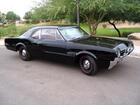
I have a 1966 Dynamic 88 with a 425 2bbl setup. Stock motor. I believe its the high compression version. Car runs really well however lately once the car warms up or is driven on the highway for any amount of time I get slight pinging underload. Goes away at higher rpm. I'm running an HEI distributor but I do not know the curve on it. Timing is currently around 8.5 initial with vacuum can plugged. Car starts awesome, idles well (850 curb idle) and as I said overall it works great but cant seem to get rid of the ping. The hotter it gets the worse it gets. I have played with the timing but doesn't seem to make a large difference but I'm not an expert that way. When I plug the vacuum can in the timing jumps up another 10 degrees or so. I believe this is normal. Carb is only a year old with mixture screws out about a turn to turn and a half. and plugs were just changed and gapped to .040 but the old ones were clean. I don't believe its carbon buildup but i'm not positive. Kinda stumped tbh. Any suggestions would be great. I have not put a vacuum guage on it yet but Im fairly confident I dont have any vacuum leaks, at least not obvious ones.
Torco Accelerator works pretty well as a booster, if you're doing unleaded fuels. I never had an issue with it. First find out if you really need it. It could simply all be in the curve.
You really need to ensure you have it "all in" around 36-ish degrees. It sounds like it may be too far advanced for what you need. Sometimes those vacuum can units pull way too much advance. Which is fine if it was a low compression engine. If it's an advance problem, you can try those canister advance stop kits, or fabricate something to keep it from advancing too far.
What is the octane # and rating method. Do you have the old distributor and did it ping on that distributor? What is the operating temp?
What color is the exhaust pipe, does it look lean?
Most HEI's have less centrifugal advance than the stock distributors. They need 15-20 deg initial advance to be at the 34 deg total timing range (vac not included). Not that it would cure pinging issues, but your distributor may be grossly retarded.
Octane level in our premium fuel is 91. I used the same distributor last year but didn't have this issue. I had a little more advance in it last year, closer to 11-12 without vac. I think this is where I get confused on the timing. The initial advance is the setting without the vac correct? Then the vac adds more along with whatever the distributor adds to get total? If I set it to 15 without the vac wouldn't that bump it too high when i add the vacuum back in? I had someone suggest leaving the vac unhooked and run it and see if the ping stops and that might tell me. The manual lists 2 engine options with the 2bbl....low and high. The holiday coupe were known to have the higher so I am kind of assuming there. I could run the number I guess. Exhaust looks normal to me and old plugs were clean, but probably slightly lean. Car never runs warm. Operating somewhere in the 160-190 range consistently.
Is the vacuum advance connected to ported vacuum or just any port on the intake/carb?
The engine could also have a lot of carbon on the pistons/valves causing hot spots under load and ping.
With engines with a lot of carbon in the cyl. I take a junkyard sourced windshild washer tank, the biggest I could find. then put the smallest holley carb jet I could in the rubber line then used the washers plasticT fitting to connect more hose. this trapped the holley jet so it could never get sucked into the engine. plugged the 3rd port on the "tee" and then put the long hose other end to the engines vaccuum source.
This gave me cheap water injection. steam is the best at cleaning cyl or carbon. Ever see cyl where the head gasket let go and coolant got in. they are spotless.
Now you go drive it for a few days, refilling the tank with water or a mix of seafoam and water or whindsheld washer fluid. Then after a few long drives and a few stomps on the gas. you now should have cleaned out the crud.
I have a cheap bore scope camera that hooks to my cell phone to look and see how clean they are or arnt. to know if I need to do this some more. Once good. I drop the oil and do an oil change.
The key here is while doing this, you go on long drives to get the oil hot enough that any water mist that gets by the rings, steams out of the crank case. I remove the pcv valve while doing this so the steam can vent out.
Works like a charm on any carboned up engine I've had and I've had many.
Plan on an oil change and new plugs after doing this if you do. but piston tops you could eat off of, is what you get.
Initial + Centrifugal advance (at 3000RPM) should put you in the 34-35 deg BTDC range. This is with vacuum advance disconnected.
A dial-back timing light makes this very easy.
After you get this sorted out, you can reconnect the vacuum advance and tweak things to suit your engine. Also, beware that most HEIs have too much vacuum advance for our engines. An adjustable can should fix that.
The standard engine in the '66 Delta 88 and Dynamic 88 was a "Super Rocket" High Compression V-8 with a 2-bbl carb requiring premium fuel. Compression ratio was 10.25 to 1.
A no-cost option on both of these cars was a Super Rocket Low Compression V-8 with a 2-bbl carb requiring only regular fuel. Compression ratio was 9 to 1.
Also optional on both cars was a Super Rocket High Compression V-8 with a 4-bbl carb.
For the Delta 88, another option was the even higher compression (10.5 to 1) Starfire V-8.
Here's the relevant portion of the 1966 Olds Dealer Specs book.
my HEI has an adjustable can on it ive just been leary to adjust it lol. So I should aim for for 34-35 without the can connected. Should I try driving it for a bit without the vacuum advance hooked up and see what happens?
The standard engine in the '66 Delta 88 and Dynamic 88 was a "Super Rocket" High Compression V-8 with a 2-bbl carb requiring premium fuel. Compression ratio was 10.25 to 1.
A no-cost option on both of these cars was a Super Rocket Low Compression V-8 with a 2-bbl carb requiring only regular fuel. Compression ratio was 9 to 1.
Also optional on both cars was a Super Rocket High Compression V-8 with a 4-bbl carb.
For the Delta 88, another option was the even higher compression (10.5 to 1) Starfire V-8.
Here's the relevant portion of the 1966 Olds Dealer Specs book.
Was the 2 barrel on the high compression engines bigger , than the low compression?
What an odd combo.
my HEI has an adjustable can on it ive just been leary to adjust it lol. So I should aim for for 34-35 without the can connected. Should I try driving it for a bit without the vacuum advance hooked up and see what happens?
Yes, 34-36 at the RPM that the mechanical advance stops advancing. This can be in the 4000+ RPM level. Once you get the total advance set, check what your timing is at idle for resetting in the future and not having to go through this exercise again. Subtract the idle timing number from the total timing number (w/o vacuum) and that tells you how many degrees of mechanical advance is built into your distributor. In addition, what ever added or subtracted timing at idle is directly proportionate for the total. Leave the vacuum advance disconnected until you get all this worked out. Then you want to mechanically limit it to 10 degrees. The screw adjustment is for rate not amount.
91 is crappy gas for our cars. And if it's the high compression 2bbl I'm surprised it's drivable.
Sounds like you may have to detune the engine to get by. (Pull back the timing)
In any case this is the best of the readily available octane boosters.
And this is a close 2nd.
I use whichever of those 2 that are available, in that order. Religiously for my ride as well as 93 octane. And that barely keeps the ping at bay.
According to your description of issue the large bottle of either booster should remedy the situation... (every fill-up...)
I continue to marvel at some of the answers on questions like this. I’ve built dozens and dozens of aluminum and iron headed 10:1 big blocks that run on 91 octane all day long, no problem. That’s because they were tuned right and I don’t do stupid **** with timing.
Next, no one has mentioned cooling system or air/fuel ratio.
Op- what is “operating temp” on this? Do you know that you have good air and water flow thru the cooling system? Verify that first.
Today’s fuels aren’t blended the same as they were yesteryear, whether they have added ethanol or not. Hence you could have a lean condition somewhere in the operating range.
Lastly, throw away the “all in by 3000” notion. That’s not optimum in every application. Get a timing light, see what your total advance rpm is, and how much with the vacuum canister disconnected. Then go from there.
And adjusting the canister limits the total, that’s what you want. Most have too much in them to begin with.
Hope this helps.
Last edited by cutlassefi; Jul 17, 2025 at 10:59 AM.
What brand of HEI is the distributor? Did it come with an advance curve card?
What's the average elevation where you live?
Once you think you have the timing where you think it should be, and it still pings, consider fuel system heat soak. The line and the carb.
The exhaust gas crossover in the intake & heads can be blocked off to significantly reduce the carbs heat soak. This crap gas today boils off more readily than it did in 1966.
If the centrifugal weight springs are too light, the full advance event could be "coming in" too early, causing preignition.
Look at the springs in the old points distributor. If they are heavier, which I suspect, if they are OEM, install them in the HEI and see what that does.
I run a high-compression (11:1) 400 at sea level on 90 ethanol-free with octane booster. My timing is at 12-13° base. I have the vac can limited to 10° on straight intake manifold vacuum, this = 22-23° at curb idle 600-700RPM, (no popping out of the exhaust). The centrifugal comes in at ~12-1300RPM and is fully advanced at ~3000RPM for a total at 3000 of 36°. No ping.
I have the heat riser crossover blocked off and a heat insulator gasket under the QJet.This solved my preignition and hot-starting issues.
So if I was to time the car and then hook can up and see what my total was at 3k or whatever it maxed ar then disconnect it and see the difference degree wise can I then adjust the vacuum advance down if it’s too far advanced? Or do I need to retard based on initial?
So if I was to time the car and then hook can up and see what my total was at 3k or whatever it maxed ar then disconnect it and see the difference degree wise can I then adjust the vacuum advance down if it’s too far advanced? Or do I need to retard based on initial?
Once you have your mechanical timing adjusted, leave it alone. Vacuum and mechanical are 2 different adjustments but are added together. You don't want more than 50* with it connected, so we limit it with a mechanical stop for 10* added max.
Last edited by oldcutlass; Jul 17, 2025 at 03:04 PM.
BlackBetty425, if our engines are unrebuilt and tuned to factory spec they do not like modern gas. I have been driving 1966-1970 models with both low compression and high compression original engines for 40 years. Rebuilt and original are different animals. If you believe your engine is original untouched and save for maintenance, correct. It will ping with insufficient gas quality. If it doesn't ping, it's tired, been rebuilt, or detuned. Either fellow members are so old they forgot or so young they don't know how these engines operated before rebuilds.
My engine is tuned to factory spec. It pings with straight 93 octane. And runs flawlessly when I blend it with 110 race fuel at the track.
That Ai take is accurate because I have lived it. And from the 8 sources that come to that conclusion 3 are Hot Rod Magazine.
Mind boggling that this is still a thing on an Olds site with heavy focus on 1960s models.
Continued
Last edited by 69CSHC; Jul 17, 2025 at 03:30 PM.
Reason: wording
And here is precisely why modern thinkers and engine builders don't see this reality.
"Finally, there is "octane requirement creep." As an engine ages, solid deposits accumulate in the combustion chamber. Mechanical compression ratio is thereby increased due to the decreased combustion chamber volume. The deposits also have low heat conduction characteristics, leading to higher chamber temperatures. Add in oil dilution from worn rings and valve guides (which induces detonation), and you end up with a significantly higher octane requirement for a given engine. Leaded fuel deposits build up quickly in the first few thousand miles of operation, then level off. Unleaded deposits take up to 10,000 miles to accumulate, but can eventually build to higher levels, especially if the vehicle is driven primarily in the city." https://www.hotrod.com/features/livi...-982-1326-22-1
This quote and article from Hot Rod Magazine was first published in March of 1987. That should tell you all you need to know.
An engine builder that keeps telling you it's not an issue is unintentionally steering you in the rebuild direction....
Thanks for all the replies. Im going to do some work on it this weekend and do some running and see where I am at. Ill also try some booster. Car runs too well for it to be that far off, I just want it to be a bit better lol. And wrapping my head around all the tuning can get overwhelming but I love learning how to tune my own rig.
Yes for sure lol. Damage is the last thing I need. I’m debating leaving vacuum advance disconnected and drive it like that just to see if I have the same issue.
Spent some time on the car tonight. First I tuned the carb using a vacuum gauge to get max vacuum. I used the PCV port on the carb. Maxed at around 20 psi.
Then I plugged the vac advance and set initial at around 11 degrees. When i revved it to 3k it seems to max out at around 25-28. I don't have a dial back or timing tape so it’s a very rough guess. Weird thing is when I hook vac advance back up the initial jumps up another 10-15 degrees or so. Which is the way it’s been since I bought the car. Which I guess puts me at over 40 for total which I know is too much. But again its a best guess. Idle is perfect…900 curb, 600 in gear. Engine doesn’t even shake. But when I drive it it pings under load. The vac advance is plugged into the carb port above the mixture screws and is teed off with the trans line. Only other ports are the PCV and choke line at the top. I can’t get it any better idle wise. When I pulled over and retarded it a bit the ping was a bit better but I’m still at 9 degrees. Ping goes away at speed. Pulled #1 and verified balancer hasn’t slipped at tdc. Plug was clean. Maybe on leaner side. Car doesnt run hot. At my max knowledge wise 😂
You want to do some really old school tuning? Maybe try this to help. It's just a ROUGH idea of where your engine timing is, and it just costs a little time, and some magic marker ink and masking tape. Sure, a dial back timing light or timing tape can be easier, but this method is virtually FREE. Again, these are close estimates.
I'm ASSUMING your 425 has a 6.5" harmonic balancer? I think the 425s used 386351 balancers which were 7" I think. I don't know for sure. If not 6.5", then you'll need to measure. Either way, that means we'll have to break out the geometry books, the slide rules, protractors, and calculators. Rather than wrapping a string around it and measuring the string (an option though), you can use this formula. Circumfrence = Pi x D (or 2 Pi R). Pi is 3.14159.... but 3.14 gets you close. So Cicurmfrence = 3.14 x 6.5 = 20.42" circumfrence. (7" balancer circumfrence is approx. 21.99")
Now you need arc length. Think about the outer edge of a piece of pie. If you cut it at a 35 degree angle for your second cut directly from center, how long will that rounded crust piece be? That's what you're looking for here.
Arc length = (angle degrees/360) X 2 Pi R
So we get approximately:
6.5" dia. balancer:
25 deg BTDC at 1-7/16" away and below the Zero mark.
31 deg BTDC at 1-3/4" away and below the Zero mark.
36 deg BTDC at 2" away and below the Zero mark.
40 deg BTDC at 2-1/4" away and below the Zero mark.
45 deg BTDC at 2-1/2" away and below the Zero mark.
For a 7" diameter balancer, approximately:
25 deg BTDC at 1-1/2" away and below the Zero mark.
29 deg BTDC at 1-3/4" away and below the Zero mark.
33 deg BTDC at 2" away and below the Zero mark.
41 deg BTDC at 2-1/2" away and below the Zero mark.
45 deg BTDC at 2-3/4" away and below the Zero mark.
Using a magic marker or easy to see pen, mark about a 4" piece of masking tape (cut straight across at the top where zero would be) with those numbers above that match your balancer diameter, starting with the top at zero and going down the tape. (36 degrees is approx 2" down from Zero on the 6.5")
Make sure the balancer outside edge is clean of grease/oil where you're going to apply the tape so it will stick well. Line up your "Zero" end of the tape with your TDC groove on the balancer. Then apply the tape securely to the balancer going clockwise from the zero mark when facing the engine.
You could also use a piece of light colored string, use the magic marker to make dots on the string where your degree markings are. Tape it to the harmonic balancer to match the zero mark and use say, white paint dots or similar to touch on the front edge of the balancer, then remove string. Dots should be visible to give you an idea where the timing is. There's many ways to skin this cat, but this is just one of them. I could have just told you the numbers, but now many people can use the formulas if they know the balancer diameter. The 6.5" and 7" balancer was used on a lot of "modern" Olds V8s over the years, so it can help a lot of people if they don't have the timing tape or dial back timing light.
Spent some time on the car tonight. First I tuned the carb using a vacuum gauge to get max vacuum. I used the PCV port on the carb. Maxed at around 20 psi.
Then I plugged the vac advance and set initial at around 11 degrees. When i revved it to 3k it seems to max out at around 25-28 (This should be OK). I don't have a dial back or timing tape so it’s a very rough guess. Weird thing is when I hook vac advance back up the initial jumps up another 10-15 degrees or so. (This is normal behavior. That vac can should be limited to 8-10°) Which is the way it’s been since I bought the car. Which I guess puts me at over 40 for total which I know is too much. But again its a best guess. Idle is perfect…900 curb, 600 in gear. Engine doesn’t even shake. But when I drive it it pings under load. The vac advance is plugged into the carb port above the mixture screws and is teed off with the trans line. Only other ports are the PCV and choke line at the top. I can’t get it any better idle wise. When I pulled over and retarded it a bit the ping was a bit better but I’m still at 9 degrees. Ping goes away at speed. Pulled #1 and verified balancer hasn’t slipped at tdc. Plug was clean. Maybe on leaner side. Car doesnt run hot. At my max knowledge wise 😂
You have too much vac advance if the ping "goes away"
My cannister is adjustable but Ive never done that before. I could put my vac gauge on it and see how much vacuum it takes to affect the timing and go from there?
Use the vacuum gauge to tune. I use it to achieve the highest vacuum reading at idle by adjusting both the A/F and timing. Then, limit the vacuum canister to 8-10°. Get a setback timing light.
Generally, the "adjustable" canisters only adjust the rate at which it moves and don't limit the total travel. Install a limiter. You can make one or buy one. See below.
Give the engine what it wants, not what you think it needs.
For now, disconnect and plug the vaccum advance. Concentrate on getting the initial and centrifugal advance sorted out.
Start by either marking the balancer as described, using a disk back timing light, or a timing tape. Set the TOTAL advance to around 32-34 degrees. See how it runs, if it runs well and no pinging, add a couple degrees and see what happens. When it starts to rattle, back off a couple degrees from the previous no pinging setting. In other words, if it pings at 36, but not 34, set it at 32 to maintain a safety margin. Drive it like that for a couple days and see how it runs. If all is good, leave the initial/centrifugal advance along, do not move the distributor from that point!! Now you can
play around with the vacuum advance.
There is nothing wrong with running 40-45 degrees of total timing, as long as the engine doesn’t rattle. SLIGHT pinging under mild acceleration is acceptable, but it needs to stop if you crowd the throttle more.
Get an adjustable vaccum advance and a limiter, or fabricate your own. It’s not hard, just time consuming.
If you look at the W machine tuning guides and the 66 and 67 W30 tuning guides they tell you to discard the hose to the vacuum advance and plug the carb leave the distributor vacuum can unplugged. Tune for initial and centrifugal timing and that's it. More responsive however may lose some economy cruising.