When you click on links to various merchants on this site and make a purchase, this can result in this site earning a commission. Affiliate programs and affiliations include, but are not limited to, the eBay Partner Network.
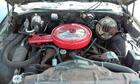
Did a compression test on my friend's 1970 455 (from an unknown car), unknown mileage, stock head and rockers, stock intake and carb, unknown compression.
Has headers and cam lift, checked at pushrod, is INT: .280 and EXH: .285 so should be .448 lift at intake valve and .456 lift at exhaust valve.
What do you think of the numbers, not to much variance, but is it low ?
Test was done with warm engine, all plugs removed and throttle fully open,
Thanks
Those numbers aren't excessively low. How many miles does the engine have on it? You could always run the compression test again and squirt oil in the cylinder before the test. If the numbers come up and stabilize you know it's just worn rings.
Those numbers aren't excessively low. How many miles does the engine have on it? You could always run the compression test again and squirt oil in the cylinder before the test. If the numbers come up and stabilize you know it's just worn rings.
Unknown mileage, what would be normal numbers for that setup ?
Yes I could do the test again, but I was expecting a much worse result (variation) due to a lean condition at idle, I have 14-15in vacuum at idle and with my hand on top of the carb it's running smoother and vacuum is 18.
Dwell is good, timing is 16btc, mixture screws almost all the way out, the only vacuum leak I could find is in the secondary throttle shaft of carb. Carb rebuilder (stock rebuild) said the play on the shaft is normal.
Check the head casting letter as that will give an idea of the year range. If I had to guess based on the compression numbers, my guess would be J heads on a mid-70s 8.5:1 compression engine.
That is a small cam for a 455, so I would expect higher vacuum. I’d agree you have a vacuum leak somewhere.
Put a vacuum gauge on an intake manifold vacuum hose, a “T” works well. Unless you have a very feisty/loby cam you should be rock steady (that is important!) between 17”Hg - 21”Hg. Most often ~17.5”Hg. You using the original TCS/DVCS solenoid vacuum “Christmas Tree” valve? Has it been replaced (e.g. deleted)? What carb? You in full manifold vacuum (preferable)? Hoses attached correctly? Sorry if you’ve stated what carb. On my phone tough bouncing/reading the posts. I think you’re a touch high on timing at 16.
Have to agree, I think you need to boost the vacuum. Carb gaskets new? Correct gaskets? Check all hoses, minor cracks are hard to see, hell replace them all.
Did a compression test on my friend's 1970 455 (from an unknown car), unknown mileage, stock head and rockers, stock intake and carb, unknown compression.
Has headers and cam lift, checked at pushrod, is INT: .280 and EXH: .285 so should be .448 lift at intake valve and .456 lift at exhaust valve.
Sounds like an original 2bbl 455 310hp gross 9.1 compression ratio, with a mild build.
Cam specs remind me of a VIN code 9s 307 cam, which is a nice upgrade over stock. Your engine was born with 250 hp net stock and the cam and headers probably pushed her to 300 hp net. If she is spitting water out that exhaust and not much of anything else she is good to go. You do not need to dyno or anything else to know if she is healthy besides pushing the pedal.
At a minimum you can take a ride with your bud and time rolling performance. To get a firmer idea of how healthy. Nice stretch of highway will do the trick.
New 1972 TH400 W30 takes 4.4 seconds to go from 40-70 mph through the gears. At 3824 lbs with a 3.42 rear.
If entire powertrain is healthy enough, performance there represents performance everywhere. Just adjust to your test weight and gear specs.
Check the head casting letter as that will give an idea of the year range. If I had to guess based on the compression numbers, my guess would be J heads on a mid-70s 8.5:1 compression engine.
That is a small cam for a 455, so I would expect higher vacuum. I’d agree you have a vacuum leak somewhere.
Your almost right for the head but believe it or not, it's an E head on passenger side and a J head on driver side ! (My friend bought it like that)
Put a vacuum gauge on an intake manifold vacuum hose, a “T” works well. Unless you have a very feisty/loby cam you should be rock steady (that is important!) between 17”Hg - 21”Hg. Most often ~17.5”Hg. You using the original TCS/DVCS solenoid vacuum “Christmas Tree” valve? Has it been replaced (e.g. deleted)? What carb? You in full manifold vacuum (preferable)? Hoses attached correctly? Sorry if you’ve stated what carb. On my phone tough bouncing/reading the posts. I think you’re a touch high on timing at 16.
Vacuum is almost steady but no more than 15. No TCS/DVCS solenid, deleted. Stock rebuild carb for a 71 455 (7041251). Not in full vacuum.
Running an open air element filter, could it be part of the problem ?
Sounds like an original 2bbl 455 310hp gross 9.1 compression ratio, with a mild build.
Cam specs remind me of a VIN code 9s 307 cam, which is a nice upgrade over stock. Your engine was born with 250 hp net stock and the cam and headers probably pushed her to 300 hp net. If she is spitting water out that exhaust and not much of anything else she is good to go. You do not need to dyno or anything else to know if she is healthy besides pushing the pedal.
At a minimum you can take a ride with your bud and time rolling performance. To get a firmer idea of how healthy. Nice stretch of highway will do the trick.
New 1972 TH400 W30 takes 4.4 seconds to go from 40-70 mph through the gears. At 3824 lbs with a 3.42 rear.
If entire powertrain is healthy enough, performance there represents performance everywhere. Just adjust to your test weight and gear specs.
I bet it does !
Is there anyway I can check if that block came originally with a 2 bbl ? Interesting......
Is there anyway I can check if that block came originally with a 2 bbl ?
Originally Posted by Tancuda
(from an unknown car)
That means no ... Unfortunately that is the first necessary step to a complete engine ID, as far as I know. Hopefully someone knows better.
Originally Posted by Tancuda
Interesting......
Definitely but basic performance testing is still only to give a better idea. Unless you take it to the track and thoroughly wring it out under ideal conditions.
The 300 hp X code auto did not show all its HP when new and original. Almost no new car was set up well enough to, till the 1987 GNX. Everyday factory tech wasn't really capable till. (tires, panhard bar, ideal gearing, converter, etc) One of the reasons the GNX is known as Buicks perfect car.
That same 4.4 from 40-70 mph that the auto X code runs is within a 5.6 second 0 to 60 and 14.1 in the 1/4 mile. And is top 5 all time performance for an automatic Olds but it still only showed 270 hp net with that performance. Unless only the stick X code was really 300 hp, and autos were overrated. So your friend's car could be quicker.
That means no ... Unfortunately that is the first necessary step to a complete engine ID, as far as I know. Hopefully someone knows better.
Definitely but basic performance testing is still only to give a better idea. Unless you take it to the track and thoroughly wring it out under ideal conditions.
The 300 hp X code auto did not show all its HP when new and original. Almost no new car was set up well enough to, till the 1987 GNX. Everyday factory tech wasn't really capable till. (tires, panhard bar, ideal gearing, converter, etc) One of the reasons the GNX is known as Buicks perfect car.
That same 4.4 from 40-70 mph that the auto X code runs is within a 5.6 second 0 to 60 and 14.1 in the 1/4 mile. And is top 5 all time performance for an automatic Olds but it still only showed 270 hp net with that performance. Unless only the stick X code was really 300 hp, and autos were overrated. So your friend's car could be quicker.
I ran same carb on my 1971 350…screamed.
If you search via my member name for DVCS delete you’ll find threads/posts detailing my vacuum hose(s) configuration for that carb w/ TCS/DVCS delete.
Vacuum is almost steady but no more than 15. No TCS/DVCS solenid, deleted. Stock rebuild carb for a 71 455 (7041251). Not in full vacuum.
Running an open air element filter, could it be part of the problem ?
Thanks
The open element air filter is not an issue.
Having the initial timing at 16 and the vacuum advance connected to manifold vacuum will increase the idle vacuum. Idle vacuum would likely be much lower with 10 initial and ported vacuum (no advance at idle). Start checking for a vacuum leak.
I ran same carb on my 1971 350…screamed.
If you search via my member name for DVCS delete you’ll find threads/posts detailing my vacuum hose(s) configuration for that carb w/ TCS/DVCS delete.
Having the initial timing at 16 and the vacuum advance connected to manifold vacuum will increase the idle vacuum. Idle vacuum would likely be much lower with 10 initial and ported vacuum (no advance at idle). Start checking for a vacuum leak.
Well if i connect to full manifold vacuum, I will have to reduce my initial timing a lot let say 4 deg, that stock distributor vacuum can will supply around 20-21 deg. so 26 total at idle ! Then my wide open throttle timing will be very low (poor power).....4 initial + 22 mec.advance = 26..too low.
Will check for leak again, maybe a small crack somewhere .
If they’re original stock vacuum hoses they can leak the entire length of each hose - they won’t necessarily manifest a leak via a visual “crack”. Buy ~10’ of “real” vacuum hoses and change them out. Good upgrade/maintenance for 55 yr old hoses.
My HEI distributor has a vacuum advance canister that gives 24 degrees advance, and I made a stop to limit it to around 10 degrees. The initial is set to 18 and the mechanical gives 16 for 34 total. The 217/224 cam in my 350 engine gave a bouncy 14-15” idle vacuum with 10 degrees initial timing, and the power brakes didn’t work well. The above modifications smoothed out the idle and increased the idle vacuum to a steady 16-17, and the brakes work correctly now.
And yes, 18 initial + 10 vacuum = 28 degrees at idle. It works well.
Check the Automatic Transmission Vacuum modulator valve rubber hose lines where rubber attaches to the metal lines and attachment at the modulator valve on the transmission.
If they’re original stock vacuum hoses they can leak the entire length of each hose - they won’t necessarily manifest a leak via a visual “crack”. Buy ~10’ of “real” vacuum hoses and change them out. Good upgrade/maintenance for 55 yr old hoses.
Check the Automatic Transmission Vacuum modulator valve rubber hose lines where rubber attaches to the metal lines and attachment at the modulator valve on the transmission.
My HEI distributor has a vacuum advance canister that gives 24 degrees advance, and I made a stop to limit it to around 10 degrees. The initial is set to 18 and the mechanical gives 16 for 34 total. The 217/224 cam in my 350 engine gave a bouncy 14-15” idle vacuum with 10 degrees initial timing, and the power brakes didn’t work well. The above modifications smoothed out the idle and increased the idle vacuum to a steady 16-17, and the brakes work correctly now.
And yes, 18 initial + 10 vacuum = 28 degrees at idle. It works well.
Yes I could try this, maybe I'll go with 12 initial, my distributor has 22 deg in it and limit my can to 14deg. Do they sell can with adjustable max vacuum, not only the rate ?
So idle would be 26
cruise = 12+14+22 = 48 (may be a bit less, cruising at 2500 rpm)
WOT = 12 + 22 = 34 total all in at 3200rpm
Would it be different if I don't have an HEI distributor ?
I'm concern about having light off throttle bug no ?
And indeed my brakes are not that good even after changing every lines, wheel cylinder, master and booster.
And indeed my brakes are not that good even after changing every lines, wheel cylinder, master and booster.
Validated/Examined the intake manifold brake booster vacuum hose, it's connection to the brake booster check valve, and validated the brake booster check valve is holding vacuum?
Validated/Examined the intake manifold brake booster vacuum hose, it's connection to the brake booster check valve, and validated the brake booster check valve is holding vacuum?
All my test with vacuum gauge was done with no line connected and plugged : pcv, booster, distributor, and trans modulator.
As said, see if it is actually a 1970 Oldsmobile 455 by the vin stamp on the front of the block by the #1 cylinder. If an original 9 to 1 motor with more cam and sounds like thicker replacement head gaskets put on, those numbers sound about right for a healthy motor.
Yes, a 1970 engine from Lansing. It could have been 9.0:1, 10.25:1, or 10.5:1 CR, depending on the size of the dish in the pistons. If you can put a borescope into a plug hole, you might be able to see the notch that identifies which pistons it has. Of course, that assumes it has OEM pistons.
Yes, a 1970 engine from Lansing. It could have been 9.0:1, 10.25:1, or 10.5:1 CR, depending on the size of the dish in the pistons. If you can put a borescope into a plug hole, you might be able to see the notch that identifies which pistons it has. Of course, that assumes it has OEM pistons.
Yes I did put a borescope in the hole but don't remember what it looked like, will do it again soon....
Yes I did put a borescope in the hole but don't remember what it looked like, will do it again soon....
Thanks everybody for the reply
Specifically you want to try to see the notches on the front edge of the top of the piston. This is an example from 1969, but note the round notch for a low-comp 455 and the conical notch for the high-comp 455.
Specifically you want to try to see the notches on the front edge of the top of the piston. This is an example from 1969, but note the round notch for a low-comp 455 and the conical notch for the high-comp 455.
That is good info thanks, as soon as I can, I'll take a look and I think I can take a picture with the borescope. Will put them here..
Thanks again