


Any reason to keep the cast iron intake?


Old(s) Fart
Joined: Mar 2007
Posts: 50,803
From: Northern VA

Thread Starter
Oldsmobile enthusiast
Joined: May 2013
Posts: 689
Old(s) Fart
Joined: Mar 2007
Posts: 50,803
From: Northern VA
The iron 4bbl intakes were the same on all BBOs for a given year (except Toros), so not particularly rare. The bigger question is which intake do you have? The E block is a 1966-67 motor. Is your intake casting no. 390390, which would be the 66-67 intake, or casting no. 398662, which is the 68-69 intake?

Registered User
Joined: Apr 2013
Posts: 141
From: Bonaire, Dutch Caribbean, Ft. Lauderdale Fl.
I've got an 'E' 400 in my car, the most I can find out about these engines is that they were produced in 66 & 67 for 442's and are rare. (E '66 - '67 400 390925 442 engine [VERY rare].) I'd really like to know more about when they were in production. My 65 442 was built in the 2cd. week of July 1965 and should have a 'B' 400, but July is late in production. They started building 66's in Sept. and probably the line (Lansing) shut down before that to retool. It's been suggested that they put what they "had' in some of the cars, particularly toward the end of production, I'm looking for the possibility that my engine is original or was a warranty block, so any information about these engines would be appreciated. By the way an 'E' 400 should have the 39 degree lifter angle which allows for more cam and better value geometry and it along with 425 which has the same lifter angle seems to be the engine of choice for those who are building the big H.P. engines. I wouldn't throw the manifold away it's probably the same as came on the 'B' 400 and should have value for the person who's restoring a 65 or 66 442 and doesn't have the original because a previous owner put aluminum intake on to enhance performance.
Old(s) Fart
Joined: Mar 2007
Posts: 50,803
From: Northern VA
I've got an 'E' 400 in my car, the most I can find out about these engines is that they were produced in 66 & 67 for 442's and are rare. (E '66 - '67 400 390925 442 engine [VERY rare].) I'd really like to know more about when they were in production. My 65 442 was built in the 2cd. week of July 1965 and should have a 'B' 400, but July is late in production. They started building 66's in Sept. and probably the line (Lansing) shut down before that to retool. It's been suggested that they put what they "had' in some of the cars, particularly toward the end of production, I'm looking for the possibility that my engine is original or was a warranty block, so any information about these engines would be appreciated. By the way an 'E' 400 should have the 39 degree lifter angle which allows for more cam and better value geometry and it along with 425 which has the same lifter angle seems to be the engine of choice for those who are building the big H.P. engines. I wouldn't throw the manifold away it's probably the same as came on the 'B' 400 and should have value for the person who's restoring a 65 or 66 442 and doesn't have the original because a previous owner put aluminum intake on to enhance performance.
Thread Starter
Oldsmobile enthusiast
Joined: May 2013
Posts: 689
Also, the 1965 intake is a square-bore design for the 4GC carb. The 66-67 intake is a spread bore design for the Q-jet.
Also the intake I took off is a "390390"
Last edited by s i 442; Jul 20, 2013 at 03:16 PM.
Registered User
Joined: Apr 2013
Posts: 141
From: Bonaire, Dutch Caribbean, Ft. Lauderdale Fl.
This has been covered before. Don't believe everything you read in the Olds FAQ. Common sense tells you that there were at least twice as many E-block 400s cast as B-block motors (two years of production vs. one), so what makes the E-block more rare than the B-block? Answer: nothing. It is unlikely that the E-block was factory installed in a 1965 car. More likely is that the 1965 B-block was blown up at one time and replaced with the newer motor. Also, the 1965 intake is a square-bore design for the 4GC carb. The 66-67 intake is a spread bore design for the Q-jet.


Registered User
Joined: Aug 2007
Posts: 67
From: Columbia Heights, MN
I figure for every one person switching to an aftermarket part there is another switching back to factory parts. So I always keep one version of the original parts in case I want to switch back or sell the car and the new owner wants it stock. I've come across a bunch of guys trying to locate original iron intakes for various years. Other than the previous mentioned 2 barrel intakes the early 4 barrel iron intakes are usually needed by somebody somewhere. Unfortunately, they take up so much room and are so heavy. They seem so much less desirable after they tip over and land on your foot.
Regarding the side track on the '65 B blocks; In the 90s I had kind of an unofficial registry of theses cars. They used B blocks well into August. They made more than 25,000 engines for that year. There was not a shortage of B blocks. I don't think they blew up any more than any other performance engine either.
Regarding the side track on the '65 B blocks; In the 90s I had kind of an unofficial registry of theses cars. They used B blocks well into August. They made more than 25,000 engines for that year. There was not a shortage of B blocks. I don't think they blew up any more than any other performance engine either.
Thread Starter
Oldsmobile enthusiast
Joined: May 2013
Posts: 689
Thanks for the info. Joe , you say that this has all been covered before. Can you direct me to those threads and by the way it does make perfect sense that 'E' 400's aren't so rare. I've have seen a number of these engines in 65 442s that I've looked at over the years, so even that is not a super rare.
Registered User
Joined: Apr 2013
Posts: 141
From: Bonaire, Dutch Caribbean, Ft. Lauderdale Fl.
Yes over a 3 year period of looking hard for a car I have seen a number of 'E' motors in 65 442's My guess is that they were/ are factory warranty replacements? Joe is right when he suggests that because of the two years of production there should be more 'E' motors than 'B' motors and that after the 'B' motor supply ran out then 'E' engines would have to used for a 400 cu.in. warranty application. Who knows, I bought my car knowing I was getting an 'E' engine not the "correct" 'B' engine, but after some investigation I believe that the 'E' engine is a better engine for my purpose and is not inconsistent with the 1966 L69 Tri-Carb. set up I'm running. As mentioned the lifter angle is better than the 'B', more room for the cam and larger diameter lifters, all good.

Registered User
Joined: Nov 2008
Posts: 3,345
From: Redmond, Oregon
I might be interested in it for a 400 stock motor I am building. Email me your price shipped to 97756
Thanks
Larry
lemoldsnut@aol.com
Thanks
Larry
lemoldsnut@aol.com

Registered User
Joined: Dec 2012
Posts: 1,605
From: Fuquay Varina NC
Every stock part I have ever thrown away because I thought I would never need it has come back to bite me. I just paid big money for an original Am/fm radio to go back in my dash. I threw a perfectly good one away about 15 years ago. My biggest error in judgement came in the late 70's when I gave away a really nice set of 15" Mopar Rally wheels with trim rings and center caps. Cost me about 900.oo to replace them in 2005. Just sayin
Connoisseur d'Junque
Joined: Sep 2010
Posts: 21,183
From: The Hudson Valley
- Eric
Registered User
Joined: Dec 2012
Posts: 1,605
From: Fuquay Varina NC
Or had it laying around and was able to help another enthusiast out with a needed part.......every part regardless of value that gets thrown away is one less original part available for whoever may need it down the road.
Lance
Joined: Oct 2009
Posts: 757
From: YUKON, OK.
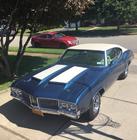
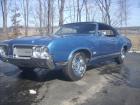
Registered User
Joined: Mar 2012
Posts: 453
From: Chisago City, MN
I am new to this hobby but have kept every original piece that I have replaced on my car just in case. If I ever sell the car or need a part I won't be angry that I got rid of the original pieces that can be re-used or rebuilt

Trying to remember member
Joined: Oct 2005
Posts: 4,112
From: Ohio
IRegarding the side track on the '65 B blocks; In the 90s I had kind of an unofficial registry of theses cars. They used B blocks well into August. They made more than 25,000 engines for that year. There was not a shortage of B blocks. I don't think they blew up any more than any other performance engine either.
Not so totally outrageous, as he said "E blocks", not "'67 E blocks". Some late build '65 442s did get B heads (proven) and there is some compelling evidence that at least a few got spreadbore Quadrajets and intakes.
Last edited by wmachine; Jul 23, 2013 at 01:01 PM.

Registered User
Joined: Dec 2011
Posts: 7,286
If anyone is willing to buy one made from an E intake, I will entertain that proposal. It would save quite a bit of coin, because there are no more J intakes handy, but I have several E intakes.
Registered User
Joined: Apr 2013
Posts: 141
From: Bonaire, Dutch Caribbean, Ft. Lauderdale Fl.
As has been said, they has been no cases found of '66 blocks being used in '65 cars, service or not. But to pursue this line of thinking you can shed some more light on it by posting your engine date code and mold number located on the shelf under the distributor.
Not so totally outrageous, as he said "E blocks", not "'67 E blocks". Some late build '65 442s did get B heads (proven) and there is some compelling evidence that at least a few got spreadbore Quadrajets and intakes.
Not so totally outrageous, as he said "E blocks", not "'67 E blocks". Some late build '65 442s did get B heads (proven) and there is some compelling evidence that at least a few got spreadbore Quadrajets and intakes.
 Oldoldsfan
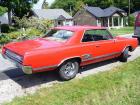
Registered User
Joined: Mar 2012
Posts: 915
From: Richmond BC
I figure for every one person switching to an aftermarket part there is another switching back to factory parts. So I always keep one version of the original parts in case I want to switch back or sell the car and the new owner wants it stock. I've come across a bunch of guys trying to locate original iron intakes for various years. Other than the previous mentioned 2 barrel intakes the early 4 barrel iron intakes are usually needed by somebody somewhere.
Registered User
Joined: Mar 2012
Posts: 915
From: Richmond BC
Too bad. I should've mentioned, I can never sell cast intakes on e-Bay. They're way too heavy and nobody wants to pay the freight. Always seems to be a CL contender. Big heavy stuff has to go local unless really rare and in demand. Small and light things go e-Bay. In between things, hit and miss.
I'm sure when I sell my 442 someone will take off the cast intake and put aluminum on again. It's just part of the game !!
I'm sure when I sell my 442 someone will take off the cast intake and put aluminum on again. It's just part of the game !!

Registered User
Joined: Aug 2012
Posts: 310
From: Murray, KY
I have A 1970 455 4BBL stock iron intake that I want to get rid of if anyone is interested. Bolts that hold stove in place are rusted/ twisted off. They will have to be drilled and tapped or heli coil. other than that in very nice shape. PM if interested

Thread
Thread Starter
Forum
Replies
Last Post


