


68 G Block


Thread Starter
Registered User
Joined: Aug 2011
Posts: 156
From: Flint, Michigan
68 G Block
Hey Guys,
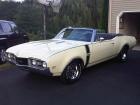
So after two years of this car sitting and finally finishing body restoration my G block is feeling quite sluggish. It's definitely not feeling like a muscle car.
If I stomp on the gas from a stop it wants to stall, and If I get the car up around 4k or higher it misfires like crazy causing a lot of 'popping' from the exhaust.
I'm look at replacing the plugs and wires.
Also the 750cfm Holley that's on it has never seemed to work right and I may be looking to replace that. Throttle response feels really slow. Almost like I'm spooling a turbo or something.
Any suggestions or tips?
So after two years of this car sitting and finally finishing body restoration my G block is feeling quite sluggish. It's definitely not feeling like a muscle car.
If I stomp on the gas from a stop it wants to stall, and If I get the car up around 4k or higher it misfires like crazy causing a lot of 'popping' from the exhaust.
I'm look at replacing the plugs and wires.
Also the 750cfm Holley that's on it has never seemed to work right and I may be looking to replace that. Throttle response feels really slow. Almost like I'm spooling a turbo or something.
Any suggestions or tips?
Registered User
Joined: Jul 2012
Posts: 2,990
From: Vancouver BC
Thread Starter
Registered User
Joined: Aug 2011
Posts: 156
From: Flint, Michigan
Thanks guys, it's all new fuel in there already. I had to drop the tank and put in a new sender unit, so I drained the tank at the same time.
I may just have to bite the money bullet and buy plugs, wires etc.
I may just have to bite the money bullet and buy plugs, wires etc.
Thread Starter
Registered User
Joined: Aug 2011
Posts: 156
From: Flint, Michigan

Old(s) Fart
Joined: Mar 2007
Posts: 50,770
From: Northern VA
Like the "matching numbers" on the Holley???
First, I've never been able to get a Holley to run as well as a Qjet on the street. The Holley is about the best W.O.T. carb you'll find, but the lack of sophistication in the primary side makes it less than desirable for the flexibility you need in part-throttle use. At a minimum, the bogging off the line indicates that you need to tune the pump shot and jetting.
The higher-RPM breakup is almost certainly an ignition problem. When this has happened to me, it's nearly always been a coil problem. Of course, be sure you don't have a fuel starvation issue, but my money is on ignition.
First, I've never been able to get a Holley to run as well as a Qjet on the street. The Holley is about the best W.O.T. carb you'll find, but the lack of sophistication in the primary side makes it less than desirable for the flexibility you need in part-throttle use. At a minimum, the bogging off the line indicates that you need to tune the pump shot and jetting.
The higher-RPM breakup is almost certainly an ignition problem. When this has happened to me, it's nearly always been a coil problem. Of course, be sure you don't have a fuel starvation issue, but my money is on ignition.
Thread Starter
Registered User
Joined: Aug 2011
Posts: 156
From: Flint, Michigan

At a minimum, the bogging off the line indicates that you need to tune the pump shot and jetting.
The higher-RPM breakup is almost certainly an ignition problem. When this has happened to me, it's nearly always been a coil problem. Of course, be sure you don't have a fuel starvation issue, but my money is on ignition.
The higher-RPM breakup is almost certainly an ignition problem. When this has happened to me, it's nearly always been a coil problem. Of course, be sure you don't have a fuel starvation issue, but my money is on ignition.
Registered User
Joined: Jul 2012
Posts: 2,990
From: Vancouver BC
There is nothing wrong with the 400 G engine! Whats the history on the engine miles has it ever been rebuilt?
If it has the factory original timing chain I would swap that out as well unless it is a low mile engine.
When I do a complete tune up I take a good look at the over all engine condition that includes a comp test as well as a leak down test.
I like to know what I'm starting with, I even pull the valve covers as I find this tells me a lot about how the engine was cared for/regular oil changes.
You should be looking at the distributor to make sure that the advance weights move freely.
Look at the cap for cracks and wear as well as the rotor, don't by crap parts as they can be bad right out of the box.
I would also change the fuel filter and go through the carb.
Good luck
If it has the factory original timing chain I would swap that out as well unless it is a low mile engine.
When I do a complete tune up I take a good look at the over all engine condition that includes a comp test as well as a leak down test.
I like to know what I'm starting with, I even pull the valve covers as I find this tells me a lot about how the engine was cared for/regular oil changes.
You should be looking at the distributor to make sure that the advance weights move freely.
Look at the cap for cracks and wear as well as the rotor, don't by crap parts as they can be bad right out of the box.
I would also change the fuel filter and go through the carb.
Good luck
Last edited by Bernhard; Jun 3, 2014 at 11:02 AM.


Thread Starter
Registered User
Joined: Aug 2011
Posts: 156
From: Flint, Michigan
There is nothing wrong with the 400 G engine! Whats the history on the engine miles has it ever been rebuilt?
If it has the factory original timing chain I would swap that out as well unless it is a low mile engine.
When I do a complete tune up I take a good look at the over all engine condition that includes a comp test as well as a leak down test.
I like to know what I'm starting with, I even pull the valve covers as I find this tells me a lot about how the engine was cared for/regular oil changes.
You should be looking at the distributor to make sure that the advance weights move freely.
Look at the cap for cracks and were as well as the rotor, don't by crap parts as they can be bad right out of the box.
I would also change the fuel filter and go through the carb.
Good luck
If it has the factory original timing chain I would swap that out as well unless it is a low mile engine.
When I do a complete tune up I take a good look at the over all engine condition that includes a comp test as well as a leak down test.
I like to know what I'm starting with, I even pull the valve covers as I find this tells me a lot about how the engine was cared for/regular oil changes.
You should be looking at the distributor to make sure that the advance weights move freely.
Look at the cap for cracks and were as well as the rotor, don't by crap parts as they can be bad right out of the box.
I would also change the fuel filter and go through the carb.
Good luck
I'll take a look at that the things you mentioned

Registered User
Joined: Jul 2012
Posts: 2,990
From: Vancouver BC
Registered User
Joined: Aug 2013
Posts: 12,762
From: Evansville, IN

Engine Builder
Joined: Jan 2010
Posts: 552
From: Louisville, ohio
There's no replacement for displacement. So that gives the 455 the overall edge. I've built a few long stroke 400s that are every bit as wicked as the short stroke 400s. Both versions held NHRA stock and superstock records. If you know what your doing their both very good engines.
Thread Starter
Registered User
Joined: Aug 2011
Posts: 156
From: Flint, Michigan
Hey guys, here's an update. And please excuse my ignorance when it comes to this stuff. I learn as I do, and I don't have a lot of experience in this stuff.
I was finally able to get around to working on the Olds. I pulled all eight spark plugs and found the two plugs belonging to the two cylinders closest to the firewall were fouled. They were very wet (as in gas) and dark. The remaining six plugs were dry and the ends were corroded/covered in a residue.
I changed out all 8 plugs and replaced all plug wires and the wire between the distributor and the ignition. (I was wrong before, it is not an HEI setup. It's a normal point distributor with an electronic ignition.)
I took the car out and got on the gas a couple of times tonight and am still having break-up/miss-firing after about 3500rpm.
Now, one thing I noticed while doing tests tonight with it, the car smells very rich. Like I was reaking of gas smell after I was done driving. I know old cars have a smell, and I'm usually used to that from my car, but this was much worse then normal. And the idle is low around 650 - 700 rpm. If I choke it a little bit the idle comes up to about 950rpm, but that kills drive-ability.
I guess my question is, could the carb be running too rich, causing the awful gas smell and the engine break-up? Or do you guys think it's something else? It's late here and I don't have an indoor garage so I was not able to pull the new plugs out to check them yet.
Again, please excuse my novice-ness in all of this.
Thank you
I was finally able to get around to working on the Olds. I pulled all eight spark plugs and found the two plugs belonging to the two cylinders closest to the firewall were fouled. They were very wet (as in gas) and dark. The remaining six plugs were dry and the ends were corroded/covered in a residue.
I changed out all 8 plugs and replaced all plug wires and the wire between the distributor and the ignition. (I was wrong before, it is not an HEI setup. It's a normal point distributor with an electronic ignition.)
I took the car out and got on the gas a couple of times tonight and am still having break-up/miss-firing after about 3500rpm.
Now, one thing I noticed while doing tests tonight with it, the car smells very rich. Like I was reaking of gas smell after I was done driving. I know old cars have a smell, and I'm usually used to that from my car, but this was much worse then normal. And the idle is low around 650 - 700 rpm. If I choke it a little bit the idle comes up to about 950rpm, but that kills drive-ability.
I guess my question is, could the carb be running too rich, causing the awful gas smell and the engine break-up? Or do you guys think it's something else? It's late here and I don't have an indoor garage so I was not able to pull the new plugs out to check them yet.
Again, please excuse my novice-ness in all of this.
Thank you

Registered User
Joined: Feb 2011
Posts: 339
From: Central Texas
Gas smell
Check underneath the fuel pump at the front of the block after running the car to look for dripping gas. I experienced dripping fuel and a strong gas smell. The pump went south and was fixed with a replacement. Probably will not explain your running issues, but easy to check.
Registered User
Joined: Feb 2013
Posts: 15,394
From: Phoenix, AZ
I read above that you have a Holley carb on it. Are the float levels adjusted properly? Also, the earlier Holley carbs were prone to power valve rupture from a backfire. I'm sure someone more knowledgeable will be able to tell you how to check for that.
Thread Starter
Registered User
Joined: Aug 2011
Posts: 156
From: Flint, Michigan
Well I have/do suffer from some back firing through the carb. Do you think that is a symptom of what you're talking about?
Thread Starter
Registered User
Joined: Aug 2011
Posts: 156
From: Flint, Michigan
Quick update, this morning I disconnected the coil plug and cranked the engine over for about 10 seconds to fill the bowls. I then opened the sight plug and fuel came pouring out. I adjusted the float level down. Rinse, repeat. Fuel level was sitting just below the sight opening.
Car idles MUCH better, throttle response is great (pedal actually feels like it has some umf behind it) and engine break-up is almost completely gone. I have a couple small pops just above 4000rpm at WOT now, but not anything close to what I was having before.
Car idles MUCH better, throttle response is great (pedal actually feels like it has some umf behind it) and engine break-up is almost completely gone. I have a couple small pops just above 4000rpm at WOT now, but not anything close to what I was having before.
Thread Starter
Registered User
Joined: Aug 2011
Posts: 156
From: Flint, Michigan
Alright, another update. Car is running much smoother, until high rpm again. It isn't back firing nearly as bad, but it feels like a fuel-cut rev limiter kicks in.
My best guess at this point is possibly poor fuel flow? Possibly filter or fuel pump? Or maybe the carb is just bad. Getting pretty frustrated at this point. So I may leave it as is for now and just enjoy the car for a little while in the low rpm range lol
My best guess at this point is possibly poor fuel flow? Possibly filter or fuel pump? Or maybe the carb is just bad. Getting pretty frustrated at this point. So I may leave it as is for now and just enjoy the car for a little while in the low rpm range lol
Registered User
Joined: Nov 2012
Posts: 535
From: Deland Fla.
I think the problem is in the ignition, check the distributor cap and make sure there are no cracks and check the rotor then clean the electronics in your dist with electronic cleaner and dry it out, check your float levels on level ground they should just be at the edge of the threads. Sometimes you can run out of fuel if the pump is not adequate. I hope this may help.
Thread Starter
Registered User
Joined: Aug 2011
Posts: 156
From: Flint, Michigan
Alright guys, sorry to dig up such an old thread, but I finally have another update!
I want to preface this by saying, when I bought this carburetor I was about 7 years younger, a lot more naive, and bought it off someone who I thought was knowledgeable.
I also gave the motor a 1000 mile break in period before even thinking about putting my foot down hard on the gas, and was quite gun shy after the motor spun a rod on me before. All of this added up to me not really ever pushing this motor hard until this year, and discovering this problem.
Now, onto the details.
I finally had some free time on Saturday and pulled the carb off of the motor to rebuild it.
The first thing I noticed after taking the secondary diaphragm housing off was the diaphragm was not holding vacuum at all. I could cover the little vent port on the side and it would still leak out. I opened up the housing and noticed the diaphragm was very old and cracked. This transitions me into the actual problem:
The gentleman who "rebuilt" this carbuerator, instead of replacing the vacuum diaphragm, just installed a screw on the throttle bracket to create a "mechanical" secondary setup.
Basically, secondaries were opening due to throttle position, on a vacuum secondary carb! (No secondary pump shot to accompany the sudden air flow!).
So the new vacuum diaphragm is on its way! This is why I've started doing everything myself!
I want to preface this by saying, when I bought this carburetor I was about 7 years younger, a lot more naive, and bought it off someone who I thought was knowledgeable.
I also gave the motor a 1000 mile break in period before even thinking about putting my foot down hard on the gas, and was quite gun shy after the motor spun a rod on me before. All of this added up to me not really ever pushing this motor hard until this year, and discovering this problem.
Now, onto the details.
I finally had some free time on Saturday and pulled the carb off of the motor to rebuild it.
The first thing I noticed after taking the secondary diaphragm housing off was the diaphragm was not holding vacuum at all. I could cover the little vent port on the side and it would still leak out. I opened up the housing and noticed the diaphragm was very old and cracked. This transitions me into the actual problem:
The gentleman who "rebuilt" this carbuerator, instead of replacing the vacuum diaphragm, just installed a screw on the throttle bracket to create a "mechanical" secondary setup.
Basically, secondaries were opening due to throttle position, on a vacuum secondary carb! (No secondary pump shot to accompany the sudden air flow!).
So the new vacuum diaphragm is on its way!
This is why I've started doing everything myself!
Registered User
Joined: Feb 2013
Posts: 15,394
From: Phoenix, AZ
I have seen this many times over the years. Some people just can't comprehend vacuum secondary operation.
Thread Starter
Registered User
Joined: Aug 2011
Posts: 156
From: Flint, Michigan
I'll just be happy to get the new diaphragm. I can't wait to have a motor that's actually breathing through all 4 barrels properly! The carb has been like this since I've owned the car, so it'll be a new experience for me.

Thread
Thread Starter
Forum
Replies
Last Post


