


455 w/4brrl but has no power!!!!


Thread Starter
Registered User
Joined: Dec 2009
Posts: 80
From: menifee
455 w/4brrl but has no power!!!!
hey everyone, i just finished converting my dads 1970 Delta 88 from a 2brrl to 4 brrl. I took the intake manifold from a 70 98 and the rochester quadrajet from a 74 chevy monte carlo w/350. i rebuilt it right, and it runs great at low speeds, but when i really put my foot down, it doesn't give that punch that i know exists. I am not sure how the q-jets work but i'm guessing the secondaries aren't opening up. I think i might have hooked up the vacuum lines incorrectly. What vaccum lines control the secondaries? Do i need to upgrade the primary jets and secondary metering rods? i will try and post images of the setup once i figure out how.

Registered User
Joined: Jun 2009
Posts: 4,293
From: Palm Bay, FL
It sounds like the choke isn't letting the secondaries open. There is no vacuum line to the secondaries as they are "forced" open by the air flowing passed the top plate. The base plates will open whenever the throttle is stabbed, but unless the lock functions when the choke warms up the top plate will never move.
Get the car nice and warm and then remove the air cleaner. Try and push down on the top plate and see if it will open. If not you found your problem.
Get the car nice and warm and then remove the air cleaner. Try and push down on the top plate and see if it will open. If not you found your problem.
Thread Starter
Registered User
Joined: Dec 2009
Posts: 80
From: menifee
I removed the linkage rod that is attached from the secondary's top plate to the choke and floored at idle, still nothing. I also noticed that as i gave it more throttle the choke released forward but still no reaction on the secondaries. You mentioned a lock that controls the top plate which i am unaware of. Can you explain more about it and where can i find it on the carb?

Registered User
Joined: Aug 2009
Posts: 333
Not sure about 74, but many Quadrajets had a metal tang on the baseplate that would prevent the secondary throttle plates from opening until the choke was fully off. If it does not release properly, the secondary throttle plates won't open, and so there's no air flow to open the top plate.
Just a little silver hook-shaped tang that slips onto a little protruding rod, on the choke side of the carb, at the bottom, in the back. It's only purpose is to prevent cold stumble. Don't get all rompy until the engine is nice and warm, and you can remove it with no other side effects.
I'd post a picture, but it's dark out there :-)
Just a little silver hook-shaped tang that slips onto a little protruding rod, on the choke side of the carb, at the bottom, in the back. It's only purpose is to prevent cold stumble. Don't get all rompy until the engine is nice and warm, and you can remove it with no other side effects.
I'd post a picture, but it's dark out there :-)
Thread Starter
Registered User
Joined: Dec 2009
Posts: 80
From: menifee
455 w/4brrl has no pwr!!
I removed that hooked shaped locking mechanism. Also i was wondering if the air valve spring tension could be causing the secondary top plates to not open. Its just something i found online and i was wondering if anyone has had this problem. Here is the link.
http://www.73-87.com/7387garage/drivetrain/myqjet.htm
http://www.73-87.com/7387garage/drivetrain/myqjet.htm
Last edited by Prsabordo; Jul 4, 2010 at 01:04 AM.
Registered User
Joined: Aug 2009
Posts: 333
Nice article. Now I have a new bookmark :-)
Sometimes the tension spring can do with adjustment, yes, but unless there is a real problem, not just a tweak situation, tension alone shouldn't be preventing the air valves from opening at all. I don't see how the spring tension could become overtight without human intervention somewhere. Too loose, yes.
I suppose there could be some kind of buildup of varnish or corrosion or something in the spring area, but that I would classify as a real problem that would need repair.
Sometimes the tension spring can do with adjustment, yes, but unless there is a real problem, not just a tweak situation, tension alone shouldn't be preventing the air valves from opening at all. I don't see how the spring tension could become overtight without human intervention somewhere. Too loose, yes.
I suppose there could be some kind of buildup of varnish or corrosion or something in the spring area, but that I would classify as a real problem that would need repair.

Resident Fish Nerd
Joined: Mar 2010
Posts: 23
From: Ann Arbor, MI
Here's a few things I can think of:
1) If the air horn is warped at all it can cause binding which can sometimes result in the secondary butterflies not opening, not opening all the way, or sticking open. Warping is pretty common, especially if the screws that attach the air horn to the main casting were tightened to much.
2) Make sure the shaft is indexed properly and the butterflies open freely by hand.
3) The air valve spring tension should be about 1/2-3/4 of a turn AFTER the butterflies lightly close while you are tapping on the housing with the handle of a screwdriver or something similar.
4) make sure the secondary throttle plates are opening. If they don't open at all you won't be exposing the butterflies to any vacuum and they won't open no matter what you do.
5) Double check all the linkage and make sure there is no binding
Also check out this thread. There's some good stuff on Qjets in here, as well as a few docs that have common problems and solutions.
http://www.oldspower.com/vb/showthread.php?t=32057
1) If the air horn is warped at all it can cause binding which can sometimes result in the secondary butterflies not opening, not opening all the way, or sticking open. Warping is pretty common, especially if the screws that attach the air horn to the main casting were tightened to much.
2) Make sure the shaft is indexed properly and the butterflies open freely by hand.
3) The air valve spring tension should be about 1/2-3/4 of a turn AFTER the butterflies lightly close while you are tapping on the housing with the handle of a screwdriver or something similar.
4) make sure the secondary throttle plates are opening. If they don't open at all you won't be exposing the butterflies to any vacuum and they won't open no matter what you do.
5) Double check all the linkage and make sure there is no binding
Also check out this thread. There's some good stuff on Qjets in here, as well as a few docs that have common problems and solutions.
http://www.oldspower.com/vb/showthread.php?t=32057
Last edited by Casa; Jul 4, 2010 at 08:15 AM.

Registered User
Joined: Mar 2008
Posts: 1,012
From: Phx, AZ
Sounds like the choke pull off is working properly.
I usually remove the warm up tang on sec side.
MAKE SURE that the primary linkage will open the secondaries fully. I have messed with many that would not do more than 10% actuation.
Jim
I usually remove the warm up tang on sec side.
MAKE SURE that the primary linkage will open the secondaries fully. I have messed with many that would not do more than 10% actuation.
Jim

Just the facts...
Joined: May 2008
Posts: 1,259
From: THE GREAT WIDE-OPEN
that chebby carb. isn't going to be calibrated right for an olds motor, and it's a smog carb. too. olds' like their fuel to make power down low, chebby's don't like nearly as much fuel because they like to spin faster to make their power, especially the sb's.
bill
bill
Thread Starter
Registered User
Joined: Dec 2009
Posts: 80
From: menifee
Thanks for the replies everyone. Ok let me see if i can hit all these points.
1. The throttle linkage is working properly and the secondary throttle plates Do open when required to.
2. I bought the carb second hand so i will check to see if the spring tension is too high.
3. I can push down the secondary top plates with my finger rather easily but it first needs a little assistance, it almost feels like it clicks open when pushing it down with my finger.
4. When rebuilding the carb i tightened everything down just snugly, but i have a tendency to tighten a little more than required so i will double check the air horn bolts.
5. How can you tell if the air horn is warped and if it is, then is that game over for my carb?
6. I will take pictures of what i am dealing with and hopefully that will help everyone out. Does anyone know how to post pictures on the forums?
1. The throttle linkage is working properly and the secondary throttle plates Do open when required to.
2. I bought the carb second hand so i will check to see if the spring tension is too high.
3. I can push down the secondary top plates with my finger rather easily but it first needs a little assistance, it almost feels like it clicks open when pushing it down with my finger.
4. When rebuilding the carb i tightened everything down just snugly, but i have a tendency to tighten a little more than required so i will double check the air horn bolts.
5. How can you tell if the air horn is warped and if it is, then is that game over for my carb?
6. I will take pictures of what i am dealing with and hopefully that will help everyone out. Does anyone know how to post pictures on the forums?
Resident Fish Nerd
Joined: Mar 2010
Posts: 23
From: Ann Arbor, MI
A straight edge will tell you if the air horn (or any other part of the carb) is warped. If it is you may be able to salvage it by twisting it with your hands to straighten it out, but it depends on how bad it is. The beautiful thing about Qjets is that most parts will interchange between carbs, so a donor carb can give you a replacement air horn for cheap if need be. If you do need to change parts just keep in mind that parts will not interchange between series. What I mean by that is that carbs starting in "70xxxxx" may not be able to take parts from carbs starting with "170xxxxx". Make sure you check the casting number on the driver's side of the carb's main body.
Binding can also result from the butterfly shaft not being indexed properly. Look closely to make sure the butterflies aren't sticking on the casting anywhere. I had that problem when I last rebuilt my Qjet; one corner of one of a butterfly was just barely contacting the casting about 5 degrees after opening.
This is also a good point. You may need to rejet and use different metering rods and secondary hanger depending on what's in there. Hope this helps.
-John
Binding can also result from the butterfly shaft not being indexed properly. Look closely to make sure the butterflies aren't sticking on the casting anywhere. I had that problem when I last rebuilt my Qjet; one corner of one of a butterfly was just barely contacting the casting about 5 degrees after opening.
-John
Thread Starter
Registered User
Joined: Dec 2009
Posts: 80
From: menifee
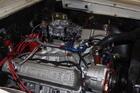
Here are the pictures of the motor and carb. Spot out anything that isn't right with the carb and also can you guys identify the vacuum lines shown, i am not sure which ones are which. thanks for the help.
004.jpg
003.jpg
002.jpg
001.jpg
010.jpg
015.jpg

004.jpg
003.jpg
002.jpg
001.jpg
010.jpg
015.jpg
Last edited by Prsabordo; Jul 4, 2010 at 09:56 PM.
Resident Fish Nerd
Joined: Mar 2010
Posts: 23
From: Ann Arbor, MI
What I mean by index is make sure all the parts are lined up properly. The butterflies have a little bit of play when screwed in, and if they are not lined up perfectly with the casting it is possible to tighten the screwed with the plate slightly off of center. If they aren't lined up perfectly you can end up with a side or corner of the butterfly plate rubbing or catching on the air horn casting, which could be the cause of your "clicking open". If you need I can go grab some pics. Just look closely around the entire butterfly and make sure it isn't contacting the casting at any point during its range of motion.
Thread Starter
Registered User
Joined: Dec 2009
Posts: 80
From: menifee
update: test drove the beast today with the air valve spring tension at 3/4, still did not feel the secondaries open up. I was curious of the big vacuum behind the carb because i noticed once i removed the vacuum line from it, the idle changed drastically. I also noticed it enters in the area for the secondary throttle plates. Does anyone know what that is for and where it hooks up to?


Registered User
Joined: Jun 2010
Posts: 3,613
From: Rogues Island, USA
I don't think that carb came off a 74. If you notice there is no choke housing or canister. That carb was designed for the mechanical spring type choke that bolts to the intake. That would explain why it's not opening. There is a little lever under the choke pull-off linkage that has a hole in it that is empty, that's where your choke linkage would have gone to pull it open when hot. You've have nothing pulling it open. Get a carb with an electric choke on it.
Registered User
Joined: Aug 2009
Posts: 333
Trip,
Sure, it's a divorced choke, but that shouldn't be affecting the secondaries. Actually, now that I look for it, there's no choke plate on that carb! Which opens a whole new can of worms, I would think...
Anyway, lack of a choke would only affect the secondaries (with a warm engine) if the secondary lock-out tang was holding the secondary throttle plates closed, and he's removed the tang. I'm betting the top of the carb is warped, or the butterflies are out of alignment.
Sure, it's a divorced choke, but that shouldn't be affecting the secondaries. Actually, now that I look for it, there's no choke plate on that carb! Which opens a whole new can of worms, I would think...
Anyway, lack of a choke would only affect the secondaries (with a warm engine) if the secondary lock-out tang was holding the secondary throttle plates closed, and he's removed the tang. I'm betting the top of the carb is warped, or the butterflies are out of alignment.
Resident Fish Nerd
Joined: Mar 2010
Posts: 23
From: Ann Arbor, MI
Looks like that carb is set up for a divorced style choke as TripDeuces said, but from what I can see in the pic the choke flap and secondary lock-out lever have both been removed. I don't think your problem is related to the choke system.
Registered User
Joined: Jun 2010
Posts: 3,613
From: Rogues Island, USA
I see that now. Been awhile since I worked on a Rochester so I went and dug my old one up to take a look. I see where the secondary lockout has been removed. That leads me to believe something is binding as others have said.
Maybe a stupid question but when you open the throttle fully by hand can you see the secondary blades standing straight up? Are the secondary rods hooked on the secondary rod hanger? Is the secondary rod hanger actually lifting when you open the throttle?
Maybe a stupid question but when you open the throttle fully by hand can you see the secondary blades standing straight up? Are the secondary rods hooked on the secondary rod hanger? Is the secondary rod hanger actually lifting when you open the throttle?
Thread Starter
Registered User
Joined: Dec 2009
Posts: 80
From: menifee
TripDeuces, when i open the throttle to full, and i push down the secondary top plates, yes the throttle plates are fully open. Yes the rod are hooked on the rod hanger and lifts up when the top plates are pushed open by hand. But when i full throttle, only the secondary throttle plates at the bottom open, not the top plates. i checked the top plates and yes one of them was slightly rubbing ad i adjusted them to have no rubbing issues. The air valve spring tension was too high and i adjusted it to 3/4 as followed. I am confused now, are the top plates for the secondaries mech controlled or air/vacuum controlled? I ordered the rochester quadrajet book by i forgot who, i think Doc Roe, or something other. Hopefully i can figure this out but as of now, the delta runs smooth and still pulls great just for the primaries operating. Thanks for all your help everyone, i really appreciate it. Also the quadrajet id is 7044502.
Last edited by Prsabordo; Jul 5, 2010 at 08:02 PM.
Registered User
Joined: Jun 2010
Posts: 3,613
From: Rogues Island, USA
They are controlled by air pressure or vacuum caused by the secondary throttle blades. As the secondary throttle blades open a vacuum is formed (negative pressure for you brainiacs) on the underside of that air flap. If you notice it has an off-center shaft so more pull is applied to the back side and it flops open providing the spring pressure isn't to great.
I remember using between 1/2 and 3/4 turn on that spring also so you are in the ball park. Actually what I did was loosened it until it bogged then gave it a 1/4 turn.
Another thing you might try is get a can of carb cleaner and pull the hanger and rods out and using that skinny straw-like nozzle shoot some carb cleaner into those holes that the rods sit in. Having both clogged is unlikely but you never know. I've seen stranger things
I remember using between 1/2 and 3/4 turn on that spring also so you are in the ball park. Actually what I did was loosened it until it bogged then gave it a 1/4 turn.
Another thing you might try is get a can of carb cleaner and pull the hanger and rods out and using that skinny straw-like nozzle shoot some carb cleaner into those holes that the rods sit in. Having both clogged is unlikely but you never know. I've seen stranger things
Just the facts...
Joined: May 2008
Posts: 1,259
From: THE GREAT WIDE-OPEN
manually crack the secondaries by moving the lever on the driver's side(the lever with the two springs on the shaft). then you will see the secondary air valves open. leave the hanger as it is for now, it isn't the problem. the smaller vacuum port on the left is for egr, it's a timed vacuum port(cap it). the big vacuum port on the front is for the pcv valve connection. the one that is capped is for the vapor canister, leave it capped. the one up higher on the right is ported advance for the distributor. check for vacuum at the hole in the side right by the vacuum break, chevy liked to use that as a manifold vacuum tap on some models, they put a long tube in that hole. spray a little carb. cleaner in there to see if it's drilled through or not.
the secondary air valves are controlled by vacuum and the resulting air flow, the vacuum break delays/dampens the opening of the air valves. make sure the vacuum break is connected to a manifold vacuum port.
that carb. number is for a '74 350, auto trans; california emissions truck, c/k10, k20, suburban series. it has 46B pri. metering rods, 75 jets, 7037851 p.p. spring, and CH sec. rods(if it's stock).
bill
the secondary air valves are controlled by vacuum and the resulting air flow, the vacuum break delays/dampens the opening of the air valves. make sure the vacuum break is connected to a manifold vacuum port.
that carb. number is for a '74 350, auto trans; california emissions truck, c/k10, k20, suburban series. it has 46B pri. metering rods, 75 jets, 7037851 p.p. spring, and CH sec. rods(if it's stock).
bill
Last edited by BILL DEMMER; Jul 5, 2010 at 08:36 PM.
Thread Starter
Registered User
Joined: Dec 2009
Posts: 80
From: menifee
TripDeuces, im going to try and loosen the air valve spring tension a little more and see if that works. Bill Demmer, what primary rods, jets, secondary rods, and hanger setup to you suggest for this thirsty 455, she's stock btw.
Just the facts...
Joined: May 2008
Posts: 1,259
From: THE GREAT WIDE-OPEN
standard 455 recipe:
49B pri. rods
70 jets
7037734 p.p.spring <<this sets the primary mixture contour
AU secondary rods
air valve tension is 1/2 turn from the point of the air valves just closing, on a BBO.
don't worry about the hanger at this point-i don't know why everybody insists on fooling with the hanger. these were for fine-tuning the secondary fuel mixture contour on a per carb. basis, as the carbs. required compensation for manufacturing tolerances.
the big thing is you only have part of the 4-bbl package. you still have small valves, probably a limper cam, and iirc, a lower CR.
bill
49B pri. rods
70 jets
7037734 p.p.spring <<this sets the primary mixture contour
AU secondary rods
air valve tension is 1/2 turn from the point of the air valves just closing, on a BBO.
don't worry about the hanger at this point-i don't know why everybody insists on fooling with the hanger. these were for fine-tuning the secondary fuel mixture contour on a per carb. basis, as the carbs. required compensation for manufacturing tolerances.
the big thing is you only have part of the 4-bbl package. you still have small valves, probably a limper cam, and iirc, a lower CR.
bill

Registered User
Joined: Aug 2009
Posts: 409
From: ID
My $.02. Your breather and vent are hooked up backwards. The breather from the carb goes to the right valve cover, and the vent/filter should be on the left. The vacuum on the back of the baseplate needs to be plugged off since you're getting your brake vacuum off of the manifold. If you are not using a thermal/vac retard advance, try hooking up your heater vacuum direct to manifold vac, instead of off of the carb. This way, the only vac you will have off of the carb is the timed port for the distributor advance.
Quadrajets do not have a "punch" when the secondaries "kick in". They open variably on demand. So, do you know for sure they are not opening? To test that theory, wire the secondary air valve shut, go drive it, put the pedal to the floor. You'll know if they aren't opening. Another thought... Do you have a stop nut on your air cleaner hold down stud? If it is not in correct alignment, the secondary hanger will get hung up on the nut and not open. Due to the air valve opening, and not enough fuel, it will significantly lean out and bog and pop. After putting your air cleaner on, always reach underneath and open the secondary air valve by hand to make sure it is not hung up. See pic:

Lastly, secondary SPRING tension controls FORCE REQUIRED to open the secondary air valve. The CHOKE PULLOFF controls RATE of secondary opening. You don't need more than 1/2-3/4 turn of spring pressure. If you still don't think they are opening fast enough, modify the pull-off to release vacuum pressure faster.
Clear as mud?
Quadrajets do not have a "punch" when the secondaries "kick in". They open variably on demand. So, do you know for sure they are not opening? To test that theory, wire the secondary air valve shut, go drive it, put the pedal to the floor. You'll know if they aren't opening. Another thought... Do you have a stop nut on your air cleaner hold down stud? If it is not in correct alignment, the secondary hanger will get hung up on the nut and not open. Due to the air valve opening, and not enough fuel, it will significantly lean out and bog and pop. After putting your air cleaner on, always reach underneath and open the secondary air valve by hand to make sure it is not hung up. See pic:
Lastly, secondary SPRING tension controls FORCE REQUIRED to open the secondary air valve. The CHOKE PULLOFF controls RATE of secondary opening. You don't need more than 1/2-3/4 turn of spring pressure. If you still don't think they are opening fast enough, modify the pull-off to release vacuum pressure faster.
Clear as mud?
Registered User
Joined: Aug 2009
Posts: 409
From: ID
Also, chevy carbs that I have used don't have a restriction here:

The Olds carb will have brass plugs here drilled to other specs. I would have to check my notes, and my book. I put plugs here and drilled to my specs. But when you do this, there are other changes that will also need to be made. This is just nit-picky, probably not the source of your lack of power.
The Olds carb will have brass plugs here drilled to other specs. I would have to check my notes, and my book. I put plugs here and drilled to my specs. But when you do this, there are other changes that will also need to be made. This is just nit-picky, probably not the source of your lack of power.
Thread Starter
Registered User
Joined: Dec 2009
Posts: 80
From: menifee
Mx442, yea i am pretty sire the secondary top plates are not opening because when i do floor it, it doesn't downshift and there is no change in power increase. what vent are you talking about. All i know is the vacuum line to the pcv is going to the valve cover and all the other stuff i don't need i plugged. Bill Demmer, thanks for the info, if the secondaries turn out to be working, then i will definitely start looking into upgrading the jets and rods.
Registered User
Joined: Aug 2009
Posts: 409
From: ID
In theory, here is what should happen when you floor it. Manifold vacuum drops, causing the rods to raise to their full up (rich position). Simultaneously the choke pull-off releases the secondary air valve at rate that the vacuum pressure bleeds off. As the air valve opens, the plastic cam raises the hangar on the secondary rods to add the fuel.
If you can open them by hand, they are probably working. Again, wire them shut, and you will quickly figure out if they were opening or not. They may be opening but because you don't feel the punch, you think they are not opening.
If you feel there is still not a power increase from part throttle to WOT, there might be too stiff of a spring holding the rods up all the time.

Past Administrator
Joined: May 2004
Posts: 10,358
From: Rural Waxahachie Texas
The downshift is where you get the 'punch' feeling you are looking for. If the transmission is not downshifting, fix that. Your carburetor might be fine. A '70 Delta 88 with a stock 455 should have a TH400 with a vacuum operated kick down device on the passenger side.
Registered User
Joined: Jun 2009
Posts: 4,293
From: Palm Bay, FL
Umm.....to the best of my knowledge all TH400 transmissions use an electric kickdown. The solenoid pin is on the drivers side of the transmission and the switch would be located on the gas pedal.
The Vacuum modulator is located on the passenger side of the trans and helps to control upshift and downshift.
The Vacuum modulator is located on the passenger side of the trans and helps to control upshift and downshift.
Just the facts...
Joined: May 2008
Posts: 1,259
From: THE GREAT WIDE-OPEN
i meant you can open the secondaries while the engine is running by using the secondary throttle lever.
the hot idle compensator was used on a/c cars, if the holes are plugged, it's fine to delete it.
bill
the hot idle compensator was used on a/c cars, if the holes are plugged, it's fine to delete it.
bill
Navy P-3 FE (Ret.)
Joined: Dec 2009
Posts: 759
From: Great Mills, MD
[the hot idle compensator was used on a/c cars, if the holes are plugged, it's fine to delete it.]
Both my non-A/C cars have it. I would think if it was not required, there would be some sort of blank off plate installed. Maybe the recessed area wouldn't be there in the first place on a carb that didn't require it. Course this probably has nothing to do with loss of power, just an observation from the picture.
Both my non-A/C cars have it. I would think if it was not required, there would be some sort of blank off plate installed. Maybe the recessed area wouldn't be there in the first place on a carb that didn't require it. Course this probably has nothing to do with loss of power, just an observation from the picture.
Just the facts...
Joined: May 2008
Posts: 1,259
From: THE GREAT WIDE-OPEN
rochester cast the HIC cavity into all bowls, only the ones that used it were drilled to allow for it. many rebuilding companies routinely plug the drilled passages with lead during the rebuild process. there were also blank covers used during some years, it was kind of hit or miss. if the holes are drilled and no HIC is installed, that would create a vacuum leak to manifold vacuum and an unfiltered air leak into the air horn area.
bill
bill
Last edited by BILL DEMMER; Jul 7, 2010 at 10:05 AM.


