When you click on links to various merchants on this site and make a purchase, this can result in this site earning a commission. Affiliate programs and affiliations include, but are not limited to, the eBay Partner Network.
So, yeah -- while Chevy and Pontiac soldiered on with "junior" big-blocks (of 402 and 400 cubes respectively) available in their A-body muscle car offerings, Buick and Olds adopted a "go big or go home" philosophy -- nothing smaller than a 455 starting in the '70 model year.
Speaking strictly in terms of big block power for the halo muscle cars, mind you -- everybody had a 350 too.
Last edited by BangScreech4-4-2; Apr 28, 2026 at 07:11 PM.
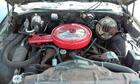
The 1975 Delta 88 and Ninety Eight cars offered an optional 400 engine. This was a Pontiac-sourced motor and was available in the VIN R 170 HP 2bbl version and the VIN S 185 HP 4bbl version. Note that there were no lawsuits about using a Pontiac motor in an Oldsmobile that year.
The 1975 Delta 88 and Ninety Eight cars offered an optional 400 engine. This was a Pontiac-sourced motor and was available in the VIN R 170 HP 2bbl version and the VIN S 185 HP 4bbl version. Note that there were no lawsuits about using a Pontiac motor in an Oldsmobile that year.
Wow, I had no idea. I worked at an Oldsmobile dealership, very small town and I never saw one of these. Very interesting.
Yeah, no lawsuit with the Pontiac 400. I wonder how many were ordered with one? They could have brought back the small bore 400G. I am surprised they didn't during the ever tightening emissions and fuel economy of the 70's.
Note that there were no lawsuits about using a Pontiac motor in an Oldsmobile that year.
That's because, I would guess, buyers had to specifically order the 400, so they knew what they were getting, and there were no surprises. Oldsmobile didn't get sued because it put Chevy engines in its cars, it got sued because it put Chevy engines in its cars AND DIDN'T TELL ANYONE. Many owners only found out when they took their car down to the local (non-dealer) garage to have a repair done, and the shop discovered that Oldsmobile parts wouldn't fit on the engine, the distributor was in the wrong place, etc.
I’m sure you could buy a 400G engine over the parts counter for some time after they stopped putting them in cars.
This thread was asking about 400 motors installed in new cars, but sure...
As of the Jan 1972 printing of the parts book, no complete 400 G was available in the parts network and the only 400G short block still available was P/N 230348 low compression.
^^^Joe, is it likely (or even possible) that given the 400G's inherent weaknesses, potential buyers of counter engines or warranty replacements were steered directly to an "upgrade" 455, thereby accounting for the lack of G-block availability at the parts counter?
^^^Joe, is it likely (or even possible) that given the 400G's inherent weaknesses, potential buyers of counter engines or warranty replacements were steered directly to an "upgrade" 455, thereby accounting for the lack of G-block availability at the parts counter?
Given the availability of wrecking yard 455s at that time, I suspect that was the more likely source. When the 350 in our family 1968 Vista spun a bearing, the dealership installed a wrecking yard 350.
^^^ Interesting ... I would have thought that given the fact that the warranty would also have to cover the replacement, that they'd want to use something that at least had a known history.
^^^ Interesting ... I would have thought that given the fact that the warranty would also have to cover the replacement, that they'd want to use something that at least had a known history.
That wasn't a warranty replacement. More to the point, a warranty replacement would have been exactly the same as the part taken out.
Interesting, I have never seen a 75 Olds with a 400 Pontiac. I have seen a 80 Olds 88 with a 301 Pontiac, 81 TransAm with a 301 Pontiac, 81 Buick Regal with a 301 Pontiac, Buick wagons w 307 Olds, almost every GM car with a 305 Chebby, on and on- what a joke- of course later they were just called GM engines...
I'd be very curious to know how the Standard Catalog of Oldsmobile, or anyone for that matter, knows how many Delta 88 convertibles came with this or any engine. We've always been told that Olds did not keep records like this at that time. Everyone would love to know how many of this or that car were blue or had a manual transmission or had air-conditoning, and we've always been told that that those records were not kept.
Originally Posted by 69CSHC
One of the many reasons people disregard cars made after 1974. If the manufacturer didn't take their product that seriously why should they...
I think this is a little harsh. I think the switch to "corporate" engines was just a matter of practicality and cost-savings. Why have a Buick 350 and a Pontiac 350 and a Chevy 350 and an Olds 350? Why have a Buick 455 and a Pontiac 455 and a Chevy 454 and an Olds 455? Why have four plants producing the same engine? Much more efficient to have a single plant (or more than one, depending on demand) producing all the engines of a particular size. Yes, the identity of an "Olds' motor or a "Buick" motor is lost, but that wasn't a concern to most buyers.
Here's the 1978 Oldsmobile engine source information that was included in the dealer brochure that year. Oldsmobile and only Oldsmobile produced the V-8 diesel. Only Oldsmobile produced the 403 and 260 V-8s. Buick made the 231 V-6. There was enough need that 350 V-8s were produced by both Chevy and Oldsmobile. Etc.
If Oldsmobile had included something like this in their 1977 brochure, they probably would have avoided the lawsuits, and I'm guessing it was the lawsuits as much as anything else that caused Olds to include information like this in its post-1977 brochures.
If Oldsmobile had included something like this in their 1977 brochure, they probably would have avoided the lawsuits, and I'm guessing it was the lawsuits as much as anything else that caused Olds to include information like this in its post-1977 brochures.
The disclosure sheet only came out as a result of the lawsuit.
So, yeah -- while Chevy and Pontiac soldiered on with "junior" big-blocks (of 402 and 400 cubes respectively) available in their A-body muscle car offerings, Buick and Olds adopted a "go big or go home" philosophy -- nothing smaller than a 455 starting in the '70 model year.
Speaking strictly in terms of big block power for the halo muscle cars, mind you -- everybody had a 350 too.
Chevy did a lot more business.
I think the 400 was a punched out small block, and the 402 was a punched out 396 made a little bigger to make the numbers make sense.
I think the 400 was a punched out small block, and the 402 was a punched out 396 made a little bigger to make the numbers make sense.
Correct. The SBC 400 used siamesed cylinders, like the Olds 403. The BBC 402 was a 396 at 0.030 over (4.096 bore on the 396 vs 4.125 bore on the 402). Interestingly, the 400 SBC was 4.125 bore by 3.75 stroke. The BBC 402 was 4.125 bore by 3.76 stroke (same crank as the 396 and 427).
And as for why Olds used the Pontiac motor, likely this was an expediency to respond to the OPEC gas crisis in 73-74. There was certainly no time to resurrect an Olds 400 motor and the in-production Pontiac was an easy way to offer something between the 350 and the 455 in the big cars. Since the frames were the same across the divisions, this was a bolt-in with zero engineering and no new emissions certification requirements. There would have been no way to get a new motor designed, tooled, certified, and in production in 12-18 months. I'm betting that the 403 was probably conceived in the 73-74 timeframe and didn't get released until the 1977 model year.
This thread was asking about 400 motors installed in new cars, but sure...
As of the Jan 1972 printing of the parts book, no complete 400 G was available in the parts network and the only 400G short block still available was P/N 230348 low compression.
look further down the list you posted. there are also two other 400G’s. one is high compression.
No, the Pontiac 400 was the same block as all Pontiac V-8s going back to 1955. Pontiac didn't make a small block.
100% correct. As a Oldsmobile in Pontiac enthusiast which I am both and I have owned many of both honestly probably more Pontiac and those bills, but I’m working on that now. Your spot on every intake manifold from a 3:26 to a 455 fits.