


455 with TH400 to an overdrive What is my best option?


Thread Starter
Registered User
Joined: May 2012
Posts: 106
From: Gluckstadt, MS
455 with TH400 to an overdrive What is my best option?
Soon I am going to have to remove my TH400 from my '75 Delta to replace the rear main seal. I am interested in what my best option would be to replace the TH400 with something that has overdrive. Is there a bolt up option? If not what is the best option with the least extra fabrication needed?
TIA
TIA
CH3NO2 LEARN IT BURN IT
Joined: Jul 2010
Posts: 5,635
From: Land of Taxes
IMO two options for us big block Olds people for OD automatics.
1. Gear Vendors OD unit. The GV unit allows you to retain the original TH400 which in my mind is superior to a 2004R. You have to shorten the driveshaft or have another made if you don’t want to cut the original one. No biggy and not very costly. Next wire the gear selector switch for easy access when driving. You basically remove the original TH400 tail shaft housing and bolt the GV up in its place. Some floor board “massaging” has been reported in some cases in A bodies. But that’s about it. The GV splits the 3 forward gears which gives you essentially a 6 speed. First, first and a half, second, second and a half etc. Cool sound with 6 up shifts. Some will comment on the gear ratios of one vs the other. Depends on what you’re looking for?
Option 2. is a Beefed THM2004R. But by the time you put $$$ and all the upgraded parts in it to survive behind a 455 you could have a GV and retain the original 400. When comparing the internals of the two the 400 is the winner by a wide margin IMO. But you also don’t have a fire breathing 455 if it’s a stock 75 455. So a mildly upgraded 200 (Buick GN spec) might be ok for you depending on what its intended use is. Any track time or Stop light follies I would shy away from a 200 unless you upgraded the hell out of it.
To install a 200 where a 400 once resided you need to relocate the cross member, (not a huge deal because the holes for a TH350 should/could already be there and I believe the 350 and 200 have the same tail mount location). Next modify the carb throttle linkage and bracket to accept a TV cable, install a new (smaller diameter 2004R 700R4 th350) slip yoke, wire the lock-up solenoid for the converter etc.
The 700R4 has more beef than a 200 but not as much as a 400 and you need an adaptor plate to mate it to the Olds block so that’s out of the equation at least for me. I thought I read in Hot Rod that one of the vendors now makes a custom 700 case that will accept a BOP bolt pattern? The 200 and 700 are very common swaps today with BOP guys. Both have their own inherent weaknesses that can be overcome with enough money. The aftermarket has stepped up that support and there is a wide variety of good parts available that were not even 5 years ago. I may have missed a few things but this has been discussed in depth many times here and out on the net. Google it and do some “real world” homework before making the decision.
Edit< as a side note I forgot this is in a B body and Joe reminded me its most likely a long tail 400 hence the same cross member location. Im not 100% sure on the GV compatibility with the LT TH400s. A call to GV tech line should answer that. The long shaft in your trans can be replaced with a short shaft as one option but that requires your trans to be disassembled. Not a huge expense but one to consider. The biggest point Im trying to make here is the major internal parts in a 200 are significantly smaller than whats found in a 400. Google it. Several companies have circumvented these issues through improved metallurgy such as cryo hardened drums, spragues, shafts, planetary gears etc. But additively to make a durable street/strip trans they are quite pricey. This is usually reserved for race applications where ETs are important. The 200 has a lot less rotating mass. For a daily street driver the 400 is the way to go with a GV but again if you drive like a granny a GN spec THM2004R might be a logical choice if your only interest is economy.>end edit
1. Gear Vendors OD unit. The GV unit allows you to retain the original TH400 which in my mind is superior to a 2004R. You have to shorten the driveshaft or have another made if you don’t want to cut the original one. No biggy and not very costly. Next wire the gear selector switch for easy access when driving. You basically remove the original TH400 tail shaft housing and bolt the GV up in its place. Some floor board “massaging” has been reported in some cases in A bodies. But that’s about it. The GV splits the 3 forward gears which gives you essentially a 6 speed. First, first and a half, second, second and a half etc. Cool sound with 6 up shifts. Some will comment on the gear ratios of one vs the other. Depends on what you’re looking for?
Option 2. is a Beefed THM2004R. But by the time you put $$$ and all the upgraded parts in it to survive behind a 455 you could have a GV and retain the original 400. When comparing the internals of the two the 400 is the winner by a wide margin IMO. But you also don’t have a fire breathing 455 if it’s a stock 75 455. So a mildly upgraded 200 (Buick GN spec) might be ok for you depending on what its intended use is. Any track time or Stop light follies I would shy away from a 200 unless you upgraded the hell out of it.
To install a 200 where a 400 once resided you need to relocate the cross member, (not a huge deal because the holes for a TH350 should/could already be there and I believe the 350 and 200 have the same tail mount location). Next modify the carb throttle linkage and bracket to accept a TV cable, install a new (smaller diameter 2004R 700R4 th350) slip yoke, wire the lock-up solenoid for the converter etc.
The 700R4 has more beef than a 200 but not as much as a 400 and you need an adaptor plate to mate it to the Olds block so that’s out of the equation at least for me. I thought I read in Hot Rod that one of the vendors now makes a custom 700 case that will accept a BOP bolt pattern? The 200 and 700 are very common swaps today with BOP guys. Both have their own inherent weaknesses that can be overcome with enough money. The aftermarket has stepped up that support and there is a wide variety of good parts available that were not even 5 years ago. I may have missed a few things but this has been discussed in depth many times here and out on the net. Google it and do some “real world” homework before making the decision.
Edit< as a side note I forgot this is in a B body and Joe reminded me its most likely a long tail 400 hence the same cross member location. Im not 100% sure on the GV compatibility with the LT TH400s. A call to GV tech line should answer that. The long shaft in your trans can be replaced with a short shaft as one option but that requires your trans to be disassembled. Not a huge expense but one to consider. The biggest point Im trying to make here is the major internal parts in a 200 are significantly smaller than whats found in a 400. Google it. Several companies have circumvented these issues through improved metallurgy such as cryo hardened drums, spragues, shafts, planetary gears etc. But additively to make a durable street/strip trans they are quite pricey. This is usually reserved for race applications where ETs are important. The 200 has a lot less rotating mass. For a daily street driver the 400 is the way to go with a GV but again if you drive like a granny a GN spec THM2004R might be a logical choice if your only interest is economy.>end edit
Last edited by droldsmorland; Jan 11, 2013 at 01:43 PM.

Registered User
Joined: Sep 2010
Posts: 3,057
From: Shorewood, Il.
And there's the 4L80E that'll need some electrical controls + adapter.
Essentially a 400 with overdrive, and crossmember and driveshaft mods required, too.
In stock form, will outlast both the above.
Essentially a 400 with overdrive, and crossmember and driveshaft mods required, too.
In stock form, will outlast both the above.

Registered User
Joined: Sep 2009
Posts: 337
From: Austin, TX
I have the 700R4 in my 67 Cutlass. The swap was done by the PO. He also added an Edelbrock intake with a 670 Street Avenger carb to get the TVS cable connected properly (not needed with a newer vehicle like yours). The early style 700 trans uses hydraulically controlled TC lockup, and that mod was done to mine. The car retains it's 3.08 rear gear for now. The trans bolts into the space of the 400 and most things lined right up. He did have a new drive shaft done, but that is nneded on almost any OD swap. I really like the swap, my only real issue is the rear gear ratio. My car drops into 4'th lockup at abouth 45 mph. This is only about 1250 rpm. I have the same trans in my Sierra pickup with a 4:10 rear end and the shift points are much more in line with the power band. Lots better accel off the line too ;-)
I will be going with 3:55 or 3:90 gears this spring and that should finish off a very good upgrade.
Tim
I will be going with 3:55 or 3:90 gears this spring and that should finish off a very good upgrade.
Tim
CH3NO2 LEARN IT BURN IT
Joined: Jul 2010
Posts: 5,635
From: Land of Taxes
On another note if you’re going through the trouble of replacing the rear main seal do yourself a major favor and do some research on that as well. Don’t simply pound another seal in and expect it to not leak. If you can catch a fingernail in the groove it’s too deep and the new seal will leak. There are several ways of making a "proper" repair. A speedy sleeve is one. Altering the seals installed depth is another or a combo of both techniques. But if the groove is too deep a speedy sleeve won’t work unless the groove on the crank surface is brought up to the level of the good surface. I use JB weld to fill the groove for a semi-permanent repair then sand/polish smooth with fine emery cloth and install the sleeve sometimes with red thread locker if I feel it’s too loose. This repair is typically performed with the engine in the car. Email for that detail or search here I’ve posted that procedure before. Of course the proper way to repair this is to machine that surface (then install a sleeve if it’s below the min spec) or by spray welding then machining. If it’s bad enough neither repair is recommended because the minimum diameter is exceeded by machining and your cutting into the hardened seal surface. Spray welding then machining works but the spray weld alters the cranks surface hardness and will need nitride hardening after machining…all this is expensive time/labor. The crank has to be removed to spray weld. At that point you’re that far into the engine and you know what that means a simple seal replacement turns into a rebuild. That’s why I do the speedy sleeve thing to a healthy engine until its rebuild time. Then I usually replace the crank anyway. Just sharing some FYI here cuz been the done that.
Last edited by droldsmorland; Jan 11, 2013 at 10:41 AM.
Registered User
Joined: Sep 2009
Posts: 337
From: Austin, TX
I know it's been a while for me (like 25 years), but isn't this originally a rope rear main seal? The crank flange is larger than the journal, so is there a speedy sleeve method I missed? Not like I'm changing a rear main anytime soon, but good to know how things are / better easier with new technology.
Tim
Tim

Old(s) Fart
Joined: Mar 2007
Posts: 50,799
From: Northern VA
Soon I am going to have to remove my TH400 from my '75 Delta to replace the rear main seal. I am interested in what my best option would be to replace the TH400 with something that has overdrive. Is there a bolt up option? If not what is the best option with the least extra fabrication needed?
TIA
TIA
The 4L80E requires floorpan mods, an adapter plate, and a standalone computer. That trans runs upwards of $2700 for a stock rebuild and the computers run $500-$1000. It also needs a custom driveshaft and crossmember location. Note that the 4L80E uses the internal same hard parts as a TH400 for gears 1-3.
A 700R4 requires beefing to live behind a 455, an adapter plate, a custom driveshaft, and a non-standard trans crossmember location.

Registered User
Joined: Sep 2012
Posts: 776
From: chicago il
I have a gvod and it is excellent and you can possibly get one used for cheaper and they last and handle a excellent amount of power. I would also beforehand do some homework and find out what the gvod was behind 350 400 etc and also pick up the driveshaft if it is a fit for you. if you get your tranny rebuilt with a used gvod you could come away a real financial winner overall with excellent mileage on the highway for a olds.
CH3NO2 LEARN IT BURN IT
Joined: Jul 2010
Posts: 5,635
From: Land of Taxes
[/Quote]I know it's been a while for me (like 25 years), but isn't this originally a rope rear main seal? The crank flange is larger than the journal, so is there a speedy sleeve method I missed? Not like I'm changing a rear main anytime soon, but good to know how things are / better easier with new technology.
Tim I guess I dont understand the question. Yes originally the seal was a rope style. If the engines been rebuilt in the last 20-30 years chances are that area has been reworked for a modern neoprene rubber style. Or better yet updated to the Ford seal. Which ever style you have is insignificant to the groove phenomena. If there is a groove none of the above will seal at least not for very long. So slipping a Speedy Sleeve on to the that crank surface will renew that surface so which ever style seal you use will have a fighting chance to seal in the oil.
Tim I guess I dont understand the question. Yes originally the seal was a rope style. If the engines been rebuilt in the last 20-30 years chances are that area has been reworked for a modern neoprene rubber style. Or better yet updated to the Ford seal. Which ever style you have is insignificant to the groove phenomena. If there is a groove none of the above will seal at least not for very long. So slipping a Speedy Sleeve on to the that crank surface will renew that surface so which ever style seal you use will have a fighting chance to seal in the oil.
NOVICE car nut
Joined: Nov 2010
Posts: 3,140
From: Milwaukee Wisconsin
IMO two options for us big block Olds people for OD automatics.
1. Gear Vendors OD unit. The GV unit allows you to retain the original TH400 which in my mind is superior to a 2004R. You have to shorten the driveshaft or have another made if you don’t want to cut the original one. No biggy and not very costly. Next wire the gear selector switch for easy access when driving. You basically remove the original TH400 tail shaft housing and bolt the GV up in its place. Some floor board “massaging” has been reported in some cases in A bodies. But that’s about it. The GV splits the 3 forward gears which gives you essentially a 6 speed. First, first and a half, second, second and a half etc. Cool sound with 6 up shifts. Some will comment on the gear ratios of one vs the other. Depends on what you’re looking for?
Option 2. is a Beefed THM2004R. But by the time you put $$$ and all the upgraded parts in it to survive behind a 455 you could have a GV and retain the original 400. When comparing the internals of the two the 400 is the winner by a wide margin IMO. But you also don’t have a fire breathing 455 if it’s a stock 75 455. So a mildly upgraded 200 (Buick GN spec) might be ok for you depending on what its intended use is. Any track time or Stop light follies I would shy away from a 200 unless you upgraded the hell out of it.
To install a 200 where a 400 once resided you need to relocate the cross member, (not a huge deal because the holes for a TH350 should/could already be there and I believe the 350 and 200 have the same tail mount location). Next modify the carb throttle linkage and bracket to accept a TV cable, install a new (smaller diameter 2004R 700R4 th350) slip yoke, wire the lock-up solenoid for the converter etc.
The 700R4 has more beef than a 200 but not as much as a 400 and you need an adaptor plate to mate it to the Olds block so that’s out of the equation at least for me. I thought I read in Hot Rod that one of the vendors now makes a custom 700 case that will accept a BOP bolt pattern? The 200 and 700 are very common swaps today with BOP guys. Both have their own inherent weaknesses that can be overcome with enough money. The aftermarket has stepped up that support and there is a wide variety of good parts available that were not even 5 years ago. I may have missed a few things but this has been discussed in depth many times here and out on the net. Google it and do some “real world” homework before making the decision.
Edit< as a side note I forgot this is in a B body and Joe reminded me its most likely a long tail 400 hence the same cross member location. Im not 100% sure on the GV compatibility with the LT TH400s. A call to GV tech line should answer that. The long shaft in your trans can be replaced with a short shaft as one option but that requires your trans to be disassembled. Not a huge expense but one to consider. The biggest point Im trying to make here is the major internal parts in a 200 are significantly smaller than whats found in a 400. Google it. Several companies have circumvented these issues through improved metallurgy such as cryo hardened drums, spragues, shafts, planetary gears etc. But additively to make a durable street/strip trans they are quite pricey. This is usually reserved for race applications where ETs are important. The 200 has a lot less rotating mass. For a daily street driver the 400 is the way to go with a GV but again if you drive like a granny a GN spec THM2004R might be a logical choice if your only interest is economy.>end edit
1. Gear Vendors OD unit. The GV unit allows you to retain the original TH400 which in my mind is superior to a 2004R. You have to shorten the driveshaft or have another made if you don’t want to cut the original one. No biggy and not very costly. Next wire the gear selector switch for easy access when driving. You basically remove the original TH400 tail shaft housing and bolt the GV up in its place. Some floor board “massaging” has been reported in some cases in A bodies. But that’s about it. The GV splits the 3 forward gears which gives you essentially a 6 speed. First, first and a half, second, second and a half etc. Cool sound with 6 up shifts. Some will comment on the gear ratios of one vs the other. Depends on what you’re looking for?
Option 2. is a Beefed THM2004R. But by the time you put $$$ and all the upgraded parts in it to survive behind a 455 you could have a GV and retain the original 400. When comparing the internals of the two the 400 is the winner by a wide margin IMO. But you also don’t have a fire breathing 455 if it’s a stock 75 455. So a mildly upgraded 200 (Buick GN spec) might be ok for you depending on what its intended use is. Any track time or Stop light follies I would shy away from a 200 unless you upgraded the hell out of it.
To install a 200 where a 400 once resided you need to relocate the cross member, (not a huge deal because the holes for a TH350 should/could already be there and I believe the 350 and 200 have the same tail mount location). Next modify the carb throttle linkage and bracket to accept a TV cable, install a new (smaller diameter 2004R 700R4 th350) slip yoke, wire the lock-up solenoid for the converter etc.
The 700R4 has more beef than a 200 but not as much as a 400 and you need an adaptor plate to mate it to the Olds block so that’s out of the equation at least for me. I thought I read in Hot Rod that one of the vendors now makes a custom 700 case that will accept a BOP bolt pattern? The 200 and 700 are very common swaps today with BOP guys. Both have their own inherent weaknesses that can be overcome with enough money. The aftermarket has stepped up that support and there is a wide variety of good parts available that were not even 5 years ago. I may have missed a few things but this has been discussed in depth many times here and out on the net. Google it and do some “real world” homework before making the decision.
Edit< as a side note I forgot this is in a B body and Joe reminded me its most likely a long tail 400 hence the same cross member location. Im not 100% sure on the GV compatibility with the LT TH400s. A call to GV tech line should answer that. The long shaft in your trans can be replaced with a short shaft as one option but that requires your trans to be disassembled. Not a huge expense but one to consider. The biggest point Im trying to make here is the major internal parts in a 200 are significantly smaller than whats found in a 400. Google it. Several companies have circumvented these issues through improved metallurgy such as cryo hardened drums, spragues, shafts, planetary gears etc. But additively to make a durable street/strip trans they are quite pricey. This is usually reserved for race applications where ETs are important. The 200 has a lot less rotating mass. For a daily street driver the 400 is the way to go with a GV but again if you drive like a granny a GN spec THM2004R might be a logical choice if your only interest is economy.>end edit
NOVICE car nut
Joined: Nov 2010
Posts: 3,140
From: Milwaukee Wisconsin
The only bolt up option is the beefed 200-4R. Trans crossmember stays in the current location. I would argue that you can purchase a properly beefed 200-4R for about $500-$1000 less than you can install a GV overdrive (you can get a quality 200-4R for under $2000). The only problem is that the 200-4R is the same length as a short-tail TH350, but your Delta uses a longtail TH400, so you'll need to get a longer driveshaft made.
The 4L80E requires floorpan mods, an adapter plate, and a standalone computer. That trans runs upwards of $2700 for a stock rebuild and the computers run $500-$1000. It also needs a custom driveshaft and crossmember location. Note that the 4L80E uses the internal same hard parts as a TH400 for gears 1-3.
A 700R4 requires beefing to live behind a 455, an adapter plate, a custom driveshaft, and a non-standard trans crossmember location.
The 4L80E requires floorpan mods, an adapter plate, and a standalone computer. That trans runs upwards of $2700 for a stock rebuild and the computers run $500-$1000. It also needs a custom driveshaft and crossmember location. Note that the 4L80E uses the internal same hard parts as a TH400 for gears 1-3.
A 700R4 requires beefing to live behind a 455, an adapter plate, a custom driveshaft, and a non-standard trans crossmember location.
Old(s) Fart
Joined: Mar 2007
Posts: 50,799
From: Northern VA

Yeah, those 200-4Rs will never live if you don't baby them...

Seriously, I'd suggest that you contact CK Performance about a beefed street 200-4R. One significant advantage is the 2.74:1 first gear in the 200-4R vs. the 2.48:1 first in the TH400. The extra off-the-line gearing will be a welcome improvement in a heavy car like the D88.

Registered User
Joined: Jan 2010
Posts: 6,104
From: central Indiana
If the engine is stock I would be willing to be a mildly modified 2004r will live just fine. Rebuild it with a good band, Grand National servo and typical pump upgrades and a mild converter. Use CK Performance shift kit with the mild shift firmness. If an extra $400 is within the budget use a upgraded input housing (some people call it the forward clutch) but I doubt that it will be needed. The 2004R will bolt in place of the 400 but will need driveshaft modifications. The carb will require minor modification to adapt it to be able to connect the TV cable.
Registered User
Joined: Sep 2010
Posts: 4,859
From: Indianapolis
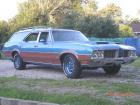
I have a moderately buit 455 in my heavy Vista Cruiser with a stoutly built 200-4r & a 4:10 posi rear. The steeper first gear combined with the 4:10 really helps heavy cars off the line & with the overdrive I still get respectable mileage. I drove from Indy to Lansing with 3 adults & the rear packed with parts to sell & drove about 70-80 mph there & back & got about 12-13mpg. I have hammered on it several times also & have not broken anything....yet I have heard that if you get a 200 to rebuild, try to get one from a '87 or '88 regular Monte, Monte SS, GN, or 442, as they have some heavy duty components from the factory that the earlier years did not.
I have heard that if you get a 200 to rebuild, try to get one from a '87 or '88 regular Monte, Monte SS, GN, or 442, as they have some heavy duty components from the factory that the earlier years did not.
Thread Starter
Registered User
Joined: May 2012
Posts: 106
From: Gluckstadt, MS
I have a moderately buit 455 in my heavy Vista Cruiser with a stoutly built 200-4r & a 4:10 posi rear. The steeper first gear combined with the 4:10 really helps heavy cars off the line & with the overdrive I still get respectable mileage. I drove from Indy to Lansing with 3 adults & the rear packed with parts to sell & drove about 70-80 mph there & back & got about 12-13mpg. I have hammered on it several times also & have not broken anything....yet I have heard that if you get a 200 to rebuild, try to get one from a '87 or '88 regular Monte, Monte SS, GN, or 442, as they have some heavy duty components from the factory that the earlier years did not.
I have heard that if you get a 200 to rebuild, try to get one from a '87 or '88 regular Monte, Monte SS, GN, or 442, as they have some heavy duty components from the factory that the earlier years did not.
Registered User
Joined: Sep 2010
Posts: 4,859
From: Indianapolis
Your mileage should improve, it depends on several factors, I believe a very important one is what kind of rpm the engine will be turning. Generally the lower the rpm, the better the mileage, but you don't want it to be lugging either. The 455's make torque relatively low in the rpm range, so around 2000 rpm is a pretty good target I would think. I'm sure others can add to this.


Registered User
Joined: Nov 2010
Posts: 904
From: St Louis, MO
Real world experience in cars with 700R4s. The 30% reduction rpm in OD got 10% better milage than in Drive (no OD). That was mostly hiway, probably less of a difference city driving.
4 more mpg might be optimistic.
4 more mpg might be optimistic.
72 Olds CS
Joined: Jun 2011
Posts: 6,657
agreed !!
you should also factor in your intended use, cruising comfort (lower engine rpms at hi way speeds) is worth something
lower first gear is worth something (200r4)
but yeah if its only gonna buy 1-2 mpg it might be nice to put it on the list when trans replacement becomes a necessity rather than a luxury

Thread
Thread Starter
Forum
Replies
Last Post
jensenracing77
General Discussion
3
May 31, 2014 11:05 PM


