When you click on links to various merchants on this site and make a purchase, this can result in this site earning a commission. Affiliate programs and affiliations include, but are not limited to, the eBay Partner Network.
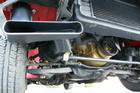
Hi All: Can someone please look at the attached photos and tell me if that fan clearance to the shroud seems correct?. This is a rest
ored car I own now for 20+ years, it always run too hot for my taste and also always I was suspect of this clearance. Your advise will be greatly appreciated since after looking a myriad of videos and photos i couldn't yet figure out!. Best Regards. Raul
This is a restored car I own now for 20+ years, it always run too hot for my taste and also always I was suspect of this clearance
I didn't know that engine operating temperature was something that one acquired a "taste" for. You've been running this car for 20 years, and you're only now worried about the engine temperature?
First off, tell us exactly what the temperature IS. Whether it suits your tastes or not, it might very well be normal. Second, given that this car has been running for decades with this supposedly too hot temperature, this sounds like a classic example of trying to fix what ain't broken.
"I didn't know that engine operating temperature was something that one acquired a "taste" for", Well now you know . Just, if at all possible, and you do know, answer my specific question. Thanks.
I don't know what the clearance between the fan and shroud should be, but I would imagine that, as long as the fan is not hitting the shroud, you're fine.
My point is that this is the SECOND question you should be asking. The first question to be answered is, IS the engine overheating? If it's not, then you don't have a problem. So I ask again, what is the engine temperature when fully warmed up? If it's anything under 220 F, you do not have a problem.
"If it's anything under 220, you do not have a problem"... Summer or Winter?, In Texas or Sweden?, AC ON or OFF?, At Idle or running at 55mph on the Freeway?, Please specify or I will rephrase my question: I like to keep my Toronado as original as possible, is the clearance in the photos correct?. Thanks.
"If it's anything under 220, you do not have a problem"... Summer or Winter?, In Texas or Sweden?, AC ON or OFF?, At Idle or running at 55mph on the Freeway?,
How about for Buenos Aires? Which looks like it has a temperature range summer to winter similar to perhaps San Diego, California.
The engine temperature will vary a bit at highway speed versus idle, AC on or off, etc., but not so much that you should have to do anything other than drive the car. As long as it stays below 220, you're fine. There's a reason why no specific operating temperature is given in the service manuals. It varies depending on engine load, type of driving, etc. But these cars were designed to operate under a range of conditions without overheating. Again, for the third time, WHAT IS THE ENGINE TEMPERATURE THAT YOU FIND DISTASTEFUL?
The 1967 chassis service manual does not give a specification for fan-to-shroud clearance. My guess is that this is because this distance is not adjustable. The figure below is from the service manual, and it shows the shroud bolted to the frame. If your fan is not clearing the shroud by the same distance all around, I would check to make sure that the shroud supports are in place and secure and not rusted away or something. I think that, rather than be concerned about what the actual clearance distance is, the concern should be, is the clearance the same all around the shroud? You want the fan in the center of the shroud, right? So you want to measure the distance from the tip of a fan blade to a point on the shroud at several positions all around the shroud. Whether that distance is 1/2-inch or 1-inch or whatever isn't as important as making sure it's 1/2-inch everywhere or 1-inch everywhere.
It's difficult to see much of anything in those photos you posted. The first photo is better than the second one. I've zoomed in and used arrows to point to the distance I think you're talking about. What is that distance on your car? Is it the same at a point 180 degrees away? To me, at first blush, the clearance looks fine.
I would guess that the clearance is about the same all around the fan as there is not much play there. As long as the fan is not hitting the shroud is what matters. The clearance may be 1/2-inch on one side and 9/16-inch on the other side, but that's not enough to be concerned about, and its not going to affect how the fan cools the engine. As long as the fan is not hitting the shroud, you need to look elsewhere to find the cause of the distasteful operating temperature.
Last edited by jaunty75; Dec 12, 2020 at 04:35 PM.
#1 question is what gauge are you using to determine it's running hot?
-Is the temp gauge off? If OEM it's likely very off. Compare it to a known good calibrated gauge. You probably don't have a problem.
IMO the fan should be deeper into the shroud. Yours doesn't look deep enough.
I'm used to seeing at least 1/2 the total blade width or less exposed or deeper. The blades should be fairly close to the shroud diameter as well.
-What's been changed in the last 50 years?
-Are all the core support to radiator seals present?
-Is your rad correct OEM spec?
-What's the original radiator dimensions(thickness)?
-Does this match with what's in there now?
-How many cores in the current rad compared to OEM?
-Is the water pump the correct nose length?
-Do your belts look aligned (parallel) with all the pulleys?
Adaptors are out there to install between the pully/pump and fan mount to extend the fan in deeper.
But first, check all the stuff above then try a heavy-duty or Super Stant 195* T stat, yes 195* not a 160 or 180*
Steer clear of the standard will-fit chineasium junk you will find at the big box places.
When is the last time the coolant was flushed? Probably way overdue. The heater core should be gently flushed with the core hoses disconnected from the system.
Use premixed 50/50.
Are all hoses good?
My 68 442 is almost flush. This is an AC car. Originally was a 3 core now a 4 core. This is why the fan is a little deeper.
Runs 190 no matter what the ambient is. Will creep to 200 at idle in traffic. I used the HD Stant 195*
It's difficult to see much of anything in those photos you posted. The first photo is better than the second one. I've zoomed in and used arrows to point to the distance I think you're talking about. What is that distance on your car? Is it the same at a point 180 degrees away? To me, at first blush, the clearance looks fine.
I would guess that the clearance is about the same all around the fan as there is not much play there. As long as the fan is not hitting the shroud is what matters. The clearance may be 1/2-inch on one side and 9/16-inch on the other side, but that's not enough to be concerned about, and its not going to affect how the fan cools the engine. As long as the fan is not hitting the shroud, you need to look elsewhere to find the cause of the distasteful operating temperature.
My bad probably, when I was refering to the clearance I meant how much IN or OUT the fan should be with respect to the shroud (axial clearance if you willI) and not the radial clearance. This axial clearance should have an impact on the efficiency of the fan in conducting the air across the rad and engine. It looks to mee to far out from the shropud.
#1 question is what gauge are you using to determine it's running hot? -Is the temp gauge off? If OEM it's likely very off. Compare it to a known good calibrated gauge. You probably don't have a problem.
I am using my customer experience comfort as a gauge I can elaborate but trust me it is runinng hot. I am a believer these cars should not drive that HOT. BTW I am using the OEM gauge and sender and seems OK to me.
IMO the fan should be deeper into the shroud. Yours doesn't look deep enough. I'm used to seeing at least 1/2 the total blade width or less exposed or deeper. The blades should be fairly close to the shroud diameter as well.
Thanks for this insight, It is what I am looking for. I also suspect it is too far out. I wish someone with an actual 1st Gen Toro can confirm this or even better post a photo like yours.
-What's been changed in the last 50 years? I can account for the last 23!, Radiator, Water Pump, Clutch, Hoses. All in an attemp to run it colder, to no avail. The timing is correct as per the CSM. I do not know if the cam is stock or not. -Are all the core support to radiator seals present? Yes. -Is your rad correct OEM spec? As far I can tell YES, Its a 3 core and all the existing supports fit. -What's the original radiator dimensions(thickness)? Do not know, I never measure it. -Does this match with what's in there now? It matches what was there. -How many cores in the current rad compared to OEM? Same -Is the water pump the correct nose length? It is the correct one, All belts run parallel. -Do your belts look aligned (parallel) with all the pulleys? Yes, all of them
Adaptors are out there to install between the pully/pump and fan mount to extend the fan in deeper. I will make one when I figure out first the desire thickness and why is so far out.BTW I saw on your photo your pulley is a 3 groove and you are not using one of them. I am correct?. Mine is 2 groove.
But first, check all the stuff above then try a heavy-duty or Super Stant 195* T stat, yes 195* not a 160 or 180* Steer clear of the standard will-fit chineasium junk you will find at the big box places. I am runnign without Thermostat.
When is the last time the coolant was flushed? Probably way overdue. The heater core should be gently flushed with the core hoses disconnected from the system. Use premixed 50/50. Are all hoses good? It was flushed a couple of years back, coolant looks very clean.
My 68 442 is almost flush. This is an AC car. Originally was a 3 core now a 4 core. This is why the fan is a little deeper. Runs 190 no matter what the ambient is. Will creep to 200 at idle in traffic. I used the HD Stant 195*
That's my dream with this car and BTW beatiful engine bay you have there!
I'm not running the A/C belt. The system needs to be completed, vacuumed, and charged. Thanks on the engine bay its not perfect but its clean. I drive it.
Running without a stat is not recommended. The coolant isn't spending enough time in the radiator to reject the heat and is dumping heat right back into the engine. Its a cumulative effect.
Olds underhood temps are hot like all cars of the era. Lots of area and metal to give off heat. It's the jacket temp that counts.
Do you remember what the pumps impeller looked like? There is a couple of different styles, of which one is better than the rest.
In order to properly troubleshoot the root cause, we need temperature data. We really need to get an accurate baseline temp then go from there.
Then do the 195 T-Stat and see what delta T does. Without the temperature data, we are just guessing and throwing parts at it.
Looked at 3 or so '67 Toro's on an image search, it appears that the fan depth into the shroud on them is approx. 1/2 way. The photos of yours appears that the fan is almost completely out of the shroud i.e., the front of the fan just barely goes into the shroud. Seems like that would swirl air in the engine bay vs. pull it through the shroud and radiator???
Looked at 3 or so '67 Toro's on an image search, it appears that the fan depth into the shroud on them is approx. 1/2 way. The photos of yours appears that the fan is almost completely out of the shroud i.e., the front of the fan just barely goes into the shroud. Seems like that would swirl air in the engine bay vs. pull it through the shroud and radiator???
Thanks Sugar Bear for your take, yes it looks to me also its too far out. When I ran the car with the hood open air flows outwardly too much compare with another OLDs i have, that make me suspicious. Now I wonder why it is so far off?, I can only think of the pulley but seems correct., when I will disassemble teh radiator I will take now a deep look at all parts involved.
"Running without a stat is not recommended. The coolant isn't spending enough time in the radiator to reject the heat and is dumping heat right back into the engine. Its a cumulative effect." Never thought it that way!, I thought the fewer restrictions the better since flow will increase, but it makes sense, so I just ordered the STAT 195 to use it. Thanks.
"Do you remember what the pumps impeller looked like? There is a couple of different styles, of which one is better than the rest." Not much. I do remember the brand is Carter, and the impeller is from an stamped metal sheet, no sure how much else to describe, "In order to properly troubleshoot the root cause, we need temperature data. We really need to get an accurate baseline temp then go from there. Then do the 195 T-Stat and see what delta T does. Without the temperature data, we are just guessing and throwing parts at it." Of course I agree, but in order to keep the discussion bounded I am now only focused on correcting fan in/out problem. After that I will setup a gauge (I am actually rumbling on building a system with bluetooth to read on my phone and keep the bay and interior original) and share the results.
Can you tell me which is the gap between the fan and radiator in your 442?
Best Regards,
Raul
I had to uncover my 66 Toro, so I decided to do some looking/measuring relative to this mystery.
I first thought maybe the fan clutch was incorrect, with a shaft that was short, which would result in the fan being pulled closer to the engine and rearward, out of the fan shroud. What I see in my Toro versus your original pictures shows that not to be the case.
The back edges of my fan blades are only about 1/2 inch inside the (plane of) interior circular opening of the shroud, whereas your photos something on the order of 1-1/2 inches, so there is a significant difference - the question is, how/where does that difference come from? So, here's some measurements that might help ----
The plane of the back edges of the fan blades pretty much lines up with the back edge of the sheet-metal radiator cover, and the plane of the circular, back edge of the fan shroud opening is about 1/2 inch forward - that's basically a repeat of the first 1/2 inch dimension, but for a different measurement.
Secondly, since the fan shroud is secured snug up against the rear face of the radiator core, I thought it might be meaningful to know the fan/radiator spacing. I measured the distance from the radiator face to the back edge of the fan blades - 4-3/16 inches.
Assuming 1966 and 1967 are identical which I think they are, maybe you can figure something out from these measurements. By the way, there's only one fan shroud for both years in the parts book, part of the AC package. I don't know the differences, but 3 radiators are listed, non-AC, AC. and HD cooling. Mine is 3-row AC version, and the only radiator supports shown in parts book would not hold the wider (radiator) tanks of a 4-row, so it would seem that's not a possibility. All I know is that something is amiss here.
Good luck
I can't do a comparison using fan clutch as point of reference as I have a NORS severe duty clutch. So, here's another measurement - 5-7/8 inches from radiator face to front edge of pulley at alternator belt
torotoyguy: So thankful for your measurements, Its the confirmation I was looking for. Definitively I have my fan not enough into the shroud. Your 5 7/8 inches are mine
6 5/8. Tomorrow, with more time, I will make a table with all your measurements against mine. I suspect the pulley is the issue. Once again thank you for taking the time. Regards. Raul.
The more I look at the fan to shroud depth the more it doesn't bother me. It's a little shallow but not enough to be the root cause IMO. And it could very well be within spec.
Let's see some temp data and what happens when the OP installs the 190-195* stat. Or any stat for that matter.
OP throttle the engine and toss a tissue against the front of the radiator. Does it aggressively suck the tissue in? If yes that's good and the fan isn't the prob.
If not the next thing to look at is the clutch. Is the clutch engaging? The fan should be fully engaged with a hot engine.
Is it a bi-metal of fluid type clutch??
With the Tstat not installed, as it is now, remove the rad cap, start it and look to see if you can see coolant circulating when throttling the engine?
No circulation? Impeller could be loose on the shaft or the core is plugged or the lower hose is collapsing at off idle RPMs.
Is the system holding 15psi...? Does the cap hold pressure and or test well with a pressure tester?
Some engines like 180*F some like 190*F some like 195*F. My AC car likes 195. It runs 190-192, 99% of the time and when it's really hot it will creep to 200-202. With the 180 it wouldn't regulate that tight. 180 allowed for greater hysterisis.
The new HD and Super Stat by Stant are designed to have a tighter delta T. You have to think 50 years of Tstat design something improved over the factory 180 recommendation.
I'm sorry but I can not add any more logic to this problem without temperature data.
I need a baseline temp or this whole exercise to have any value.
Another food for thought angle, do fans have different offsets like wheels? Gauchobyte can you see any part #'s on your fan to assist in confirming correct application?
Sugar Bear: I cannot see, without dismantling, any part number, It's a 7 blade 18" OD which fits specs, I believe its the OE, I will confirm when possibel. Bests.
"The more I look at the fan to shroud depth the more it doesn't bother me. It's a little shallow but not enough to be the root cause IMO. And it could very well be within spec." Possibly, but I do not believe it is within specs, its actually dangerous because of exposed fan blades either to handwork and the upper hose. I need to understand why the offset and get it fixed.
Let's see some temp data and what happens when the OP installs the 190-195* stat. Or any stat for that matter.
"OP throttle the engine and toss a tissue against the front of the radiator. Does it aggressively suck the tissue in? If yes that's good and the fan isn't the prob." Nice Tip, whn possibley I will do it and update. "If not the next thing to look at is the clutch. Is the clutch engaging? The fan should be fully engaged with a hot engine." I have changed it twice with no results, its a brand new correct replacement. "Is it a bi-metal of fluid type clutch??" Do not know but I guess its a fluid type.
"With the Tstat not installed, as it is now, remove the rad cap, start it and look to see if you can see coolant circulating when throttling the engine? No circulation? Impeller could be loose on the shaft or the core is plugged or the lower hose is collapsing at off idle RPMs." I have done this many times, A lot of circulation much more than another car i have (425 2bbl) with Tsat. Pump was changed a couple of times also with no results regarding operating temperature. Keep in mind This is not a showstopper issue, I ran the car regularly, but it becomes uncomfortable on summer days.
"Is the system holding 15psi...? Does the cap hold pressure and or test well with a pressure tester?" Yes, I do not have a pressure tester but radiator cap holds and water does not spill out. Water level remains constant.
Some engines like 180*F some like 190*F some like 195*F. My AC car likes 195. It runs 190-192, 99% of the time and when it's really hot it will creep to 200-202. With the 180 it wouldn't regulate that tight. 180 allowed for greater hysterisis.
The new HD and Super Stat by Stant are designed to have a tighter delta T. You have to think 50 years of Tstat design something improved over the factory 180 recommendation.
"I'mI need a baseline temp or this whole exercise to have any val
sorry but I can not add any more logic to this problem without temperature data."
Understood and Thanks again, After I solve this I will set up a gauge, measure and share.
Can you define what this means? Are you saying the interior of your car is hotter than you think it should be?
Making sure we are communicating properly...
After measuring using torotoyguy data it is clear the fan is too far out the shroud. It also makes sense to me to use as a reference that the fan should be flux with the sheet metal rad cover. Using this I am far out by 3/4 of an inch. If I correct this with a spacer I will match torotoy data. What puzzles me is why and the only explanation i can find is that somewhat the whole engine is rearward by that amount. Belts are parallel, crankshaft pulley is aligned with water pump pulley and radiator can not move axially as far as I understand. I can live with this unless anyone has a better explanation. Thanks everybody for your help.
Hi Sugar Bear: My take on engine too far back is because i cannot imagine other possibility. Belts are aligned so it cannot be the water pump or pulley. My fan has no part number stamped except FRONT and ERG (do not know what it means), its 18" in diameter and 7 blades as specs. It could be the clutch but "supposedly" its the correct one, not sure how to check it.
Is your fan mounted on the fan clutch so that its "Front" labelling is oriented toward the front of the car? Possibly a stupid question, but maybe the fan's "hub" is not axially positioned in the middle of the "thickness" of the fan blades, and backwards mounting would result in the blades moving relative to the fan shroud (and other parts as well).
I honestly can't figure out how an engine could be positioned any way other than the right way - to the best of my knowledge, the holes for motor/transmission mounts are not slots as would be necessary to change position. Also, there's limited space between the black plastic insulator covering the transmission chain cover, and the firewall - for the engine to be moved toward the rear, that chain cover would end up being against the firewall.
Per a previous photo, your fan clutch's shaft looks similar in length to mine, and I'm okay with everything.
This is definitely bewildering.
Torotoyguy: Well Yes, Its the only thing I am sure of.: the front side of the fan points to the front side of the car. I too believe is far fetched the engine moved backwards, What I found misleading is that all belts are aligned, unless 3/4 of inch is a tolerance the eye would not notice which I doubt. I am planning to remove the radiator to see if there is anything wrong there, I will keep everyone posted. Thanks.
Perhaps a member with the same car could measure from the firewall to the shroud and from the firewall to the air cleaner stud. Those two dimensions would tell if the engine and the shroud are in the same position. Another helpful measurement would be from the nose of the car to the aft of the shroud.
Hi Gents: I was in the process of replacing the belts in th 67 Toro when I came across with the hole pattern of the bottom of the shroud and guess what?, there are two holes oriented perpendicular to the radiator face (please look at the photo) and they also are apart the amount I need to correct since I am using the rear facing hole. For a moment I realize i have figure it out the problem but then I realized there are no corresponding mounting hole on the upper rad support so why are they there?,
Hi Gents: I was in the process of replacing the belts in th 67 Toro when I came across with the hole pattern of the bottom of the shroud and guess what?, there are two holes oriented perpendicular to the radiator face (please look at the photo) and they also are apart the amount I need to correct since I am using the rear facing hole. For a moment I realize i have figure it out the problem but then I realized there are no corresponding mounting hole on the upper rad support so why are they there?,
If you move the fastener to the open, forward hole, the displacement (at the bottom) will go from bad to worse, and the top will remain unchanged - this whole thing is really strange.
Hi All: Can someone please look at the attached photos and tell me if that fan clearance to the shroud seems correct?
I don't know about '67 Toronado.
I went nuts trying to get my fan pulled back out of the shroud on my '66 Toro. First, I had to get the correct water pump--the '66 Toro uses the shortest one. Getting the short water pump (5.1") pulled the fan rearward, closer to correct in relation to the shroud.
Next, I went through the Hayden catalog looking for a fan clutch with reduced length, correct pilot size, correct rotation, and correct bolt circle diameters. This clutch is so short that it's hard to get it bolted to the water pump--there's almost no clearance to get a wrench in place.
With the short fan clutch on the short water pump, I finally got the fan about where I wanted it. Most folks say that 1/2 in, 1/2 out is perfect, but I say that's as deep into the shroud as you'd want to go. 1/3 in, 2/3 out works better. It kinda depends on the shroud, some have a flare at the fan (rear) end, which helps the radial flow. Others--like yours--just have a small-diameter non-flared shroud exit. The fan doesn't really pull air axially as well as it pulls air from the front, but throws it out radially. If it's too deep in the shroud, the shroud blocks the radial flow and the fan doesn't move as much air. Of course, the thickness of the radiator makes a difference, and I've installed a 4-core (thicker) rad from a newer Toro. Wider, too, so I removed the blockoff plate on one side of the rad support.
Last edited by Schurkey; Jan 17, 2021 at 08:09 PM.
I just realized I was wrong with previous response - moving the bottom of the shroud to the unused, forward mounting holes will move the shroud back, but only at the bottom. So, you've only half fixed your problem since the fan position relative to the shroud will remain unchanged at the top - also, you will now have created a space between the shroud and the radiator at the bottom which to some extent will compromise cooling as actual air flow through the radiator is reduced.


 . Just, if at all possible, and you do know, answer my specific question. Thanks.