When you click on links to various merchants on this site and make a purchase, this can result in this site earning a commission. Affiliate programs and affiliations include, but are not limited to, the eBay Partner Network.
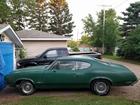
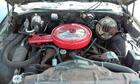
Hey mew here. I have a 1978 cutlass with a 350 and id like know what year the engine is. The block has the numbers 395558 2 above the timing chain and the side of the block has 38E163463 and there are also the numbers 149 next to the distributor. And both heads have the number 5 on them. The engine is also gold if that helps in anyway
The engine has been swapped the original was a 350 Diesel.
!!! RESOLVED !!!
Thank you to the ppl who helped
Im kinda confused about what year the engine is, my own research had me beliving its a 1968 350, but id like to know for sure.
Last edited by DjLuggy; Jun 25, 2025 at 08:01 AM.
Reason: Lacking info
I'm not an expert, but I believe this is the VIN derivative that plays a part in the "numbers matching" sense.
3 = Oldsmobile
8 = model year 1978 (or 68, I suppose, but since the engine is in a '78 Cutlass, why do you think it could be a '68 engine and not a '78?)
E = plant where engine/car assembled (not sure)
163463 = repeat of the last six digits of the car's VIN.
E in the VIN indicates Linden, New Jersey assembly plant.
What is the car's VIN? If the last six digits of the VIN match the last six above, then that proves that the engine is original to the car and is a '78 engine.
Last edited by jaunty75; Jun 25, 2025 at 07:05 AM.
I'm not an expert, but I believe this is the VIN derivative that plays a part in the "numbers matching" sense.
3 = Oldsmobile
8 = model year 1978 (or 68, I suppose, but since the engine is in a '78 Cutlass, why do you think it could be a '68 engine and not a '78?)
E = plant where engine/car assembled (not sure)
163463 = repeat of the last six digits of the car's VIN.
E in the VIN indicates Linden, New Jersey assembly plant.
What is the car's VIN? If the last six digits of the VIN match the last six above, then that proves that the engine is original to the car and is a '78 engine.
The engine has been swapped, the original was a 350 Diesel, and the engine in the car rn is gold and has no displacement markings on it and the VIN markings don't match
The engine has been swapped, the original was a 350 Diesel, and the engine in the car rn is gold and has no displacement markings on it and the VIN markings don't match
You could have said upfront that the engine has been swapped and saved us all some time.
Obviously the VIN derivative won't match the car's VIN, and that's irrelevant now.
I don't know how you can tell if it's a '68 or a '78, but I'm guessing others will know. I don't think there's any markings on the engine that indicate its displacement.
You could have said upfront that the engine has been swapped and saved us all some time.
Obviously the VIN derivative won't match the car's VIN, and that's irrelevant now.
I don't know how you can tell if it's a '68 or a '78, but I'm guessing others will know. I don't think there's any markings on the engine that indicate its displacement.
The engine is a 1968. The 1968-76 Olds 350 blocks were casting number 399958 2 as shown on the OP's motor. The 1977-80 350 blocks were casting number 557752 3B.
TYSM This made my day. The guy I bought the car from said it had a -73 engine, but the markers didnt add up. This should also make ordering new parts also easier.
Are there some differences between -68 and -73 engines or are they mostly the same?
TYSM This made my day. The guy I bought the car from said it had a -73 engine, but the markers didnt add up. This should also make ordering new parts also easier.
Are there some differences between -68 and -73 engines or are they mostly the same?
They are mechanically identical. Obviously the heads and cam are different due to emissions requirements. The 1968 heads have smaller exhaust crossover ports at the intake flange, thus the different P/N for the intake gasket between the two.
They are mechanically identical. Obviously the heads and cam are different due to emissions requirements. The 1968 heads have smaller exhaust crossover ports at the intake flange, thus the different P/N for the intake gasket between the two.
You are in luck, if stock you have at minimum around a 9 to 1 compression Olds 350. Is it a 2 or 4 barrel? If it has a factory iron non EGR 4 barrel intake, it probably is the even higher compression variety. It makes high performance upgrades much easier. A lot can happen in 50 years, including a total rebuild but if stock and running good, a good starting point.
You are in luck, if stock you have at minimum around a 9 to 1 compression Olds 350. Is it a 2 or 4 barrel? If it has a factory iron non EGR 4 barrel intake, it probably is the even higher compression variety. It makes high performance upgrades much easier. A lot can happen in 50 years, including a total rebuild but if stock and running good, a good starting point.
The way it was when I bought it, it was a 2 barrel but the guy who I bought it from said he had it a 4 barrel at some point, but idk if he was talking ****.
But currently I have a Edelbrok performer 2711 (if I remember correctly) aluminium intake and a Q-jet from a -75 olds
The way it was when I bought it, it was a 2 barrel but the guy who I bought it from said he had it a 4 barrel at some point, but idk if he was talking ****.
But currently I have a Edelbrok performer 2711 (if I remember correctly) aluminium intake and a Q-jet from a -75 olds
IF the engine was a factory 2bbl motor, it was 9.0:1. If it was a factory 4bbl motor, it was 10.25:1. Since the motor has been messed with multiple times in the last 55 years, the only way to tell is to pull a spark plug and use a borescope to see what the dish on the piston looks like. If the car runs on regular, it's probably the low compression version.
IF the engine was a factory 2bbl motor, it was 9.0:1. If it was a factory 4bbl motor, it was 10.25:1. Since the motor has been messed with multiple times in the last 55 years, the only way to tell is to pull a spark plug and use a borescope to see what the dish on the piston looks like. If the car runs on regular, it's probably the low compression version.
Id have to use a borescope, since I don't know what kinds of gas regular and premium or whatever they are, since im not from US, I usually run Shell or ST1 98E5 or Shell V-power. Haven tried it on any other lower octane gases. The lowest I can get is 95E10
Id have to use a borescope, since I don't know what kinds of gas regular and premium or whatever they are, since im not from US, I usually run Shell or ST1 98E5 or Shell V-power. Haven tried it on any other lower octane gases. The lowest I can get is 95E10
Unfortunately European octane ratings do not match up with US ratings.
What is your carb #? Might want to make sure it is not one of the ones with the funky single APT rod/jet.
They can be made to work, but if you have access to any others, a late model '76-'80 pre electric unit would be a better start point.
Nice, we have the same engine, save for possible compression rating difference.
Originally Posted by olds 307 and 403
You are in luck, if stock you have at minimum around a 9 to 1 compression
Yes sir.
DjLuggy, I figure you are aware seeing as you mentioned finding this out made your day. But will post anyway, 1968-1970 350 most desirable, followed by 1971-1976 followed by 1977-1980. So when it comes to a non original engine you really scored.
Originally Posted by DjLuggy
Id have to use a borescope, since I don't know what kinds of gas regular and premium or whatever they are, since im not from US, I usually run Shell or ST1 98E5 or Shell V-power. Haven tried it on any other lower octane gases. The lowest I can get is 95E10
Here is a comparison of RON, Finland's rating system vs AKI, U.S.A.s rating system.
1970
Regular 94 RON . . . . . . . . . . . . . . .90 AKI
The best readily available in the states is 93 AKI or 97 RON. Which is what I use in my high compression 350, plus an octane booster on every fill up. (Which she needs because she is factory timed, and can ping without it.)
95 RON which you said is the lowest grade available in Finland is equivalent to 91 octane in U.S. 91 AKI is the lowest grade I could get away with on my low compression 330. In addition you cannot hurt our engines by over octaning them from readily available grade. It will simply use what it needs to. But you can definitely hurt them by under octaning them for periods of time. I used 94 octane which was available back when I had the Olds 330 religiously just to be safe. Because she hated 87 and 89 (which caused run on after I turned off and removed key from ignition) so I figured why not just go for the best. Because I did not want to hurt the engine by being cheap on gas. And when an engine has run on its horrendously crude rough and concerning. Every second that the engine/car is bucking is nerve racking when you love your car.
What is your carb #? Might want to make sure it is not one of the ones with the funky single APT rod/jet.
They can be made to work, but if you have access to any others, a late model '76-'80 pre electric unit would be a better start point.
The numbers I found on the carb are "17056256" and "2935" and has the letters "AHF"
17056256 does have the single rod/jet aux. power piston assembly. (Note #54 and #54a)
Just realized you are in Finland and assume Quadrajets are probably not common.
If that is your only option, I would get in touch with Cliff at Cliffshighperformance.com.
He has some of the best parts available and ships overseas often. He also wrote one of the best books on Quadrajets. Worth the price to help you walk through everything Quadrajet.
He would also be able to help you make this carb work well.