When you click on links to various merchants on this site and make a purchase, this can result in this site earning a commission. Affiliate programs and affiliations include, but are not limited to, the eBay Partner Network.
Rocket 350 tuning for relatively optimal performance
Hi All,
this site has been an incredible resource for me throughout this journey.
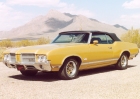
I inherited a single owner 1970 cutlass with a 350 2bbl. Car has less than 30k miles and runs good.
so far, I rebuilt the carb, new fuel pump, replaced suspension, changed fluids, plugs, and had a dual exhaust put in that comes off the stock manifold.
Next up is carb tuning, along with timing. I did my best to dial in the carb after the rebuild based on sound and it runs well but I know it could be better.
I bought a vacuum gauge and an RPM gauge to help with this and will follow the idle mixture instructions. I’ve never actually done my own timing before and it’s somethin I want to learn.
Should I do the timing before doing idle mixture adjustment? Is there any particular order I should do these things? anyone have a link to very detailed set of instructions for timing/idle mix and carb tuning?
the nature of my questions obviously reveals that I’m a novice. But, learning as I go has been super fun and any help y’all could share with me would be great!
Should I do the timing before doing idle mixture adjustment? Is there any particular order I should do these things? anyone have a link to very detailed set of instructions for timing/idle mix and carb tuning?
Good you have a vacuum gauge - you should also have the Chassis Service Manual (CSM) for your car.
You always perform a tune-up in the following order - always:
(1) Establish/Set dwell;
(2) Establish/Set timing (remove advance timing canister vacuum hose to/from distributor and cap/plug both the line and the carburetor port, then adjust timing). When finished adjusting/setting timing, reconnect advance timing canister;
(3) Adjust A/F mixture screws one at a time to achieve the highest available/achievable vacuum. The vacuum needle should be "steady" and read between 15"Hg - 22"Hg. Most generally somewhere about 17"Hg with an OEM cam.
This (below) timing applies to all 350 cid engines. It is contained in the CSM. Do you have the CSM? Do you have a tune-up label located on the engine radiator fan shroud? The tune-up label will state the appropriate tune-up parameters for your engine. When you rotate the distributor to set/establish timing, you'll unlock the distributor hold-down plate & rotate the distributor to advance or retard the timing. As soon as the correct timing is achieved, lock down the hold-down plate.
Before you start make sure that all of the ignition components are in good shape, points, condenser, cap, rotor, wires and spark plugs. I would just use the stock settings for your engine.
This (below) is what a tune-up label looks like (Note: 1971 350 cid 4 bbl).
The document "attachment" provides a link to show you how to use a vacuum gauge and how to perform a proper tune-up (I think I put this document together prior to the last ice age).
I’ll add that you need to be able to see the scribe line on the balancer and the timing tab. You don’t necessarily need to see the numbers on the tab; you can just use the notches.
I stole this picture from another thread. You can see the tab has been wiped clean of oily grime so the numbers are visible.
Adding to what Kenneth mentioned. Using a flashlight & your fingers (fingernails) circle the balancer w/ your fingers locating the scribe line - it's often recessed just below the surface. Once you've cleaned residue from the scribe line, it's best to use some white nail polish/paint and fill that scribe with white nail polish/paint. It shows up really well when using a timing light & it will last a long time when you need to find it for your next tune-up.
Good you have a vacuum gauge - you should also have the Chassis Service Manual (CSM) for your car.
You always perform a tune-up in the following order - always:
(1) Establish/Set dwell;
(2) Establish/Set timing (remove advance timing canister vacuum hose to/from distributor and cap/plug both the line and the carburetor port, then adjust timing). When finished adjusting/setting timing, reconnect advance timing canister;
(3) Adjust A/F mixture screws one at a time to achieve the highest available/achievable vacuum. The vacuum needle should be "steady" and read between 15"Hg - 22"Hg. Most generally somewhere about 17"Hg with an OEM cam.
great thanks so much.
Do I need to remove or plug any vacuum lines for the dwell? If not, dwell read 29 degrees.
timing - i followed instructions and found the timing to be 8 degrees at 575rpm, which is what it should be according to the chillin manual. But I’m reading elsewhere that timing should be measured at 850rpm?
I hooked up the vacuum gauge and it was vibrating at 14. Of course, when I tried to push the throttle, I knocked the gauge into the fan and broke it lmao.
so, need to order a new vacuum gauge. I am also going to buy new vacuum hoses - these are cracking.
when I get my new gauge and hoses, I’m going to go through the process again entirely. But so far, timing and dwell seem to be good. Vacuum is low (14). I have been looking for a vacuum diagnostics guide to see what may be the cause and it mentioned either a vacuum leak or valve timing 🤦.
also to note - when I push the throttle quickly off of idle it bogs down a bit. It even stalled once when I tried it in the driveway. It also smells rich. I’m assuming this could likely be a messed up AF mixture but hopefully that is solved when I get a new vacuum gauge
Last edited by jclifford442; Feb 1, 2024 at 11:43 AM.
Perform the test in upper LH corner of this diagram - which you should be able to pass. Then, read each of the other diagnostics in the diagram. Leave advance timing canister hooked up while setting dwell. The most important factor is to disconnect the advance canister while setting timing then reconnect after setting timing & prior to setting A/F mixture screws. 14"Hg is too low unless you by chance have a gnarly high performance cam.
Once you get the carb adjusted closely, if the hesitation continues try adjusting/advancing the timing 2 degrees to 10 degrees BTDC and readjust the carb.
Listen closely for pinging/detonation, if you hear any retard the timing back to 8 degrees.
Perform the test in upper LH corner of this diagram - which you should be able to pass. Then, read each of the other diagnostics in the diagram. Leave advance timing canister hooked up while setting dwell. The most important factor is to disconnect the advance canister while setting timing then reconnect after setting timing & prior to setting A/F mixture screws. 14"Hg is too low unless you by chance have a gnarly high performance cam.
thanks for the chart. It’s super helpful. I printed it and took it out with me to work on the car today. I made an interesting observation.
1- rechecked the timing with advance hose plugged and it was 8 degrees still.
2- replaced the old vacuum hoses
3- reconnected the advance and spent about an hour adjusting the AF. The best I could get was 14 hnz. Turned them all the way in to gently seated, out 1.5 turns and then adjust both slowly to achieve max rpm and pressure.
4- plugged advance hose, hooked timing light back up and slightly loosened the distributor holder. I turned the dist slowly until timing read about 14 degrees and the vacuum pressure increased to 18hnz or so. Car sounded great.
I went a little further and the engine started wobbling so backed it off into the sweet spot.
Took a test drive and there is a noticeable pep in her step now. What could this be? Has the timing chain slipped?
The timing chain has stretched, they all do and the gears wear. This is a very low mileage car so that is less of a factor. Also the timing marks may be off due to a slipped harmonic balancer.
Listen carefully for pinging/detonation with the advanced timing it will damage pistons if it pings. Although not required in that engine, premium fuel will reduce the chance of pinging/detonation.
Before you start make sure that all of the ignition components are in good shape, points, condenser, cap, rotor, wires and spark plugs. I would just use the stock settings for your engine.
I replaced the plugs and gapped them to spec a few months ago. I could pull them out and see how they’re doing now.
I honestly wouldn’t be able to tell if the cap, rotor, condenser, points are in good shape by looking at them. Is that something you could help me determine if I posted some photos?
Originally Posted by Vintage Chief
This (below) is what a tune-up label looks like (Note: 1971 350 cid 4 bbl).
The document "attachment" provides a link to show you how to use a vacuum gauge and how to perform a proper tune-up (I think I put this document together prior to the last ice age).
thanks for the document! Very detailed and helpful. In the doc, it explains which vacuum lines and ports to disconnect, plug etc. and I realized that when I did the timing, I didn’t plug the Pcv hose. It’s something I’ll remember to do on my 3rd tune up attempt this afternoon.
As sugarbear suggests, timing chains stretch and gears wear. Since timing chain aligns camshaft-to-crankshaft & engine tune-up timing is performed off harmonic balancer (scribe) located on crankshaft, a small amount of timing chain misalignment can easily translate from 1° - 5° out of alignment; albeit, the need to bump the timing to compensate. A 10° - 14° BTDC reading is w/in reason.
It might take you a couple tune-ups to dial it all in. Best case scenario is a new distributor cap, new distributor rotor, new condenser, new contact points & new spark plugs (as Eric suggested). These are considered routine/normal maintenance items anytime a tune-up is performed.
Spark plugs can demonstrate overall health: Sandstone coloration = spot-on; Dark/Charcoal/Sooty (wet) = burning rich; White/Dry = Lean. Always best to error on the side of Rich vs. Lean.
Old cracked vacuum lines can really play havoc - good you replaced them. After your next tune-up attempt you should have the engine pretty well dialed in. Dwell>Timing>A/F mixture - always in that sequence. Vacuum gauge needle should be rock steady. Good Luck.
The most obvious symptom of timing chain issues is a timing mark that jumps around at a steady RPM. If the timing mark is rock solid, your timing chain (especially at 30K miles) is probably OK (but you'll want to keep an eye on this because the factory used nylon teeth on the cam sprocket which is known to gradually disintegrate at elevated miles, eventually leading to a jumped tooth).
As cutlassefi mentioned, you can't beat a wideband O2 meter to fine-tune your A/F mixture (and would compensate for changes in fuel formulations over 54 years). However, that tool wasn't readily available when your car was built and "good enough" A/F mixture can be achieved without one. Besides, short of re-jetting the carb, the only A/F mixture you have control over is at idle speed. The method I always used successfully on my '68-'70 Oldsmobiles was:
1) Make sure points/condenser/plugs/wires/rotor/cap are all in good shape.
2) Make sure the vacuum advance modulator was not leaking air and was not stuck.
3) Make sure no vacuum leaks.
4) Make sure advance weights / springs on distributor are clean, lubed and functional
5) Set dwell per Mfr recommendations
6) Set timing per Mfr recommendations (sometimes have to adjust this before dwell just to get the engine running depending on what you did just prior to this step)
7) Set idle mixture screws for max vacuum
8) Test drive it, listen for pinging on hard acceleration
8-a) If it pings, adjust timing 2-deg retarded
8-b) If it is sluggish and doesn't ping, adjust timing 2-deg more advance
9) Repeat step 8) as required (I always advance the timing until it pings, then back off until it doesn't)
If your carb is out of whack and not providing decent nominal A/F ratio when driving and doing strange things like creating smoke (running rich) or mis-firing (running lean), look into a carb rebuild or adjusting the jets. This would be an unusual situation though, I have yet to encounter a need to re-jet a factory carb due to being unable to achieve decent performance without pinging.
Last edited by JohnnyBs68S; Feb 5, 2024 at 02:25 PM.














 ,,,,,
,,,,,


