


vacuum advance


Thread Starter
Registered User
Joined: Sep 2009
Posts: 64
vacuum advance
i have a question, kind of new to this. I had a mechanic tune up my distributor and rebuilt my q-jet. i know he changed the springs that go inside the distributor . he said it was for better rpm in lower speeds. distributor also has a pertronix 3. i noticed that hose from the distributor advance that goes to the carburator he put a screw on hose to plug. is this normal ? he said he has 24 years experiance.. but you know how that goes. i thought you needed the vacuum advance

Connoisseur d'Junque
Joined: Sep 2010
Posts: 21,183
From: The Hudson Valley
Is this a street motor?
If it is, then he's an idiot.
You need vacuum advance in a car that spends most of its life at part-throttle and midrange RPMs. It makes up for the longer burn times in partially-charged cylinders.
You need to figure out what was done and then figure out whether it was done right.
Tell us more about your motor - the usual stuff: displacement, compression, cam specs, valves, porting, etc.
There are people here who are very knowledgeable about building Olds engines and will be able to offer good starting points for your timing.
If your motor is stock, then just compare with the specs in the Chassis Service Manual.
You will need a timing light, a tachometer, a vacuum gauge, and a dwell meter, and probably a hand vacuum pump (easier then sucking on the hose).
There are numerous threads both here and in other forums about properly setting your timing - you should check them out and then ask some questions here.
I never let anyone work on my car.
- Eric
If it is, then he's an idiot.
You need vacuum advance in a car that spends most of its life at part-throttle and midrange RPMs. It makes up for the longer burn times in partially-charged cylinders.
You need to figure out what was done and then figure out whether it was done right.
Tell us more about your motor - the usual stuff: displacement, compression, cam specs, valves, porting, etc.
There are people here who are very knowledgeable about building Olds engines and will be able to offer good starting points for your timing.
If your motor is stock, then just compare with the specs in the Chassis Service Manual.
You will need a timing light, a tachometer, a vacuum gauge, and a dwell meter, and probably a hand vacuum pump (easier then sucking on the hose).
There are numerous threads both here and in other forums about properly setting your timing - you should check them out and then ask some questions here.
I never let anyone work on my car.
- Eric

Old(s) Fart
Joined: Mar 2007
Posts: 50,768
From: Northern VA
X2. Vacuum advance provides better fuel economy and low speed driveability. Converting to fully mechanical advance is not a good idea for street-driven cars. Of course, now you need to figure out exactly what was done to the mechanical advance since too much mechanical advance too early will cause part throttle detonation when the vacuum is reconnected.
Connoisseur d'Junque
Joined: Sep 2010
Posts: 21,183
From: The Hudson Valley
First you need to know what the advance is supposed to be.
You can get this information from your Chassis Service Manual (I believe...), and also from old Motor manuals (they've got a lot of great information like this).
Then you run your engine (the vacuum is already disconnected) and map RPM vs degrees advanced from your initial setting. This is easier with an adjustable timing light or a timing tape on the balancer. You compare your advance with what is called for, and use one of those custom distributor advance kits to readjust it to where you want it.
Once you've got it set where it was designed to be, you can play with it and find out whether there are any changes that make it work better, if you want to.
From the way you describe it (no vacuum, heavy springs), it sounds as though he set it up the way you might for racing, where throttle position is usually wide open or close to it, so vacuum advance isn't in play, and he set the centrifugal advance to act through a wider RPM band, which may make things better or worse for you (I'm no expert in this).
Good luck, and if you want any specific advice, you'll need to post more specific information about your engine so the people who ARE experts here can make informed suggestions.
- Eric
You can get this information from your Chassis Service Manual (I believe...), and also from old Motor manuals (they've got a lot of great information like this).
Then you run your engine (the vacuum is already disconnected) and map RPM vs degrees advanced from your initial setting. This is easier with an adjustable timing light or a timing tape on the balancer. You compare your advance with what is called for, and use one of those custom distributor advance kits to readjust it to where you want it.
Once you've got it set where it was designed to be, you can play with it and find out whether there are any changes that make it work better, if you want to.
From the way you describe it (no vacuum, heavy springs), it sounds as though he set it up the way you might for racing, where throttle position is usually wide open or close to it, so vacuum advance isn't in play, and he set the centrifugal advance to act through a wider RPM band, which may make things better or worse for you (I'm no expert in this).
Good luck, and if you want any specific advice, you'll need to post more specific information about your engine so the people who ARE experts here can make informed suggestions.
- Eric
Thread Starter
Registered User
Joined: Sep 2009
Posts: 64
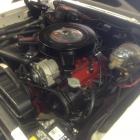
I think the reason he didnt connect the vacuum advance is because the canister is bad..instead of buying a new canister .Im thinking of getting an hei distributor from a junk yard.they basically go for the same price. what years are the ones that would work for my car? 1972 cutlass supreme v8 350

Registered User
Joined: Oct 2010
Posts: 1,275
From: Boise ID
It sounds like you need to cut your loses and take it to a different shop. The first shop obviously just wanted your car out of his hair, not necessarily repaired properly. The vacuum advance does have to be hooked up.
Connoisseur d'Junque
Joined: Sep 2010
Posts: 21,183
From: The Hudson Valley
- Eric
Thread Starter
Registered User
Joined: Sep 2009
Posts: 64
has anybody heard of these distributors. they said their hei. what do you all think ? http://www.dependonauto.com/distributors.aspx

Thread
Thread Starter
Forum
Replies
Last Post


