When you click on links to various merchants on this site and make a purchase, this can result in this site earning a commission. Affiliate programs and affiliations include, but are not limited to, the eBay Partner Network.
Im in the progress of putting together my new-used 355 sbo and just wanted to give some inspirations of my project
I purchased a finished engine which the previous owner built for his vista cruiser. Its an Olds 350 which has speed-pro 5.8 cc dish pistons, 4.087 bore, (calculated 9.1-9.3:1 compression ratio) with stock stroke. Rods an pistons have been balanced.
A Melling high volume oil pump is installed too.
nearly all engine bolts and rocker arm studs are from ARP.
the heads are 7a heads with new melling valves, lunati 73126 (364 lbs/in rate) valve springs, comp 1.6 ratio roller rockers with comp poly locks and comp umbrella valve seals.
I swapped out the comp 42-227-4 (252/252 0.433 lift in and exh) which was installed by the previous owner to a Lunati 272/276 (0.484 in and 0.484 exh). I degreed the cam and had to install it 2° retarded with a cloyes 9 keyway timing set to get close to the specs on the cam card (intake lobe centerline is now at 103°, cam card says 104°, i think this is close enough).
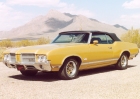
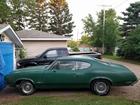
I will run the engine in my 1971 olds cutlass S with edelbrock performer olds intake, quadrajet carb, headers and MSD ready to run distributor. Transmission will be aTh350 trans with transgo 1-2 shift kit and hughes BPO20 converter.
Rear end is a 10 bolt with eaton truetrac and 3.23 gears.
I hope this will make the car a nice fun driver for street use
I swapped out the comp 42-227-4 (252/252 0.433 lift in and exh) which was installed by the previous owner to a Lunati 272/276 (0.484 in and 0.484 exh). I degreed the cam and had to install it 2° retarded with a cloyes 9 keyway timing set to get close to the specs on the cam card (intake lobe centerline is now at 103°, cam card says 104°, i think this is close enough).
I will run the engine in my 1971 olds cutlass S with edelbrock performer olds intake, quadrajet carb, headers and MSD ready to run distributor. Transmission will be aTh350 trans with transgo 1-2 shift kit and hughes BPO20 converter.
Rear end is a 10 bolt with eaton truetrac and 3.23 gears.
That is very similar to my car. I have the UltraDyne version of that camshaft on a 110º LSA, installed at 106º. It sounds as if you advanced the cam, not retarded it.
My car also has a Performer RPM intake and a BPO25 converter.
That is very similar to my car. I have the UltraDyne version of that camshaft on a 110º LSA, installed at 106º. It sounds as if you advanced the cam, not retarded it.
My car also has a Performer RPM intake and a BPO25 converter.
Ok this is strange... when i installed the cam dot-to-dot straight up, the intake lobe centerline was at 101° and now, as you can see in one of the pictures above, i intalled the gear set on "R2" and then i had 103° centerline. Maybe my thinking is wrong ?
My thinking was when i look at the drawing on the cam card:
If the Intake lobe centerline should be at 104° BEFORE TDC, and it is at 101° BEFORE TDC, i have to retard it to get closer to 104°, since 101° is closer to TDC than 104°.
Advance or retarded depends upon your reference point. Mine reference point was 106º, which was the recommended setting for my cam. It's odd to me that your cam card says 104º, but if that's what it says, then that's where you should install it.
Sorry if I confused you. Most of the time advanced or retarded is with respect to where the manufacturer recommends setting it. If they recommend 110º and you install it at 108º, it is 2º advanced; if you install it at 112º, it is 2º retarded.
Advance or retarded depends upon your reference point. Mine reference point was 106º, which was the recommended setting for my cam. It's odd to me that your cam card says 104º, but if that's what it says, then that's where you should install it.
Sorry if I confused you. Most of the time advanced or retarded is with respect to where the manufacturer recommends setting it. If they recommend 110º and you install it at 108º, it is 2º advanced; if you install it at 112º, it is 2º retarded.
^^^^^x2, correct.
And ditch the regular Performer and get an RPM.
Advance or retarded depends upon your reference point. Mine reference point was 106º, which was the recommended setting for my cam. It's odd to me that your cam card says 104º, but if that's what it says, then that's where you should install it.
Sorry if I confused you. Most of the time advanced or retarded is with respect to where the manufacturer recommends setting it. If they recommend 110º and you install it at 108º, it is 2º advanced; if you install it at 112º, it is 2º retarded.
Ok no problem now i got it 👍
my cam card says 110° lobe separation. 104° centerline. Theres written: "the above (104°) centerline will make this cam 6° advanced.
it has an advanced ground from factory (which i think its not bad for a street engine).
i just wanted to get the cam in the engine just as best as the cam card says it should be.
So my thinking was right when at dot-to-dot my centerline was at 101°, i installed it 2° retarded to come closer to the 104° ? 🤔
^^^^^x2, correct.
And ditch the regular Performer and get an RPM.
Ok, thanks for this information, i always liked the performer, because it looks quite the same and has the same mounting points and threads like the stock 4bbl iron intake
But if Ill find an rpm somewhen i will give it a try.
So my thinking was right when at dot-to-dot my centerline was at 101°, i installed it 2° retarded to come closer to the 104° ? 🤔
Don't think about dot-to-dot, just focus on getting it at the recommended setting. It doesn't matter if you have to advance or retard from your starting point to get there as long as you get there. The final setting is what is called advanced or retarded.
And the RPM has the same mounting points and threads as both the Performer and the stock 4bbl iron intake.
Don't think about dot-to-dot, just focus on getting it at the recommended setting. It doesn't matter if you have to advance or retard from your starting point to get there as long as you get there. The final setting is what is called advanced or retarded.
And the RPM has the same mounting points and threads as both the Performer and the stock 4bbl iron intake.
perfect, thats exactly what i did.
yes, i took a look at some pictures today and recognized that too.
I have another short question, just to get sure if ive done this right:
i have comp 1.6 ratio roller rocker arms with poly locks and after i installed my cam and the lifters, i adjusted the rockers with the method of the "sister cylinder" and the firing order:
Rock: 1843 6572
Adjust: 6572 1843
and this method worked really fast because its not necessary to rotate the engine several times.
when i rocked cyl. #1 i adjusted #6 with bringing the rockers to 0 lash and added 3/4 turns on the poly lock preload, so that the plunger in the lifter is not touching the "c clip". I did this to all cylinders like in the list above.
im just wondering if 3/4 of a turn for the lifter preload is OK? Or too much? Or too less?
They usually suggest 1/2 turn past 0 lash. You can try the 3/4, but remember too much is not a good thing, valves can hang open as lifters bottom out. At least you are doing it the right way with the intake off, I will never adjust valves again with the intake on. I would rotate thr engine a couple of turns and check for any excessive play in the rockers or push rods and adjust as necessary.
They usually suggest 1/2 turn past 0 lash. You can try the 3/4, but remember too much is not a good thing, valves can hang open as lifters bottom out. At least you are doing it the right way with the intake off, I will never adjust valves again with the intake on. I would rotate thr engine a couple of turns and check for any excessive play in the rockers or push rods and adjust as necessary.
Ok, thanks a lot! So i will do it again with 1/2 turn. Is it really true that, when the preload was given, the plunger should be not touching the c clip?
Yes, im sure its a lot easier with the intake off to whatch what the lifters are doing
Less preload usually yields a smoother idle and you gain a little RPM.. I usually run hyd. Lifters at 1/8 to 1/4. If it has the correct lifters I have ran them at zero.
Less preload usually yields a smoother idle and you gain a little RPM.. I usually run hyd. Lifters at 1/8 to 1/4. If it has the correct lifters I have ran them at zero.
Ok, good to know!
I have the Lunati 71951 micro-trol lifters that you recommended. Now i gave them 1/2 turn over. Lunati instructions are saying 1/2 turn too.
So, thw next few days i will pull my old engine out of the car and put the new in.
for cam break in i used Lucas Oil assembly lube on the camshaft and the bottom of the lifters. i will use a break in additive, hold the engine for about 20 minutes on 2000-2500 rpm and change oil + filter afterwards. Then run the car without heavy acceleration/load for about 500 miles and then im going to change the oil again.
Is this theoretically the right precedure or do you guys have any other opinions about it?
Thanks to all for the great info and help i get here!
Sounds good, don't skimp on the cam break in time. Put a big fan in front if necessary to keep it cool. Go up and down on the throttle in low gear to seat the rings.
You can run 0 preload with the micro trol lifters. They have the c clip at the bottom vs the wimpy spring clip. I would set then to 1/4 turn. More preload kills vaccum and it will idle a little rougher. Atleast for me that was the case. But at any rate 1/2 is totally fine.
Sounds good, don't skimp on the cam break in time. Put a big fan in front if necessary to keep it cool. Go up and down on the throttle in low gear to seat the rings.
Ok, i will !
And, for sure, first i will prime the oiling system with a drill to make sure that every lifter and rocker arm gets enough lubrication.
You can run 0 preload with the micro trol lifters. They have the c clip at the bottom vs the wimpy spring clip. I would set then to 1/4 turn. More preload kills vaccum and it will idle a little rougher. Atleast for me that was the case. But at any rate 1/2 is totally fine.
Yeah, im quite happy that i bought them! This C-clip looks a lot better than these weak wire-clips. Thanks again for the recommendation!
and thanks for the information, im learning more and more in this forum!
Yeah, im quite happy that i bought them! This C-clip looks a lot better than these weak wire-clips. Thanks again for the recommendation!
and thanks for the information, im learning more and more in this forum!
Thats a 50 year old trick. That "C clip" is actually called and internal snap ring. I don't think I would run "0" lash, maybe .010" preload.
Thats a 50 year old trick. That "C clip" is actually called and internal snap ring. I don't think I would run "0" lash, maybe .010" preload.
Ok, haha, i thought in english its "C-Clip", in german these things are called "Sicherungsring", which actually means "securing-ring" .
So, my Rocker-studs have an 3/8-24 thread, which means that 1 turn is 0.041. So i did 1/2 turn, that means i now have 0.020 preload. I think this is ok.
Ok, haha, i thought in english its "C-Clip", in german these things are called "Sicherungsring", which actually means "securing-ring" .
So, my Rocker-studs have an 3/8-24 thread, which means that 1 turn is 0.041. So i did 1/2 turn, that means i now have 0.020 preload. I think this is ok.
Here is a link to McMaster-Carr. They call them "Retaining rings". The nice thing about these internal "retaining rings" is they make contact most of the way around the groove and fit deeper into the valve lifter groove. https://www.mcmaster.com/retaining-rings
Finally, my the engine is back in the car. And most parts are reassembled. Did a stock-look aux trans oil cooler lining too.
Filled up oil with ZDDP additive for breaking in new camshaft. Turned the pump with a drill, all rockers are getting oil 👍
Water and trans fluid is already filled too.
I hope i can do the cam break in the next days, im just still curious if i can break the cam in with the valve springs im going to use (Lunati 73126 single springs with damper, 364 lbs rate, open @ 1.250 303 lbs.)
Here are some pictures, i hope everything will work well. I cant wait for summer to drive the car.
Make sure you burp all the air out of the cooling system before you start it. If you have an air pocket when the t stat opens at the 2000 break in rpm. It is going to boil over. An easy way to do this is to fill the cooling system with the heater hose disconnected from the intake, once you see coolant start to come out. Reconnect the hose top off the coolant level. This will keep you from having to shut it down in the middle of the break-in.
Make sure you burp all the air out of the cooling system before you start it. If you have an air pocket when the t stat opens at the 2000 break in rpm. It is going to boil over. An easy way to do this is to fill the cooling system with the heater hose disconnected from the intake, once you see coolant start to come out. Reconnect the hose top off the coolant level. This will keep you from having to shut it down in the middle of the break-in.
Thanks for that, i will try to get the air out as best as possible!
The cam break in went well! I already changed oil and filter and filled the engine with fresh oil. So now the car is ready to do some miles.
the carb i will use is a 1971 olds Q-jet and has the number 7041250 NC. The carb was perfect for my stock engine, but i guess with the new engine i have to rejet it. I want to keep the qjet, since i rebuilt it and installed new throttle bushings 2 years ago and i really like these carbs.
I dont know exactly which primary jets and rods are from factory in this carb, but i read that in the year 71 and above, theyre terribly lean in part throttle.
Maybe someone know which jets/rods are from factory in a 7041250 qjet and maybe can tell me which jets and rods would be a good starting point for a mild street setup like mine?
Hello everyone! The cam break in went well! I already changed oil and filter and filled the engine with fresh oil. So now the car is ready to do some miles.
the carb i will use is a 1971 olds Q-jet and has the number 7041250 NC. The carb was perfect for my stock engine, but i guess with the new engine i have to rejet it. I want to keep the qjet, since i rebuilt it and installed new throttle bushings 2 years ago and i really like these carbs.
I dont know exactly which primary jets and rods are from factory in this carb, but i read that in the year 71 and above, theyre terribly lean in part throttle.
Maybe someone know which jets/rods are from factory in a 7041250 qjet and maybe can tell me which jets and rods would be a good starting point for a mild street setup like mine?
Thanks a lot for any informations
First thing would be find out what primary jets and primary metering rods you have.
Second thing would be find out secondary metering rod letters and hanger letter.
Third thing would be to adjust the carburetor idle screws for maximum vacuum.
First thing would be find out what primary jets and primary metering rods you have.
Second thing would be find out secondary metering rod letters and hanger letter.
Third thing would be to adjust the carburetor idle screws for maximum vacuum.
For sure, i will definitely take the carb apart to find out whats inside, when i did the rebuild, i havent written down the jet specs because my engine was bone stock and so i havent cared about this.
im just wondering if anyone has some paper or whatever where the factory jetting/rods/hangers are listed or some self-expieriecend-knowledge which jetting would be a good starting point for tuning. I searched in this forum, but i couldnt find 🤔
Since that my carb is a 1971 (low compression), im sure that its too lean at part throttle.
If no one post back ill try to remember to check my 70 csm. The csm has a good qjet set up section, when i went thru mine i set every setting as reccomended, when i hit the gas the car goes no burps farts or hesistation. I richened up the primarary side but i still have to do more. IIRC the secondary set up is generally closer might require a different hangar but the ruggles book thinks its close.
How did the carb work at idle? You will also want to look at enriching idle mixture as well. Cliff Ruggles book has a ton of info. A wideband tuner will be a good tool to see where your carb is currently at.
For sure, i will definitely take the carb apart to find out whats inside, when i did the rebuild, i havent written down the jet specs because my engine was bone stock and so i havent cared about this.
im just wondering if anyone has some paper or whatever where the factory jetting/rods/hangers are listed or some self-expieriecend-knowledge which jetting would be a good starting point for tuning. I searched in this forum, but i couldnt find 🤔
Since that my carb is a 1971 (low compression), im sure that its too lean at part throttle.
The secondary rod hanger was custom selected for each carb at final assembly to fine tune the calibration based on assembly tolerances. There wasn't one specific one used on all carbs.
The secondary rod hanger was custom selected for each carb at final assembly to fine tune the calibration based on assembly tolerances. There wasn't one specific one used on all carbs.
You have the correct information from Joe P. Now you have to find out what you have.
today i took the car for the first ride on the street.
at WOT it ran good, much difference to my old stock engine, but as i thought, performance off the line and in part throttle isnt really good.
I ordered a calibration kit with different primary jets and rods. I will take the carb apart the next days and take a look whats really inside. Im going to post a few pictures.
today i took the car for the first ride on the street.
at WOT it ran good, much difference to my old stock engine, but as i thought, performance off the line and in part throttle isnt really good.
I ordered a calibration kit with different primary jets and rods. I will take the carb apart the next days and take a look whats really inside. Im going to post a few pictures.
Thanks a lot for the help!
Did you adjust the idle mixture screws for maximum vacuum ? Did you check ignition timing ? What type distributor do you have ? What is your initial ignition timing ?
Did you adjust the idle mixture screws for maximum vacuum ? Did you check ignition timing ? What type distributor do you have ? What is your initial ignition timing ?
yes, today i adjusted the idle mixture screws for the max. Vacuum i could get. My distributor is an MSD ready to run, i already had it ob my stock engine. I have to check ignition timing again, but while break in, we timed it ~ 36° total and ~ 20° initial.
Thats pretty close how i had the timing on my stock engine, i once read that the olds engines like a lot initial. But - i have to check it again.




 .
.