When you click on links to various merchants on this site and make a purchase, this can result in this site earning a commission. Affiliate programs and affiliations include, but are not limited to, the eBay Partner Network.
What were the compression numbers you did? I have seen the factory steel shim gasket rot from nasty coolant and seep coolant in the cylinders. I would pull both heads, the other may be ready to fail and is .025" thinner than a replacement. Be careful leaving that coolant in the cylinders more than a couple of days or corrosion can occur.
Last edited by olds 307 and 403; Jun 1, 2025 at 07:12 AM.
I plan to sort out the garage and then park the car inside so I can pull the heads. In the meantime I’ll have to make sure to start the car at least every other day.
i removed the smog system, this was a Cali car so it had a ton of hoses and the giant air pump.
Be careful starting the car, it can hyda-lock and bend connecting rods etc. IMO, it would be better to thoroughly drain the cooling system at the block drain plugs, remove the spark plugs, crank it over to expel any liquid and then squirt a small out of oil as in a half teaspoon and crank it over again with the plugs out. Lastly reinstall the plugs.
After this you can still start it for a few seconds to move it...few seconds not a full minute.
Last edited by Sugar Bear; Jun 1, 2025 at 03:59 PM.
okay I see, and where does that hose go from the PCV? I have a breather valve installed there, is it necessary to switch over?
Up to you, I have mine setup factory correct. On a 69 350 its opposite yours. My breather is on passenger side valve cover and feeds into the air cleaner housing via a breather vent pipe. And the PCV valve is on my drivers side valve cover and feeds into the carburetor by hose.
Be careful starting the car, it can hyda-lock and bend connecting rods etc. IMO, it would be better to thoroughly drain the cooling system at the block drain plugs, remove the spark plugs, crank it over to expel any liquid and then squirt a small out of oil as in a half teaspoon and crank it over again with the plugs out. Lastly reinstall the plugs.
After this you can still start it for a few seconds to move it...few seconds not a full minute.
I did pull the spark plugs from the two cylinders and cranked it, no liquid came out. Then added the CRC head gasket fixer to the radiator, idled the car for 20 minutes, then drove to Autozone and dropped off the old battery core. Car ran great until I came to any stop, then upon letting off the brake and switching to the gas it would bog and then die. Started right back up and if I didn’t give it the beans it would immediately die when trying to drive off. Didn’t seem to be down on power during the drive however.
Up to you, I have mine setup factory correct. On a 69 350 its opposite yours. My breather is on passenger side valve cover and feeds into the air cleaner housing via a breather vent pipe. And the PCV valve is on my drivers side valve cover and feeds into the carburetor by hose.
Greya info, this will help a lot when I get to the carb. I think for now I’ll leave the breather installed. I do have the factory filter that runs to the air cleaner installed on the driver side.
I did pull the spark plugs from the two cylinders and cranked it, no liquid came out. Then added the CRC head gasket fixer to the radiator, idled the car for 20 minutes, then drove to Autozone and dropped off the old battery core. Car ran great until I came to any stop, then upon letting off the brake and switching to the gas it would bog and then die. Started right back up and if I didn’t give it the beans it would immediately die when trying to drive off. Didn’t seem to be down on power during the drive however.
I think you mentioned a carb replacement so don't confuse the two conditions. That could be the carb and not your coolant leak related troubles.
I think you mentioned a carb replacement so don't confuse the two conditions. That could be the carb and not your coolant leak related troubles.
I ended up not replacing the carb. We figured out some stuff was loose on the 60 year old car, shocker. Tightened it all up and it worked much better. I did buy a fuel filter and O-ring to replace that and hope it helps with the acceleration problem.
Brayden, If it is a GM Rochester carb they don't use O-rings at the carb for the fuel inlet filter nut. They use flat metal gaskets in your ear. Later carbs used a nylon flat gasket that attached to the end of the fuel filter nut.
Get back and let us know/refresh what carb you have, replacing the fuel filter requires specific steps to prevent stripping things.
Brayden, If it is a GM Rochester carb they don't use O-rings at the carb for the fuel inlet filter nut. They use flat metal gaskets in your ear. Later carbs used a nylon flat gasket that attached to the end of the fuel filter nut.
Get back and let us know/refresh what carb you have, replacing the fuel filter requires specific steps to prevent stripping things.
It’s a Rochester 2-bbl. I’m definitely curious to know what I need to do the replacement the right way.
The gasket must be the correct one and may not be available at a big box store.
Spray penetrating oil between the nut on the steel tube/fuel line and the tube itself. Place a 1" wrench on the inlet nut and don't let it move. Place a line/tubing wrench on the tubing nut and strike it in the loosening direction. Sometimes locking pliers are needed. Don't let the tubing turn or the wrench round the corners on the nut. Unthread the tubing nut from the fuel inlet nut and then unthread the fuel inlet nut that holds the filter from the carb and the gasket. There should be a spring. Replace the filter but be super cautious not to cross thread the inlet nut into the carb and don't over tighten it. Put two drops of oil on the inlet filter nut threads. Slide the nut back on the tube a little and put a small amount of anti-seize on the tube and then slide the tubing nut back up and thread it into the filter nut. Tighten the assembly by tightening the filter nut first and then hold its position while tightening the tubing nut into it, check for leaks.
It partially closes to help a cold motor on start up, to reach temperature quicker. Make sure it isn't seized and fully opens. Not sure why only certain Oldsmobile had them, many of our Northern cars didn't use them.
It partially closes to help a cold motor on start up, to reach temperature quicker. Make sure it isn't seized and fully opens. Not sure why only certain Oldsmobile had them, many of our Northern cars didn't use them.
I wiggled it when I was under the car, it moves smoothly. Wasn’t hooked up to anything and I’d never seen anything similar so I figured I’d ask what it was.
That's a heat riser and looks to be in very good condition. It uses a weight and a spring to open/close with engine temp. Most have seized and then were eliminated.
That's a heat riser and looks to be in very good condition. It uses a weight and a spring to open/close with engine temp. Most have seized and then were eliminated.
Jeff - Further searching I found many others - rusted closed, removed, etc. I thought it might be called a heat riser, but wasn't sure of the nomenclature.
The gasket must be the correct one and may not be available at a big box store.
Spray penetrating oil between the nut on the steel tube/fuel line and the tube itself. Place a 1" wrench on the inlet nut and don't let it move. Place a line/tubing wrench on the tubing nut and strike it in the loosening direction. Sometimes locking pliers are needed. Don't let the tubing turn or the wrench round the corners on the nut. Unthread the tubing nut from the fuel inlet nut and then unthread the fuel inlet nut that holds the filter from the carb and the gasket. There should be a spring. Replace the filter but be super cautious not to cross thread the inlet nut into the carb and don't over tighten it. Put two drops of oil on the inlet filter nut threads. Slide the nut back on the tube a little and put a small amount of anti-seize on the tube and then slide the tubing nut back up and thread it into the filter nut. Tighten the assembly by tightening the filter nut first and then hold its position while tightening the tubing nut into it, check for leaks.
Yeah..... So that did not work so well. The nut on the hardline ended up rounding off. I have a new fuel pump and fuel filter. If anyone knows how I can replace the fuel line from pump to carb with something that isn't hardline, I'd appreciate pointing me in the right direction. The only way I'll be getting it apart is by unthreading the fuel inlet nut and sending my hardline to the shadow realm in the process. I did some searching for a pre bent replacement but no dice. I'm not familiar with the fittings for all of this stuff but I'd like to replace my line with stainless steel braided if possible. Also was able to find the copper crush washer at NAPA.
Car is running. Sounds ehh, power underwhelming. We did not replace the carb just tightened everything up. Which stopped the leaking bowl significantly.
New valve covers/gaskets so I’m not leaking oil on my exhaust headers. Nice.
Valve train is all done up, torqued to 25 ft/lbs at cylinder TDC.
New Spark Plugs.
Cylinders 3/5 leaking the coolant, not ideal.
Did an oil flush and then changed the oil and filter, spray sea foam all over the valve area of the head(Where the rockers are, technical term??) No coolant in the oil, ideal.
Removed the smog system. Did a little ghetto but it’s okay I have bigger fish to fry.
Installed new hood hinges, wasn’t able to get to the spring to install the hood before the AZ sun got to us.
Filled the radiator up, tighten the cap for an overflow/expansion tank(whatever it’s called) which I must have loosened/didn’t install correctly, drove the car for 10 minutes or so. Level lowered about 2 inches, some due to refilling what was lost in the block so maybe not a terrible leak. I bought some CRC head gasket repair. Will run it through the radiator tomorrow and cross my fingers. I’m hoping it’s just a head gasket crack between cylinders 3/5.
Anyways, your guy is mad tired from baking in the sun for three days. Giving this car some love, things didn’t turn out exactly how I wanted but I learned a lot and got out there.
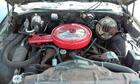
thanks again for all the support, advice, encouragement, etc. You guys are life savers. Oh and here’s a pic of my engine bay, that I was hoping to have all cleaned up by now but didn’t get around to it lol
Running the engine with a known coolant leak may cause more problems due to steam it could create. This is not going to heal and no block seal is going to stop it. You need to pull the heads and see what is going on, cylinder walls may be pitted with rust.. if you luck out new head gaskets are not that expensive it that is all it needs but I bet not.. Also an exhaust gas in the coolant is another needed test before and after as well as a coolant pressurazation test, Some auto parts stores rent these for free..
If you need to I bought my hard line from the fuel pump to the carb from Inline Tube. I actually think Auto Zone or Advance might sell em too.
On an aside you can install flare to AN fittings on your fuel pump and carb then make an AN line to connect them. But buying those AN fittings can get a bit pricey quick.