When you click on links to various merchants on this site and make a purchase, this can result in this site earning a commission. Affiliate programs and affiliations include, but are not limited to, the eBay Partner Network.
I just purchased a '66 Cutlass and joined the forum. At some point in this car's life the original 330 was replaced with a rocket 350. The previous owner had the wrong PCV valve installed which I noticed as it appeared to be nearly hanging out of the rubber grommet on the valve cover. I've since installed the a new grommet and PCV valve for a rocket 350. With the car at operating temp I noticed acceleration seems much smoother which is great but I also started to develop an issue where the car occasionally started to stall at low rpm and was a little difficult to restart but after a few cranks got going again. Also over the weekend installed a tach and noticed that I was idling around 1100-1200 rpm with the engine at operating temp which seemed rather high and I dialed it back down to around 800-900 rpm. Afterwards, I let it idle in my driveway for maybe close to 10 minutes afterward and it did not stall. My question is should I look into any other possible culprits like verify fuel pressure or possibly reset the air/fuel adjustment screws on the Holley carb?
Last edited by rbt111; Oct 23, 2024 at 09:31 AM.
Reason: clarity
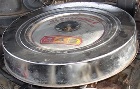
Other than an aftermarket air cleaner it is a stock 350
Stock Rocket 350 of what year?
Stock Rocket 350 heads?
Stock Rocket 350 30,000 lb iron intake manifold?
You have a TCS valve/solenoid installed in the intake manifold?
A/C or no A/C?
I checked the stamping on the engine block near the water pump. Didn't give me what I was looking for when entering it into the Google machine. Reply I got was a 350 engine mfg between 1968 thru 1976.
I was wrong as well about the the carb and air cleaner being the only aftermarket items. With a little additional research it appears the intake that is stamped "Performer 350 Olds" is actually an Edlebrock intake. That's all I can determine unless I want dig into the engine deeper. In regards to the TCS I'll have to take another look but I don't think It may be bypassed. the only vacuum line I can see coming off the manifold is going to the power brake booster.
I checked the stamping on the engine block near the water pump. Didn't give me what I was looking for when entering it into the Google machine. Reply I got was a 350 engine mfg between 1968 thru 1976.
That's the block casting number, and the data is correct that the same casting was used from 1968 to 1976.
You will need to look at the VIN pad to determine the specific year. The head number may also give a clue to the year, assuming they are original to the engine.
5 = 1968-1969
6 = 1970
7 = 1971
7a = 1972 (small capital A)
8 = 1973-1976
The only vacuum line I can see coming off the manifold is going to the power brake booster. Thanks to all of you for chiming in.
While you didn't specifically answer my question regarding A/C or no A/C, evidently you have no A/C since you would have a vacuum hose/line from the intake manifold to the A/C vacuum tank. You stated you have only one vacuum hose. Additionally, if you have only one vacuum hose you don't have a TCS (Christmas Tree) solenoid/valve, as well.
What transmission - TH350? Once you figure out the VIN derivative number stamped onto the engine block, I'd be interested (if it were mine) in knowing if the transmission (if it's a TH350) shares the same (matching) VIN derivative number as the VIN derivative number stamped onto the engine block. Albeit, a matching pair. Finally, if it's sporting a TH350, you should have a vacuum line for the automatic transmission modulator valve from the intake manifold to the passenger side of the TH350 (if it's a TH350).
That's the block casting number, and the data is correct that the same casting was used from 1968 to 1976.
You will need to look at the VIN pad to determine the specific year. The head number may also give a clue to the year, assuming they are original to the engine.
5 = 1968-1969
6 = 1970
7 = 1971
7a = 1972 (small capital A)
8 = 1973-1976
I don’t know that documenting the engine will be as helpful as it would be for a known quantity -- there's really no way of knowing what's in it. I guess it's useful to identify the heads at any rate, but if the manifold and carburetor have been changed it may be possible that internal work has been done too.
I would start with:
1) Vacuum reading
2) Compression test
Those two will yield some good info about the general health of your engine. Report back with detailed results and we can help you decide where to go next.
the only vacuum line I can see coming off the manifold is going to the power brake booster.
There should be a vacuum line going to the modulator for an automatic transmission.
And there should be a vacuum line going to the HVAC controls.
And there should be a vacuum line connected to the PCV valve.
Some of these may be connected to ports on the carburetor instead of the intake manifold.
While you didn't specifically answer my question regarding A/C or no A/C, evidently you have no A/C since you would have a vacuum hose/line from the intake manifold to the A/C vacuum tank. You stated you have only one vacuum hose. Additionally, if you have only one vacuum hose you don't have a TCS (Christmas Tree) solenoid/valve, as well.
What transmission - TH350? Once you figure out the VIN derivative number stamped onto the engine block, I'd be interested (if it were mine) in knowing if the transmission (if it's a TH350) shares the same (matching) VIN derivative number as the VIN derivative number stamped onto the engine block. Albeit, a matching pair. Finally, if it's sporting a TH350, you should have a vacuum line for the automatic transmission modulator valve from the intake manifold to the passenger side of the TH350 (if it's a TH350).
You are correct the car has no A/C and I am just fine with that since it's a convertible. The transmission is a Muncie 4 speed. Not exactly sure which variant be it an M20 or an M21. So as far as vacuum hoses there is the one going to the brake booster another going from the PCV to the back of the Holley. Lastly the vacuum advance off the distributor to the passanger side of the Holley. That's really it a pretty plain Jane setup.
Just got the old girl up to a hot idle and put the vacuum guage on the manifold port off the Holley. She's reading a bit low at only 16 psi. For reference I am near Chicago which is only about 600 ft above sea level. I understand that matters. Also I did the throttle test and the guage went down to zeo back up a little past 20 (perhaps around 24) and settled back down to 16.
I am sensing my timing is not dialed in correctly.
You passed the fundamental throttle vacuum test. 16"Hg is well w/in the ball park. In your 1st post you mentioned A/F idle mixture screws. On any normally aspirated ICE you'd adjust each A/F idle mixture screw (one at a time) to the highest vacuum achievable after a normal tune-up to specifications:
(1) Set Dwell
(2) Set Timing (Don't forget to unhook & plug vacuum advance prior to timing, then hook vacuum advance back up after timing).
(3) Adjust each idle A/F mixture screw (independently) to highest achievable vacuum.
It's generally in your best interest to install a new set of contact points, new rotor, new distributor cap & importantly a new distributor condenser/capacitor as part of an engine tune-up. A new condenser will ensure the electrical field collapses rapidly, sharply & cleanly as well as trap (absorb) energy to prevent contact points from arcing. Obviously, if the car is new to you & you're unsure what has been done previously & by whom, a fresh tune-up prior to A/F idle mixture adjustment is preferred. If you're completely unfamiliar with the engine, it might be a good time to pull a couple of plugs for evaluation pursuant type of plug(s), gap, and burn (white=lean, sandstone=perfect, black=rich). Always side towards a shallow rich burn rather than a lean burn.
Good primer Norm, but but I'd be inclined to test the compression before getting into the ignition and carb, just to complete the diagnosis before proceeding.
Also OP has yet to confirm whether the original points distributor is still in place.
Thanks again all for assisting a newbie. Some other things I tested today.
1. Replaced the fuel pressure guage on the fuel inlet the splits off to each accelerator pump (Holley double pumper) as it was not in good shape and I could not read it. It is showing 5.5 PSI which is good. Confirmed that with my Vac guage which doubles as a fuel pressure guage.
2. Got a cheap $30 Harbor Freight timing light. Either I am doing something wrong or the mark on my harmonic balancer is not correct because it is showing my timing as WAY OFF. The cheapy HF timing light has an advance dial and at idle I got to move that to around 50 degrees to get the timing mark to show TDC. I am thinking of pulling the spark plug in the #1 cylinder and putting a rod down there and hand cranking it until the piston fully pushes it out as far as it can go and seeing where the timing mark lies.
3. After wondering how in the world could this engine even run if the timing was so far out of wack I loosened up the distributor hold down bolt and started moving the the distributor in each direction while watching the vac guage. To my surprise I didn't have to turn it too far clockwise or counter-clockwise for the engine to start running rougher and the vacuum to start dropping. I setteled on just a very slight turn clockwise which seemed to smooth out the engine but honestly not by much. Then I tightened the bolt back up.
4. Verified the spark plugs wires were in the correct firing order going counter-clockwise 1-8-4-3-6-5-7-2
Good idea about the compression test. I should be passing by Harbor Freight again tomorrow. I'll stop in and grab a compression test kit. The distributor is not orginal. In fact the previous owner mentioned to me he recently changed the distributor cap, rotor, and added the Accel HEI supercoil. I know he was not the individual that did the restoration work to this car.
Good primer Norm, but but I'd be inclined to test the compression before getting into the ignition and carb, just to complete the diagnosis before proceeding.
Also OP has yet to confirm whether the original points distributor is still in place.
The distributor is not orginal. In fact the previous owner mentioned to me he recently changed the distributor cap, rotor, and added the Accel HEI supercoil.
at idle I got to move that to around 50 degrees to get the timing mark to show TDC
This is possible if the vacuum advance is connected to full manifold vacuum when checking the timing. If the canister is disconnected, then there’s definitely sumpin’ up.
The distributor is not orginal. In fact the previous owner mentioned to me he recently changed the distributor cap, rotor, and added the Accel HEI supercoil. I know he was not the individual that did the restoration work to this car.
Originally Posted by BangScreech4-4-2
Is it still points-triggered?
As it looks like our inquiries appear to have stumped you somewhat, please allow me to backtrack a little in the interest of clarity. HEI refers to an entire ignition system (High Energy Ignition) which was fully electronic (no points) and was installed in most GM products from the factory from 1975 on. Because of its reliability and simplicity of maintenance it is often retrofitted to earlier models. It is readily identified by its large diameter cap which incorporates an integral coil. Conversely, a conventional points-triggered ignition will have a smaller distributor housing and cap and the coil will be located remotely elsewhere on the intake manifold and connected to the distributor by a high-tension lead.
To add to the merriment, just because you have a small-housing distributor doesn't mean it necessarily contains points -- there are aftermarket points-to-electronic conversion kits (like Pertronix) which use electronic pickups inside the original housing, and there are entire replacement aftermarket distributors (like MSD Ready-to-Run) which have the same profile as OEM. Both systems retain the original-style housing, cap and remote coil. Given the passage of years and previous owners' penchant for modification, yours could have any of these.
If after reading the above, you're still not sure, maybe post an image of your setup.
You're right anything is possible. It's likely the distributor was replaced as most I can see a number of things around the car have been. I did get to spend some time working on the car today and have a number of things to report back.
First the compression test results.I've read various things about should it be done cold, hot and doesn't really matter. I did it cold with the carb throttle held open. The psi results by cylinder number:
1. 143
2. 150
3. 145
4. 150
5. 147
6. 145
7. 150
8. 153
From what I gather those are pretty good results as they fall in range with little variance.
I mentioned my timing results seemed WAY off in an earlier post on this thread. During the compression testing at one point the timing mark landed damn near on the TDC marking. I took the oppurtunity insert a screwdriver in the #1 cylinder and it did not go in far. I then cranked the engine oh so slightly and the screw driver pretty much went in to the handle so that makes me acutally think the timing mark on the balancer is correct.
The plugs did not look too bad a little carbon on the tip but no real sign of damage,oil or any excessive rich or lean conditions. I'm thinking the previous owner replaced them fairly recently. They seem new, gaps all checked out at .035
I then got the engine up to temp and moved on to inspecting the air/fuel mixture with my vacuum guage and here is where i think it gets pretty interesting. As I mentioned the reading I have been getting was 16 psi. I turned thte mixture screws in and then backed out 1.5 turns and started turning them in to lean it more which made the engine run worse and then started to enrichen the mixture screws on each side. Eventually I got the vacuum to hold steady at 19psi and rpm shot up to 1100 so I dialed the idle screw back down to ~ 750. She sounded good sitting there idling but at this point it's dark and I figured that was enough and felt like I deserved a beer. I think I just need to let her warm up and get her out for a test drive. It's likely I was running too lean.
Ignition timing and mixture both affect idle vacuum. While it is said to do timing first, that is only to save work. You can get the mixture on, do points and timing, then come back to mixture. Idle speed is last. Mixture should be backed out until the max vacuum is passed (with that setting noted), then put back to that max vac setting, plus usually a quarter turn in.
A lot of people are like "oh an advance timing light is only for using the advance with checking timing at high rpm." Well, yes. However, some timing indicators are so bad, you can dial in to keep it showing zero if zero BTDC is easy to see, i.e., dial ten, and, if the car is 10 advanced at idle, it will show up as zero, etc, etc. I did this on my van.
Darkness and progress does mean Miller Time.
Next up, send us a picture of your distributor so we know what system you have. To test drive, warm up car and do the following from a stop:
1. Clutch out slow, no gas. Should grab first and start rolling. This is a parking lot test.
2. Normal take off.
3. Fairly stout take off.
4. Launch.
5. Get rolling in first at like whatever it wants to do at idle, rolling along, stab accelerator.
I don't know what circuits a Holley double pumper has, but it should handle idle, off idle, accelerator pump, and primaries, and all the transitions between without bogging.
From what I gather those are pretty good results as they fall in range with little variance ...
... The plugs did not look too bad a little carbon on the tip but no real sign of damage,oil or any excessive rich or lean conditions. I'm thinking the previous owner replaced them fairly recently. They seem new, gaps all checked out at .035.
Compression numbers are fine for consistency, although low overall cylinder pressure indicates a low compression smog era motor.
Plug gap is right for a points ignition. Can we go ahead and proceed on the assumption that this is what you have?
I believe it's an HEI. it has the ACCEL supercoil on it with the tach and BAT on the cap. I understand from your previous post point-type ignitions could be converted to HEI.
Do you need a pic of it with the distributor cap off? I can grab that this evening.
I believe it's an HEI. it has the ACCEL supercoil on it with the tach and BAT on the cap. I understand from your previous post point-type ignitions could be converted to HEI.
Do you need a pic of it with the distributor cap off? I can grab that this evening.
Actually a picture of it with its cap on should tell us whether it's an HEI or not. They are freakishly large compared to conventional points-type, and as previously mentioned the coil is integral, mounted on the cap.
Looks like an HEI to me. What hasn't been mentioned based on what I've read on this post. A pcv valve is a metered air/vacuum leak that is compensated for by enriching the carb circuits. Most carbs are calibrated to deal with it for the most part. The pcv valve is a fixed orafice plain and simple. If the one that was installed when you first got the car was incorrect for that engine, the idle mixture will be set to that air leak. When you installed the correct pcv valve with the correct orafice size you have thrown off the idle air fuel mixture. Also if the original pcv valve wasn't in the valve cover fully, it wasnt drawing in the crankcase vapors which also throws off the mixture settings. As has been said, check the base timing first which means disconnect and plug the vac advance line. Set timing to probably around 10 to 14 degrees at an idle of around 700 rpm. Then reconnect the vac advance line and adjust one idle mixture screw to the highest vacuum reading (dont worry about how many turns it doesn't matter). Then set the idle stop back to 700 and adjust the other idle mixture screw to the highest vac reading. Then set the idle stop screw to your desired curb idle and your done. I will also say the alot of hei distibutors have way too much timing in the vacuum advance. You should only have about 10 to 11 degrees with the vacuum line getting manifold vacuum. I had to make a stop to limit the vacuum advance to limit mine. Follow these suggestions if you want. I do this for a living. Good luck.
Thank you for your input. I have to admit the timing is the part of it all that has me a confused and it mainly boils down to my skillset or lack thereof. I have no idea how the car seems to idle good and my timing light is showed the timing WAY OFF. Maybe it's because I bought the cheapy Harbor Freight light with the timing advance dial. Likely it's the person (me) operating it. I thought it was the timing mark on the balancer not being lined up correctly with the guide but from my previous post I mentioned that when the mark was lined up I could barely get a screwdriver to go in to the #1 cylinder too far. When I moved it about the crank 1/4 rotation it went in much further.
Also when I loosened the distributor hold down and moved the cap it did not take much (both clockwise and counter-clockwise) for the car's engine to start sounding like it was running poorly.
I'm going to try to get her out for a drive and do some testing early this evening. It's a beautiful warm fall day here near Chicago and hopefully the changes I made to the carbs air/fuel mixture will have a positive impact to how she runs.
If the timing is still the crux of the issue I may have to phone a mechanic friend to come and assist. It would be worth it IMO to get some better hand-on knowledge about engine timing.
This evening I got her out for a test out for a test drive. I drove the car lightly around the neighborhood to get it up to temp. Then went a bit more heavier on the accelerator. She responded significantly better. So much so that I feel confident in saying my issue all along was she was running too lean. She is not going to win any races with that smog dog 350 but the throttle response is definetly more crisp. Perhaps an oh so slight hesitation when the accelerator is pegged to the floor might be the only negative thing I can say but again it's very slight and something I can live with since she's a cruiser and not a racer.
Thanks for your reply. I have a question and based on what I've been reading online it may be a loaded one and that's not my intent. Should I have my vacuum advance connected to the manifold fitting or the port fitting on the Holley. Currently it is on port vacuum. I am reading some people say manifold others say port.
The manifold port will lncrease the timing at idle and make it run more efficiently at idle. I prefer running it on the manifold port. Either one is the same once the throttle is opened and vacuum drops. Try both and see with one your engine prefers.
... Should I have my vacuum advance connected to the manifold fitting or the port fitting on the Holley. Currently it is on port vacuum. I am reading some people say manifold others say port.
Originally Posted by gs72
The manifold port will lncrease the timing at idle and make it run more efficiently at idle. I prefer running it on the manifold port. Either one is the same once the throttle is opened and vacuum drops. Try both and see with one your engine prefers.
The consensus on CO seems to be manifold. Having tried both on my '69 400G, I can only tell you that in my case there was no discernible difference.