When you click on links to various merchants on this site and make a purchase, this can result in this site earning a commission. Affiliate programs and affiliations include, but are not limited to, the eBay Partner Network.
I just purchased a '76 cutlass salon with (in theory) 53,000 original miles. Engine idles fine but pings on even light load. (Will check timing) Also won't seem to kick off high idle. When I floor it there is almost no response.
Haven't waded into much yet but looks like someone at least disconnected and plugged up some of the vacuum/EGR. Someone also installed an electric choke which I might return to original (I'm kinda a purist).
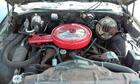
Anyway, I've attached a pic - was wondering if this is the original carb? The #s on the side end in 6259? Someone cut the original metal fuel line and ran a rubber splice between two sides. Not sure if maybe they couldn't free it up on the carb side and needed to remove the carb (it looks rebuilt/gaskets), or if maybe the inlet position
with this carb doesn't match original. Was thinking of at least getting a new metal fuel line from inline tube.
I found a vacuum routing diagram on this site - so I might wade into this on the weekend. If you guys have suggestions on where to start, that would be helpful. I gotta say for a car that idles fine, I've never seen a motor with less power.
Just an observation that may not actually be an issue - the choke looks to be completely closed. Was it cold when the picture was taken? If not, perhaps the choke is not opening fully and when you go full throttle the secondary lockout is still engaged. That would present as no power at full throttle as the secondaries are not opening.
Yeah, it was cold. Choke opens essentially as it should. Won't kick down to low idle - but I'm not sure yet whether it won't kick from high to low idle, or the low idle is jus set super high. Will look into that today probably.
Engine idles fine but pings on even light load. (Will check timing) Also won't seem to kick off high idle. When I floor it there is almost no response.
The choke holds the secondaries closed while it is on. If the car won't come off of fast idle, that suggests that the choke is not opening correctly, which would prevent you from opening the secondaries and thus the "almost no response". The pinging is unrelated to that problem. Sounds like the car needs a comprehensive tune up and carb rebuild.
The choke holds the secondaries closed while it is on. If the car won't come off of fast idle, that suggests that the choke is not opening correctly, which would prevent you from opening the secondaries and thus the "almost no response". The pinging is unrelated to that problem. Sounds like the car needs a comprehensive tune up and carb rebuild.
Yeah maybe - has definitely already had work done. New plug wires, carb appears to have new gaskets. Was loading up today some. This type of diagnosis is not something I'm particularly good at.
So I brought the idle down today and adjusted the timing. It was too advanced as I suspected. Now it idles great. I can just bip the key and she kicks right off and idles smooth. However, now if I try to drive it, it pops (I think through the carb) on any acceleration. (Just once not a continuous pop pop pop). But zero power.
Any thoughts on likely problems? The fact that I retarded the timing and now it pops makes me think the problem is ignition related. Would a bad vacuum advance cause this? Other ideas?
One reason for a pop when pressing the throttle is the accelerator pump may not be squirting fuel, which causes a temporary too-lean condition. With the engine off and the choke butterfly open, look into the carb, operate the throttle, and verity two streams of fuel squirt out.
I checked the accelerator pump. Can definitely hear a squirt and smoke comes up from the carb (w/. engine freshly off) when pumping accelerator. Also checked firing order.
Vacuum advance to plumbed to the two port thermal switch on right side of intake manifold, which appears to be fed on manifold vacuum after going through a 5 way tee and also some kind of diaphragm thing with three ports on it (VRV?).
Maybe tomorrow I'll try plugging up the brake booster hose to see if that might be leaking - that would also cause a lean condition?
Last edited by getmygoat; Nov 3, 2023 at 03:00 PM.
What is the timing currently at? It could be a shot vacuum advance. It may also be very lean going into transition. The EGR allows a very lean mix, it not functioning might bring this problem on.
What is the timing currently at? It could be a shot vacuum advance. It may also be very lean going into transition. The EGR allows a very lean mix, it not functioning might bring this problem on.
I couldn't read the numbers on the indicator above the balancer... but the line on the balancer was more towards the left side than the right. Prior to adjustment the line was nowhere to be seen. I rotated the distributor counter clockwise which I believe retarded the timing. I thought about maybe the vacuum advance being broken. It looks newer. Can I test it with a hand held pump? Maybe another task for tomorrow. Whatever it is must be a major issue, not something like being 2-4 degrees off on timing. I mean this thing has no power. Almost zero. I also suppose if that thermo vacuum switch isn't working then the vacuum advance might not be getting any vacuum. It also seems strange its plumbed to manifold vacuum (which will drop when the throttle is opened? not increase like a ported vacuum would? But from the diagram I found on this site that appears correct. The only thing taking ported vacuum in this diagram is the EGR. My EGR is disconnected and the ported vacuum port is blocked off
I'm sort of hoping for a brake booster problem.. as it appears original and there is some indication of a master cylinder leak out the back and down the booster. So I believe that brake fluid can eat into the booster over time and cause it to fail. Also the rubber diaphram is 45+ years old so not surprising if its given up the ghost at this point.
I assume a vacuum leak prevents the engine from sucking enough fuel from the carb.
It should be a 24 degree timing tab, you want it at 20 degrees for that year, I believe. The vacuum advance might not be getting vacuum, it will hurt part throttle. Make sure the advance weights move freely. Also make sure the choke is coming off completely, allowing the secondaries to open. Also nearly every Qjet I worked on the secondary air door was set too loose. That could also cause the pop back on heavy acceleration.
Thanks for your response. I will check those items - note its not popping on heavy acceleration, its popping on just the lightest acceleration, e.g. even less than you might use when a light turns green. The car is essentially undriveable.
Green light is the GO signal for wide open throttle.
Yes it is. You need to get all the vacuum hoses routed correctly and set the timing to spec for your car, there is some variance from year to year. Every mark on the tab is 2 degrees. Also check the distributor mechanical advance, cap, rotor, ohm plug wires, check plug wires, fuel filter in carb etc. A full tune up, it is closing in on 50 years old. Make sure the choke pull off is functioning and your vacuum advance is working. Your car will be a dog off the line but should do just fine at highway speeds. A 4000 pound car, 160 HP and 2 something gears won't light the world on fire but should do better than this. Is it cranking normal? I wonder if the nylon coated cam gear is heading south.
6259 is the correct carb for a 49-state Cutlass 350 with A/C and 2.41 axle. Choke stat should be set TWO notches rich. Timing spec is 22° @ 1100 rpm. Plug gap should be set .060 per the factory update.
The part throttle detonation is probably a result of disabling the EGR and no catalytic converter. You might be able to tune that out with an adjustable vacuum advance canister.
There are 50 pages devoted to emission devices, tuneup and performance diagnoses in the 1976 CSM. Boggles the mind especially since these problems can be carburetor, emissions device or ignition related. Or even a plugged or internally collapsed exhaust system. Do things sound normal at the tailpipe?
Plugged fuel filters or a weak fuel pump will cause these symptoms too.
You're on right track with replacing and correcting vacuum hose routing first. From 1976 CSM:
49-state vacuum diagram:
Explanation of emissions devices:
California vacuum diagram. Should be N/A but you never know what someone has done in 47 years. Never trust what someone else has tried to fix.
6259 is the correct carb for a 49-state Cutlass 350 with A/C and 2.41 axle. Choke stat should be set TWO notches rich. Timing spec is 22° @ 1100 rpm. Plug gap should be set .060 per the factory update.
The part throttle detonation is probably a result of disabling the EGR and no catalytic converter. You might be able to tune that out with an adjustable vacuum advance canister.
There are 50 pages devoted to emission devices, tuneup and performance diagnoses in the 1976 CSM. Boggles the mind especially since these problems can be carburetor, emissions device or ignition related. Or even a plugged or internally collapsed exhaust system. Do things sound normal at the tailpipe?
Plugged fuel filters or a weak fuel pump will cause these symptoms too.
You're on right track with replacing and correcting vacuum hose routing first. From 1976 CSM:
Thanks for all the suggestions. I confirmed the vacuum advance is at least partially functioning. Holds vacuum via hand pump and disconnecting it reduces idle (with port plugged) - and reconnecting increases idle. I plugged off the brake booster line and no difference. Car appears to have been worked on recently, plug wires are new. Fuel pump is new. Does have a rubber hose spliced between the pump and carb - real hack job. Was planning to order a new metal line from inline tube and get that squared away later. I confirmed firing order is correct.
I just want to emphasize this engine doesn't need a tune up in that its running less than ideal. This engine has some kind of major intake/ignition issue. As configured currently, it idles great but a smidge of throttle under load and it pops. When purchased they had the idle cranked way up (it would do 40 mph w/o foot on the pedal), and would not always pop off the line, but I assume the high throttle setting was partially masking the issue. Prior to me adjusting idle speed and timing, the car had maybe 10% of its power. Now it has basically zero power, I can't really accelerate at all. This motor is screwed up bad. A family member has some expertise in Rochester Q-jets and he had me stick a probe down the air horn and search for the primary jets/springs and we found them and they appear unstuck. He thought maybe they were stuck down from the car sitting or something.
I was reading about the 76 quadrajet and it has an altitude compensating mech called an aneroid... apparently it can give people fits when rebuilding this carb.. so one theory is while the carb was previously rebuilt, they could have screwed it up. The car did load up on me quite a bit yesterday. Started fine cold but I shut off after ~1 minute of running and then wouldn't start until I went pedal to floor while cranking. It then started but was loaded up and I had to give it a lot of throttle to keep it running until it cleared itself. I was planning a compression test so maybe I can check plug gap then.
The vacuum routing appears correct according to the california diagram, even though this is not a California emissions car. (Except that EGR is blocked off and ported carb vacuum port that would normally go to EGR is blocked off too). I could hook that back up I suppose, although EGR looks original and would seem unlikely to function correctly? Has electric choke conversion which I hate, but seems to function ok for now. Not a primary cause of this issue.
The diagram shows an EGR-TCV valve between the EGR and carb. How would I find a replacement for this? I've searched around and generally no hits on EGR-TCV. What is TCV? temperature control valve?
Last edited by getmygoat; Nov 5, 2023 at 06:28 PM.
If it 'pops' when you ask for power then a spark is being delivered when an intake valve is open or partially open. Double check your timing, should be 20 degrees if I remember correctly.
I keep a vacuum gauge on the firewall for adjusting the idle mix. Turning needles for maximum vacuum. Also shows if there is a vacuum leak. If the engine bogs when leaving a stop sign or stop light, it could well be a faulty pick-up coil in the distributor. I have had that problem on two occasions on two different cars. This is assuming that your carb is working properly.
For what it's worth- - just my two cents.
If it 'pops' when you ask for power then a spark is being delivered when an intake valve is open or partially open. Double check your timing, should be 20 degrees if I remember correctly.
I keep a vacuum gauge on the firewall for adjusting the idle mix. Turning needles for maximum vacuum. Also shows if there is a vacuum leak. If the engine bogs when leaving a stop sign or stop light, it could well be a faulty pick-up coil in the distributor. I have had that problem on two occasions on two different cars. This is assuming that your carb is working properly.
For what it's worth- - just my two cents.
Thanks! I'll check that stuff. Was considering replacing the coil is it appears original.
Just to be clear, the pick-up coil is not the coil in the distributor cap. It is a small circular coil with small connecting wires. It is located underneath the weights and reluctor. You will have to remove the distributor. Easiest way to diagnose is to swap in a known good distributor. Maybe grab one at a wrecking yard.
What's the part number on the carb? It looks like a late 70-early 80 carb.
These cars notoriously run lean and the distributor curve is not really optimized for performance.
Carb looks new or rebuilt?? No carb out of the box will be optimized. They always need to be tuned to the application.
Verify no vacuum leaks anywhere including the carb gasket(don't over-tighten the carb) trans modulator and brake booster etc.
Verify the EGR is moving. If not take it off and clean it.
Get the choke set right so it pulls off in a short amount of time...2mins or less. It is adjustable. That black cap should have an arrow pointing in the lean or rich direction. A little adjustment is all that is needed.
With a vacuum gauge hooked to an intake vac source, adjust the timing and air/fuel screws on the carb to achieve the highest possible vacuum reading with a warm engine choke 100% off at curb idle. Then road test it. You don't need a timing light, do it by the gauge and your ear.
Pull the distributor rotor. Inspect the springs & weights for movement and lightly lubricate.
The plug gap should come down off the 1976 recommended .080" (!!). Get some NGKs and gap at 040-045" See what it likes by reading the plugs.
Once you've optimized the fuel and ignition curve it will run like a 350 should. If not we'll walk you through the next steps.
Once you've optimized the fuel and ignition curve it will run like a 350 should. If not we'll walk you through the next steps.
Thanks much for all the advice... Will follow. The carb is 17056259. Original to the car. EGR not hooked up. I will work on that. Would like to find one that looks like the original at least.. who knows, maybe the original still works.
Just to be clear, the pick-up coil is not the coil in the distributor cap. It is a small circular coil with small connecting wires. It is located underneath the weights and reluctor. You will have to remove the distributor. Easiest way to diagnose is to swap in a known good distributor. Maybe grab one at a wrecking yard.
Thanks - I'll consider it if it still runs bad after the easier stuff is tried.