


350 Motor Photos and Questions!


Thread Starter
Registered User
Joined: Apr 2013
Posts: 515
From: Wilmington, DE
350 Motor Photos and Questions!
Just brought home the Hurst's new power plant. Sold to me as a 1970 350 with #6 heads. Engine history is totally unknown. Motor has edlebrock performer rpm 7111 intake, HEI set up, new oil pan, new water pump, ARP head hardware, Carter AFB carb (cfm unknown). Enclosed are some pictures along with some questions I have.

Motor on the new stand.

Casting number on the bell housing. I am not sure of the significance.

Stamp on the crankshft. "393654" Again, unsure of the significance.

2 Bolt main, which I found sort of surprising. Did any Rocket 350 come with a 4 bolt?

I am almost positive that it has a new timing chain. The piece is spotless.

That oil pump and screen is not looking so hot. Any suggestions for a replacement brand?

I can't tell if the pistons are original or have been replaced. The best way to tell would be to pull the heads I'm sure. The motor ran real well when I heard it.

Springs look real good, no sludge in the valve train.
Long story short. Plan on putting the motor in my 83 H/O. 2004r with shift kit, eaton HD 3:73 rear, stock 2400 stall. Headman headers and 40 series flowmasters. Car currently has 2.25 piping. I am thinking I should step up to 2.5, thoughts? As long as she doesn't overheat and can spank every fox mustang I pull up next to I'll be happy. Thanks for looking!
Motor on the new stand.
Casting number on the bell housing. I am not sure of the significance.
Stamp on the crankshft. "393654" Again, unsure of the significance.
2 Bolt main, which I found sort of surprising. Did any Rocket 350 come with a 4 bolt?
I am almost positive that it has a new timing chain. The piece is spotless.
That oil pump and screen is not looking so hot. Any suggestions for a replacement brand?
I can't tell if the pistons are original or have been replaced. The best way to tell would be to pull the heads I'm sure. The motor ran real well when I heard it.
Springs look real good, no sludge in the valve train.
Long story short. Plan on putting the motor in my 83 H/O. 2004r with shift kit, eaton HD 3:73 rear, stock 2400 stall. Headman headers and 40 series flowmasters. Car currently has 2.25 piping. I am thinking I should step up to 2.5, thoughts? As long as she doesn't overheat and can spank every fox mustang I pull up next to I'll be happy. Thanks for looking!
Justin
Joined: Mar 2012
Posts: 3,454
From: utah
That looks like it could have used a few more oil changes
The number on the block next to the distributor (83) is the Julian build date not positive but I think the big number3 is mold number
The number on the crank is a part number I would check out olds FAQ for more info on that
The number on the block next to the distributor (83) is the Julian build date not positive but I think the big number3 is mold number
The number on the crank is a part number I would check out olds FAQ for more info on that
Thread Starter
Registered User
Joined: Apr 2013
Posts: 515
From: Wilmington, DE
That looks like it could have used a few more oil changes
The number on the block next to the distributor (83) is the Julian build date not positive but I think the big number3 is mold number
The number on the crank is a part number I would check out olds FAQ for more info on that
The number on the block next to the distributor (83) is the Julian build date not positive but I think the big number3 is mold number
The number on the crank is a part number I would check out olds FAQ for more info on that
-I've been doing a lot of research on the crank. The information is sort of inconclusive. A big "N" means a forged crank (I have a big Ol' N). However I read something saying that all 68-72 350s cranks were iron. I'm going to keep looking. I'm sure Mr. Padavano will chime in and drop some insight on this. I agree that it could've used some more oil changes. However, for 500 bucks I'm happy.

Old(s) Fart
Joined: Mar 2007
Posts: 50,803
From: Northern VA
Edit: Before someone brings this up, yes, there were a handful of forged 455 cranks made early in the 1968 model year.
Thread Starter
Registered User
Joined: Apr 2013
Posts: 515
From: Wilmington, DE
No, it really isn't. All 1964-67 cranks are forged, all 1968-1990 cranks are cast. The "N" stands for nodular cast iron, which is a better grade of cast iron. Also, Olds never built a production block with four bolt mains.
Edit: Before someone brings this up, yes, there were a handful of forged 455 cranks made early in the 1968 model year.
Edit: Before someone brings this up, yes, there were a handful of forged 455 cranks made early in the 1968 model year.
Thank you for the clarity.
Connoisseur d'Junque
Joined: Sep 2010
Posts: 21,183
From: The Hudson Valley
Looks pretty good, from what we can see, but the photo quality is pretty bad, and you can only say so much about a motor from pictures.
Yes, that's a replacement timing set - new-looking, and it's a double-roller chain.
The springs and keepers look new. Interestingly, the bridges do not.
The ridges on the pistons are typical of factory pistons, and they don't look too worn.
That looks like an original oil pump to me - wouldn't hurt to change it while it's right there. High-volume pumps will keep your pressure higher at low RPMs when hot, but will steal a couple of HP as well.
"N" on the crank does not mean "Forged," it means "Nodular," as in "cast iron" (some more knowledgeable than I may say it means nothing at all).
Cast cranks are just fine, and, yes, they were all cast after '67.
There is no such thing as a four bolt main Olds motor (other than some unobtainium experimental and racing versions). Olds motors don't need the extra bolts.
If the heads have been off, then you may have the "standard" 0.046" thick Fel-Pro head gaskets, which will steal about half a point of compression (unless the heads were decked), or maybe a little more. Make sure your cam choice accounts for this if you decide to stick with the same gaskets.
I'd get out the feeler gauges, PlastiGage and micrometer and start measuring stuff and checking the bearings. That'll tell you what you really need to know.
Good luck with it!
- Eric
edit: Joe, you were faster!
Yes, that's a replacement timing set - new-looking, and it's a double-roller chain.
The springs and keepers look new. Interestingly, the bridges do not.
The ridges on the pistons are typical of factory pistons, and they don't look too worn.
That looks like an original oil pump to me - wouldn't hurt to change it while it's right there. High-volume pumps will keep your pressure higher at low RPMs when hot, but will steal a couple of HP as well.
"N" on the crank does not mean "Forged," it means "Nodular," as in "cast iron" (some more knowledgeable than I may say it means nothing at all).
Cast cranks are just fine, and, yes, they were all cast after '67.
There is no such thing as a four bolt main Olds motor (other than some unobtainium experimental and racing versions). Olds motors don't need the extra bolts.
If the heads have been off, then you may have the "standard" 0.046" thick Fel-Pro head gaskets, which will steal about half a point of compression (unless the heads were decked), or maybe a little more. Make sure your cam choice accounts for this if you decide to stick with the same gaskets.
I'd get out the feeler gauges, PlastiGage and micrometer and start measuring stuff and checking the bearings. That'll tell you what you really need to know.
Good luck with it!
- Eric
edit: Joe, you were faster!
Seasoned beater pilot.
Joined: Jan 2007
Posts: 5,468
From: Chicago
Also, just to complete the information tangents here,some 67' 330 crankshafts were cast, and not forged near the end of production.
Your odds of getting a 330 forged crank are very good, but not fool proof.
Your odds of getting a 330 forged crank are very good, but not fool proof.
Thread Starter
Registered User
Joined: Apr 2013
Posts: 515
From: Wilmington, DE
If the heads have been off, then you may have the "standard" 0.046" thick Fel-Pro head gaskets, which will steal about half a point of compression (unless the heads were decked), or maybe a little more. Make sure your cam choice accounts for this if you decide to stick with the same gaskets.
-In regards to cam shaft selection I would be grateful for some guidance. I've read a lot about the "do nots" of camshaft selection but only at face value. Based on the research I've done this is a 9.1 motor in stock form. The questions I have are:
-What lift can I go with without having clearance issues?
-What is a fitting duration? The research I've done on the factory 350s from olds faqs shows a factory duration of 286/286, that sounds awful high for factory. Is that a 0.050 measurement? The aftermarket cams I've looked at are more in the 226/241 range @ 0.050 (at surface value those are smaller numbers but I'm not sure where the factory duration is measured)
-Lobe Seperation- This is one I am stuck at. With 3:73 gears and a 2004r the car is going to see it's share of RPMS (intake as noted is a performer RPM). At what degree of lobe separation will I have nice high end pulling power and a desirable idle sound without having vacuum issues/valve float/less streetability (car will have long tube headers).
If I am understanding this right a 226/241@0.050 with a 106 degree lobe separation is really more for the choppy muscle car sound and less for pure low end grunt, correct?
Thanks
-In regards to cam shaft selection I would be grateful for some guidance. I've read a lot about the "do nots" of camshaft selection but only at face value. Based on the research I've done this is a 9.1 motor in stock form. The questions I have are:
-What lift can I go with without having clearance issues?
-What is a fitting duration? The research I've done on the factory 350s from olds faqs shows a factory duration of 286/286, that sounds awful high for factory. Is that a 0.050 measurement? The aftermarket cams I've looked at are more in the 226/241 range @ 0.050 (at surface value those are smaller numbers but I'm not sure where the factory duration is measured)
-Lobe Seperation- This is one I am stuck at. With 3:73 gears and a 2004r the car is going to see it's share of RPMS (intake as noted is a performer RPM). At what degree of lobe separation will I have nice high end pulling power and a desirable idle sound without having vacuum issues/valve float/less streetability (car will have long tube headers).
If I am understanding this right a 226/241@0.050 with a 106 degree lobe separation is really more for the choppy muscle car sound and less for pure low end grunt, correct?
Thanks
Last edited by 1BOSS83; Feb 17, 2014 at 09:04 PM. Reason: EDIT: The key for the FAQ does note that the measurements are at 0.00
Engine Builder
Joined: Jan 2010
Posts: 552
From: Louisville, ohio
That is not a double roller timing chain. It is a link chain just like the factory used. Nothing wrong with them. Just wanted you to know what you really have.
Factory cams were rated at advertised duration, not @ .050. @ .050 numbers are probably around 195-200 for the "average" production 350.
Even though it sounded OK when you heard it run you should pull it down and see exactly what you have. Then, and only then, can you make good decisions on what to buy as far as cam and such.
Just an opinion but it looks like an unmolested short block that has had the heads rebuilt and a new timing chain installed. "Maybe" a new cam. And then of course the RPM intake installed.
Factory cams were rated at advertised duration, not @ .050. @ .050 numbers are probably around 195-200 for the "average" production 350.
Even though it sounded OK when you heard it run you should pull it down and see exactly what you have. Then, and only then, can you make good decisions on what to buy as far as cam and such.
Just an opinion but it looks like an unmolested short block that has had the heads rebuilt and a new timing chain installed. "Maybe" a new cam. And then of course the RPM intake installed.
Last edited by Smitty275; Feb 18, 2014 at 08:25 AM.

Connoisseur d'Junque
Joined: Sep 2010
Posts: 21,183
From: The Hudson Valley


Thread Starter
Registered User
Joined: Apr 2013
Posts: 515
From: Wilmington, DE
I do not plan to disassemble it further. I paid 500 for a running motor with performance/aftermarket replacement parts. I'm sure it will run circles around the bone stock 307 and hasn't cost me a ton just yet. I plan on dropping the 350 in and having some fun with it until I need to tear it all the way down and go the way of machine work and a potential custom build carb to pan.


Registered User
Joined: Mar 2011
Posts: 558
Registered User
Joined: Oct 2010
Posts: 1,275
From: Boise ID
COULD is the veritable. He didn't state exactly what his plans where other then it's going in his car. I'd crack a couple of caps off everything to see what I was dealing with before going to the trouble and expense of putting all new gaskets in and putting it in unknown. Now is the time to check.

Registered User
Joined: Dec 2011
Posts: 7,286
"Just brought home the Hurst's new power plant. Sold to me as a 1970 350 with #6 heads. Engine history is totally unknown. Motor has edlebrock performer rpm 7111 intake, HEI set up, new oil pan, new water pump, ARP head hardware, Carter AFB carb (cfm unknown). Enclosed are some pictures along with some questions I have."
=====================
Does the oil fill tube start with a zero?
#6 heads is correct for a 1970 350.
I don't see where it says the engine is "known to run great"
This may be really hard to believe but it's not unheard of for a seller to put a positive spin on things whilst making a sale.
Even if you have heard the motor run, cold, under no load....
NOW is the time to pull ALL the rod caps and check the bearings and journals.
I got caught on that on the 403... pulled SOME of the caps on a recently rebuilt motor, looked great. After a LOT of effort to install it looking like a 307.... knock knock knock.... pull it back out.
Proper cam selection is hampered by lack of KNOWING the compression ratio. Can you see anything piston dish-wise thru a plug hole? The LC vs HC dish is pretty obvious if you have seen both [see pix in Chassis Service Manual].
oooooooooh, you gots 12-pt rod nuts
Those are "like ARP"
[They are also factory issue for all such Olds V8's]
Olds engines don't need 4 bolt mains, evidently.
=====================
Does the oil fill tube start with a zero?
#6 heads is correct for a 1970 350.
I don't see where it says the engine is "known to run great"
This may be really hard to believe but it's not unheard of for a seller to put a positive spin on things whilst making a sale.
Even if you have heard the motor run, cold, under no load....
NOW is the time to pull ALL the rod caps and check the bearings and journals.
I got caught on that on the 403... pulled SOME of the caps on a recently rebuilt motor, looked great. After a LOT of effort to install it looking like a 307.... knock knock knock.... pull it back out.
Proper cam selection is hampered by lack of KNOWING the compression ratio. Can you see anything piston dish-wise thru a plug hole? The LC vs HC dish is pretty obvious if you have seen both [see pix in Chassis Service Manual].
oooooooooh, you gots 12-pt rod nuts
Those are "like ARP"
[They are also factory issue for all such Olds V8's]
Olds engines don't need 4 bolt mains, evidently.
Last edited by Octania; Feb 21, 2014 at 05:10 PM.

Thread Starter
Registered User
Joined: Apr 2013
Posts: 515
From: Wilmington, DE
COULD is the veritable. He didn't state exactly what his plans where other then it's going in his car. I'd crack a couple of caps off everything to see what I was dealing with before going to the trouble and expense of putting all new gaskets in and putting it in unknown. Now is the time to check.
My plan is real simple. I am going to put in a new oil pump/screen, pan gasket, spark plugs/freeze plugs and have it put in by a mechanic I know. New headers and muffler shop to yank the cats and put in new mid pipes. Store the 307 and if this 350 is not the well working motor I assume it to be based on my evidence and novice dis-assembly I will have the 350 rebuilt and mull over my learned lesson.
As far as the seller is concerned he is the best friend of a member of CO and was very straight with me about his experience with this motor. I'm not naive I know what I got for 500 bucks and at my estimation it was a good deal. The intake, desirable old's heads and a core 350 is worth the 500 to me, if it runs real well than even better. Thats just where I am at.
Thread Starter
Registered User
Joined: Apr 2013
Posts: 515
From: Wilmington, DE
"Just brought home the Hurst's new power plant. Sold to me as a 1970 350 with #6 heads. Engine history is totally unknown. Motor has edlebrock performer rpm 7111 intake, HEI set up, new oil pan, new water pump, ARP head hardware, Carter AFB carb (cfm unknown). Enclosed are some pictures along with some questions I have."
=====================
Does the oil fill tube start with a zero?
#6 heads is correct for a 1970 350.
I don't see where it says the engine is "known to run great"
This may be really hard to believe but it's not unheard of for a seller to put a positive spin on things whilst making a sale.
Even if you have heard the motor run, cold, under no load....
NOW is the time to pull ALL the rod caps and check the bearings and journals.
I got caught on that on the 403... pulled SOME of the caps on a recently rebuilt motor, looked great. After a LOT of effort to install it looking like a 307.... knock knock knock.... pull it back out.
Proper cam selection is hampered by lack of KNOWING the compression ratio. Can you see anything piston dish-wise thru a plug hole? The LC vs HC dish is pretty obvious if you have seen both [see pix in Chassis Service Manual].
oooooooooh, you gots 12-pt rod nuts
Those are "like ARP"
[They are also factory issue for all such Olds V8's]
Olds engines don't need 4 bolt mains, evidently.
=====================
Does the oil fill tube start with a zero?
#6 heads is correct for a 1970 350.
I don't see where it says the engine is "known to run great"
This may be really hard to believe but it's not unheard of for a seller to put a positive spin on things whilst making a sale.
Even if you have heard the motor run, cold, under no load....
NOW is the time to pull ALL the rod caps and check the bearings and journals.
I got caught on that on the 403... pulled SOME of the caps on a recently rebuilt motor, looked great. After a LOT of effort to install it looking like a 307.... knock knock knock.... pull it back out.
Proper cam selection is hampered by lack of KNOWING the compression ratio. Can you see anything piston dish-wise thru a plug hole? The LC vs HC dish is pretty obvious if you have seen both [see pix in Chassis Service Manual].
oooooooooh, you gots 12-pt rod nuts
Those are "like ARP"
[They are also factory issue for all such Olds V8's]
Olds engines don't need 4 bolt mains, evidently.
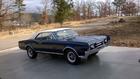
I thought a lot of the advice given to me and I'm changing my direction. I'm having new headers (Came today!) put on the Hurst with a new starter. (Only glaring issues, motor has 100k in soft miles on it). While I keep enjoying the Hurst I am waiting and I am having the 350 gone through by a machine shop. Price Quoted was 900-1200. I'll keep this posted as I go.
Thanks for the advice, went a long way.
Thread Starter
Registered User
Joined: Apr 2013
Posts: 515
From: Wilmington, DE
UPDATE!
Hurst is getting new headers and starter on Tuesday. Wednesday we go to the muffler shop and the cats are 86'D and new mid-pipes/X-pipe go in to the current 40 series.
With that Squared away I got in touch with the machine shop and here is what I found out. Bear with me here because we have some hypothetical situations here:
1,000= fully rebuilt heads, new cam bearings, crank bearings, oil pump, cylinder hone, piston clean up, rings, water jackets/freeze plugs, full replacement of all gaskets. I also got the feel good conversation of "I'll measure out your cam, crank etc to give you a better idea of what we have.."
1,400= All the about listed with .30 over bore and new pistons.
1,900= 1k +1.4k + New cam, lifters, rods.
NOW! Obviously all this will change if something is seriously wrong with the motor. These are the figures I was given for what I called "A near stock, reliable and street able motor that can run circles around the current set up."
I figure with the motor in near stock form and adding: HEI, Performer RPM intake, headers and rest of the H/O drive train I should have something I'll be very happy with.
Thanks for reading and as always I'm interested in all opinions!
Hurst is getting new headers and starter on Tuesday. Wednesday we go to the muffler shop and the cats are 86'D and new mid-pipes/X-pipe go in to the current 40 series.
With that Squared away I got in touch with the machine shop and here is what I found out. Bear with me here because we have some hypothetical situations here:
1,000= fully rebuilt heads, new cam bearings, crank bearings, oil pump, cylinder hone, piston clean up, rings, water jackets/freeze plugs, full replacement of all gaskets. I also got the feel good conversation of "I'll measure out your cam, crank etc to give you a better idea of what we have.."
1,400= All the about listed with .30 over bore and new pistons.
1,900= 1k +1.4k + New cam, lifters, rods.
NOW! Obviously all this will change if something is seriously wrong with the motor. These are the figures I was given for what I called "A near stock, reliable and street able motor that can run circles around the current set up."
I figure with the motor in near stock form and adding: HEI, Performer RPM intake, headers and rest of the H/O drive train I should have something I'll be very happy with.
Thanks for reading and as always I'm interested in all opinions!
Thread Starter
Registered User
Joined: Apr 2013
Posts: 515
From: Wilmington, DE

Thread
Thread Starter
Forum
Replies
Last Post


