When you click on links to various merchants on this site and make a purchase, this can result in this site earning a commission. Affiliate programs and affiliations include, but are not limited to, the eBay Partner Network.
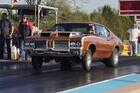
I found this old clipping from 1968
400 G runs a 11.90 in Jr stock trim.
I used the Wallace et & mph & weight
433 flywheel hp 390 rear wheel hp
1.08 hp per cubic inch
I found this old clipping from 1968
400 G runs a 11.90 in Jr stock trim.
I used the Wallace et & mph & weight
433 flywheel hp 390 rear wheel hp
1.08 hp per cubic inch
would be nice to know the engine mods for those numbers
would be nice to know the engine mods for those numbers
I agree
stock intake, stock rods,factory Q jet,stock pistons, no porting, stock valve size.
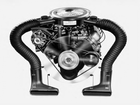
They ran 180 degree headers like this but for a Oldsmobile. Factory race cam, max compression ratio. .030 over bore. Most likely good air and track conditions were also factors. I would guess .20 of the 11.90 pass was down track conditions and good air. Driving skill is also overlooked often few can extract the maximum.
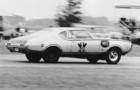
Woodland was a good driver and Anderson was a good wrench they held multiple records over many years as did many Oldsmobile races during this time period. Pete Kost and Ron Gerry to name a few others that held records over the years.
A more typical pass for the 68 and 69 400 G 12.20 to 12.50.
Both Woodland & Anderson and Pete Kost held the record for a while running the 400G.
The ET does not all come from engine Hp & TQ they were very good at chassis tuning as well. They were true racers and innovators that had direct backdoor access to factory support. Not the typical summit catalog builder.
Last edited by Bernhard; Feb 28, 2021 at 10:21 PM.
They ran Jrs competion Headers. 2" pipes with 4" collector. They shimmed the rocker arm stands, internal snap rings on the valve lifters. The control arms had brass bushings on one end, not sure about both ends. Air Lift airbags were also used. And the times were using a 7" tire on 5" wide rims. It was harder to get the 400G engine to produce the same power as the "short stroke" 400 (66-67) that used the W-30, 308 degree cam. The 328 degree cam (68-70) did help.
I do not know who made the headers for Pete Kosts car or the Woodland & Anderson car. They were 180 degree headers. When I talked to Pete he said they had a deal with Hooker headers back then. These cars were factory backed.
I do not know who made the headers for Pete Kosts car or the Woodland & Anderson car. They were 180 degree headers. When I talked to Pete he said they had a deal with Hooker headers back then. These cars were factory backed.
Those G blocks were good motors if you knew how to run them and kept rev's down no difference then running the 455 they spun just as many rods back in the day but there were more available lol.
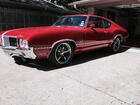
There was alot alot of rule bending as well . Guys would cut and weld the spindles further on one side than the other to trip the beams on the big end sooner. Bearly snug control arm bolts for fast movement. Removing one spring from the mechanical advance . Dropping the oil pan a few inches to keep the oil away from the crank shaft , there was also alot of wizardry on the cam shaft I can't remember what the rules on cams where but this is where I believe cam grinders came into play they had to have the stock lift and duration but the ramps I believe is where alot of the magic was they didn't. Run stock cams so to speak. They would also build engines realllly loose atleast from what I can gather. I buy a ton of old super stock magazines and study then because well... Old technology and techniques are cheaper than new tech. I use alot of those tricks on my cutlass.
They were playing with special friction reduction additives back then in the gearbox and diff. They also worked on the ring pack tension, and the contact face of the ring to reduce friction. They understood friction was a HP/TQ killer. Just like today they earned their gains.