When you click on links to various merchants on this site and make a purchase, this can result in this site earning a commission. Affiliate programs and affiliations include, but are not limited to, the eBay Partner Network.
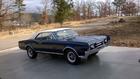
Hello from Calgary, Canada. I have a car presently being restored in South Dakota.
My focus is a bit different. Vintage ambulances. Involved with restoring a 1970 Cotner/Bevinton Oldmobile Cottington ambulance. Based on the 98 chassis. Quite complete car, but still some needed issues. Will post some pics as time evolves.
The biggest need is a rear bumper and one of the two grills. Any help much appreciated.
I'm sure the grille on your ambulance is the same as on any 1970 Delta 88 or 98, so you just need a 1970 full-size Oldsmobile grille. It doesn't have to be off of another ambulance.
As far as the bumper, is it unique to the ambulance, or is it an ordinary 1970 98 rear bumper? I found this photo of the rear end of a '70 Olds ambulance. Compared to the rear bumper on the '70 98 convertible below, they do look different. That means you'll have to find one from another '70 ambulance, and that may not be easy or cheap. Good luck.
Last edited by jaunty75; Jun 18, 2021 at 08:03 AM.
Grilles will be standard issue Ninety Eight. I don't know how much if any modification C-B did to the rear bumpers on the coaches. Do you see any signs of cut and weld on the back side of it?
This time of year I am in South Dakota. Which business is doing the work on your ambulance? Do you forsee any problems getting the ambulance back across the border?
good luck with your project
I will start by saying I am Totally naive to Old's mechanically and all input is appreciated. Having said that, I grew up with them all around me. My main focus, as mentioned is vintage ambulances, but this is my first C/B Olds. Always loved them.
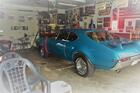
Here are a couple in my collection.
Very specific plans for the C/B Olds, and all help appreciated!
Do you forsee any problems getting the ambulance back across the border?
Originally Posted by 70W-32
I too am interested in how you deal with the border closure. I here it just got extended again.
Originally Posted by stillakid54
I recently shipped an original US car back home, no issues at all.
The U.S/Canada border closure concerns PEOPLE, not goods. I just ordered a part from the carburetor doctor, and it was shipped from a supply center in Vancouver, BC. It arrived just about as quickly as it would have were it shipped from somewhere in the U.S,
Which coachbuilder did the 51 and 57 Pontiacs? Rear roof looks Henney. How about the 65? All three are proof a car can work for a living and still look good.
Didn't see many BOPChev pro cars here, not even limos. Cadillac had that market cornered.
A friend's brother got hold of a 63 Ford Amblewagon a few years ago. These are normally Chevy guys but that Amblewagon is a factory 390 four-speed...
The 52 is a National. The 57 and 65 are Superior.
FYI, pre WWII a number of companies built pro cars on Oldsmobile chassis. The best known are: Henney, Miller, Meteor, Cunningham and S & S. Post war included Dixie, and the best known, Comet, whose name was changed to Cotner/Bevington after Ford bought the Comet name in 1960, and the company was named after the two original owners. They produced vehicles until 1975.
C/B primary competition were Superior Pontiac's.
Back in the 70s I crewed ambulance here in PA- our stable included a 69 Pontiac, 69 Caddy and 74 Caddy- all Superiors . For whatever reason, Supreior never used Olds. We also were one of the first to use Chevy truck-mounted boxes (Swab Wagon Co), which were supposedly transferable to a new chassis down the road, and therefore cheaper in the long run. Turned out the cost of the changeover ended up about the same, and improvements along the way justified buying new. The old boxes were usually set up to handle 4 patients if needed. (Even our Superiors had hooks in the ceiling to hang a 2nd stretcher- not a lot of space though). The 74 Caddy had a Federal Q2 siren that would dim all the lights when you wound it up..
C/B could not compete through the early 60's well with Superior as they had a limited dealership. In 1964 they were purchased by the Wayne Corporation, that also owned Miller Meteor, one of the three large volume Cadillac based pro car producers. This improved the marketing of the C/B Olds, though it never caught up to the Superior Pontiac's.
All of your memories from when you served are bang on. The car being restored is a four patient car, with hardware to hang two cots from the ceiling. Ordered primarily where small town rural service would have limited vehicles.
As to the Federal Q, they draw a huge amount of current, and the headlight story is totally correct. Federal now produces an electronic equivalent, to provide a similar sound, with much less current. I have an original Q on several of my cars. With one, was at an EMS event, ran the siren up at one point, blew the solenoid, and could not shut the darn thing off. Great!! We eventually got it disconnected, but it was a pretty loud couple of minutes.
If you look closely at the pic Jaunty75 put up it looks like they just cut the top off the middle section of the 98 bumper and bolted on a filler piece. You can see a row of bolts across the top. Is that piece still usable on your bumper?? Maybe you could find a stock 98 bumper( maybe someone here might have one) & have your shop modify it. It sure looks like the ends of the bumper are stock, they just lowered the middle section to clear the rear door.
From humble beginnings. Hundreds and hundreds (and hundreds more) of hours, by a very talented friend, we have it back on the road. Everything from mechanical to electrical pretty much replaced.
The color combination was chosen as this was used for one of the cars in the 1970 sales brochure.
Was this one specific for ambulance use or was it a combination?
I'm old enough to remember the days before organized rescue squads, when local funeral homes also provided ambulance and rescue service using the hearse as patient transport.
Working vehicles led hard lives and often got used up and cast aside. 30-some years ago a nearby junkyard had a row of nothing but hearses and funeral limos. One of my buddies wouldn't go anywhere near them.😄
from the original picture, it appears it was built as ambulance only. Many of the ambulance/hearse combinations usually lacked the fiberglass roof extension, and had either limited or removable emergency lights. An EMS unit I volunteered with in the seventies bought a used '63 (?) Cadillac combo that had a single red beacon of the roof, and a siren mounted under the hood. We used it for routine transports- from hospital to nursing home, e.g.-but we did have to press it into emrgency service once when all 5 of our others were busy..
If the Cotner Bevington was similar to the Superior Coach at the time, there was an option for hooks in the ceiling to hang a second stretcher, as many areas had a limited number of ambulances to respond to multiple injury events. The early (late 60's) 'modular' truck chasis-based ambulances even 'could' handle four stretchers, but it was not the best scenario.
Thanks for the reply's. With the elevated roof line this is a straight ambulance. You mention the hooks. This is a four stretcher car, and I will post a pic separately regarding their use. Not a lot of room for the poor souls hanging from the roof. For a small town though that might have a single ambulance, a multi-patient option was necessary for multiple injury calls.
As you both say, in the years before government run ambulance (EMS) services, ambulance provision was often provided by the local funeral home. This dates back to early years, where they had a vehicle large enough to transport a stretcher, and were not squeamish in dealing with the sick and injured. They would often order a "combination" model, as depicted in this 67 brochure. It was of standard headroom height, often two length options. The rear compartment had rudimentary storage for basic first aid material. The floor had either reversible rollers for carrying a casket or stretcher, or would have a removable casket table, or "skeleton rack". In addition they could have removable side landau panels, as depicted, for funeral use. Warning equipment typically consisted of a removable beacon that was mounted on the roof, and an under hood siren.
Lastly, totally as you describe, an ambulance was a service vehicle, driven hard, put away wet. Often by services where financial resources were limited because of the funding model. Combine this with the small production numbers, and very few survive. This is the reason that those of us with this interest will take on a car that might well be cast aside were it a standard vehicle.
Last edited by stillakid54; Apr 30, 2023 at 12:10 PM.
This is from the 1970 C/B brochure, and was the decision for the color choice. It shows the multi patient option well. One can only imaging trying to load those upper collapsible stretchers, holding a patient, on a snowy cold rural road in January (or being transported in such a fashion).