


1966 442 Convertible Project

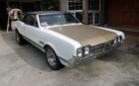
Thread Starter
Registered User
Joined: Aug 2011
Posts: 29
From: Cirtus Heights, CA
1966 442 Convertible Project
I felt that I should share my trials and tribulations with all the “fun” that I am having with my car. I bought a 1966 442 convertible with the hopes of restoring it (it was my first car I ever bought). Well, I made the mistake of buying off of eBay and not checking it out first. The photos were pretty good and I could see that the fenders and quarter panels needed some work. The engine was not correct as it is a 425, and when I finally got it running, I noticed that the transmission was a three speed and not the two speed Jetaway that should have come with the car. I figured out that the tranny was actually a TH350. The rear end is a 3:90, and since I want to build a cruiser, that will have to go.
Mycar.jpg
I have been looking for parts, mainly fenders, and they are very difficult to find. The 66 442 has unique fenders and so far I have only found a passenger fender. While I was looking for parts, I found a 67 442 Holiday Coupe on eBay and many of the body panels looked OK, and it had the correct 400 engine in it. The floor was rusted out (Fred Flintstone style), but I bought it anyway. I had it shipped and to ship a non-op is a PITA. It took a while to get it but it now sits in the driveway.
Every body panel had rust holes in them, but all the trim was intact. I removed the fenders and found Yellow Jacket nests, with live adult Yellow Jackets in them. Driver’s door was filled with old wasp nests. This car was sitting for a long time out in the rain. The bucket seats and rear seats are salvageable. Rear bumper is rusted but can be rechromed; front bumper damaged in a crash and is rusted through so it is trash. Core support mangled and rusted, headed to recycling. It is a console car and that is intact. My 66 is column shift so I want to change it over to the console. I learned how to pull the dash, much harder than it looks. Pulled the fuel tank, cut off the exhaust pipes, and unbolted (I use that term loosely since I had to use my Sawzall to cut most of them) the body mounts and jacked up the body. I had to cut the e-brake cable because the cable was rusted to the sheath. The master cylinder was full of rust and the brake lines also were cut. The body will go to the crusher since nothing is usable on it. I also learned a few things: I took all the windows out, found screws in the vent windows that are not in the 66 but they are in the 67 (of course, I only had the 66 CSM so I had to get the 67 CSM, thanks wildaboutcars!); in fact I found a lot of differences between the 66 and 67. That the stainless steel trim screws are very hard to drill out, that a Grab-It bit is a must for my toolbox, rusted screws do not come out easily. While grinding, always wear goggles (even though your eyes are covered by safety glass, you can still get a ricochet into the side under your glasses… very scary).
EnginePN.jpg 1967Nofront.jpg Interior.jpg
While the car was up on the jack stands, I looked at the diff and it turns out to be a 3:55 and that will go into the 66 as well. I pulled the driveshaft at the same time.
The engine was seized and wouldn’t turn at all. I drained the fluids and a lot of clear water came out of the oil pan (oh no, not a rusted engine too!). Maybe this is the problem with the engine. I shot some Kroil into each cylinder in hopes of freeing the engine. I stripped the front end and pulled the engine and transmission (BTW, when you tilt the engine and tranny, transmission fluid comes pouring out the open end of the transmission where the drive shaft was… wish I had known that before I dumped the ATF on the driveway) . Then I tried to unbolt the tranny from the engine and since the engine wouldn’t turn, how could I get the torque converter bolts off. I put the engine and tranny back into the car so it wouldn’t spin when I tried to turn the engine with a 36” breaker bar, still no luck. I tried to see what others here on CO did to separate the engine from transmission, but I could not find anything. The CSM does not say anything so I went online. I found a Jeep forum that said if the engine was seized, and you had an automatic transmission, after you take out the engine/tranny, disconnect the bolts holding them together and then slide/pry the transmission back and the TC will stay bolted to the engine. You need to get the tranny lined up to get it to work but it did work and the tranny slid right off. I was able to get to the three TC to flywheel bolts and remove them. They came out amazingly easily. I then removed the six flywheel bolts and the flywheel.
EngineOut.jpg Separated.jpg
I had an old engine stand but I didn’t think that it would hold the 400 so I went to Harbor Freight and bought a one ton stand. I know that everyone says to get a two ton stand but this one looks really well made and very strong. I mounted the engine on the stand and got to work on it. I tried to turn the engine but it still wouldn’t budge. I pulled the intake manifold, pried the distributor out (once it moved up a little, it came right out), and then I got to work on the heads. The heads were not even on very tight and all the push rods and some of the lifters were already removed. I guess the guy that I bought this from was working on it too. Heads were removed and they don’t look bad at all. Some of the valves don’t seat very well but I am going to send them to the machine shop to have the valve seats replaced with hardened valve seats and new valves. What was the real shocker is that the pistons looked in really good shape. I’ve seen a number of rusted engines here on CO and this was not one of them. I then put a large storage tub under the engine and rotated it in the upside down position and removed the oil pan. The crank and connecting rods also looked in really good shape. I then unbolted the crank bearings and any of the pistons that I could get to. Since the engine was upside down, when I pushed the pistons out of the block, they fell on the engine stand or concrete and one broke. I had finally located the problem; there was a spun bearing on the crankshaft. Once that was removed the crankshaft turned and the rest of the pistons were removed.
WorkArea.jpg
Looksgood.jpg
One last problem to take care of and this is where I need some help. The bolt that holds the harmonic balancer to the end of the crankshaft will not come out. If I can’t remove the HB, I can’t remove the crank or the camshaft (and it looks a little worn). I don’t have acetylene available to heat up the HB, only propane. Since I want to get everything checked out by the machine shop, should I just take the whole block in and have them take the rest apart and clean it? I think that I just answered my own question…
Mycar.jpg
I have been looking for parts, mainly fenders, and they are very difficult to find. The 66 442 has unique fenders and so far I have only found a passenger fender. While I was looking for parts, I found a 67 442 Holiday Coupe on eBay and many of the body panels looked OK, and it had the correct 400 engine in it. The floor was rusted out (Fred Flintstone style), but I bought it anyway. I had it shipped and to ship a non-op is a PITA. It took a while to get it but it now sits in the driveway.
Every body panel had rust holes in them, but all the trim was intact. I removed the fenders and found Yellow Jacket nests, with live adult Yellow Jackets in them. Driver’s door was filled with old wasp nests. This car was sitting for a long time out in the rain. The bucket seats and rear seats are salvageable. Rear bumper is rusted but can be rechromed; front bumper damaged in a crash and is rusted through so it is trash. Core support mangled and rusted, headed to recycling. It is a console car and that is intact. My 66 is column shift so I want to change it over to the console. I learned how to pull the dash, much harder than it looks. Pulled the fuel tank, cut off the exhaust pipes, and unbolted (I use that term loosely since I had to use my Sawzall to cut most of them) the body mounts and jacked up the body. I had to cut the e-brake cable because the cable was rusted to the sheath. The master cylinder was full of rust and the brake lines also were cut. The body will go to the crusher since nothing is usable on it. I also learned a few things: I took all the windows out, found screws in the vent windows that are not in the 66 but they are in the 67 (of course, I only had the 66 CSM so I had to get the 67 CSM, thanks wildaboutcars!); in fact I found a lot of differences between the 66 and 67. That the stainless steel trim screws are very hard to drill out, that a Grab-It bit is a must for my toolbox, rusted screws do not come out easily. While grinding, always wear goggles (even though your eyes are covered by safety glass, you can still get a ricochet into the side under your glasses… very scary).
EnginePN.jpg 1967Nofront.jpg Interior.jpg
While the car was up on the jack stands, I looked at the diff and it turns out to be a 3:55 and that will go into the 66 as well. I pulled the driveshaft at the same time.
The engine was seized and wouldn’t turn at all. I drained the fluids and a lot of clear water came out of the oil pan (oh no, not a rusted engine too!). Maybe this is the problem with the engine. I shot some Kroil into each cylinder in hopes of freeing the engine. I stripped the front end and pulled the engine and transmission (BTW, when you tilt the engine and tranny, transmission fluid comes pouring out the open end of the transmission where the drive shaft was… wish I had known that before I dumped the ATF on the driveway) . Then I tried to unbolt the tranny from the engine and since the engine wouldn’t turn, how could I get the torque converter bolts off. I put the engine and tranny back into the car so it wouldn’t spin when I tried to turn the engine with a 36” breaker bar, still no luck. I tried to see what others here on CO did to separate the engine from transmission, but I could not find anything. The CSM does not say anything so I went online. I found a Jeep forum that said if the engine was seized, and you had an automatic transmission, after you take out the engine/tranny, disconnect the bolts holding them together and then slide/pry the transmission back and the TC will stay bolted to the engine. You need to get the tranny lined up to get it to work but it did work and the tranny slid right off. I was able to get to the three TC to flywheel bolts and remove them. They came out amazingly easily. I then removed the six flywheel bolts and the flywheel.
EngineOut.jpg Separated.jpg
I had an old engine stand but I didn’t think that it would hold the 400 so I went to Harbor Freight and bought a one ton stand. I know that everyone says to get a two ton stand but this one looks really well made and very strong. I mounted the engine on the stand and got to work on it. I tried to turn the engine but it still wouldn’t budge. I pulled the intake manifold, pried the distributor out (once it moved up a little, it came right out), and then I got to work on the heads. The heads were not even on very tight and all the push rods and some of the lifters were already removed. I guess the guy that I bought this from was working on it too. Heads were removed and they don’t look bad at all. Some of the valves don’t seat very well but I am going to send them to the machine shop to have the valve seats replaced with hardened valve seats and new valves. What was the real shocker is that the pistons looked in really good shape. I’ve seen a number of rusted engines here on CO and this was not one of them. I then put a large storage tub under the engine and rotated it in the upside down position and removed the oil pan. The crank and connecting rods also looked in really good shape. I then unbolted the crank bearings and any of the pistons that I could get to. Since the engine was upside down, when I pushed the pistons out of the block, they fell on the engine stand or concrete and one broke. I had finally located the problem; there was a spun bearing on the crankshaft. Once that was removed the crankshaft turned and the rest of the pistons were removed.
WorkArea.jpg
Looksgood.jpg
One last problem to take care of and this is where I need some help. The bolt that holds the harmonic balancer to the end of the crankshaft will not come out. If I can’t remove the HB, I can’t remove the crank or the camshaft (and it looks a little worn). I don’t have acetylene available to heat up the HB, only propane. Since I want to get everything checked out by the machine shop, should I just take the whole block in and have them take the rest apart and clean it? I think that I just answered my own question…


Registered User
Joined: Oct 2005
Posts: 7,318
From: NJ
Interesting start, The HB is together with rubber....no heat should be used here. Keep the crank from turning at the flywheel end and then the bolt should come off and then you need a puller for the HB.... nothing hard just some knowhow...
Last edited by Oldsmaniac; Sep 24, 2012 at 07:09 PM. Reason: spelling
Thread Starter
Registered User
Joined: Aug 2011
Posts: 29
From: Cirtus Heights, CA
Well, while the engine was seized, I used my 36" breaker bar on that nut and it wouldn't budge (putting about 200 pounds of weight on the end). I am assuming that it is a right handed bolt. Maybe it rusted like the pulleys that I took off with a lot of effort.


Registered User
Joined: Mar 2008
Posts: 4,026
The balancer bolt is 3/4" fine thread and torqued to 160 ft lb min. That is why it doesn't want to come out. Use a 1-1/8" socket, breaker bar, cheater pipe, and keep the crank from turning--a 1/2" drive extension in a balancing hole on a counterweight may work. An impact gun also will work.

Thread
Thread Starter
Forum
Replies
Last Post
70SXchris
Cars For Sale
1
Mar 25, 2011 09:31 PM


