


Boiling plastic to restore?


Thread Starter
Registered User
Joined: Feb 2008
Posts: 11,798
From: Plano, TX
Boiling plastic to restore?
I saw this article in the Rockauto newsletter about restoring plastics by boiling. Anyone ever try this? Looks like I need to find some yellowed stuff and try it myself...
"Tired of breaking the old, brittle plastic clips that hold on exterior and interior trim? Worried that the plastic thermostat housing will either leak or crack after being over tightened? Hoping for a way to rejuvenate the yellowed plastic gears, slides and rollers in that window regulator? Having trouble sliding the plastic handles onto the metal rods that came with that new foosball table? The answer to these and other plastics conundrums is an elixir available at the nearest kitchen sink.
My dad was a plastics engineer for 30+ years. One of the best tips he has given me thus far is to rejuvenate and limber up old and new thermoplastic polymers by soaking them for a minute or so in boiling water. The results with nylon can be especially dramatic. Yellowish nylon goes into the water brittle and comes out supple and milky white.
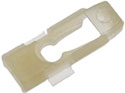


New composite thermostat housings, foosball table handles, and other plastic pieces that must be mounted to metal become slightly more flexible and are an easier and better fit.
The boiling water does not melt the plastic. Soaking nylon in room temperature water for a long time has the same impact as a short bath in boiling water. The chemistry is too complex for just the son of a plastics engineer to explain. Basically the moisture releases tension between polymer molecules that was created when the plastic was first made (molded, extruded, etc.) or that built up over time as the plastic was exposed to sunlight, heat, chemicals or otherwise aged.
Over the years I have only seen good results from putting my plastic parts in boiling water. At worst the plastic seems unaffected, probably a thermoset plastic (rigid body parts, distributor caps, Bakelite, etc.). However, there are myriad plastic resin recipes and plastic products out there and I must include a disclaimer and encourage common sense and caution. Do not soak plastic pieces that include electronics, gaskets, lubricants, paint, adhesives, decals, etc. that are not supposed to be exposed to water. Do not bring a plastic part out of a freezing garage and immediately dunk it into a boiling pot of water. Thin, molded plastic pieces like interior trim or milk jugs might lose their shape if exposed to heat. Heat and moisture from boiling water might not be uniformly transferred through very thick plastic pieces. If you are at all concerned about the temperature of boiling water, then maybe instead try soaking the plastic piece in unheated water for a day or two. Don’t boil a greasy composite valve cover in your spouse’s favorite spaghetti kettle…
Tom Taylor,
RockAuto.com"
"Tired of breaking the old, brittle plastic clips that hold on exterior and interior trim? Worried that the plastic thermostat housing will either leak or crack after being over tightened? Hoping for a way to rejuvenate the yellowed plastic gears, slides and rollers in that window regulator? Having trouble sliding the plastic handles onto the metal rods that came with that new foosball table? The answer to these and other plastics conundrums is an elixir available at the nearest kitchen sink.
My dad was a plastics engineer for 30+ years. One of the best tips he has given me thus far is to rejuvenate and limber up old and new thermoplastic polymers by soaking them for a minute or so in boiling water. The results with nylon can be especially dramatic. Yellowish nylon goes into the water brittle and comes out supple and milky white.
New composite thermostat housings, foosball table handles, and other plastic pieces that must be mounted to metal become slightly more flexible and are an easier and better fit.
The boiling water does not melt the plastic. Soaking nylon in room temperature water for a long time has the same impact as a short bath in boiling water. The chemistry is too complex for just the son of a plastics engineer to explain. Basically the moisture releases tension between polymer molecules that was created when the plastic was first made (molded, extruded, etc.) or that built up over time as the plastic was exposed to sunlight, heat, chemicals or otherwise aged.
Over the years I have only seen good results from putting my plastic parts in boiling water. At worst the plastic seems unaffected, probably a thermoset plastic (rigid body parts, distributor caps, Bakelite, etc.). However, there are myriad plastic resin recipes and plastic products out there and I must include a disclaimer and encourage common sense and caution. Do not soak plastic pieces that include electronics, gaskets, lubricants, paint, adhesives, decals, etc. that are not supposed to be exposed to water. Do not bring a plastic part out of a freezing garage and immediately dunk it into a boiling pot of water. Thin, molded plastic pieces like interior trim or milk jugs might lose their shape if exposed to heat. Heat and moisture from boiling water might not be uniformly transferred through very thick plastic pieces. If you are at all concerned about the temperature of boiling water, then maybe instead try soaking the plastic piece in unheated water for a day or two. Don’t boil a greasy composite valve cover in your spouse’s favorite spaghetti kettle…
Tom Taylor,
RockAuto.com"




Just an Olds Guy
Joined: Jul 2008
Posts: 24,528
From: Edmonton, AB. And "I am Can 'eh' jun - eh"
Just an Olds Guy
Joined: Jul 2008
Posts: 24,528
From: Edmonton, AB. And "I am Can 'eh' jun - eh"
Yup, I bought an OEM radiator overflow from one of our guys. It has some bromine staining. I decided that I would experiment with the cap since I know I can get replacements.
First, I should preface this by saying I've already soaked this in water/bleach for about 4 hours. I need to get a tiny tube bristle brush to get into the little orifices. Second, the pictures don't really do proper justice. The cap is fairly dark. I guess the boiling helped a little, but not really that much. There's no way I'm going to boil the whole assembly. Right now I have the reservoir sitting in the garage filled with a mix of water/pink solution (an enzyme cleaner) It has been sitting about 6 days and is about 1/2 as dirty now as it used to be then. This tank is so rare (OEM) and expensive I don't want to try anything severe that would damage it to the point of failure. The first picture from the seller.

Here's the cap before boiling for 1/2 hour. Top/bottom


And here's the cap after. Not much improvement at all. What I did notice though was a white scum on the side of the pot and a white film on the plastic that comes off when rubbed.


This part is reproduced which is why I didn't mind trying the experiment with it:

First, I should preface this by saying I've already soaked this in water/bleach for about 4 hours. I need to get a tiny tube bristle brush to get into the little orifices. Second, the pictures don't really do proper justice. The cap is fairly dark. I guess the boiling helped a little, but not really that much. There's no way I'm going to boil the whole assembly. Right now I have the reservoir sitting in the garage filled with a mix of water/pink solution (an enzyme cleaner) It has been sitting about 6 days and is about 1/2 as dirty now as it used to be then. This tank is so rare (OEM) and expensive I don't want to try anything severe that would damage it to the point of failure. The first picture from the seller.
Here's the cap before boiling for 1/2 hour. Top/bottom
And here's the cap after. Not much improvement at all. What I did notice though was a white scum on the side of the pot and a white film on the plastic that comes off when rubbed.
This part is reproduced which is why I didn't mind trying the experiment with it:
Thread Starter
Registered User
Joined: Feb 2008
Posts: 11,798
From: Plano, TX
Well it looks better anyway.
You recon the repop part is the exact color of the original when it was new? Looks too white....
So I can imagine this process can work with some parts but not all. Just a try and see what happens at your own risk sort of thing.
Thanks for the trials!
You recon the repop part is the exact color of the original when it was new? Looks too white....
So I can imagine this process can work with some parts but not all. Just a try and see what happens at your own risk sort of thing.
Thanks for the trials!
Just an Olds Guy
Joined: Jul 2008
Posts: 24,528
From: Edmonton, AB. And "I am Can 'eh' jun - eh"
Rob, if you check the before/after pics there is also some difference in the lighting. That's why the after pics look a bit better. It was worth a shot, and didn't appear to hurt the plastic at all - after all it's designed to be in a hot environment.
The repop pic is from a vette website, so I can't say for certain what the true color would be. As you can see though, this cap doesn't have a strap that goes around the overflow like a lot of other repop lids do. I also can't see the detail on the repop to see if it has any wording on it.
The repop pic is from a vette website, so I can't say for certain what the true color would be. As you can see though, this cap doesn't have a strap that goes around the overflow like a lot of other repop lids do. I also can't see the detail on the repop to see if it has any wording on it.
Just an Olds Guy
Joined: Jul 2008
Posts: 24,528
From: Edmonton, AB. And "I am Can 'eh' jun - eh"
BTW, one thing that's strongly recommended with bleach soaking - rinse THOROUGHLY with water after. Apparently prolonged exposure to bleach breaks down the plastic or makes it brittle?

NOVICE car nut
Joined: Nov 2010
Posts: 3,140
From: Milwaukee Wisconsin
Do you have some before/after pics? I tried soaking my reservoir in the sink full of scalding hot water with plenty o bleach. After 4 hours of soaking not much different. How bad was the washer bottle to start with? I'm searching for different kinds of bristle brushes to get inside the tank to those hard to reach areas. Any suggestions?
BTW, one thing that's strongly recommended with bleach soaking - rinse THOROUGHLY with water after. Apparently prolonged exposure to bleach breaks down the plastic or makes it brittle?
BTW, one thing that's strongly recommended with bleach soaking - rinse THOROUGHLY with water after. Apparently prolonged exposure to bleach breaks down the plastic or makes it brittle?

Registered User
Joined: Jul 2008
Posts: 4,532
From: Chi-town
I did rinse it out well, but now you have me wondering just how well did I rinse the bleach out, hmmm there is probably a neutralizing agent I could use as well, such as baking-soda maybe?
Just an Olds Guy
Joined: Jul 2008
Posts: 24,528
From: Edmonton, AB. And "I am Can 'eh' jun - eh"
Chances are really good that the ww fluid has neutralized whatever didn't come out in the rinse. Most washer fluid is between 35 and 45% methyl alcohol.

No it's not a parts car!!
Joined: Nov 2010
Posts: 438
From: NE, Illinois
I also saw that Rock Auto news letter and tried it on my rad. overflow cap with similar results. (see Allen R's pictures) Now I am tempted to try it on the reservoir it self and pray it dose'nt get damaged.
Just an Olds Guy
Joined: Jul 2008
Posts: 24,528
From: Edmonton, AB. And "I am Can 'eh' jun - eh"

IIRC all your plastic caps on the 83 are black, and new rad overflow and washer jugs are still available for your ride.

Hangin' out...
Joined: Dec 2008
Posts: 608
From: Scottsdale, AZ

Rad overflow and washer jugs are still available new?! Through whom?
Hangin' out...
Joined: Dec 2008
Posts: 608
From: Scottsdale, AZ

Just an Olds Guy
Joined: Jul 2008
Posts: 24,528
From: Edmonton, AB. And "I am Can 'eh' jun - eh"
CLR works too. Takes a lot less time. But I did run vinegar through the coffee maker. Had to run another 3 tanks of water till I had it purged. Ever enjoyed the aroma of fresh brewed vinegar??

Registered User
Joined: Jul 2011
Posts: 406
[QUOTE=Allan R;421512] I'm searching for different kinds of bristle brushes to get inside the tank to those hard to reach areas. Any suggestions?
The only place I've seen what I call "pipe cleaner" brushes is my local Harbor Freight. I've had good results cleaning overflow and w/w containers by throwing a paper towel and some washers to aid in the scrubbing into the jar. Some soapy water or degreaser and careful shaking usually gets the interior clean.
The only place I've seen what I call "pipe cleaner" brushes is my local Harbor Freight. I've had good results cleaning overflow and w/w containers by throwing a paper towel and some washers to aid in the scrubbing into the jar. Some soapy water or degreaser and careful shaking usually gets the interior clean.
Just an Olds Guy
Joined: Jul 2008
Posts: 24,528
From: Edmonton, AB. And "I am Can 'eh' jun - eh"
The only place I've seen what I call "pipe cleaner" brushes is my local Harbor Freight. I've had good results cleaning overflow and w/w containers by throwing a paper towel and some washers to aid in the scrubbing into the jar. Some soapy water or degreaser and careful shaking usually gets the interior clean.

Thread
Thread Starter
Forum
Replies
Last Post


