When you click on links to various merchants on this site and make a purchase, this can result in this site earning a commission. Affiliate programs and affiliations include, but are not limited to, the eBay Partner Network.
I'm back to playing around with 170-- series later Qjets with the center inlets. Originally these were smog carbs, but mine were redone by SMI in the past few years with various tweaks. I've got a decent tuning parts box for experimenting. Tons of little parts to organize or lose on the garage floor.
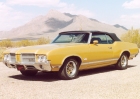
This car has a wideband 02 sensor so I can really dial in the mixture (AFR) at various RPM & load settings. Last week I took it on a 3 hour gentle freeway run and got somewhere around 14 mpg. Great, at least by my standards for an old 455.
I organized my primary qjet rods today by size. I was trying to figure out how far I'd like to lean out the carb, I've built up quite a collection of primary rods for the later qjets: 40B, 41B, 43J, 44K, 45, 48M, 50V, 52V etc, etc, etc. I get that the first two digits are the diameter of the primary rod at the tip. As I understand it, the higher the number, the leaner the rod.
Can any of you tell me Rochester / GM's logic behind the letter designations on the primary rods? I'm guessing it's something to do with the taper (so the AFR at a given RPM/load), but if I have a 48K vs 48M, what's the difference? Would the 48K be leaner or the 48M? I can test for this, but thought I'd ask since some of you would probably know or remember.
The qjet secondary rod hangers have letters too. Those letter codes roughly equate to secondary richness. That logic is A= leanest, V = richest, unless I'm mistaken. But I have no idea if the same logic applies to the primary rod letters.
Can anyone clue me in on what the logic of the primary rod letter designations are?
I don't have info on the 170 series rods but from what I recall they are an extended tip, double taper for increased efficiency. This is what I have for primary and secondary rods. Hope this helps.
Many thanks for the offer. I got a copy of the Ruggles book long ago. It’s just been a while since I read it. And I got the Roe book back in the ‘80’s as an introductory text. Both are good, but Ruggles is better for me since I like the modified later (M4MC) model qjets.
I’m still fiddling with carbs even though I’m a retired computer geek. Something appeals to me about the mechanical nature of carburetors instead of compiled code. For cars, it’s still AFR in the cylinders, whether digitally delivered or analog. I’m just sticking with analog for now since you can fix it by the side of the road most of the time. “With a hammer!” - Jay Leno.
Do you like the EFI? Which one did you go with? What would you call the pros and cons?
I’m sort of halfway there with the 02 sensors in the exhaust, but haven’t made the leap. I believe digital will be better, but with the 02 sensors, I’m having fun using the AFR measurements to really nail down tuning the jets, rods, springs and so on. Plus a carburetor is more “period”. There’s a bit of me that wants to keep these cars close to what GM was doing in the 60’s.
Or maybe one day I’ll pull a Neil Young when the electric/battery “crate motors” come of age. That sector is just beginning and kind of interesting.
Hope I didn’t bore you and I truly appreciate your offer, perhaps there’s someone here who might benefit other than me.