When you click on links to various merchants on this site and make a purchase, this can result in this site earning a commission. Affiliate programs and affiliations include, but are not limited to, the eBay Partner Network.
No , not that .... I was wondering about using it to remove rust in an area you can't get to . My son found some railroad track pieces he wanted to remove rust scale from , and I was amazed at how well vinegar worked . My question is .... If you use it in an area where there is filler , will it dissolve that too ? I'm sure it will remove anything bonded to the metal other then metal itself including POR 15 , but I thought I would ask .
No , not that .... I was wondering about using it to remove rust in an area you can't get to . My son found some railroad track pieces he wanted to remove rust scale from , and I was amazed at how well vinegar worked . My question is .... If you use it in an area where there is filler , will it dissolve that too ? I'm sure it will remove anything bonded to the metal other then metal itself including POR 15 , but I thought I would ask .
It'll certainly remove anything loose, or weak.
Not really a help, but it removed a lot of crap out of a radiator. It was cheap, and effective. 1 gallon of vinegar, and two nights sittings of filling the radiator removed a lot of crap.
In retrospect, for `$200 I should have just bought a new radiator. It would cool better, and look nicer. And last forever.
In my experience vinegar won't remove anything but rust unless the material is attached to rust that is dissolved. Paint, sealer, etc on good metal won't be affected. Vinegar is also slow. I've soaked parts for days and the vinegar loses it's punch pretty quickly so you have to replenish it often.
I started with white vinegar on my parking brake pedal assy. I got tired of waiting and augmented my soaking brew with a splash of some 'aluminum cleaner' solution I had laying around that has phosphoric & some other acids in it. Worked fantastic. Word of warning : It worked almost too good. The ratchet spring completely disappeared...
Before & after. In the clean pic it looks like there's still rust colored areas, but this is a trick of the light. It looks pristine in person.
In my experience vinegar won't remove anything but rust unless the material is attached to rust that is dissolved. Paint, sealer, etc on good metal won't be affected. Vinegar is also slow. I've soaked parts for days and the vinegar loses it's punch pretty quickly so you have to replenish it often.
I started with white vinegar on my parking brake pedal assy. I got tired of waiting and augmented my soaking brew with a splash of some 'aluminum cleaner' solution I had laying around that has phosphoric & some other acids in it. Worked fantastic. Word of warning : It worked almost too good. The ratchet spring completely disappeared...
Before & after. In the clean pic it looks like there's still rust colored areas, but this is a trick of the light. It looks pristine in person.
Wow , thanks for the input guys , That did work pretty good .
Vinegar is also slow. I've soaked parts for days and the vinegar loses it's punch pretty quickly so you have to replenish it often.
Which is not at all surprising given that, chemically, vinegar is just 5% acetic acid in water. Acetic acid is a weak acid to begin with, and then we're diluting it by a 20 to 1 ratio with water. Remember, we EAT the stuff. It can't be too harsh.
If you want something you can buy off the grocery store shelf that is more acidic than vinegar, get RC Cola. It has a slightly more acidic pH than vinegar.
You could rig up a small Electrolysis Bucket with some rebar a battery charger and a 5 gallon bucket. Once you make the bucket it's the lazy approach to cleaning rust from there on out.
In my experience vinegar won't remove anything but rust unless the material is attached to rust that is dissolved. Paint, sealer, etc on good metal won't be affected. Vinegar is also slow. I've soaked parts for days and the vinegar loses it's punch pretty quickly so you have to replenish it often.
I started with white vinegar on my parking brake pedal assy. I got tired of waiting and augmented my soaking brew with a splash of some 'aluminum cleaner' solution I had laying around that has phosphoric & some other acids in it. Worked fantastic. Word of warning : It worked almost too good. The ratchet spring completely disappeared...
Before & after. In the clean pic it looks like there's still rust colored areas, but this is a trick of the light. It looks pristine in person.
I looked into dissolving rust and found this "OSPHO" stuff. It is a type of acid solution. I can't remember what type of acid it is but it works good. It comes in a 5 gallon jug for about $25.00. You can paint it on w/a brush or rag or spray it on with a spray bottle. I spray it into blind spots. I bought it at Ace Hardware.
I looked into dissolving rust and found this "OSPHO" stuff. It is a type of acid solution. I can't remember what type of acid it is but it works good. It comes in a 5 gallon jug for about $25.00. You can paint it on w/a brush or rag or spray it on with a spray bottle. I spray it into blind spots. I bought it at Ace Hardware.
You could rig up a small Electrolysis Bucket with some rebar a battery charger and a 5 gallon bucket. Once you make the bucket it's the lazy approach to cleaning rust from there on out.
Can't speak for the others, but I looked into it and it was more $$ - like $70+ for 5 gallons.
With my brew I can make 10 gals of solution (for the heater box parts) for ~ $5. Just mix 9-ish gals of water with ~ quart of $15/gal generic aluminum brightener.
The aluminum brightener I have has all kinds of scary things in it. Phosphoric acid, hydroflouric acid, hydrochloric acid, alien blood acid, etc...
Is it the proper/perfect thing to use ? Maybe not. Blasting might work better for some stuff but I don't have a cabinet.
And I probably wouldn't suggest it on something like body panels where it could cause problems with sophisticated paint(s). But, I rinse with water, dry, & then rinse/wipe with mineral spirits. The parts stay rust free until I'm ready to paint. Then I BrakeKleen 'em, dry, warm, & paint with no problems.
I have to monitor it. If I let sit too long it starts eating off paint (usually not a bad thing). If it goes longer it starts to turn the parts dark gray. But the gray is some sort of rust preventer. I threw my old rusty clutch rod in it and forgot about it for like 2 weeks. It now looks like gray phosphate. I left it sitting outside where I was working...for like 2 weeks & a couple of rains. It still looks brand new.
You could rig up a small Electrolysis Bucket with some rebar a battery charger and a 5 gallon bucket. Once you make the bucket it's the lazy approach to cleaning rust from there on out.
Works well as long as the rusty surface has a direct line of sight to the rebar. Doesn't work well if its a complex part or a part with enclosed areas. Electrolysis does have the benefit of completely benign leftovers. (just water & iron)
If you use graphite plates and washing soda in your electrolysis process you won't get the red scum. Also if you allow the process to take place over a day or two and use a brass wire brush, it will not only remove rust it will remove paint as well. You can scrub the part with your bare hands right in the solution. Works way better than Evaporust, muratic acid, pop or vinegar.
Quote:
Originally Posted by jankyrre View Post
If I need large quantities I use citric acid,cheap,and if you heat it up it works pretty fast.
35% vinegar works good too.
Where do you get that from ? The best I found in the local grocery store was 6%
Dont know where you can buy it in the US,but here in the kingdom of gnomes you can buy 35% vinegar in any grosery store.Works good as weed killer too.
Also food grade molasses from a farm store is good. Mix it one gallon molasses to 5 gal water and let your parts soak. It stinks like $hit after a few days, but gets things looking bright and shiny.
I bought some Evapo-Rust today . Vinegar was probably good enough because I also have some RustBullet I was going to follow up with when I'm done with this .
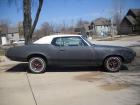
Ok , here's what I'm doing . I was pouring the vinegar in the rear quarter panel lip pinch weld areas where you can't get to . I made a dam on both sides by stuffing plastic bags down in there so the vinegar doesn't just run out right away , and it also soaks the entire area where the metal is welded together . I re-applied several times to keep it somewhat wet . I don't need to get ALL the rust out of there , hence the reason I bought the rust bullet . I probably removed most of the rust in there already with a thin piece of bendable metal that I taped some sandpaper on the end of it a couple of years ago , and then shoved it in there and sanded back and forth with . The car is kept in underground parking area . For the most part the only areas on the rear quarters that were getting bad were in the corners . I removed that rust already , but know there would be rust up further also . Welding new sheet metal is out of the question because of cost , and I don't weld .
5% vinegar worked really well for me when I decided to restore my fuel tank. The tank had 5 year old gas and ? else inside. It was rusty and was a mess. 4 gallons of vinegar sloshed around daily for 10 days. A good water bath for half and hour to flush all the junk out and then after dumping as much water out as possible and going in with a rag to sop up the rest I put a shop vacuum blowing air through the tank. After about an hour it was bone dry and clean metal. Fogged it with some oil and voila. New sender, total cost $100
5% vinegar worked really well for me when I decided to restore my fuel tank. The tank had 5 year old gas and ? else inside. It was rusty and was a mess. 4 gallons of vinegar sloshed around daily for 10 days. A good water bath for half and hour to flush all the junk out and then after dumping as much water out as possible and going in with a rag to sop up the rest I put a shop vacuum blowing air through the tank. After about an hour it was bone dry and clean metal. Fogged it with some oil and voila. New sender, total cost $100
Works well as long as the rusty surface has a direct line of sight to the rebar. Doesn't work well if its a complex part or a part with enclosed areas. Electrolysis does have the benefit of completely benign leftovers. (just water & iron)
360 degrees of rebar daisy chained around the bucket
Can't speak for the others, but I looked into it and it was more $$ - like $70+ for 5 gallons.
With my brew I can make 10 gals of solution (for the heater box parts) for ~ $5. Just mix 9-ish gals of water with ~ quart of $15/gal generic aluminum brightener.
The aluminum brightener I have has all kinds of scary things in it. Phosphoric acid, hydroflouric acid, hydrochloric acid, alien blood acid, etc...
Is it the proper/perfect thing to use ? Maybe not. Blasting might work better for some stuff but I don't have a cabinet.
And I probably wouldn't suggest it on something like body panels where it could cause problems with sophisticated paint(s). But, I rinse with water, dry, & then rinse/wipe with mineral spirits. The parts stay rust free until I'm ready to paint. Then I BrakeKleen 'em, dry, warm, & paint with no problems.
I have to monitor it. If I let sit too long it starts eating off paint (usually not a bad thing). If it goes longer it starts to turn the parts dark gray. But the gray is some sort of rust preventer. I threw my old rusty clutch rod in it and forgot about it for like 2 weeks. It now looks like gray phosphate. I left it sitting outside where I was working...for like 2 weeks & a couple of rains. It still looks brand new.
This is interesting. Can you post a picture of what you use, and one of the clutch rod. I'm genuinely curious to see the coloring of it.
I wish this thread had come about before I bought 3 gallons of Evap-o-rust at about $65. Oh, well, the Evap-o-rust is environmentally friendly and I still have a mostly full bucket. BUT, it does not work as well, nor as fast as the fore-mentioned acid solutions.
Not my bucket personally but got the pic off the interwebs same idea but mine has 10 sticks daisy chained to it. On moving parts that won't come apart from each other I use alligator clips to bond them together to help the process along.
I use apple cider vinegar. I buy one gallon jugs an use a plastic storage container with a lid. Cleans real rusty parts overnight. The lid make a bid difference in how well it works. the container I use holds 3-4 gallons. cost about 2.50 a gallon.
Here's a picture of what the Vinegar / Evapo-Rust did . It took ALL the rust off of the bottom portion of this area on the car where the arrow is pointing to .....
One nice thing about EvapoRust is you can reuse it, but I've found that it loses strength after each use. For lightly rusted parts I just clean them real good and use EvapoRust. For more heavily rusted parts I have a more complex process, so here's my method of prepping used parts:
1. Thoroughly clean and degrease the part. Oileater is great for degreasing.
2. Soak in 9% vinegar (straight from the bottle) overnight or longer, depending on the condition of the part.
3. Rinse thoroughly with water and use baking soda if the parts are heavily pitted to neutralize the acid.
4. Soak in EvapoRust 4-6 hours or until the rust is gone.
This lets the vinegar do most of the heavy lifting and the EvapoRust is the closer. You have to tweak the soak times based on the parts. Hardened steel parts hold up better in the vinegar, whereas cast metal or pot metal parts will all but disappear if left in the vinegar too long. It's best to check on your parts until you know how they respond to the vinegar. I forgot and left a cast caliper bracket in the vinegar for 3 days and it was as thin as a toothpick when I took it out.
I've also discovered when using EvapoRust, that the removed rust settles to the bottom, which continues to weaken the effectiveness. So I don't pour all the EvapoRust back into the bottle, I leave the last 1/2 pint or so (which contains all this sediment) in the bucket. This seems to make the EvapoRust last much longer before going dead.
If you live in a humid climate (like Houston) you'll need to treat the parts quickly after stripping so they don't flash rust. A bare metal prep like Eastwood's Fast-Etch will leave a thin, galvanized coating on the parts to protect them until you can paint. I wipe the parts down with Lacquer thinner before spraying paint. Here is the 9% Vinegar I buy at the grocery store.
Rust does not saticfy mutatic acid and HCl,when the rust is gone it starts eating the steel.Phosforic? acid is the one to use,this is the activ ingredience in a lot of rust removers.Also used as a conservative in food and softdrinks.
Is 9% vinegar the strongest you can buy?
We can buy this in the grocery stores
I have tried about everthing,and citric acid is my favorite,cheap,but require som heating to speed up the reaction time.
Last edited by jankyrre; Nov 12, 2015 at 12:13 PM.


 No , not that .... I was wondering about using it to remove rust in an area you can't get to . My son found some railroad track pieces he wanted to remove rust scale from , and I was amazed at how well vinegar worked . My question is .... If you use it in an area where there is filler , will it dissolve that too ? I'm sure it will remove anything bonded to the metal other then metal itself including POR 15 , but I thought I would ask .








 Oh, well, the Evap-o-rust is environmentally friendly and I still have a mostly full bucket. BUT, it does not work as well, nor as fast as the fore-mentioned acid solutions.